Sora Is Dead. Here's What Musicians Should Do Now
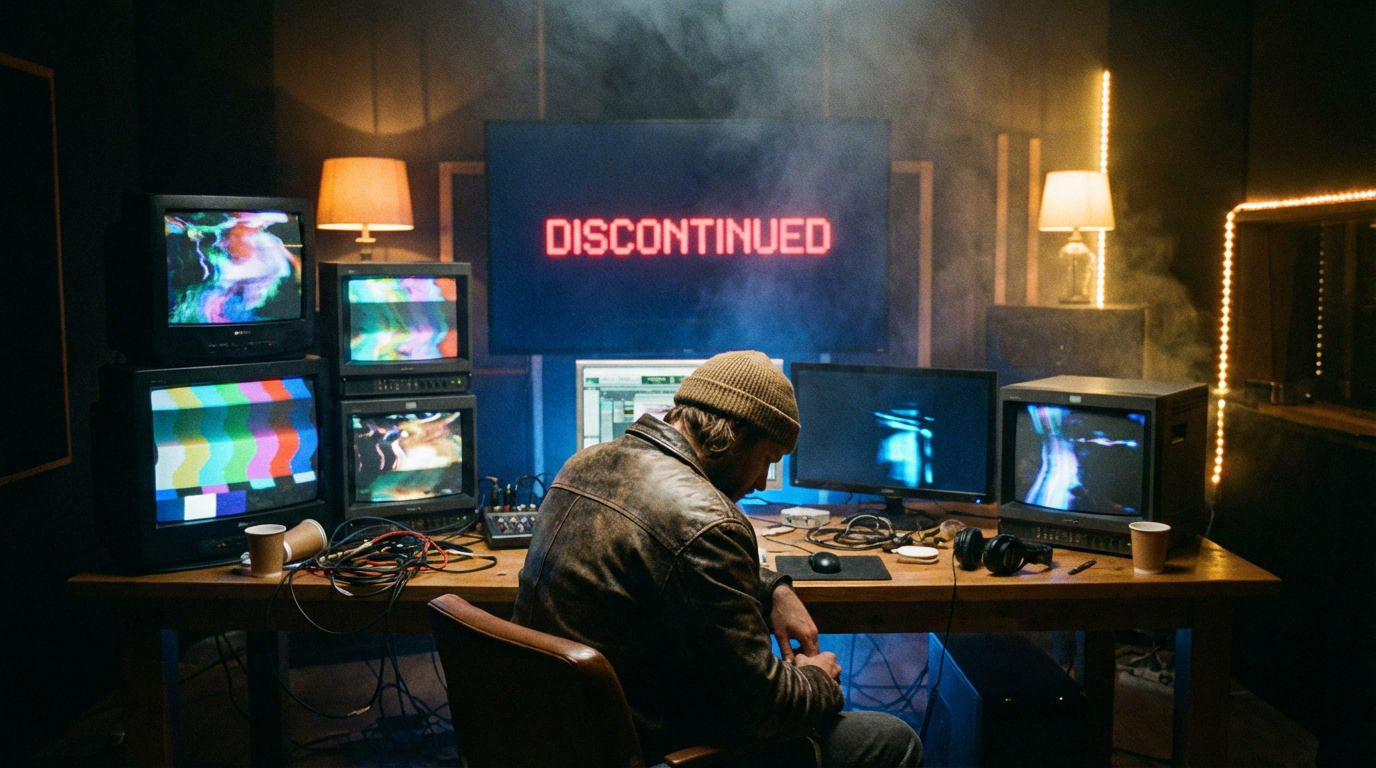
Nine days from now, the Sora app goes dark forever.
If you’re a musician who built your visual workflow around OpenAI’s once-revolutionary video generator, you’ve probably already felt that sinking feeling. The “We’re saying goodbye to Sora” notice. The scramble to export your content. The quiet panic of realizing your creative tool just… vanished.
But here’s the thing most people are missing: Sora’s departure doesn’t mean AI video is dying. Far from it. The technology is thriving — just not where OpenAI expected.
For independent musicians making AI music videos, April 2026 isn’t an ending. It’s a reshuffling of the entire deck — and the new hand looks surprisingly good.
What Actually Happened to Sora
Let’s start with the facts, because the narrative around Sora’s death has been surprisingly muddy.
On March 24, 2026, OpenAI announced on X that it was discontinuing Sora in both the mobile app and the API. OpenAI noted that the app is planned to shut down on April 26, 2026, and the API on September 24, 2026.
The numbers behind the shutdown are staggering. Sora was burning through an estimated $15 million per day in inference costs at its peak. Its entire lifetime revenue from in-app purchases came to $2.1 million. Read that again. Fifteen million dollars a day to run, and two million dollars total earned. That’s not a product getting killed prematurely — that’s a product that was mathematically doomed.
The app peaked in November with about 3,332,200 downloads across the iOS App Store and Google Play.
By February 2026, downloads had fallen to 1.1 million — a 75% decline.
And then there’s the Disney collapse. OpenAI’s partnership with Disney, which included a licensing agreement allowing Disney characters to be used within Sora, was also coming to an end.
Disney had committed $1 billion to the partnership, yet found out Sora was being shut down less than an hour before the public. One billion dollars — and they got a phone call with less than sixty minutes’ notice.
CEO Sam Altman made the call: kill Sora, free up compute, and refocus. The internal reasoning was blunt. OpenAI’s CEO of Applications, Fidji Simo, told employees they would be “doing away with side quests” and optimizing for “productivity on the business front.”
Sora — the tool that broke the internet in 2024, that promised to democratize filmmaking — was a side quest.
Why Musicians Should Care (Even If You Never Used Sora)
Here’s where it gets interesting for anyone making music videos.
Sora’s death doesn’t exist in isolation. It’s part of a massive restructuring happening across the entire AI video landscape right now. April 2026 has been one of the most significant months in AI video in terms of model releases, market exits, and competitive reshuffling.
The dominoes are falling fast:
-
Sora is dead — the highest-profile Western AI video tool is gone
-
ByteDance’s Seedance 2.0 hit copyright trouble — ByteDance was recently forced to pause the rollout of its viral Seedance 2.0 following copyright disputes with major Hollywood studios and streaming platforms
-
A mysterious horse galloped to the top — more on this in a second
Meanwhile, the music industry itself is crossing what the Hollywood Reporter calls an AI “tipping point.” There’s a vibe shift happening in how the music industry is coping with its ongoing AI revolution. “It wasn’t even happening at the end of last year, but in the past couple months since the beginning of this year,” says Suno CEO Mikey Shulman. “I don’t meet a lot of producers and songwriters who aren’t using Suno at least a little bit in their workflows.”
If the music side of AI is hitting mainstream acceptance, the visual side needs to keep pace. And that’s exactly what’s happening — just with different players than anyone expected.
Enter the Horse: Alibaba’s Stealth Takeover
Thirteen days after Sora’s shutdown, something wild happened.
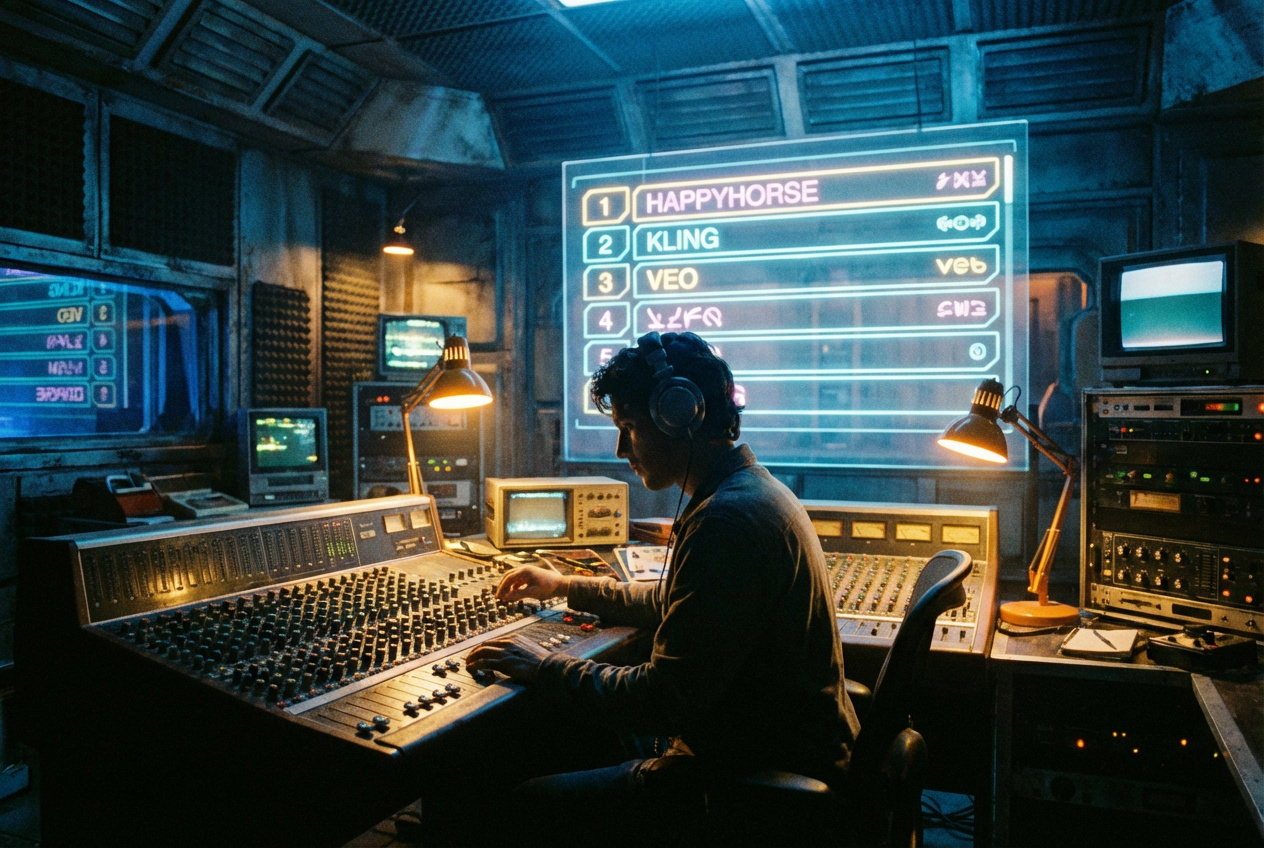
In early April 2026, a mysterious AI video model named HappyHorse quietly appeared on the Artificial Analysis Video Arena blind test leaderboard. Both its V1 and V2 versions simultaneously climbed to the top of the Text-to-Video and Image-to-Video rankings, shattering Elo scores and leaving industry heavyweights like Seedance 2.0, Kling 3.0, and PixVerse V6 in the dust.
Nobody knew who made it. The anonymous launch had sparked speculation about whether the developer was a tech giant such as Tencent or Alibaba or an independent developer.
Then the reveal: Alibaba confirmed it is behind HappyHorse-1.0, an anonymous AI video model that reached the top of global benchmark rankings. The team behind it? HappyHorse was developed by Alibaba’s Taotian Future Life Lab, led by Zhang Di, former Vice President of Kuaishou and Head of Kling Technology. This team joined Alibaba at the end of 2025, focusing on AI video generation.
Yes — the guy who built Kling (one of the most popular AI video tools) left to build something even better.
The performance gap is unprecedented. Happy Horse ranked first in the text-to-video (without audio) track with 1389 Elo points, leaving the second-place Dreamina Seedance 2.0 by nearly 115 points.
The margin over second-place Seedance 2.0 — 74 Elo points — is the largest gap in leaderboard history.
But here’s the detail that matters most for musicians: HappyHorse 1.0 generates both high-quality video and synchronized sound effects directly from a single text prompt. By processing video and audio tokens within a unified Transformer sequence, the model ensures that auditory elements naturally align with on-screen actions.
Audio-visual sync in a single pass. No stitching together separate video and audio models. No post-production alignment headaches. For anyone who’s ever tried to sync AI-generated visuals to a beat drop, this is a massive deal.
The New Landscape for Music Video Creators
So Sora’s dead, HappyHorse is flexing, and the industry is in flux. What does the actual competitive landscape look like right now for musicians who need visuals?
Tier 1: The Serious Contenders
Google Veo 3.1 has quietly become the professional’s choice. Veo 3.1 is the best Sora replacement in 2026, delivering superior video quality and longer clips. It also comes with native audio generation — critical for music video work.
Kling 3.0 offers something no other tool matches: length. Kling AI extends video length to 3 minutes. For musicians, three minutes means you can potentially generate an entire visual accompaniment without stitching clips together. Kling captured roughly 27% market share by ARR in the AI video generation space.
Runway Gen-4 remains the filmmaker’s tool. Runway Gen-3 is designed for professional-grade video production with advanced control over camera movement, lighting, and scene composition. The Gen-4 update has only expanded those capabilities.
HappyHorse 1.0 is the wild card. The team has confirmed the model will be released openly. GitHub and weights are coming soon. An open-source, top-ranked video model with native audio sync could be transformative for the entire creator ecosystem.
Tier 2: Music-Specific Tools
The general-purpose models are powerful, but not all AI video tools are equally suited for music. Hip-hop in particular relies heavily on rhythm, bass impact, and vocal flow. Many generic AI platforms fail to synchronize visuals with beat structures.
That’s where purpose-built music video generators come in. If you’re looking for tools that actually understand BPM, beat drops, and vocal timing, check out our complete guide to AI music videos — we keep it updated as the landscape shifts.
The Lesson Sora Taught Every Musician
Here’s the biggest takeaway from Sora’s death, and it applies whether you make hip-hop, EDM, pop, or indie:
Do not build your creative workflow around a single platform.
For creators and developers, the biggest lesson here is straightforward: do not build your entire workflow around a single AI tool, especially one offered by a company that is still defining its business model.
One artist described using Midjourney, Stable Diffusion, Flux, and Krea for images; Sora, Kling, Midjourney, Luma, Seedance, and Veo for video; ChatGPT, Claude, Gemini, and Deepseek for text — frequently switching platforms in response to improvements, regressions, price changes, closures, restrictions, and unexpected openings. Each time, it required relearning an interface, adapting to new interaction logics, and rebuilding workflows from scratch.
This is the reality of creative AI in 2026. The tools are incredible, but the ground beneath them shifts constantly. The musicians who thrive are the ones who treat AI tools as ingredients in their process, not the entire recipe.
Your Post-Sora Music Video Playbook
If you’ve been using Sora (or if you’ve been sitting on the sidelines waiting for the “right” tool), here’s your action plan:
1. Export Everything Before April 26
The Sora web and app experiences will be discontinued on April 26, 2026. The Sora API will be discontinued on September 24, 2026. If you want to keep your Sora content, export your data before the Sora app is discontinued.
Don’t assume your content will be preserved. Download everything now.
2. Test Multiple Platforms This Week
The AI video market has more strong options than ever. HappyHorse 1.0 is completely free during its beta period. Google Veo 3.1 offers a generous free tier. There’s no excuse not to spend an afternoon testing what each tool can do with your specific music.
3. Think in Terms of Workflows, Not Single Tools
The smartest music video creators in 2026 are using pipelines: generate base visuals in one tool, refine them in another, sync to audio in a third. Our step-by-step guide to making an AI music video walks through exactly how to set this up.
4. Prioritize Audio-Visual Sync
This is the single most important feature for music videos, and it’s where most general-purpose AI video tools still fall short. The most advanced tools are now focusing on understanding tempo, frequency, and lyrical timing. Seek out platforms that actually analyze your track’s structure rather than just laying visuals over audio.
5. Stay Genre-Aware
Different genres have radically different visual needs. A lo-fi track needs dreamy, atmospheric visuals. A metal video needs aggressive motion and dark aesthetics. A Latin music video demands vibrant color and rhythm-matched movement. The best AI music video creators match their tool to their genre.
What Comes Next
Native audio becomes table stakes. Kling has it on their Q2 roadmap. Runway is rumored to be close. By year-end, any serious model without native audio generation will be at a significant disadvantage.
Real-time generation arrives. Current models take 30 seconds to several minutes per clip. Multiple labs are targeting sub-5-second generation for 720p output by Q4 2026, which would open up live/interactive use cases.
Imagine: you’re performing live, and AI generates synchronized visuals in real time behind you. In live settings, real-time AI visuals are beginning to redefine performances, allowing music to generate imagery as it happens. This isn’t science fiction. This is Q4 2026.
The AI video market is also heading toward consolidation. The market can’t sustain 15+ funded AI video startups. Expect 3-5 acquisitions or shutdowns in the next 12 months. Sora was first. It won’t be last. Which is precisely why platform-agnostic workflows matter so much.
The Real Opportunity
Sora’s death sounds like bad news. It’s actually the opposite.
The most technically impressive AI video tool ever built couldn’t turn a profit. That means the market is brutally selecting for tools that provide actual value to actual creators — not just flashy demos.
The generative AI in music market, valued at $642.8 million in 2024, is projected to reach $3 billion by 2030 with a CAGR of 29.5%. Similarly, the AI-generated video market is expected to grow by 35% annually, reaching $14.8 billion by 2030, with 54% of major artists already using AI visuals.
More than half of major artists are already using AI visuals. The question isn’t whether you’ll make an AI music video — it’s whether you’ll do it well.
The tools available today are better, cheaper, and more music-aware than anything Sora ever offered. The musicians who move quickly — who test the new platforms, build resilient workflows, and focus on the creative vision rather than the tool — are going to create the most compelling visual music of the decade.
Sora is dead. Long live AI music videos.
Ready to create your first AI music video — or your next one? OneMoreShot.ai is built specifically for musicians who want stunning, beat-synced visuals without the uncertainty of platforms that might disappear tomorrow. Upload your track, pick your style, and create something beautiful in minutes. Because your music deserves visuals that last.