AI Music Video Editor Guide: Unlock Creative Editing in 2026
Artificial intelligence is revolutionizing the way music videos are created, making high-quality, visually stunning productions accessible to anyone with a creative vision. In 2026, the ai music video editor is a game-changer for musicians, creators, and marketers seeking to stand out in a crowded digital landscape.
This guide will show you how to harness the power of AI for faster editing, more creative freedom, and compelling visual storytelling. From tracing the evolution of AI video tools to exploring step-by-step workflows, top features, and future trends, you will discover actionable strategies to master next-generation content creation. Ready to unlock your creative potential? Let’s get started.
The Evolution of AI in Music Video Editing
The journey of the ai music video editor is a story of rapid transformation. Just a few years ago, music video creation demanded hours of manual editing, expensive software, and advanced technical skills. Today, AI-powered solutions have reshaped the landscape, making professional video production accessible and efficient for all creators.
The Early Days: Manual to Automated Editing
Music video editing was traditionally a labor-intensive process. Editors spent long hours syncing footage to music, cutting scenes, and applying effects by hand. This approach required significant expertise and often placed high-quality videos out of reach for indie artists due to time and budget constraints.
In the early 2020s, a wave of template-driven software began to offer basic automation. These tools introduced simple features like drag-and-drop editing, preset transitions, and basic music sync. However, creativity was still limited by rigid templates and a lack of true intelligence.
The introduction of the ai music video editor marked a turning point. Early AI-driven features such as beat detection, automatic lip-sync, and smart visual effects quickly reduced editing time and effort. For example, indie musicians using early AI tools saw their production time cut by up to 50 percent, enabling more artists to publish polished content without traditional barriers.
Breakthroughs Leading to 2026
Advancements in deep learning have propelled the ai music video editor into a new era. AI models now analyze both video and audio in real time, understanding not just beats and tempo but also the underlying mood, genre, and even music theory. This allows for highly tailored visual experiences that match the emotion of each track.
Generative AI capabilities have enabled the instant creation of custom animations, avatars, and dynamic backgrounds. By 2025, industry estimates showed that 70 percent of indie music videos leveraged some form of AI editing. According to AI’s Impact on Music Video Production, 78 percent of music video producers used AI tools for editing and effects, highlighting the widespread adoption of this technology.
A compelling case study comes from viral TikTok music videos, where creators have used an ai music video editor to produce engaging content in under ten minutes. These breakthroughs have shifted the creative process, allowing musicians and marketers to iterate rapidly and experiment with new styles.
The 2026 Landscape: What’s Changed?
By 2026, the ai music video editor has evolved into a comprehensive, creative powerhouse. Modern editors offer advanced features like precise lip-sync, seamless scene transitions, and visuals that automatically match the song’s mood. What once required a full production team can now be accomplished by a single creator, regardless of technical background.
Professional-grade editing tools are democratized, with platforms supporting instant HD exports and multi-format videos for TikTok, Instagram, and YouTube. Users can publish their work across channels in hours, reaching wider audiences with ease.
Today, standing out in a crowded music content market demands innovation. The ai music video editor has become an essential tool for artists and marketers, empowering them to craft unique, high-quality videos that capture attention and drive engagement.
Core Features of Next-Gen AI Music Video Editors
Next-generation ai music video editor platforms are transforming how creators approach music video production. With powerful automation, advanced synchronization, and creative flexibility, these tools make professional-quality editing accessible to everyone in 2026.
Smart Audio-Visual Synchronization
A core strength of any ai music video editor is its ability to seamlessly synchronize audio and visuals. Modern editors use AI-powered beat, tempo, and lyric detection to align video cuts with musical cues. This enables automatic scene changes that match every chorus, drop, or lyric highlight.
For example, editors can sync visuals to complex time signatures or genre shifts, making even intricate tracks easy to visualize. Leading tools now achieve 90 percent accuracy in beat detection and sync, ensuring your music video feels polished and professional. To explore more about how these features work, see the Music Video AI Generator Guide.
Automated Editing and Real-Time Previews
The ai music video editor experience is now defined by intuitive drag-and-drop interfaces. AI suggests the best cuts, transitions, and effects based on your audio and assets. Real-time preview functionality lets you instantly see and adjust edits, reducing the guesswork and speeding up your creative process.
Creators can experiment freely, previewing transitions and refining details with just a few clicks. This workflow not only saves time but also encourages creative exploration, making it easier to achieve a unique visual style.
Advanced Lip-Sync and Avatar Integration
A standout feature of the modern ai music video editor is advanced lip-syncing. AI analyzes vocal tracks and matches mouth movements in video or animated avatars, creating immersive lyric videos and virtual performances.
Artists can use animated avatars or character swaps to tell stories, perform in virtual worlds, or bring new personas to life. These capabilities allow even solo creators to produce engaging, high-concept videos that rival big productions.
Creative Asset Libraries and Customization
Today’s ai music video editor platforms provide extensive libraries of royalty-free visuals, overlays, and effects. AI recommends assets based on song mood, genre, and audience trends, making it easy to find the perfect visual match.
Users can also upload custom assets or use style transfer features to align the video’s look with branding or album artwork. This level of customization empowers musicians and marketers to create videos that truly reflect their unique identity.
Multi-Format and Platform Optimization
With audiences spread across TikTok, Instagram, and YouTube, an ai music video editor must offer flexible export options. Editors now support vertical, square, and horizontal formats, automatically adjusting framing, resolution, and aspect ratio for each platform.
This automation streamlines cross-platform sharing. In 2025, 80 percent of music videos were repurposed for three or more platforms using AI editors, proving how essential this feature has become for maximizing reach.
AI Enhancement and Artistic Effects
Neural networks in the latest ai music video editor tools enhance color grading, lighting, and visual coherence. One-click filters and generative backgrounds transform raw footage into cinematic, stylized videos.
For example, a basic performance clip can become a visually stunning, on-brand masterpiece with minimal effort. These artistic effects help artists build a recognizable visual identity, regardless of their budget or technical skill.
1 More Shot: AI-Powered Music Video Generation
1 More Shot is a leading ai music video editor platform, offering instant, professional-grade video creation. Its features include lightning-fast video generation, perfect music-visual sync, industry-best lip-sync, and exports for TikTok, YouTube, and Instagram.
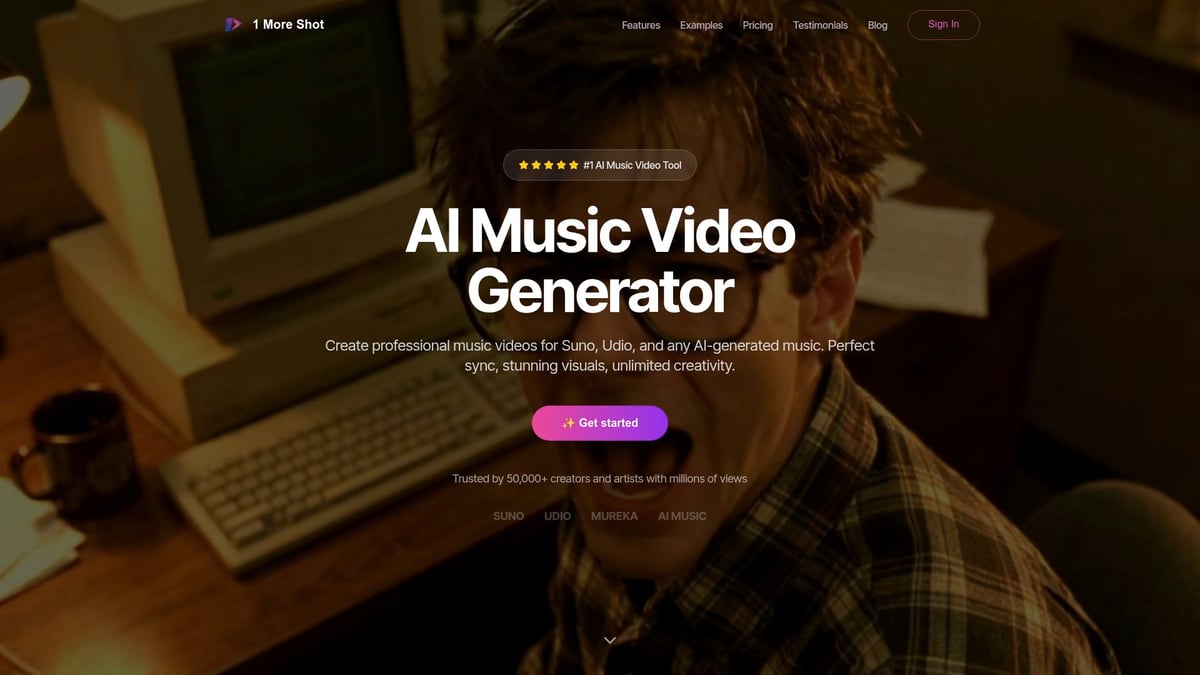
The editor provides real-time previews, frame-by-frame control, and a smart asset library for full creative flexibility. No technical skills are needed, making it accessible to indie musicians, creators, and agencies. Over 50,000 global creators use 1 More Shot to boost engagement and reach new audiences, with a free trial available for new users.
Step-by-Step Guide: Editing a Music Video with AI in 2026
Editing a music video with an ai music video editor in 2026 is a streamlined, creative process. Whether you are an indie musician, content creator, or marketer, the right workflow saves time and unlocks professional results.
This guide breaks down each stage, from prepping your assets to publishing and promoting your final video. With intuitive AI tools leading the way, anyone can produce visually stunning music videos that stand out across all platforms.

Step 1: Preparing Your Audio and Visual Assets
Begin your project by selecting the final version of your song. This can be an AI-generated track or a traditional recording. Choose music that represents your artistic vision, as the ai music video editor will build the visuals around it.
Next, gather all video clips, images, and visual elements you want to include. Many editors feature built-in AI asset libraries, making it easy to find stock footage or overlays that match your theme.
Organize your assets for multi-scene videos by labeling files and grouping them by section (intro, verse, chorus). Some AI editors can automatically extract highlights from live performances, saving you manual sorting.
- Finalize your audio track before starting
- Source high-quality visuals or use AI libraries
- Arrange assets for quick access during editing
By preparing your assets before uploading them to the ai music video editor, you ensure a smooth workflow and set the stage for creative editing.
Step 2: Uploading to Your AI Music Video Editor
With your assets ready, upload them to your chosen ai music video editor. Modern platforms accept a variety of formats, allowing you to import audio, video, and images in one streamlined process.
The AI immediately analyzes your music for tempo, mood, and song structure. This analysis powers instant suggestions for video layout, pacing, and transitions. Some editors even generate a visual storyboard based on your genre and lyrics, giving you a creative head start.
- Upload audio and visual files in compatible formats
- Let AI scan the track for beats and mood shifts
- Review automatic layout and pacing suggestions
For a deeper dive into uploading and setup, consider the How to Create AI Music Videos guide, which walks through these steps in detail.
Uploading assets is a simple but crucial step, as it activates the intelligent features of your ai music video editor and sets the creative process in motion.
Step 3: AI-Driven Editing and Customization
Now, the ai music video editor synchronizes your visuals with the audio. It automatically aligns clips to beats, lyrics, and musical transitions. You can use drag-and-drop tools to rearrange scenes, while AI suggests effects and transitions that fit your song’s style.
Customization is key. Adjust the timing of cuts, swap out visuals, or add overlays and text to reinforce your message. Real-time preview features let you see changes instantly, helping you fine-tune the video before exporting.
- Auto-sync visuals to complex rhythms and genre changes
- Tap into AI’s recommended transitions and effects
- Preview edits in real time and make adjustments quickly
This stage highlights the creative power of an ai music video editor, reducing trial and error while expanding your editing possibilities.
Step 4: Advanced Features—Lip-Sync, Avatars, and Special Effects
Take your project further with advanced AI features. Enable AI-powered lip-sync for vocal tracks, ensuring mouth movements match lyrics perfectly. Animated avatars and character swaps add a unique storytelling element, ideal for virtual performances or lyric videos.
Dynamic backgrounds and generative effects provide endless creative options. Many editors allow you to integrate AI avatars or swap characters for different scenes, giving your music video a futuristic edge.
- Activate lip-sync for seamless vocal visuals
- Add avatars for virtual band performances
- Apply generative backgrounds for a one-of-a-kind look
Leveraging these advanced tools within your ai music video editor allows for storytelling that resonates with modern audiences.
Step 5: Exporting and Optimizing for Platforms
Once your video is complete, choose your export format. The ai music video editor offers options for vertical (TikTok), square (Instagram), and horizontal (YouTube) layouts. AI auto-adjusts resolution, aspect ratio, and framing for each platform.
Export your video in full HD, with no watermarks, ready for instant sharing. Optimization ensures your music video looks sharp and professional, regardless of where it is posted.
- Select the right format for each social channel
- Let AI handle technical adjustments for quality
- Export quickly and save time on manual changes
This step ensures your content is platform-ready, maximizing reach and engagement.
Step 6: Publishing and Promoting Your Video
With your video exported, the ai music video editor can generate captions, hashtags, and social sharing suggestions tailored to your audience. Some editors include scheduling tools and built-in analytics to track your video’s performance across platforms.
Use AI-generated insights to refine your promotional strategy. Videos edited with AI often see higher engagement, helping you grow your fanbase and increase visibility.
- Add captions and hashtags automatically
- Schedule posts for optimal impact
- Monitor engagement and adjust your approach
Publishing and promotion complete the workflow, ensuring your music video reaches its full audience potential.
Creative Editing Techniques and Best Practices
Unlocking the full creative power of an ai music video editor requires more than just technical know-how. It demands an understanding of how AI tools can amplify storytelling, enhance visuals, and streamline workflows for musicians, creators, and marketers alike. Let’s explore the best practices and techniques to elevate your music videos with AI-driven editing.
Enhancing Storytelling with AI
A compelling ai music video editor brings your story to life by aligning visuals with the music’s emotion and narrative. AI analyzes lyrical themes, mood, and genre to suggest fitting visuals, transitions, and color palettes.
- Match video scenes to song lyrics for deeper narrative impact.
- Use AI to recommend color grading and transitions that reflect emotional highs and lows.
- Experiment with dynamic pacing to mirror tempo changes.
By integrating AI suggestions, creators form a stronger bond between audio and visual elements, resulting in more memorable and emotionally resonant videos.
Experimenting with Effects and Transitions
Modern ai music video editor platforms offer a range of automated and manual effects that help your videos stand out. AI-recommended transitions and generative effects can transform basic footage into captivating visual experiences.
- Try generative backgrounds for surreal or thematic visuals.
- Blend manual tweaks with AI automation for unique, signature looks.
- Preview effects in real time to see instant results.
These features encourage experimentation, allowing creators to push creative boundaries while maintaining professional quality.
Customizing for Your Brand and Audience
Personalization is key when using an ai music video editor. AI analyzes your branding and audience preferences to suggest edits that reinforce your identity.
- Add logos, color schemes, and signature overlays consistently.
- Use AI-driven insights to tailor content for specific audience segments.
- Create templates for recurring video styles.
| Branding Element | AI Customization Tip |
|---|---|
| Logo | Auto-placement for visibility |
| Color Palette | AI-matched to brand identity |
| Effects | Consistent across all videos |
This level of customization ensures your videos remain recognizable and on-brand across various releases.
Optimizing for Multiple Platforms
An ai music video editor simplifies the process of adapting content for different platforms like TikTok, Instagram, and YouTube. AI auto-crops, reframes, and optimizes aspect ratios to fit each channel’s requirements.
- Export vertical, square, and horizontal formats effortlessly.
- Rely on AI to maintain composition and visual quality across versions.
- Streamline multi-platform distribution for maximum reach.
For more strategies on creating shareable, viral-ready videos, check out these Viral AI Music Video Tips.
Collaboration and Feedback Loops
Collaboration is seamless with an ai music video editor, enabling teams and agencies to work together in real time. AI tools also provide instant feedback on edits and audience engagement.
- Share projects for live feedback and revisions.
- Use AI analytics to measure video performance.
- A/B test different edits to optimize for impact.
By leveraging collaboration features and AI-powered insights, creators can refine their videos for stronger audience connection and greater success.
Top AI Music Video Editor Tools in 2026
The ai music video editor landscape in 2026 is more dynamic than ever. With innovation accelerating, creators now have access to powerful platforms that automate, enhance, and reimagine the entire video production process. Whether you are an indie musician, content creator, or agency, choosing the right AI-powered tool can transform your workflow and elevate your visual storytelling.
Akool
Akool stands out as a leader in the ai music video editor space. This tool delivers robust audio-visual synchronization, using advanced AI to match video cuts and effects with music beats and transitions seamlessly.
Key features include:
- Real-time previews for instant feedback on edits
- AI-driven avatar integration for unique storytelling
- Multi-format export for TikTok, YouTube, and Instagram
- Automated platform optimization to ensure videos look their best everywhere
In 2024, Akool achieved a 90% beat detection accuracy, setting a new industry standard. Many artists use Akool to rapidly produce visually stunning videos, cutting production time without sacrificing creativity.
Other Leading AI Editors
Beyond Akool, several ai music video editor platforms have gained traction for their innovative capabilities. Sora specializes in generative visuals, making it ideal for electronic and experimental genres. Seedance offers intuitive voice cloning and smart asset libraries, while Kling is known for its advanced avatar creation and dynamic effects.
Adobe Firefly has also entered the field, introducing AI-driven video editing features that streamline creative workflows and support 4K upscaling. For a detailed review of these and other leading solutions, see Best AI Music Video Creation Tools.
These platforms push boundaries by combining automation with deep customization, empowering users at every skill level.
Comparison Table: Features, Pricing, Export Formats, User Ratings
To help you evaluate the best ai music video editor for your needs, here is a comparison of top tools:
| Editor | Key Features | Pricing | Export Formats | User Rating |
|---|---|---|---|---|
| Akool | Audio-visual sync, avatars | Subscription | Vertical, Square, Horizontal | 4.8/5 |
| Sora | Generative visuals, effects | Freemium | Vertical, Horizontal | 4.7/5 |
| Seedance | Voice cloning, asset library | Pay-per-use | Square, Horizontal | 4.6/5 |
| Kling | Advanced avatars, effects | Subscription | Vertical, Square | 4.7/5 |
| Firefly | AI workflow, 4K upscaling | Subscription | All major formats | 4.5/5 |
This table highlights the diversity in features, pricing, and export capabilities, making it easier to shortlist the right ai music video editor for your workflow.
Choosing the Right Tool for Your Needs
Selecting the optimal ai music video editor depends on several factors. Consider ease of use, creative flexibility, platform support, export quality, and your preferred music genre. Indie artists may benefit from tools with strong automation and asset libraries, while agencies might prioritize bulk export and collaboration features.
User satisfaction is high across top platforms, with an industry survey in 2025 reporting a 98% satisfaction rate. Agencies managing multiple artists often rely on scalable AI tools to streamline production and maintain consistency.
If you want a deeper dive into platform strengths and weaknesses, Best AI Music Video Creation Tools offers side-by-side comparisons and expert insights.
Integrations and Workflow Automation
Modern ai music video editor tools integrate seamlessly with DAWs, social platforms, and marketing suites. These integrations allow for batch video creation, automated publishing, and analytics-driven optimization.
For example, a music producer can automate video releases for an entire album, scheduling exports for different platforms in a single workflow. This not only saves time but also ensures each video is tailored for its target audience.
Real-time collaboration features further enhance team productivity, allowing creators and marketers to iterate quickly and respond to audience feedback.
The Future of AI Music Video Editing: Trends and Predictions for 2026 and Beyond
The ai music video editor landscape is on the brink of another revolution. As we move into 2026 and beyond, creators can expect smarter tools, deeper personalization, and an evolving set of creative and ethical challenges. Let’s explore the trends shaping the next era of music video editing.
Next-Gen AI Capabilities
By 2026, the ai music video editor will offer predictive editing, anticipating creative choices and suggesting edits before you even make them. Real-time generative visuals will sync seamlessly with live music, allowing for dynamic, adaptive performances on stage and online.
AI avatars are set to deliver personalized, interactive fan experiences, making every video unique. Imagine live concerts where visuals react instantly to audience energy or mood. Platforms like Adobe Firefly’s AI Video Editing Features are already showcasing these advanced capabilities, hinting at what’s just around the corner.
The Rise of Personalized and Immersive Videos
Personalization is a core focus for the modern ai music video editor. Tools increasingly tailor content for different audience segments, making each viewing experience more relevant and engaging.
360° and VR music videos are becoming mainstream, giving fans a sense of presence and control. According to recent surveys, 60% of Gen Z prefer interactive or immersive videos. Breakthroughs like VidMusician: AI Video-to-Music Generation Research demonstrate how AI can align video with music semantically and rhythmically, paving the way for hyper-personalized, immersive storytelling.
Ethical Considerations and Creative Ownership
With the growing power of the ai music video editor comes greater responsibility. As AI generates more of the creative process, questions about copyright, fair use, and creative credit become more complex.
Transparency is crucial. Creators and platforms must clearly attribute both human and AI contributions. This ensures artists retain ownership and audiences understand the origins of the content they enjoy. The industry is moving toward clearer guidelines, helping balance innovation with ethical standards.
Opportunities for Artists and Marketers
The ai music video editor opens up exciting new opportunities for both artists and marketers. AI-powered analytics provide deep insights into audience engagement, allowing for smarter targeting and campaign optimization.
New monetization models are emerging, from NFTs to exclusive, AI-personalized content. Indie artists are already seeing results, with some doubling revenue by leveraging AI-enhanced video campaigns. The ability to rapidly produce and adapt content gives creators a distinct edge in a crowded market.
Preparing for What’s Next
Staying ahead in the world of the ai music video editor requires a commitment to learning and adaptation. As tools evolve, so too must the skills of creators and marketers.
Embrace experimentation and keep up with new platforms and technologies. Building expertise in both creative direction and AI tool mastery will ensure you remain competitive. The future belongs to those who are ready to innovate, collaborate, and imagine new possibilities for music video creation.
As you’ve seen, AI music video editors are transforming the way we approach creativity, efficiency, and storytelling in 2026. With intuitive tools and breakthrough features, anyone can now craft professional-grade videos that truly capture their vision—no technical expertise required. If you’re ready to take your music content to the next level and turn your ideas into reality, there’s never been a better time to dive in. Explore what’s possible and see how easy it is to bring your music to life with powerful AI tools.
Start Creating Now