Ultimate Guide to Creating Video From AI in 2026
Imagine effortlessly crafting a professional-quality video from ai, all within minutes and without the need for cameras or a full production team. This guide is your key to unlocking the potential of AI-powered video creation in 2026, whether you are a marketer, educator, or musician.
You will discover a step-by-step roadmap, exploring the evolution of AI video, essential tools and models, practical workflows, creative strategies, and emerging trends. Get ready to transform your ideas into compelling visuals with actionable advice and the latest advancements in AI video technology.
The Evolution of AI Video Creation: 2020–2026
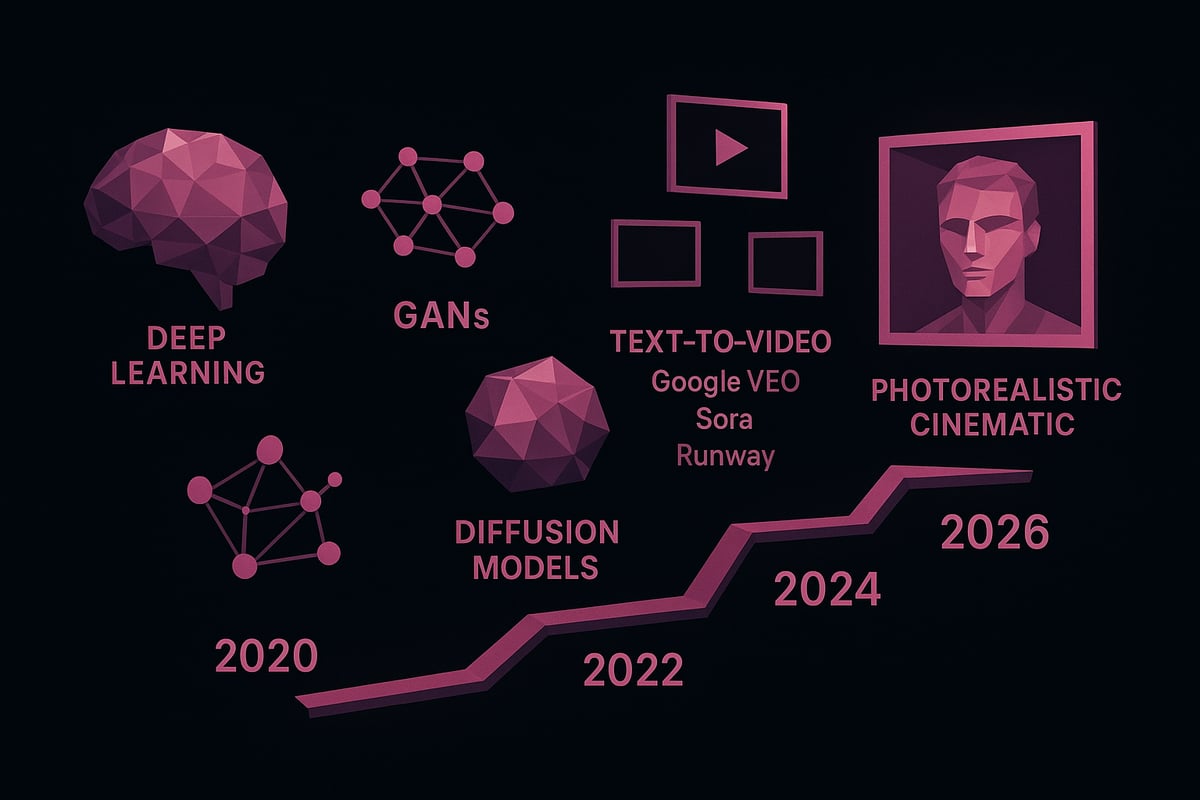
The journey of video from ai has been nothing short of revolutionary between 2020 and 2026. In just a few years, advances in deep learning and generative adversarial networks (GANs) have transformed how creators approach video content. Early efforts focused on simple animations or basic scene generation, but the arrival of diffusion models marked a turning point, rapidly boosting realism and creative possibilities.
Milestones in AI Video Technology
From 2020 to 2026, the landscape of video from ai has been shaped by several groundbreaking developments. Deep learning algorithms laid the groundwork, enabling machines to interpret and generate moving images with increasing sophistication. GANs soon followed, allowing for realistic video synthesis that blurred the line between authentic footage and AI creation.
The introduction of diffusion models brought a new era of clarity and detail. These models powered tools like Google VEO, Runway, and Sora, making text-to-video and image-to-video generation accessible to anyone. By 2026, platforms such as ImagineArt evolved from basic template-based systems to engines capable of advanced style transfer and multimodal input, where users could blend text, images, and even audio to craft rich, unique videos.
A notable shift emerged: the democratization of video from ai. No-code interfaces made high-quality video creation possible for users of all skill levels. According to ImagineArt, over 300,000 creators had adopted AI video tools by 2026. For a deeper look at these transformative trends, you can explore AI video creation trends 2025.
Impact on Content Creation and Industries
These advances in video from ai have disrupted nearly every content-driven industry. In marketing, brands began producing professional-quality commercials in minutes, not days, leading to a surge in ad output and engagement. Entertainment, education, and social media followed suit, with micro-influencers and educators leveraging AI video tools to reach wider audiences with personalized, impactful content.
User-generated content exploded as creators discovered the efficiency and creativity unlocked by video from ai. Cost and time savings became significant factors, making high-end production accessible to small businesses and solo creators. Brands reported dramatic increases in campaign variations and A/B testing, thanks to bulk AI video generation.
However, the rapid adoption of video from ai also brought ethical questions to the forefront. Deepfakes raised concerns about authenticity and misinformation. Copyright and attribution issues became more complex, urging creators and platforms to develop guidelines and best practices for responsible use.
Essential AI Video Creation Tools and Models in 2026
The landscape for video from ai has dramatically transformed by 2026, offering creators more powerful and accessible tools than ever before. With a surge of innovation, these platforms enable anyone to generate professional-grade videos quickly, efficiently, and with remarkable customization. Understanding which tools to use is the first step to mastering video from ai creation workflows.

Leading AI Video Generators
Choosing the right platform is crucial for making the most of video from ai. In 2026, several leaders stand out, each offering distinct strengths:
- ImagineArt: Renowned for its user-friendly interface and broad style options, ImagineArt allows creators to start with text, images, or video clips.
- Google VEO 3: Known for cinematic storytelling and high-resolution outputs, VEO 3 excels at narrative-driven projects.
- Pixverse AI (V5): Specializes in animated and stylized scenes, ideal for explainer videos and creative content.
- Sora AI (2nd Gen): Focuses on photorealism and smooth motion, perfect for commercials and cinematic sequences.
- Runway, Kling AI, Hailuo AI, Seedance AI: Each offers unique features, from real-time previews to advanced motion transfer.
To help compare these platforms, consider the following table:
| Platform | Key Strengths | Output Quality | Customization | Use Case Example |
|---|---|---|---|---|
| ImagineArt | Multi-mode input, styles | High | Extensive | Brand campaigns |
| Google VEO 3 | Cinematic, narrative | Ultra-high | Advanced | Storytelling |
| Pixverse V5 | Animation, speed | High | Moderate | Explainers |
| Sora 2 | Photorealism, transitions | Ultra-high | Advanced | Ads, music videos |
By 2026, over 300,000 creators are using video from ai tools like these, reflecting their widespread adoption. For a deeper look at the top platforms, see this Best AI video creation tools guide.
Key Features and Innovations
The evolution of video from ai platforms is marked by a suite of advanced features designed to simplify and enhance the creative process. Most notable are:
- Multi-mode input: Start projects using scripts, images, existing video, or even audio prompts.
- AI prompt enhancers: Improve storytelling, scene composition, and visual coherence.
- Audio sync and lip-sync: Essential for music videos, dialogue, and explainer content.
- Style options: Choose from cinematic, animated, photorealistic, or surreal looks.
- Video extenders and motion transfer: Create longer, more dynamic clips with seamless scene transitions.
- Bulk video generation: Produce multiple versions for A/B testing, campaigns, or multilingual needs.
- Asset libraries and organization: Efficiently manage video, audio, and image assets for reuse.
- Video quality enhancers: Boost color, clarity, and stabilization for professional results.
Using video from ai tools in 2026 means leveraging these innovations for both speed and creativity. For example, Pixverse V5 supports real-time animation previews, while Sora 2 enables cinematic motion and expressive lighting. ImagineArt’s prompt enhancer ensures your ideas translate accurately into visuals. With these features, video from ai content can now rival traditional production in both quality and impact.
Pricing, Access, and Free Options
Affordability and accessibility are central to the popularity of video from ai. Most leading platforms, like ImagineArt, offer tiered subscription models:
- Free: Limited video generations per month, basic export options.
- Basic: More credits, higher resolution, access to core features.
- Standard: Up to 12,000 video generations per year, advanced styles, watermark-free downloads.
- Ultimate/Creator Plans: Unlimited generations, priority support, team collaboration.
Credit-based models allow users to pay as they go, while unlimited options cater to power users. Platforms support web, mobile, and API integrations, making video from ai available to everyone, from solo creators to large enterprises.
Free trials and entry-level plans ensure newcomers can experiment without risk. By 2026, standard users generate thousands of videos annually, benefiting from instant HD exports and organized asset libraries.
Choosing the right pricing tier for your video from ai needs depends on project scale, required features, and intended distribution. Whether you’re producing a single music video or managing a global campaign, these flexible options make AI-powered video creation more accessible than ever.
Step-by-Step Workflow: Creating Video from AI in 2026
Unlocking the full potential of video from ai requires a clear, methodical process. Whether you are a marketer, educator, or content creator, following a step-by-step workflow ensures you achieve stunning results with minimal effort. Let us break down the essential phases for seamless AI video production.
Planning and Preparing Your Content
Success with video from ai begins long before you hit “generate.” Start by defining your video’s purpose. Is it a product ad, a music video, or educational content? Clarify your target audience and the desired outcome.
Next, gather all necessary source materials. This could include text prompts, detailed scripts, reference images, audio clips, or even short video snippets. The more specific and organized your input, the better your results.
Crafting effective AI prompts is crucial. Focus on clarity and detail. Instead of “man walking,” try “A knight rides through a fiery landscape at sunset.” Use style instructions, such as “cinematic,” or “animated,” to guide the AI’s creative direction.
Consider leveraging AI prompt enhancers, which help refine and expand your input for richer storytelling. These tools can transform a simple idea into a vivid, memorable sequence.
For a detailed, hands-on approach, you can explore the How to create video from AI guide, which covers prompt writing, asset collection, and creative planning in depth.
Selecting the Right AI Video Generator
Choosing the ideal platform for video from ai depends on your project goals and technical needs. Start by reviewing available AI video generators. Platforms like ImagineArt, Google VEO 3, Sora AI, and Runway each offer unique strengths—some excel at text-to-video, while others focus on animation or photorealism.
Key criteria to consider include output quality, speed, customization options, and ease of use. For marketing campaigns, look for tools with robust branding features and rapid export. For storytelling, prioritize platforms with advanced scene transition and character consistency.
Accessibility is also vital. Some tools offer mobile apps and APIs, making it easier to integrate video from ai into your broader workflow. Additionally, ensure your chosen platform supports the export formats you need, such as vertical for TikTok or horizontal for YouTube.
Compare subscription tiers and free trial options, especially if you are just starting. Many platforms provide entry-level plans, letting you experiment without commitment.
Customizing and Generating Your Video
Once you have selected your platform, it is time to bring your video from ai to life. Begin by uploading your assets—text, images, audio, or existing video clips. Most AI tools allow you to set the overall style, such as “cinematic,” “animated,” or “photorealistic,” giving your project a distinct look.
Fine-tune the motion and emotional direction of your scenes. For example, you can instruct the AI to create a “tense” or “romantic” atmosphere. Use built-in features to ensure character consistency and smooth scene transitions, preventing jarring shifts in tone.
Many advanced generators offer real-time previews and editing. Adjust elements on the fly, test different prompt variations, and review interim results. AI-driven lip-sync and audio sync features are invaluable for music videos or dialogue-heavy content, ensuring audio matches visuals with precision.
If you need to generate multiple versions, use bulk generation options. This is especially useful for A/B testing or producing campaign variations. Organize your assets with the platform’s library tools, making it easy to reuse elements in future projects.
Exporting and Sharing
After generating your video from ai, the next step is exporting and sharing your work. Leading platforms support a range of resolutions, from 720p to 1440p or higher, as well as multiple aspect ratios like vertical, horizontal, and square. This flexibility ensures your content looks sharp across all social media and streaming platforms.
Instant HD export and watermark-free downloads are now standard on most professional plans. Some tools even allow direct sharing to TikTok, YouTube, or Instagram, streamlining your workflow.
Efficient asset library management is essential for ongoing projects. Store your videos, images, and audio files in organized folders, making it easy to access and repurpose content as needed. This approach saves time when scaling up your video from ai production.
If you plan further editing, download raw files in your preferred format. This gives you maximum flexibility for post-production tweaks or collaboration with other team members.
Troubleshooting and Optimization
Even with advanced AI, creating video from ai can involve challenges. Common issues include prompt misinterpretation, style mismatches, or audio sync errors. Do not get discouraged—these are often easy to fix with a few adjustments.
Use video quality enhancers built into your platform to improve color, clarity, and stabilization. If the AI struggles with your prompt, try rephrasing for greater specificity or add style instructions. Manual tweaks, such as adjusting timing or replacing assets, can resolve most problems.
Adopt best practices for achieving cinematic, brand-ready results. Preview your video from ai before exporting, check for consistency, and solicit feedback from peers. Over time, you will develop an intuition for prompt engineering and creative direction, making each project smoother and more impactful.
A troubleshooting table can be helpful:
| Issue | Solution |
|---|---|
| Prompt misinterpretation | Rewrite with clearer, specific language |
| Style mismatch | Add or adjust style instructions |
| Audio sync errors | Use built-in sync tools, adjust manually |
| Quality issues | Apply video enhancers, re-export |
With practice, optimizing your video from ai becomes second nature, letting you focus on creativity and storytelling.
Creative Strategies for AI Video Success
Unlocking the full potential of video from ai requires more than just selecting the right tool. Success hinges on creative strategies that blend compelling storytelling, technical enhancement, scalable workflows, and ethical discipline. Let’s explore the essential techniques to maximize your results with video from ai.
Storytelling and Scripting with AI
Effective video from ai starts with a well-structured narrative. Begin by outlining a clear beginning, middle, and end. This helps AI models interpret your story flow and maintain coherence.
Use descriptive prompts to guide the AI’s visual choices. For example, inputting “A product launch unfolding in a futuristic city at dusk” generates dynamic scenes with emotional impact. Incorporate visual metaphors and expressive language to elevate your message.
AI avatars can personalize tutorials, product demos, or brand storytelling. Prompt engineering is crucial—experiment with variations to achieve nuanced, expressive scenes. A thoughtful script combined with precise prompts ensures your video from ai resonates with audiences.
Visual and Audio Enhancement
To make your video from ai truly stand out, align visuals seamlessly with music, voiceover, or ambient audio. Select style presets that match your desired mood, such as cinematic, animated, or surreal.
Leverage AI-driven color grading, lighting, and motion effects to enhance atmosphere. Adjust facial expressions and lip-sync for realism, especially in dialogue-heavy scenes. For music videos, synchronize visuals to rhythm and tempo, creating a cohesive viewer experience.
Apply video from ai quality enhancers to improve color, clarity, and stabilization. These enhancements ensure your content is polished and engaging, regardless of platform or audience.
Scaling Content Production
One major advantage of video from ai is the ability to scale content efficiently. Use bulk video generation to produce multiple variations for A/B testing or campaign personalization. Organize assets in AI-sorted libraries for easy reuse and adaptation.
Collaborative features allow teams to review drafts, provide feedback, and streamline production. According to ImagineArt, brands now generate up to 10 times more video content using these strategies. For practical workflows and detailed tips, see Using AI to create videos.
Leverage API integrations to automate repetitive tasks and publish directly to platforms like TikTok, YouTube, or Instagram, maximizing your video from ai output.
Ethical and Branding Considerations
As video from ai becomes mainstream, maintaining originality and ethical standards is essential. Avoid deepfake misuse by ensuring transparency with your audience about AI-generated elements. Always credit sources and respect copyright when incorporating third-party material.
Consistency is key for brand identity—use standardized templates, color schemes, and AI avatars across all videos. Develop internal guidelines to prevent unintentional misrepresentation or bias in your content.
Stay informed about evolving regulations and best practices. By prioritizing ethics and brand integrity, your video from ai will earn trust and foster long-term engagement.
Industry Applications: How AI Video is Transforming Sectors
AI-powered video from ai is revolutionizing every major sector, making high-impact video creation accessible, fast, and cost-effective. Let us explore how different industries are harnessing these tools to drive innovation and results.
Marketing and Advertising
In marketing, video from ai enables brands to move from concept to finished ad in minutes. AI platforms automate scriptwriting, storyboarding, and video assembly, allowing rapid testing of creative ideas.
- Personalization at scale: AI tailors video ads for specific demographics.
- Brands leverage Google Vids AI Video Creation for cinematic, platform-optimized campaigns.
- Case study: A jewelry brand used AI-generated videos to boost ad output and engagement, resulting in higher sales.
Performance analytics from these tools help marketers optimize campaigns, while the ability to generate multiple variants enhances A/B testing.
Education and Training
Education is being transformed by video from ai, making learning more engaging and accessible. AI avatars deliver explainer videos, tutorials, and interactive modules in multiple languages.
- Rapid creation of on-brand, curriculum-aligned content.
- Accessibility features, such as automatic subtitles and sign language avatars.
- Teachers use AI to generate training materials without filming, saving time and resources.
Institutions are now able to scale video content, ensuring consistent messaging and improved learner outcomes.
Entertainment and Social Media
The entertainment world is embracing video from ai for content creation on platforms like TikTok, Instagram, and YouTube. AI tools empower creators to produce short-form videos, experimental storytelling, and authentic user-generated content.
- Runway’s Gen-4 AI Video Model enables text-to-video generation with cinematic quality.
- Micro-influencers and artists use AI to express unique visions, increasing their reach.
- Data shows over 50,000 creators make music and social videos with AI.
Seamless integration with social platforms makes sharing and iteration effortless.
Music and AI-Driven Music Videos
Artists now rely on video from ai to visualize their music. AI synchronizes visuals to rhythm, mood, and lyrics, producing immersive music videos without the need for large crews.
- Automatic lip-sync and facial animation for realism.
- Visual effects and style transfers to match song themes.
- Example: Musicians transform AI-generated tracks into engaging video performances.
This democratizes music video production, opening creative opportunities for independent artists.
Corporate and Internal Communications
Corporations use video from ai to streamline onboarding, HR training, and internal announcements. AI ensures brand consistency and fast content updates.
- Automated video production for new policies, benefits, or company news.
- Centralized asset libraries and templates for efficiency.
- Teams collaborate and share drafts securely within AI platforms.
The result is more effective communication, reduced costs, and a unified brand voice across all internal media.
The Future of AI Video Creation: Trends and Predictions for 2026 and Beyond
As we look ahead to 2026 and beyond, the landscape of video from ai is set to transform at an unprecedented pace. Breakthroughs in artificial intelligence, shifting creator needs, and emerging technologies are converging to redefine what is possible in video from ai production. Let us explore the key trends and predictions shaping the future of this dynamic field.
Advancements in Generative AI Models
The next era of video from ai will be defined by leaps in generative modeling. Diffusion and transformer-based models are expected to deliver hyperrealistic visuals, enabling creators to generate lifelike scenes and characters with minimal input. Real-time video from ai generation will become standard, allowing for instant previews and live content creation.
Multi-modal AI will further enhance the process, seamlessly blending text, images, video, and audio to create rich, dynamic outputs. Platforms like Google VEO are already moving from static image generation to dynamic, story-driven video from ai. Open-source innovations, such as the Open-Sora Video Generation Model, are making cutting-edge tools more accessible and efficient than ever before.
Democratization and Accessibility
Democratization is a defining trend in video from ai. No-code and low-code platforms are lowering entry barriers, empowering individuals and small teams to produce professional-quality video from ai without advanced technical skills. Mobile-first tools are making video from ai creation possible anywhere, at any time.
Global adoption is accelerating, with more than 300,000 creators expected to use video from ai tools by 2026. Flexible pricing, free trials, and API integrations are expanding access for educators, marketers, and indie creators. As a result, video from ai is becoming a universal medium for storytelling and communication.
Ethical, Legal, and Social Implications
With the rise of video from ai comes heightened scrutiny around ethics, legality, and social impact. Regulatory bodies are introducing new rules to address concerns about deepfakes, misinformation, and AI-generated media. Authenticity verification and watermarking solutions are being developed to help audiences trust video from ai content.
Copyright, ownership, and fair use debates are intensifying as AI-generated videos blur the lines between original and derivative works. Responsible creators are adopting best practices, such as transparent disclosure and adherence to licensing standards, to ensure that video from ai remains a force for good.
Integration with Other Technologies
The integration of video from ai with other digital technologies is unlocking new creative possibilities. AI-generated video is being used in AR and VR experiences, making content more immersive and interactive. API-driven workflows enable brands to automate video from ai production and personalize content at scale.
Unified frameworks, like the UniVA: Universal Video Agent, are streamlining the process of video understanding, editing, and generation. Cross-platform content repurposing is making it easier to distribute video from ai across multiple channels, maximizing reach and engagement.
Opportunities and Challenges Ahead
The future of video from ai presents both exciting opportunities and significant challenges. Scaling content production while maintaining high quality will require ongoing innovation and investment. Creators must stay agile, learning new tools and techniques to remain competitive in the evolving landscape of video from ai.
Community and collaboration will play pivotal roles, as networks of AI video creators share knowledge and support each other. By embracing responsible practices and continuous learning, the next generation of creators will shape a vibrant, ethical, and inclusive future for video from ai.
You’ve just explored how AI video creation has evolved, discovered the latest tools, and learned step-by-step strategies to bring your ideas to life. Whether you’re a musician ready to visualize your next track or a marketer aiming to streamline content production, the power of AI is now truly accessible to everyone. If you’re inspired to put these insights into action and create your own professional quality music videos, there’s no better time to get started. Experience it for yourself—Start Creating Now and see what you can achieve with the latest AI technology.