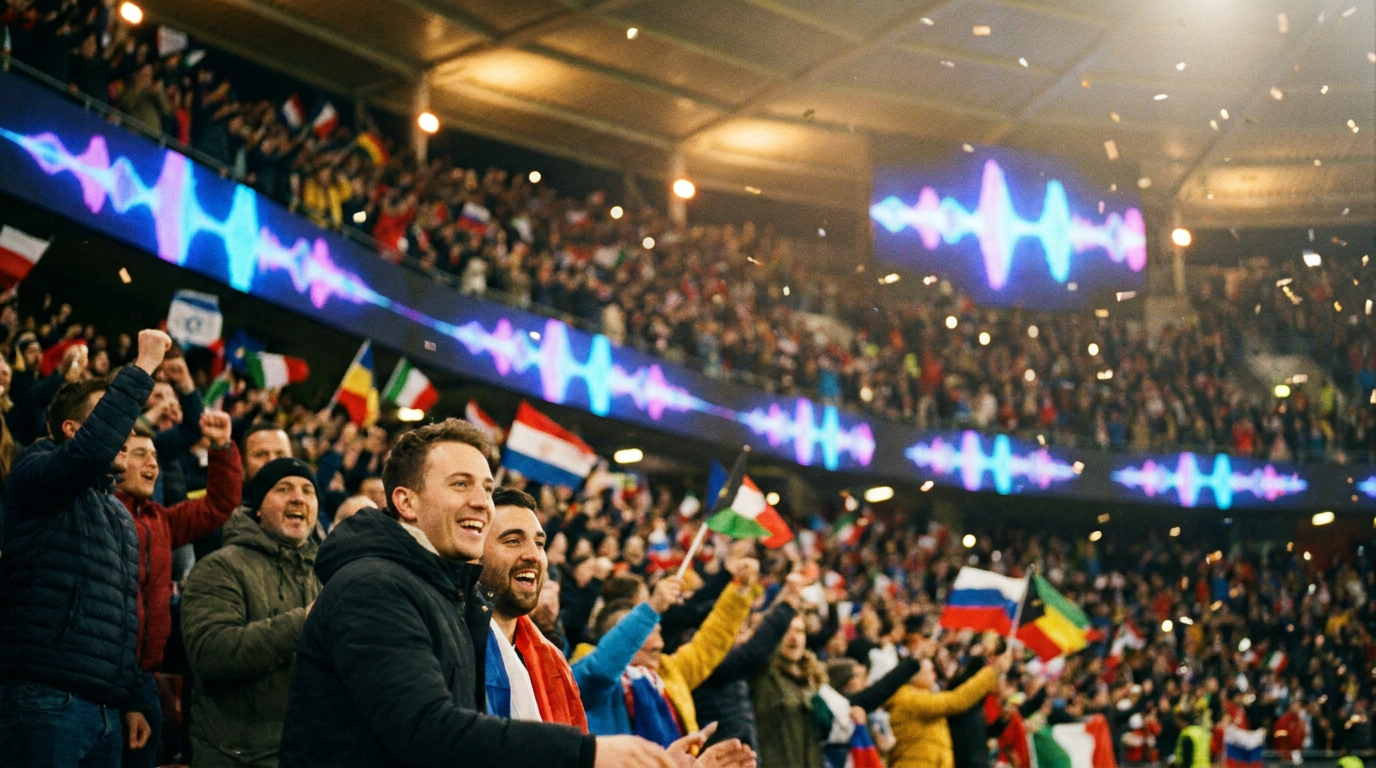
AI World Cup Songs Are Beating FIFA's Own Anthems
The 2026 FIFA World Cup just kicked off across the US, Canada, and Mexico — and something bizarre is happening on the soundtrack front. The most exciting music around the tournament isn’t coming from Shakira or the FIFA-commissioned Jelly Roll and Carin Leon anthem. It’s coming from anonymous creators armed with AI music generators and a lot of national pride.
Fan-made football anthems are raking in millions of plays on social media, rivaling FIFA commissions from musicians — and as these AI-generated tunes go viral across YouTube, TikTok, and Instagram, experts say the trend raises serious questions about song ownership, artist compensation, and the valuation of human creativity.
Welcome to the first major cultural moment where AI-generated music isn’t just a curiosity — it’s the soundtrack to the biggest sporting event on Earth.
How “Imbattables” Started a Global Chain Reaction
The trend appears to have started with a song dedicated to the French team, “Imbattables” (French for “unbeatable”), released in February by artist Crystalo, who is listed on Spotify as France’s “premier AI musical creator.” The song features a call-and-response listing the names of Kylian Mbappé and other star French national players.
It’s catchy. It’s chantable. And it spread like wildfire.
A Brazilian anthem followed with a similar name-chanting format and a trending phonk melody that producer Guilherme Maia (artist name M4IA) said he created by layering together different elements he had put together with AI. Tracks for top sides Portugal, Argentina, and Germany, as well as many others, soon sprang up across platforms, garnering massive praise from fans.
Each follows a similar formula: a near-identical beat, with swapped-out languages, team names, and players. It’s like a template that went global — same energy, different flags. And fans are eating it up.
When AI Fans Outshine the Official Anthem
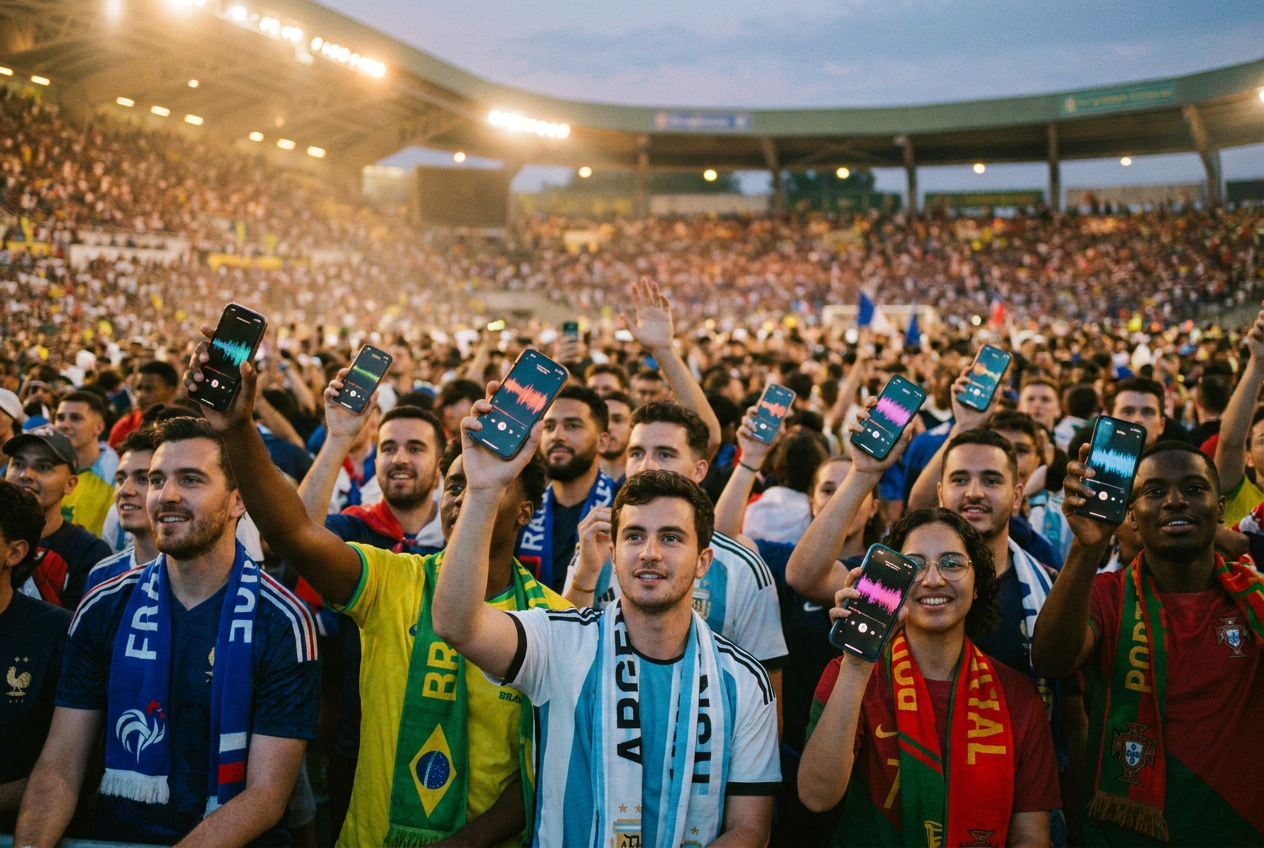
Here’s where things get really interesting. FIFA went the traditional route, commissioning official anthems from established artists. But many users do not appear to mind about the AI origins, with some even showing a preference for the AI-generated songs over the official anthem that football’s world governing body FIFA commissioned from musicians Jelly Roll and Carin Leon.
A highly anticipated World Cup track from Shakira was also released, but the fad of AI fan songs was still drumming up excitement on social media for the tournament.
Think about that for a second. FIFA spent real money commissioning real artists to create the tournament’s musical identity. And anonymous creators with AI tools are getting more organic engagement. That’s not a glitch in the matrix. That’s a signal.
The reason is pretty simple: these AI fan songs feel personal. They name-check your team’s actual players. They’re in your language. They’re designed for the exact context of chanting, sharing, and short-form video. They’re not trying to be universal pop anthems — they’re trying to be your anthem.
The Imperfect Charm (and the Obvious Tells)
The AI songs aren’t flawless, and that’s part of the story. A fan-made World Cup song for Portugal was sung with a Brazilian accent, while a Colombian version read James Rodriguez’s first name with an English rather than Spanish pronunciation.
These gaffes reveal AI’s ongoing struggle with cultural nuance. Brent Keogh, a music and sound design lecturer at the University of Technology Sydney, noted that AI often falls short when recognizing cultural nuances such as accents, which may not be picked up unless the producer is a native speaker. “It’s just increasingly common that people will go ahead and put content out that doesn’t have that really basic quality control,” he said. “That can be just amusing, but it can also be seriously offensive in certain cultural contexts.”
And yet? Some commentators are saying, “I hate the idea of AI, but wow, this is a banging tune.” That tension — between principle and pleasure — is basically the defining emotion of AI music in 2026.
What This Means for Musicians (Not Just Football Fans)
If you’re a musician reading this and thinking “cool, but I don’t make football songs,” slow down. The World Cup AI song phenomenon isn’t just about sports. It’s a masterclass in what happens when AI-generated music meets a massive, emotionally charged moment. And there are lessons here for every genre.
1. Event-Driven AI Content Is Insanely Powerful
The World Cup songs work because they’re hyper-contextual. They arrive at exactly the right moment for a specific audience. Musicians can apply this same logic: create AI-assisted visuals and content tied to cultural moments that matter to your audience. Whether that’s festival season, award shows, or album anniversaries — timeliness trumps perfection.
If you’re looking for ways to ride cultural moments with AI visuals, our complete guide to AI music videos breaks down the full workflow.
2. The Visual Layer Is the Missing Piece
Most of these World Cup AI songs exist as audio tracks with basic static artwork or simple lyric videos. That’s a huge missed opportunity. Imagine combining these chant-style anthems with AI-generated footage of stadiums, celebrations, flags, and crowd energy. The visual gap is where smart creators can differentiate.
This is exactly the kind of scenario where an AI music video generator shines. If you can turn a track into a visual experience in minutes, you’re instantly ahead of every creator posting a static Spotify screenshot. Learn the full process in our guide on how to make an AI music video.
3. Localization Is the New Virality
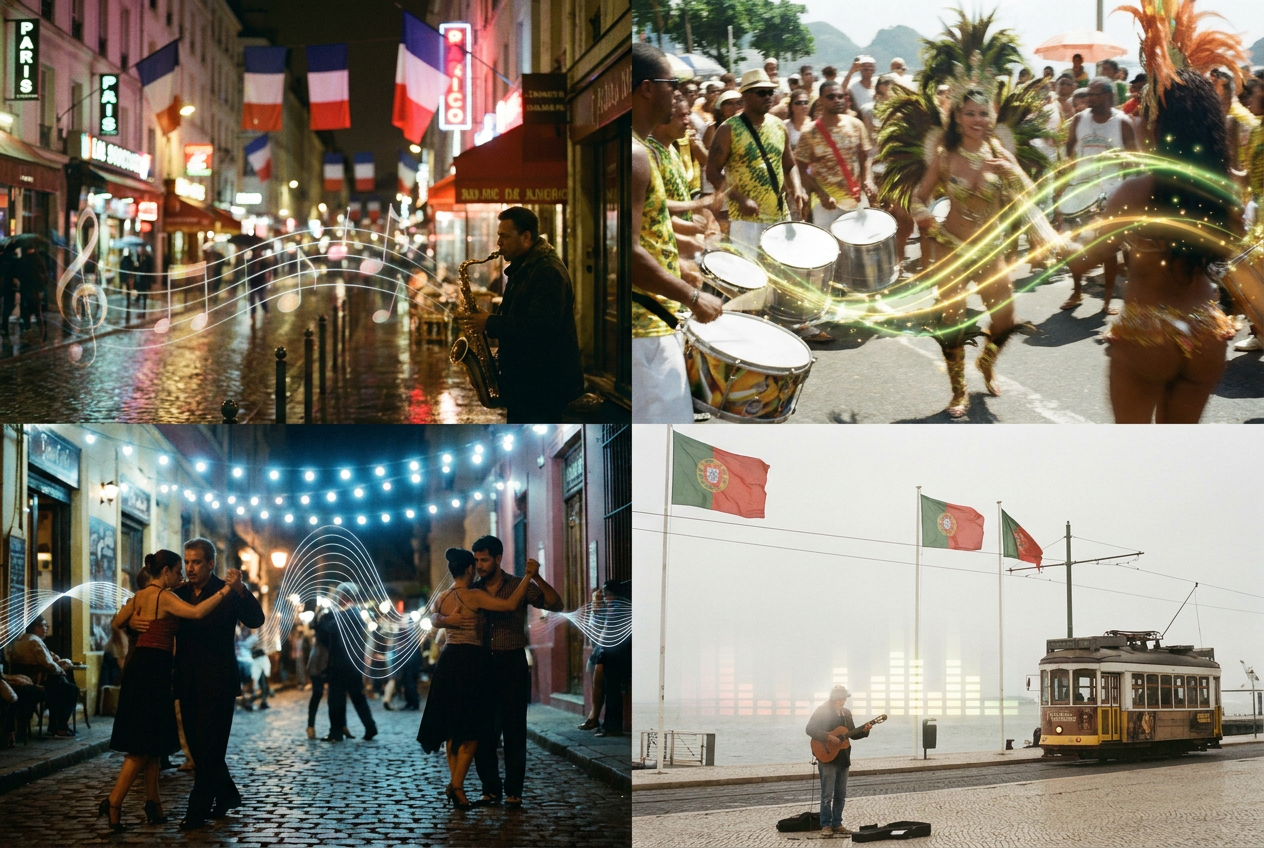
Fans are experimenting with styles like EDM, Afrobeat, Latin pop, trap, cinematic orchestral music, and stadium chants. AI-generated songs in Spanish, English, Arabic, Portuguese, French, and other languages help creators target global supporter communities.
This multi-language, multi-style approach isn’t just a World Cup thing. It’s a preview of how music marketing will work across all genres. Artists making Latin music or K-Pop can already use AI to create localized visual content for different fan bases around the world.
The Ethics Question Nobody Wants to Answer
M4IA stressed that he built his Brazilian track on his own and used AI as an assistant when creating certain elements, rather than asking a music generation tool like Suno to create a song with one prompt. But Jason Palamara, an assistant professor of music technology at Indiana University, noted that with the way the models exist, there is a lack of clarity over how artists are credited if their copyrighted work is used to train them.
This is the uncomfortable core of the whole phenomenon. As one industry voice put it, “knowing what goes into a generative output, like a World Cup fan song, is the thorny Rubicon that the music industry has to cross now.”
Morgan Hayduk, co-CEO of music rights software company Beatdapp, said that listeners enjoying the World Cup fan songs may not be seeking artistic complexity. “There seems to be a cohort of people who actually don’t care,” Hayduk observed. “They like the music, and they like the back story that it came from a large language model and not a songwriter or a group.” He said that quick-fix songs that can be chanted by fans are a clear use case for AI-generated music in its current stage.
That’s a remarkable admission from someone in the rights industry. There’s a growing audience that prefers the AI origin story. The mythology of “a fan made this with AI for their team” is itself part of the appeal.
The Bigger Picture: 20,000 AI Tracks Per Day
These World Cup songs aren’t happening in a vacuum. Research by streaming service Deezer and Ipsos found that 97 percent of listeners could not tell the difference between AI-generated and human-made music. Streaming services are seeing tens of thousands of new fully AI-generated tracks uploaded daily — according to The Associated Press, up to 20,000 new AI tracks per day on Deezer alone, representing roughly 18 percent of uploads.
Meanwhile, Suno just raised a $400 million Series D round at a $5.4 billion valuation — only seven months after raising at $2.45 billion — underscoring that investors are confident in the company’s future despite the litigation it faces.
The infrastructure for AI-generated music is scaling at a pace that makes the World Cup trend feel like a warm-up act. Every major cultural event from here on out will likely have its own wave of AI-generated music and video content.
How to Ride the Wave (Without Getting Washed Away)
Whether you’re a musician, a content creator, or just someone who wants to make something cool for their country’s World Cup campaign, here’s the playbook:
Start With the Song
Use AI music tools to generate or augment a track that fits the vibe — high energy, chantable, culturally specific. Think stadium anthems, not studio ballads.
Add the Visual Layer
This is where you stand out. A track with a compelling AI music video gets 10x the engagement of audio alone. EDM-style visuals with stadium energy, pop aesthetics with flag-waving crowds, or hip-hop swagger with street celebrations — match the visual style to the vibe.
Move Fast
Cultural moments have a short shelf life. The beauty of AI tools is that you can go from idea to finished video in hours, not weeks. That speed is the entire competitive advantage.
Be Transparent
The World Cup AI songs that are getting the most respect are the ones that are upfront about their process. M4IA was open about using AI as an assistant when creating certain elements. Honesty builds trust, and in a world where 97% of listeners can’t tell the difference anyway, transparency is a feature, not a bug.
The First AI Soundtrack of a Global Event
What we’re witnessing right now — in real time — is the first World Cup where AI-generated music is a genuine part of the cultural conversation. Not as a novelty. Not as a threat. As content that millions of people are actively choosing over officially commissioned alternatives.
As one lecturer noted, AI tools could play a role in “democratising” football songs, particularly if fans were disappointed with official releases. That “democratization” is exactly what’s happening — and it extends far beyond football.
For musicians, the lesson is clear: the tools exist to create culturally relevant, visually stunning content at the speed of culture. The artists who figure out how to pair AI-generated (or AI-assisted) music with compelling visuals will own the next wave — whether the moment is the World Cup, festival season, or your own album drop.
The soundtrack of 2026 isn’t being written by record labels alone anymore. It’s being written by fans, creators, and artists who move fast and make things that feel right in the moment.
Ready to turn your next track into a visual experience that matches this energy? Try OneMoreShot.ai and create a music video in minutes — no film crew, no six-week timeline, no FIFA budget required.