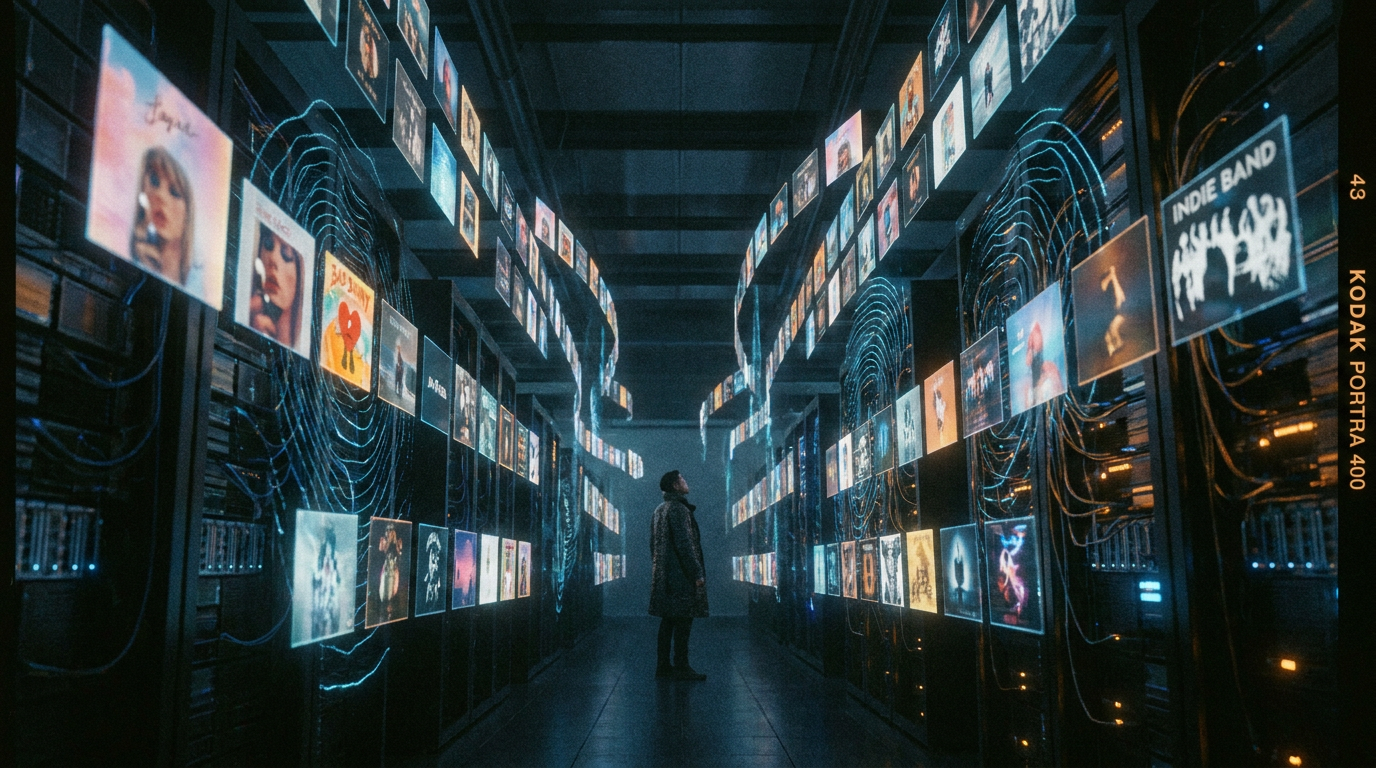
21 Million Songs Exposed in AI Training Data
Yesterday, The Atlantic dropped a bomb on the AI music industry. And this time, the evidence comes with receipts.
The publication released four searchable databases of music that has been used to train AI models.
The scope is staggering: 12 million tracks in one database, 9 million in another, and the two final ones each containing about 100,000 songs. That’s over 21 million recordings — and for the first time, anyone can search them.
If you’re a musician — whether you’ve got 100 streams or 100 million — there’s a real chance your work is sitting in one of these datasets right now. And you almost certainly didn’t give permission.
Here’s what this means for you, for the AI music industry, and for the future of making music videos.
What The Atlantic Actually Found
The investigation was led by Atlantic staff writer Alex Reisner, who identified “four giant datasets of songs that are being shared within the AI-development community.” Note the present tense there — “are being shared.” Not “were.” Not “used to be.” These datasets are actively circulating right now.
The report pinpointed four training datasets consisting of north of 21 million recordings between them. The second-largest dataset was compiled by AI researchers associated with Sleeping AI; German AI non-profit LAION put out the biggest of the datasets.
The investigation gives further context to just how much copyrighted music was used for AI training, including hit tracks from Taylor Swift and Bad Bunny. But the blockbuster names are almost beside the point. The truly revealing detail is what else is in there.
The training tracks include releases from indie artists who are already litigating against Suno and Udio. Many of the relevant professionals have impressive streaming followings, but the two biggest datasets also contain years-old releases with around 100 streams — great music that one would almost have to seek out for its technical characteristics. The datasets were assembled or bolstered in the not-so-distant past, as they include projects that dropped in late 2024.
That last part is the kicker. These aren’t dusty archives of forgotten music. They’re being actively curated and updated. Someone is choosing your songs — sometimes because they’re technically excellent, not because they’re famous.
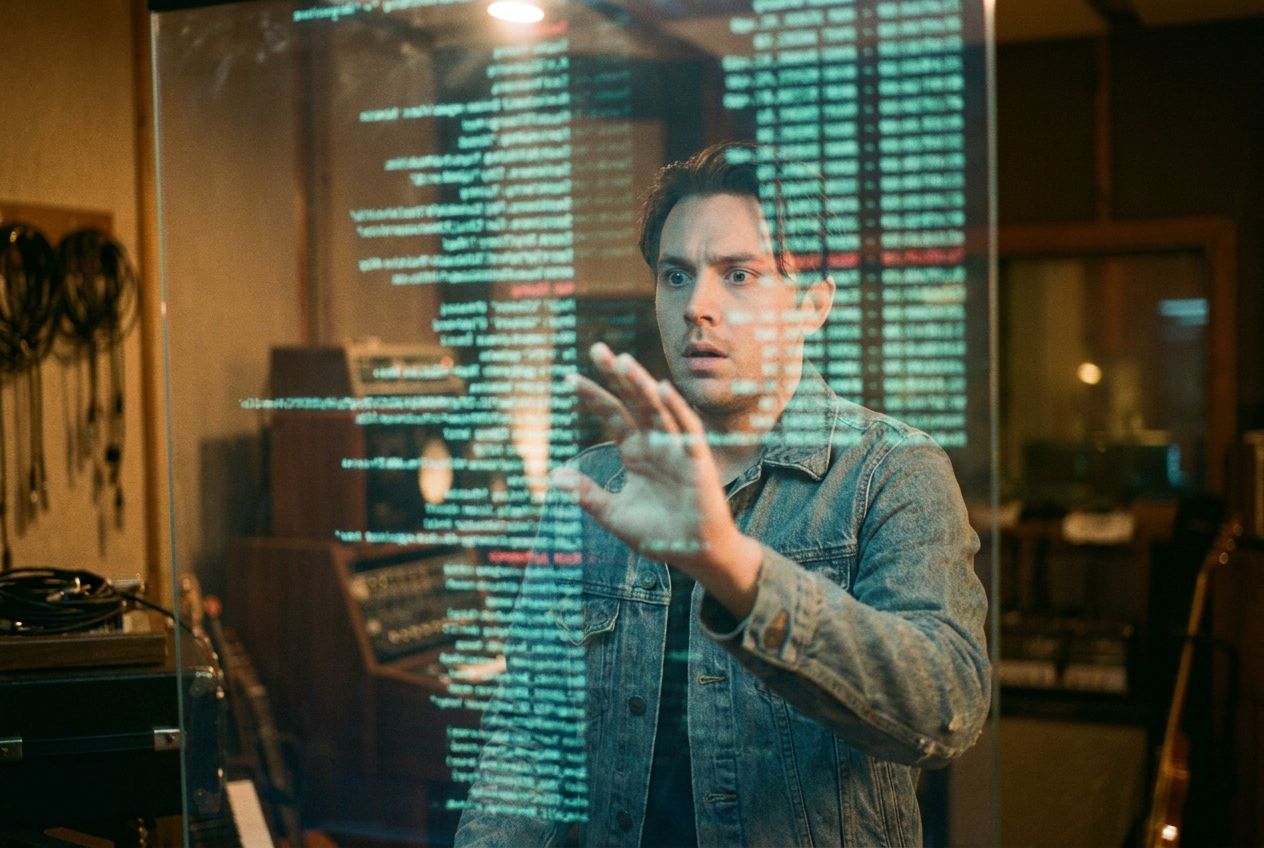
The Bigger Picture: Who’s Using These Datasets
Google and Stability AI have reportedly utilized tracks from one of the 100,000-song datasets, the Free Music Archive. But that’s the tip of the iceberg.
The LAION-DISCO-12M dataset alone contains 12 million links to music on YouTube. And this is an openly shared resource — meaning any AI developer in the world can download and use it. The Free Music Archive dataset, while smaller, is notable because it includes tracks from a curated collection that many indie artists contributed to without imagining their work would feed a generative AI model.
The datasets aren’t just training Suno and Udio. They’re the foundation stones for any new AI music startup that wants to build a model. Generative models require high-quality songs for training. And especially in the era of AI slop, not all music is created equal.
This explains something that’s been puzzling independent musicians for months: why obscure, low-stream tracks show up in AI training data alongside chart-toppers. The answer is that AI developers are optimizing for musical quality and diversity, not popularity. Your 100-stream jazz demo might be more technically valuable to a training algorithm than a pop song with a billion plays.
Why This Matters Right Now: The Summer Ruling
The timing of this investigation isn’t accidental. We’re weeks away from what could be the most consequential legal decision in AI music history.
Suno is fighting all claims on fair use grounds in the District of Massachusetts, with a key summary judgment hearing scheduled for July 2026.
If Suno wins on fair use, it blows up every licensing deal in the AI music space. If it loses, the UMG-Udio template becomes the industry standard.
The Atlantic’s searchable databases give judges — and the public — hard evidence of the scale involved. It’s one thing to argue abstractly about whether AI training on copyrighted works is “transformative fair use.” It’s quite another to click through 21 million specific songs and find your own.
Because the ruling turns on whether training AI on copyrighted material is fair use — a question that applies to text, images, code, and video, not just music. A clear ruling could set precedent across generative AI.
Meanwhile, the major labels have been making their own moves. Warner Music Group settled with Suno in November 2025. The settlement includes a licensing arrangement allowing Suno to use Warner’s catalog to train its model, with compensation flowing back to rights holders.
UMG settled with Udio in October 2025. That settlement created what has been called the first major-label licensing template for AI music generation.
But Sony’s claims against Udio remain ongoing as of May 2026 , making Sony the last major holdout — and the one whose case could rewrite the rules for everyone.
What This Means for Independent Musicians
Let’s be blunt: the major labels will be fine. They have legal teams, settlement money flowing in, and licensing deals locked up. The question that this investigation forces is: what about everyone else?
Independent musicians filed separate class actions against both companies, arguing that the major-label settlements don’t protect smaller rights holders.
This is the ugly reality. Warner settled with Suno. Universal settled with Udio. Great — for Warner and Universal artists. But if your music appears in one of the LAION or Sleeping AI datasets and you’re signed to a small indie label or self-distributed, those settlements don’t cover you.
The Atlantic’s databases are the first tool that makes it possible for independent artists to actually check if their work was used. That’s significant. Before this, you were essentially trusting AI companies’ claims about their training data — companies that, as Digital Music News noted, have been fighting to conceal their “training numbers.”
If you’re an independent artist reading this, here’s what to do:
- Search the databases. The Atlantic has made them publicly searchable. Look for your catalog.
- Document everything. If you find your music, screenshot it. Note which dataset it appears in.
- Talk to a lawyer — or a collective. Several musician advocacy groups are assembling class-action participants. Your evidence could matter.
- Keep making music. Seriously. Whether AI was trained on your work or not, the world needs more human-created art. The legal system will catch up.
The AI Music Video Angle Nobody’s Talking About
Here’s where things get interesting for our world. All of the controversy — every lawsuit, every settlement, every Atlantic exposé — centers on AI-generated music. The training data debate is entirely about audio models: Suno, Udio, and their competitors.
AI-generated visuals for music operate in a completely separate lane.
When you create an AI music video using tools like OneMoreShot.ai, your original music is the audio source. You wrote it. You own it. The AI generates visuals for your song — it doesn’t generate a song trained on someone else’s catalog. That’s a fundamentally different copyright posture.
This distinction is becoming more important by the day. As the training data controversy intensifies, musicians who use AI for visuals while keeping their music human-created occupy the safest possible ground. You get the creative leverage of AI without the legal exposure.
If you’re looking to explore this approach, check out our complete guide to AI music videos or dive into genre-specific tutorials like AI music videos for hip-hop, EDM, or indie.
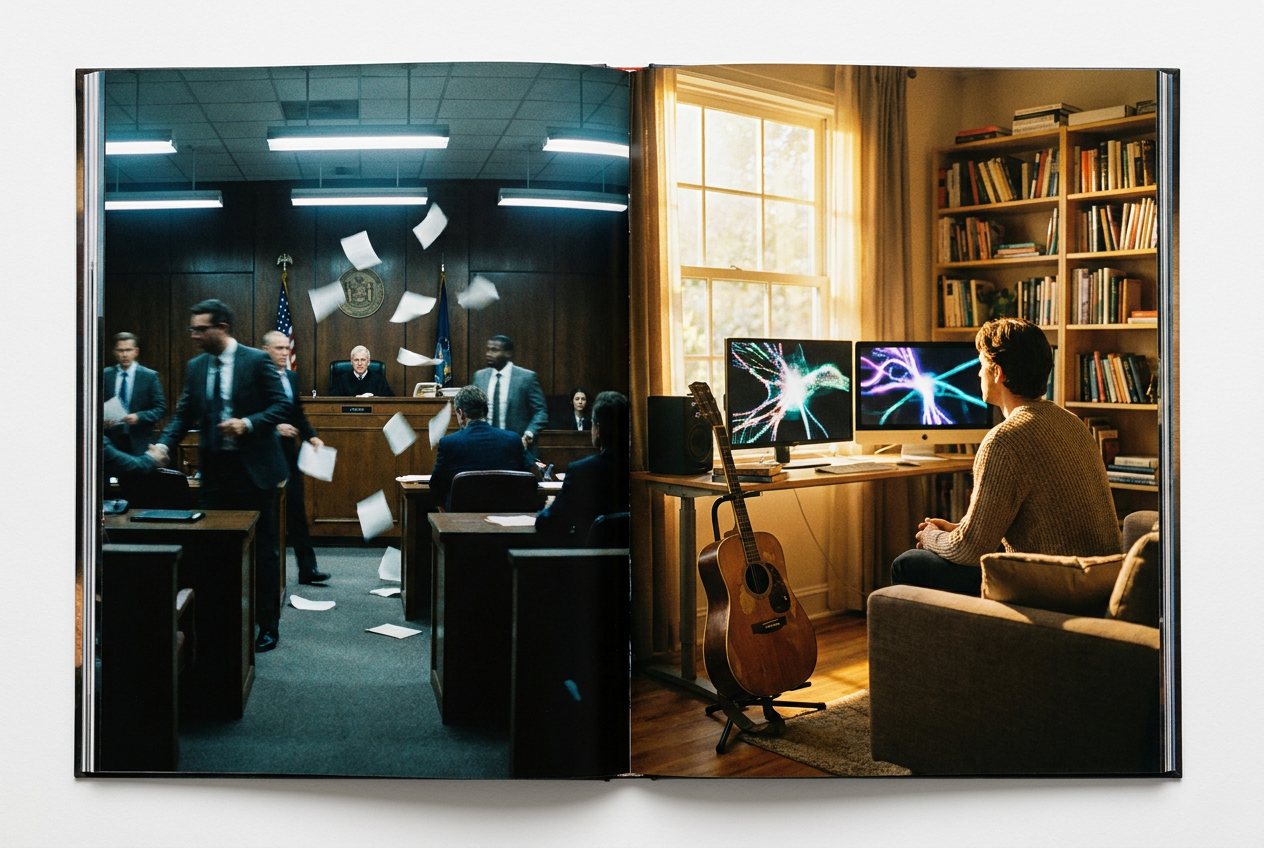
The Proof Era Has Begun
AI music creators are entering the proof era. Not just proof that a song sounds good. Proof of process. Proof of rights awareness.
This framing, from industry analyst Jack Righteous, captures the moment perfectly. The Atlantic’s investigation is the starting gun. Going forward, the question every AI music platform will face isn’t “how good is your output?” — it’s “where did your training data come from, and can you prove it?”
Tool choice is becoming part of rights strategy. Where you make the song may matter almost as much as what the song sounds like.
For musicians building their visual presence, this same logic applies. Choosing tools with clean provenance — where you provide the music and the AI provides only the visuals — keeps you on the right side of a rapidly evolving legal landscape. Our guides for how to make an AI music video and genre-specific templates for pop and R&B walk you through the process without the legal headaches.
Where This Goes Next
The next 60 days are going to be wild. Here’s what to watch:
The Sony ruling (July 2026). A ruling against Suno on fair use would force every AI music company to license training data or shut down. A ruling for Suno would gut the labels’ negotiating leverage and reset the licensing market overnight.
The indie class actions. Independent musicians are organizing. The Atlantic’s databases give them, for the first time, specific evidence of which songs were used. Expect filings to accelerate.
Platform responses. Many music streaming services have taken steps to prevent, identify, or label generative AI creations. But that hasn’t stopped scammers from creating imitations of existing bands and trying to benefit off their work with AI copycats. Detection tools will have to get much better.
The LAION question. LAION is a non-profit. Non-profits don’t have deep pockets for settlements. If their dataset was the foundation for commercial AI music tools, the liability chain gets complicated fast.
A similar case in book publishing didn’t make headway with a judge on claims of copyright infringement, but piracy allegations have proved to be a more compelling argument. The full results and payout from that suit are still pending, though the initial settlement was for $1.5 billion. That $1.5 billion figure from the book publishing world should make every AI music company’s legal team sweat.
The Bottom Line
Twenty-one million songs. Four databases. Searchable by anyone. Published by one of the most respected publications in journalism.
The era of “trust us, our training data is fine” is officially over.
For musicians, this moment is clarifying. If you’re making original music, your work has value — and now you have tools to see if someone else has been extracting that value without permission. If you’re using AI for visuals to promote your music, you’re in a fundamentally different and safer category than AI platforms that generate music from scraped training data.
The music you create is yours. The visuals you need to promote it are just a few clicks away. And the legal clarity the industry desperately needs? It’s coming this summer, whether everyone’s ready or not.
Ready to create stunning visuals for your original music — no scraped training data, no legal gray areas? Try OneMoreShot.ai and build your first AI music video in minutes.