AI Music Videos for Indie: Complete Guide
AI Music Videos for Indie: The Complete Guide
There’s a moment in Washed Out’s “The Hardest Part” — the one where the camera pushes through a wall and spills into a sun-bleached living room, then melts into a hospital hallway, then a cemetery — that could only exist because of AI. A continuous push forward through time, tracking the relationship of a couple from middle-school into the afterlife. Director Paul Trillo leaned into the surreal qualities of AI to create something genuinely new: “I leaned into the hallucinations and Sora’s dream logic to explore memories that never existed.”
That video — made entirely with OpenAI’s Sora — became one of the most debated pieces of visual art in indie music. The four-minute music video for Washed Out’s latest single, “The Hardest Part,” was made entirely with OpenAI’s text-to-video model, Sora. But debate aside, it proved something that bedroom pop producers, indie folk singer-songwriters, and dream pop artists have been quietly realizing: AI is the most indie-spirited visual tool to come along in years.
The reason is simple. In indie music, visual aesthetics refer to the artistic style, imagery, and presentation associated with independent or alternative music artists. Like music or fashion anything “indie” is synonymous with DIY, creativity, and authenticity. AI-powered video tools embody that same ethos — they put the creative director’s chair inside your bedroom studio and let you experiment with surreal, emotionally resonant visuals at the cost of a streaming subscription rather than a film crew.
2026 marks a strong surge in indie and AI-collaborative artist growth. New artist releases this year often combine virtual elements with real acoustic performance. If you’ve been waiting for the right moment to create an indie AI music video, you’re reading this at exactly the right time.
In this guide, we’ll walk through indie visual aesthetics, the best AI tools for the genre, a step-by-step workflow, copy-paste prompt examples for every indie subgenre, and distribution strategies that actually reach indie audiences. If you’re new to AI video altogether, start with our Complete Guide to AI Music Videos in 2026, then come back here for the indie-specific deep dive.
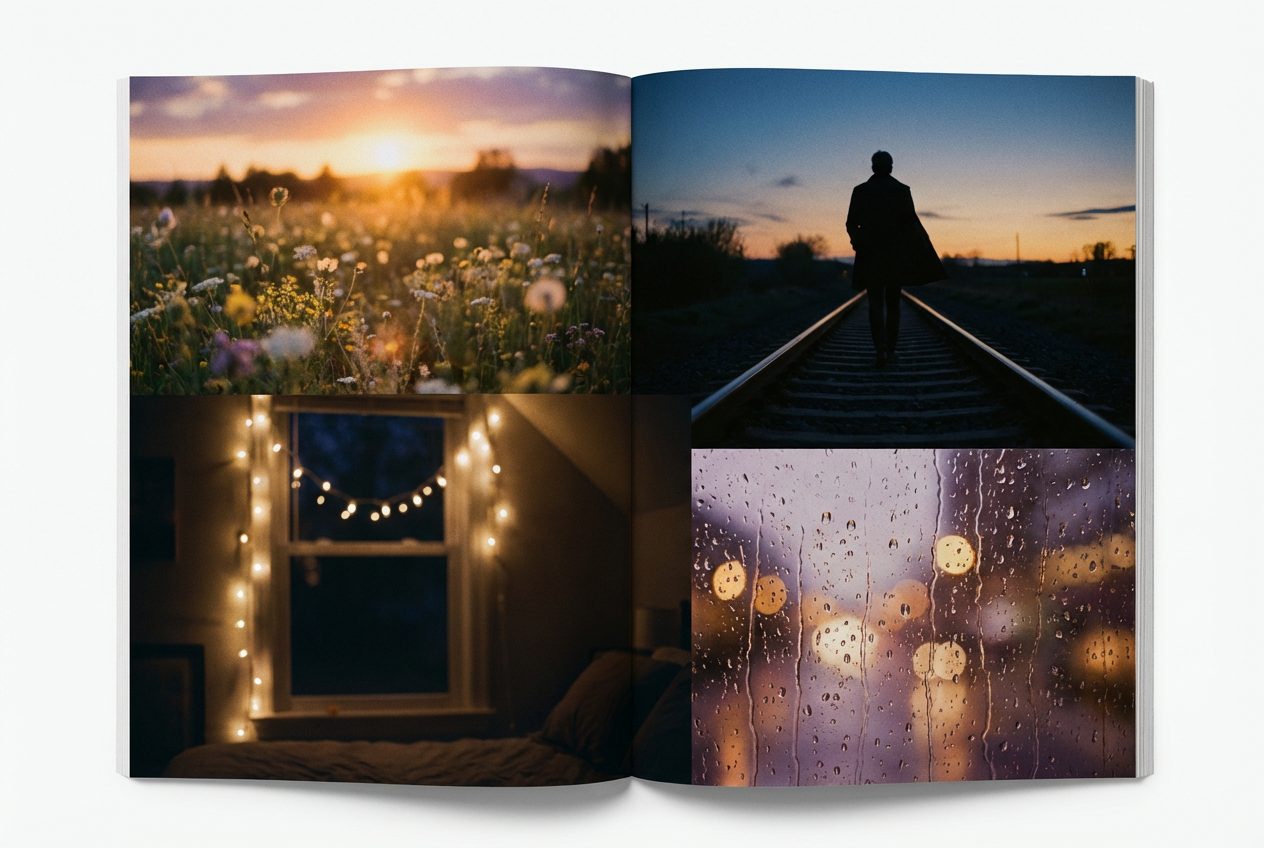
Indie Visual Aesthetics: The Visual Language of Independence
Before you open any AI tool, you need to understand what indie looks like — and more importantly, why it looks the way it does. Indie visuals aren’t just a filter. They’re a philosophy.
The Core Principles
Indie music videos frequently showcase unconventional storytelling, experimental cinematography, and imaginative visuals that complement the music’s mood and lyrics. Directors may employ creative techniques and artistic concepts to produce memorable and visually captivating videos on relatively modest budgets.
This is the foundational truth of indie visuals: constraints breed creativity. The grainy Super 8 footage in a Fleet Foxes video isn’t accidental — it’s a deliberate aesthetic choice that mirrors the warmth and imperfection of the music itself. The lo-fi quality is the point.
Color Palettes by Subgenre
Indie Rock / Indie Pop: Desaturated earth tones, muted yellows, warm amber. Think Vampire Weekend’s sun-faded preppy palette or The National’s brooding slate grays. High contrast is rare — everything sits in a comfortable, slightly washed-out middle ground.
Indie Folk: Golden hour is the default lighting. Warm sepias, forest greens, the dusty blue of a twilight sky. Bon Iver’s “Holocene” video is a breathtaking visual masterpiece. Shot in the stunning landscapes of Iceland, the video follows a young boy as he explores the countryside, wandering through rivers, mountains, and valleys. The video mirrors the reflective and serene nature of the song, creating a sense of wonder and isolation.
Dream Pop: Hazy pastels, lavender washes, soft pinks bleeding into pale blue. Think Beach House and Cocteau Twins. Similarly to shoegaze, vocals are a distinguishing element of dream pop and are often mainly viewed as an instrumental texture, with more importance being placed on melody and timbre, rather than lyricism. The visuals should feel equally textural — more about atmosphere than narrative.
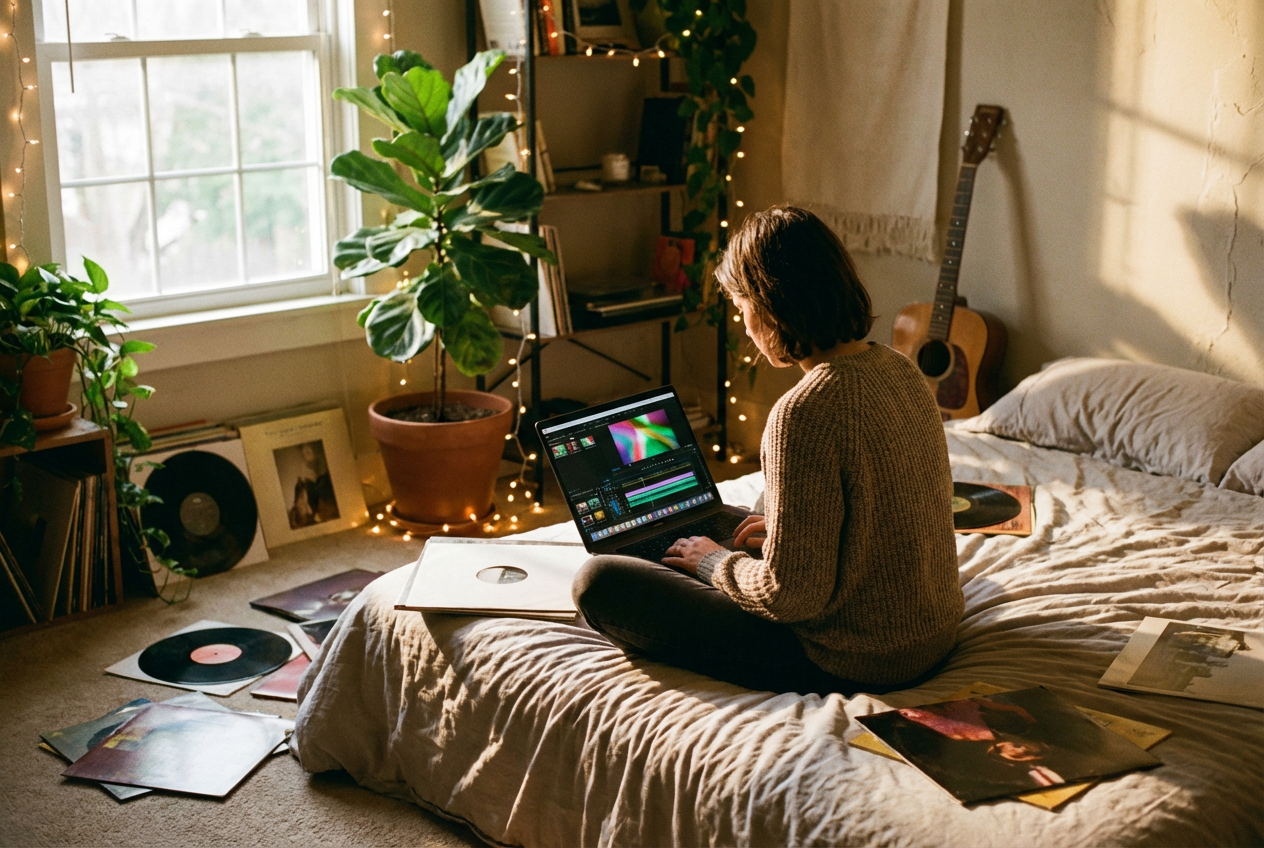
Bedroom Pop: Warm, intimate lighting. Fairy lights, laptop screens glowing in dim rooms, late-afternoon window light. The color palette tends toward warm neutrals with pops of soft neon — think Clairo’s early videos or the visual world around boy pablo.
Indie Electronic: Glitch textures, liquid gradients, slow-morphing abstract shapes. Tame Impala, led by Kevin Parker, is known for its psychedelic rock sound and visually captivating music videos. “The Less I Know The Better,” directed by Canada, is a prime example. Tame Impala bridged indie and electronic visuals with psychedelic color bleeding and retro-futurist imagery.
Motion and Pacing
Indie music videos move differently than other genres. Where hip-hop favors rapid cuts and EDM synchronizes to BPM drops, indie visuals tend toward:
- Slow, contemplative camera movements — drifting pans, gentle dollies, steady handheld
- Long takes that breathe with the music
- Transitions that feel organic — dissolves, light leaks, and slow fades rather than hard cuts
- Match-cut storytelling — the kind of editing where a hand reaching for a door handle becomes a hand reaching for a lover
Lo-fi aesthetics, vintage film grain, and handheld cinematography are making a comeback. Many artists are opting for a DIY look that feels more personal and nostalgic. This trend reflects the growing influence of indie culture and the rejection of overly polished, commercialized visuals.
Iconic References to Study
Before prompting any AI tool, build a visual library. These videos define what indie looks like:
- Bon Iver — “Holocene”: Epic landscapes, solitary figure, golden naturalism
- Arcade Fire — “The Suburbs”: Nostalgic suburban imagery, muted summer light
- Tame Impala — “The Less I Know The Better”: Psychedelic color, surreal narrative
- Phoebe Bridgers — “Kyoto”: Travel footage mixed with raw emotional performance
- FKA twigs — “Cellophane”: Experimental, body-centric, otherworldly
- Grimes — “Oblivion”: Grimes, the avant-garde queen of indie music, delivers a mesmerizing visual experience in “Oblivion.” Directed by Emily Kai Bock, the video features Grimes wandering through various surreal landscapes.
Best AI Tools for Indie Music Videos
Not every AI video tool handles the indie aesthetic equally well. The genre’s emphasis on texture, mood, and subtlety requires tools that can generate soft, atmospheric visuals rather than hyper-polished corporate content.
OneMoreShot.ai — Built for Indie Artists
OneMoreShot.ai is purpose-built for musicians who want to go from audio file to finished music video without touching a timeline editor. Create professional AI music videos in seconds. Upload your song, choose your style, and generate a fully synced music video automatically. No editing skills needed.
What makes it particularly powerful for indie:
-
Style selection that includes dreamlike, vintage, and atmospheric presets — all central to the indie palette
-
Scene-by-scene editing so you can shape the emotional arc to match your song structure: Build your video scene by scene in the editor. Full creative control over every clip, transition, and effect.
-
Multi-format export for YouTube (16:9), TikTok/Reels (9:16), and Spotify Canvas (square) — You can export in multiple formats including HD 1080p for YouTube, vertical format for TikTok and Instagram Reels, and square format for social media posts.
-
Fast turnaround: Most music videos are generated in just 2-5 minutes, depending on the length of your track and the complexity of the visuals you choose.
-
Broad format support: We support all major audio formats including MP3, WAV, FLAC, AAC, and OGG. You can also paste a link to your track from platforms like Suno, Udio, or YouTube.
For indie artists who record in bedrooms and release on Bandcamp, this workflow makes visual content as accessible as the music itself.
Other Tools Worth Knowing
Kaiber excels at painterly, audioreactive visuals. Kaiber takes a slightly different approach. Its Superstudio interface allows creators to input audio, reference images, and text prompts to generate animated scenes that respond dynamically to the beat. It’s ideal for lyric videos or audioreactive content. Kaiber’s style leans artistic rather than photorealistic, offering dreamlike or painterly visuals that suit electronic, lo-fi, or indie pop.
Neural Frames offers granular frame-by-frame control: Map drums, bass, vocals, and more to motion, cuts, and effects for true audio-reactive results. Great for indie electronic artists who want visuals tightly synced to their production.
Runway ML generates high-quality individual clips but Runway was not designed with audio in mind. There’s no mechanism for your track to influence what the visuals do — the tool doesn’t know what a beat drop is, doesn’t recognize a chorus, and can’t sync cuts to your rhythm. You’re generating clips in isolation and assembling them alongside your audio in a separate editor. It’s powerful if you already know your way around Premiere or DaVinci Resolve, but it adds significant editing overhead.
For a broader comparison of tools across all genres, check out our guide on How to Make an AI Music Video.
Step-by-Step: Creating an Indie AI Music Video
Here’s a practical workflow for creating an indie AI music video using OneMoreShot.ai. This process works whether you’re making a full-length video for YouTube or a 30-second teaser for TikTok.
Step 1: Map Your Song’s Emotional Arc
Once your song’s emotional identity is clear, you stop thinking about a “music video” and start thinking about scenes. Each section of the song gets its own visual idea. A verse might be quiet and minimal. A chorus might open up and move forward. A bridge might pull inward again.
Before opening any tool, listen to your track three times with your eyes closed. Note:
- Where does the energy shift?
- What colors do you feel during the chorus vs. the verse?
- Is this song about movement (traveling, searching) or stillness (reflecting, waiting)?
- What’s the dominant emotion — longing, joy, melancholy, euphoria?
Write a simple shot list: 4-6 visual concepts that map to the song’s sections.
Step 2: Upload Your Track
Head to OneMoreShot.ai and upload your audio file. The platform analyzes your track’s structure — tempo, energy shifts, vocal sections — to intelligently time the visuals.
Step 3: Choose Your Visual Direction
This is where genre specificity matters. For indie, lean toward:
- Soft, textural styles over hyper-realistic ones
- Natural settings — forests, coastlines, empty roads, small-town streets
- Warm, desaturated color grading — think 35mm film rather than digital perfection
- Human-scale subjects — solitary figures, close-up hands, intimate spaces
Avoid: overly glossy/corporate looks, neon-heavy cyberpunk aesthetics, rapid-fire montages. Those belong in other genre guides (like our AI Music Videos for EDM or AI Music Videos for Pop).
Step 4: Refine Scene by Scene
Use the scene editor to adjust individual clips. For indie, pay attention to:
- Transition speed: Slow dissolves feel more indie than hard cuts
- Visual consistency: Keep the color palette cohesive throughout — a warm amber video shouldn’t suddenly switch to cool blue unless the music demands it
- Negative space: Don’t fill every frame. Indie visuals breathe. A wide shot of an empty highway says more than a cluttered composition
Step 5: Export for Your Platform
Export your final video in the formats you need. For a typical indie release in 2026:
- 16:9 HD for YouTube and your website
- 9:16 vertical for TikTok and Instagram Reels
- 1:1 square or short loop for Spotify Canvas
Successful musicians in 2025 create what industry insiders call a “content creation package” – multiple visual assets that can be deployed across platforms. A typical major release might include the main music video, a lyric video for YouTube searches, Canvas loops for Spotify, behind-the-scenes content for Instagram Stories, and several TikTok-ready clips highlighting the catchiest moments.
Prompt Examples for Indie AI Music Videos
These prompts are designed to be copy-pasted into OneMoreShot.ai or adapted for other AI video tools. Each one targets a specific indie subgenre.
🎸 Indie Rock
Prompt: A lone figure walking down an empty highway at golden hour, shot from behind, wearing a denim jacket with a guitar case slung over their shoulder. Flat desert landscape stretches to the horizon. Warm amber light, dust particles visible in the air, slight film grain. Camera slowly dollying forward. Mood: restless, searching, alive.
🌿 Indie Folk
Prompt: A person sitting on the bank of a misty river at dawn, knees drawn to their chest, surrounded by tall grass and wildflowers. Soft diffused light, cool blue-green tones with warm highlights on the skin. A wooden rowboat rests half-submerged nearby. Gentle camera drift to the right. Mood: contemplative, peaceful, bittersweet.
✨ Dream Pop
Prompt: A figure spinning slowly in a field of lavender, their silhouette blurring into soft focus against a pastel sky. Light leaks wash across the frame in pink and gold. Double exposure effect layering the figure with clouds and flowers. Extremely slow motion. Mood: ethereal, hypnotic, weightless.
🛏️ Bedroom Pop
Prompt: Close-up of hands playing a ukulele on a rumpled bed covered in patterned sheets, fairy lights creating bokeh circles in the background. Warm indoor light, slightly overexposed. Camera slowly pulling back to reveal a small, plant-filled bedroom. Subtle dust motes floating. Mood: intimate, cozy, genuine.
🔮 Indie Electronic
Prompt: Abstract liquid forms morphing slowly in deep purple and teal, revealing fleeting glimpses of a face beneath the surface. Organic glitch textures ripple outward in rhythm. Holographic light refractions. Dark background with concentrated pools of saturated color. Mood: immersive, nocturnal, psychedelic.
🏠 Lo-Fi Indie
Prompt: A rainy window seen from inside a dimly lit apartment. Blurred city lights outside streak through raindrops. A coffee cup sits on the windowsill. The camera is still, almost meditative. Color palette: warm brown, muted gold, desaturated teal. 16mm film grain. Mood: nostalgic, solitary, safe.
🌊 Shoegaze / Noise Pop
Prompt: A coastline at dusk, waves crashing in extreme slow motion. Heavy fog obscures the horizon. A distant figure stands ankle-deep in the surf, face turned away. Heavy VHS-style tracking artifacts and blur at the frame edges. Washed-out pinks and grays. Mood: overwhelming, beautiful, disorienting.
🎹 Chamber Pop / Baroque Pop
Prompt: An abandoned ballroom with crumbling plaster walls and a grand chandelier hanging at an angle, lit by hundreds of candles. A single person sits at an old piano, playing. Light and shadow create dramatic contrast. Dust and pollen drift through shafts of warm light. Camera slowly orbits. Mood: elegant, melancholy, timeless.
For lo-fi-specific video techniques, also see our AI Music Videos for Lo-Fi guide.
Indie AI Music Video Inspiration
The groundbreaking example everyone knows is Washed Out’s “The Hardest Part.” Trillo created the video with prompts that were at least 1,000 words each, and tried endless variations before settling on the final shots. “Whatever time you save generating the shots,” he says, “you end up putting that time elsewhere. You can explore a multiverse of what this video could look like, which is unlike any other kind of type of creation.”
This process generated about 700 video segments, from which Trillo selected 55 clips to piece together in Adobe Premiere.
What makes it relevant for every indie artist reading this: the dreamlike, imperfect quality of AI generation actually served the song. There is something dreamlike, almost uncanny, about the visuals — an effect that seems intentional. “I wasn’t interested in capturing realism but something that felt hyperreal. The fluid blending and merging of different scenes feels more akin to how we move through dreams and the murkiness of memories.”
This is the key insight: AI’s “imperfections” — its tendency toward soft morphing, dreamlike transitions, and slightly unreal environments — naturally align with indie aesthetics. What looks like a glitch in a corporate context looks like art in an indie context.
For a curated gallery of indie AI music video examples, visit our AI Music Video Examples: Indie showcase.
Tips for Authenticity: Keeping It Indie
AI can generate stunning visuals, but the indie audience has a keen eye for inauthenticity. Here’s how to keep your AI music video feeling genuinely indie:
1. Embrace Imperfection
Indie culture values the handmade, the rough-edged, the human. When AI generates something slightly “off” — a morphing shadow, a blurred face, a surreal transition — consider keeping it. Indie music embraces flaws. It has a human-like vibe. It appeals to anyone who has ever felt like they didn’t fit in and channelled that experience into creativity. Your video should feel the same way.
2. Don’t Over-Polish
Resist the urge to upscale everything to 4K perfection. Indie videos often look better with a bit of grain, a slightly limited color palette, and less-than-cinematic framing. Think about adding film grain or a subtle VHS overlay in post.
3. Tell a Feeling, Not a Story
The best indie videos evoke a mood rather than narrate a plot. Instead of scripting “character walks into bar, meets love interest,” think about sequences that feel like emotional impressions: hands in grass, light through a window, a road disappearing into fog.
4. Anchor in Specificity
Generic AI prompts produce generic results. Instead of “nature scene,” try “moss-covered stone wall in the Scottish Highlands at 6am in October.” Specificity is what separates an indie video from stock footage.
5. Mix AI with Real Footage
AI video is not here to replace real performance. It is here to extend it. When you combine real human footage with AI-generated scenes thoughtfully, you create music videos that feel modern, cinematic, and unmistakably yours. Film yourself playing in your room on your phone, then use AI to generate the atmospheric intercut scenes. The contrast between real and generated footage can be creatively powerful.
6. Stay Consistent With Your Visual Identity
Indie musicians often develop distinct visual identities and branding for their projects, including logos, merchandise designs, and promotional materials. These elements reflect the artist’s personality and aesthetic preferences and help establish a connection with fans. Use a consistent color palette, recurring visual motifs, and a coherent mood across all your video content — from Spotify Canvas loops to full-length videos.
7. Know When AI Isn’t Right
Not every song needs AI visuals. Sometimes a single-take performance video shot on a phone in your apartment will connect more deeply with your audience. Use AI as a tool in your creative arsenal, not a replacement for genuine human presence.
Distribution Strategy: Reaching Indie Audiences
Creating the video is half the battle. Getting it in front of the right ears and eyes is the other half. Indie audiences discover music differently than mainstream listeners.
YouTube: Still the Long-Form Home
YouTube remains the primary home for full-length indie music videos. YouTube is the best platform to post your music videos, behind-the-scenes footage, and even vlogs of your life outside of music. Optimize for search with titles that include your genre tags — “Artist Name - Song Title (Official Video)” with indie, dream pop, or bedroom pop in your description and tags.
TikTok: The Discovery Engine
TikTok favours short, catchy clips that grab attention in the first second. So you can share a 15-second snippet of your chorus, a funny behind-the-scenes moment, or a unique visual from your music video to reach more viewers quickly. For indie, the most effective TikTok content tends to be genuine — show your process, share the AI prompts you used, or post a side-by-side of the prompt vs. the generated result. Most distributors now support direct TikTok delivery, yet the platform’s algorithm increasingly rewards authentic, lightly produced content instead of polished studio clips.
Instagram Reels: Visual Storytelling
Instagram: You can use Stories, Reels, and DMs to connect with fans. Post 15-30 second visual teasers from your AI music video as Reels. Use the vertical export from OneMoreShot.ai.
Spotify Canvas
Spotify Canvas: Short looping videos (3-7 seconds) that play on Spotify, which can be uploaded via Spotify for Artists. We’ve found great success with these as they keep the brand consistent and personalize the music player’s visuals. If you’re not doing these you should start yesterday. Use your AI tool to generate a perfectly looping 5-second visual that captures your song’s mood. Early data shows that users who watch a video on Spotify are 34% more likely to replay the song the following week.
Bandcamp
Bandcamp is another great option if you want to sell directly to fans and build a loyal community. Bandcamp remains the spiritual home of indie music distribution. While it doesn’t host video natively, you can embed YouTube videos on your Bandcamp page and use visual stills from your AI video as album art or promotional imagery.
Indie Playlists and Music Blogs
Pitch your video alongside your track to indie-focused playlist curators and music blogs. A compelling visual makes your pitch dramatically more memorable. We’ve found that investing in quality visuals and short video content delivers better results than blanket ad spending.
The Content Package Approach
For a single release, generate:
- One full-length music video (3-5 min, horizontal, YouTube)
- Three vertical teasers (15-30 sec each, TikTok/Reels)
- One Spotify Canvas loop (5-7 sec, square)
- 2-3 still frames for social posts, blog pitches, and Bandcamp
With OneMoreShot.ai, you can generate all of these from a single upload in under an hour.
Conclusion: Your Bedroom Studio Now Has a Visual Department
The indie music ethos has always been about resourcefulness — making something beautiful with whatever you have. AI has leveled the playing field by giving independent musicians the same creative tools at a fraction of the cost. An indie creator with a small budget can now produce videos that rival and sometimes surpass those made by mainstream stars.
Indie rock is dependable for emotional storytelling and visual content. And with AI video tools designed specifically for musicians, translating that emotional storytelling into visuals no longer requires a production budget — just a clear artistic vision.
Whether you’re crafting a hazy dream pop visualizer, a contemplative indie folk narrative, or a glitchy bedroom pop aesthetic, AI music video generators like OneMoreShot.ai give you the visual vocabulary to match your sonic world.
The Washed Out video took six weeks and 700 generated clips to assemble. Today, you can create something emotionally resonant in minutes.
Ready to turn your indie track into a visual experience? Create your AI music video now →
For more genre-specific guides, explore our walkthroughs for rock, R&B, jazz, and country — or browse the full Complete Guide to AI Music Videos in 2026.