44% of Music Uploads Are Now AI-Generated
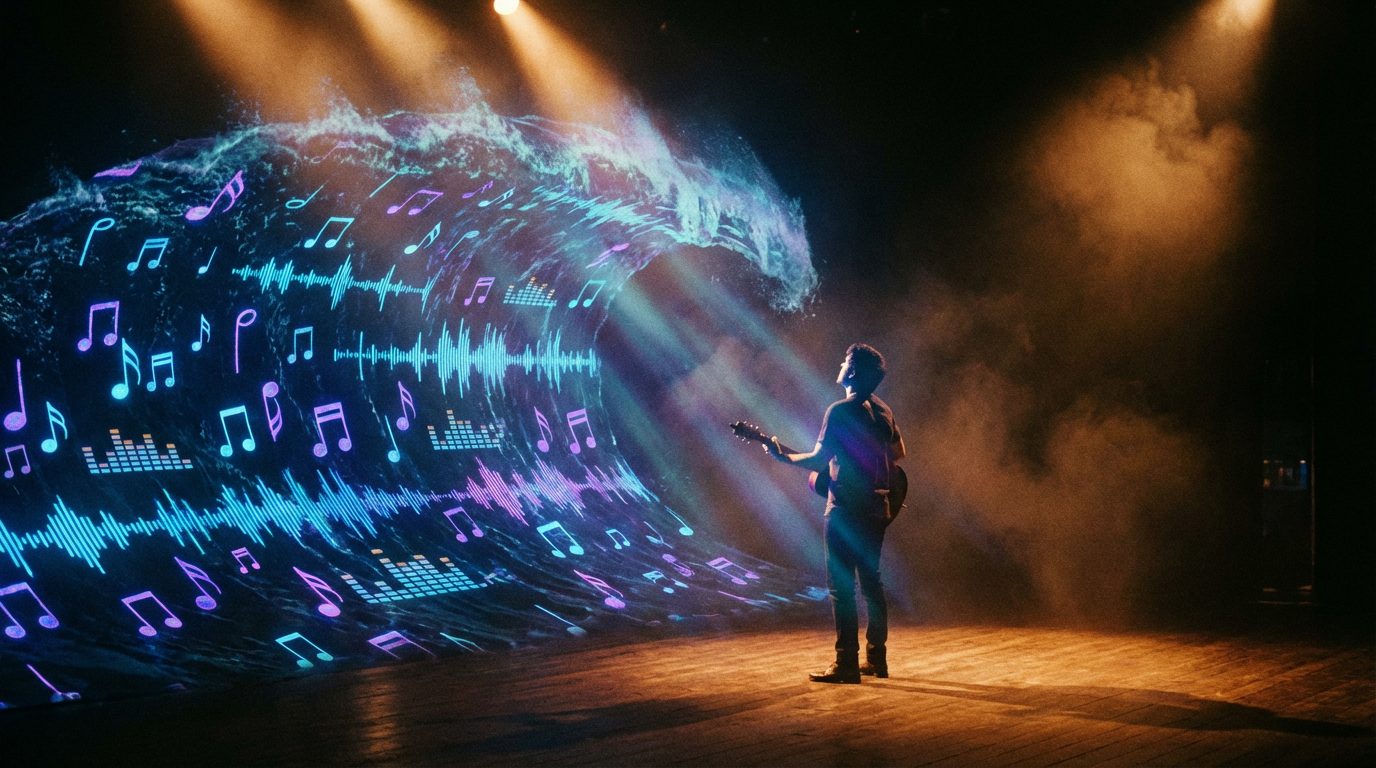
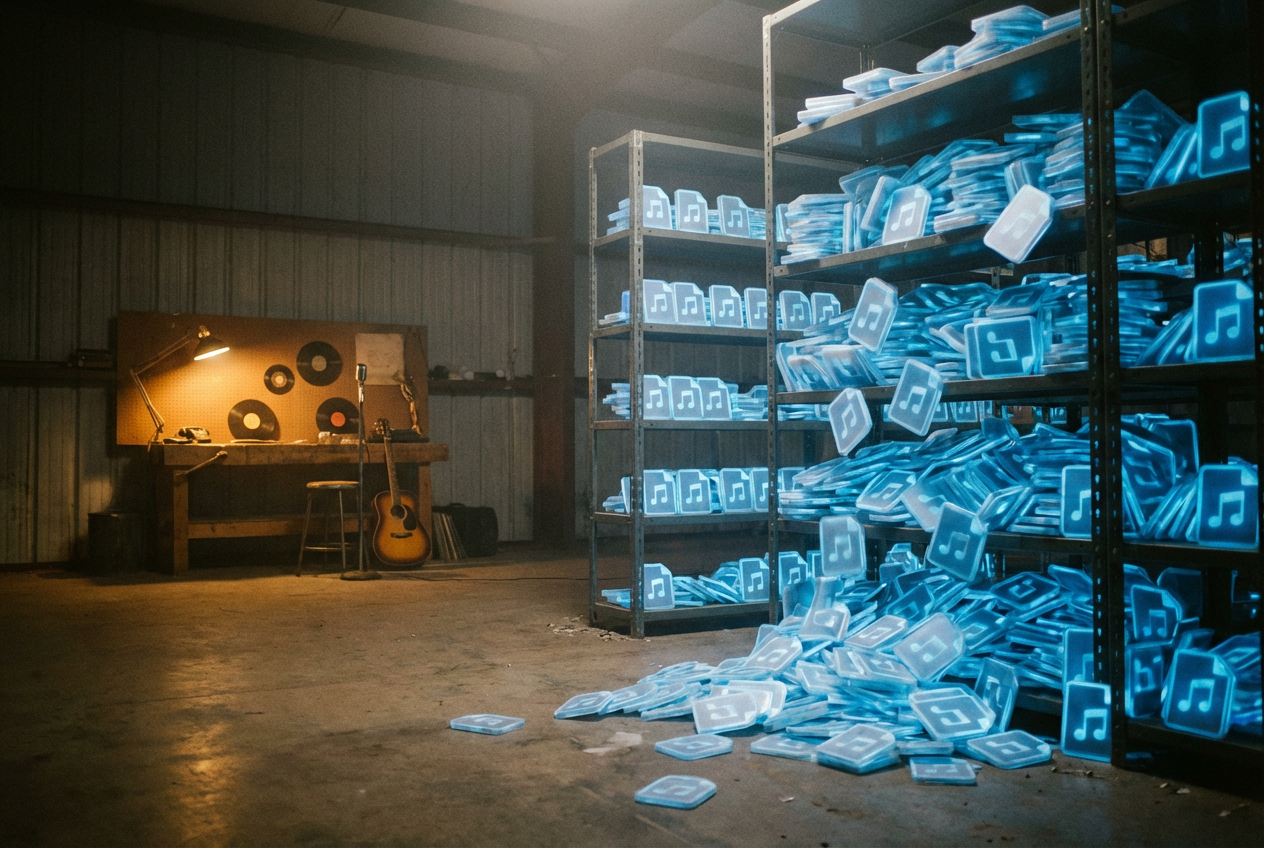
Yesterday, Deezer dropped a stat that should make every musician sit up straight: 44% of all new music uploaded to the platform is now AI-generated. That’s 75,000 synthetic tracks flooding in every single day. Two million per month.
Let that marinate for a second. Nearly half the “new music” arriving on a major streaming platform wasn’t made by a person with a story to tell. It was generated by an algorithm, likely in seconds, and uploaded by someone trying to game the royalty pool.
This isn’t a future scenario. This is today. And if you’re a musician who actually writes, records, and performs your own work, this is the most important data point in your career right now.
The Numbers Are Staggering — and Accelerating
Deezer has tracked a continuous surge in AI-generated music uploads. The platform reported receiving around 60,000 AI tracks per day in January 2026, up from 50,000 in November, 30,000 in September, and just 10,000 in January 2025, when it first launched its AI-music detection tool.
Read that trajectory again: 10K → 20K → 30K → 50K → 60K → 75K in just sixteen months. If 44% of Deezer’s daily uploads equate to 75,000 tracks, this implies the French streaming service is now receiving over 170,000 songs daily — much higher than Luminate’s 2025 end-of-year report that claimed over 100,000 songs are uploaded daily.
That exponential curve isn’t slowing down. It’s getting steeper.
This represents a sharp rise from 34% at the end of last year. In roughly four months, AI’s share of uploads jumped 10 full percentage points. At this rate, AI-generated tracks will be the majority of new uploads on Deezer before the year is out.
The Fraud Problem Is Enormous
Here’s where it gets ugly. The platform’s detection system identified a majority of plays on AI tracks as inauthentic and removed those plays from royalty calculations. Deezer reported that roughly 85% of streams on AI-labeled tracks were flagged and demonetized.
Let’s be blunt about what’s happening: These AI uploads aren’t mainly from artists trying out new tools. Deezer indicates that most submissions seem aimed at gaming the streaming royalty system. The strategy involves uploading a massive volume of AI-generated tracks and then using bots to stream those songs repeatedly.
This isn’t creative experimentation. It’s industrial-scale fraud. A North Carolina man, Michael Smith, pleaded guilty to conspiracy to commit wire fraud after investigators concluded he used AI and automated accounts to collect more than $8 million in royalties. He’s facing up to five years in prison.
And yet the flood keeps growing.
Nobody Can Tell the Difference (And That’s the Point)
Perhaps the most unsettling finding from Deezer’s research: Deezer commissioned a blind listening study with 9,000 participants across eight countries. The company reported that 97% of participants could not reliably distinguish AI-generated music from human-made music by ear.
Ninety-seven percent. That’s not a flaw in human hearing — it’s a testament to how far tools like Suno and Udio have come. The audio quality gap between AI and human music has essentially closed. Deezer said its proprietary tool can detect AI-generated music, particularly from two of the most popular offerings right now: Suno and Udio.
But here’s the paradox: AI-generated music accounts for only about 1 to 3 percent of total plays on the service. The company disclosed the figures on Monday and said the large volume has not produced matching listener demand.
People can’t tell the difference in a blind test — but they’re still not choosing AI music when they fire up their playlists. The supply is exploding, but real demand isn’t there. That should give every human musician some comfort. It also reveals the entire game: this isn’t about listeners wanting AI music. It’s about bad actors exploiting the economic architecture of streaming.
Deezer Is Fighting Back (But They’re Mostly Alone)
To its credit, Deezer is taking the most aggressive stance of any major streamer. The platform has now stopped storing hi-res versions of AI-generated tracks, on top of its existing policy of removing such content from algorithmic recommendations and editorial playlists.
The company reported the system has 99.8% accuracy and has flagged more than 13.4 million AI tracks in its catalog so far this year. They’ve even started licensing their detection technology to others. At the end of March 2026, the Hungarian Bureau for the Protection of Performers’ Rights acquired usage rights for Deezer’s AI detection tool, becoming the first collection society to use technology of this kind.
But what about the other platforms? Other major streaming services are pursuing AI transparency via supply-chain self-disclosure rather than platform-level detection. Apple Music launched its Transparency Tags system in March, placing the onus on labels and distributors to declare AI-generated content at the point of delivery. Spotify announced it would support the new DDEX industry standard for AI disclosures in music credits.
Translation: Spotify and Apple are basically asking the foxes to self-report their visits to the henhouse. About 80% of respondents said fully AI-produced songs should carry clear labels. Listeners want transparency. But most platforms aren’t delivering it at the level Deezer is.
The Bigger Picture: AI Music Has Hit Its Tipping Point
This Deezer data doesn’t exist in a vacuum. The entire music industry is crossing what The Hollywood Reporter called an AI tipping point. There’s a vibe shift happening in how the music industry is coping with its ongoing AI revolution. “It wasn’t even happening at the end of last year, but in the past couple months since the beginning of this year,” Suno CEO Mikey Shulman says. “I don’t meet a lot of producers and songwriters who aren’t using Suno at least a little bit in their workflows. I think people are starting to be a little more comfortable being public and upfront about their use.”
Meanwhile, Udio carved out settlements and partnerships with Universal Music Group and Warner Music Group last fall, and Suno managed to settle with WMG back in November. With some of the labels now calling the AI labs partners, the platforms have looked to posture themselves not as invaders but as music companies themselves.
The labels are cutting deals. The songwriters are quietly using AI in their workflows. And the streaming platforms are drowning in synthetic content. According to a study by CISAC and PMP Strategy, nearly 25% of music creators’ revenues are at risk by 2028.
This isn’t a drill.
What This Means for Musicians Who Make Real Music
So where does this leave you — the artist who actually picks up an instrument, writes lyrics at 2 AM, and pours their soul into their recordings?
Ironically, in a stronger position than you might think. Here’s why:
1. Authenticity Is Becoming Your Moat
When 44% of uploads are synthetic slop, being genuinely human becomes a differentiator. iHeartRadio announced its “Guaranteed Human” program, pledging that the company doesn’t and won’t “use AI-generated personalities” or “play AI music that features synthetic vocalists pretending to be human.” In a memo to staff, chief programming officer Tom Poleman writes, “‘Guaranteed Human’ is a core part of our brand.”
That’s a major radio platform turning “made by humans” into a brand promise. The market is already starting to reward authenticity.
2. Visual Content Separates You From the Bots
Here’s the thing the streaming fraudsters haven’t figured out yet: video. A Suno-generated track uploaded to Deezer by a bot doesn’t come with a compelling music video, a captivating visual story, or content that builds a fanbase across platforms.
This is exactly where tools like OneMoreShot.ai become your secret weapon. While the bots are flooding Spotify and Deezer with faceless audio files, you can pair your human-made music with stunning AI-generated visuals that tell your story, build your brand, and give fans a reason to follow you — not just a track.
If you’re new to this approach, our complete guide to AI music videos walks you through the entire process. Whether you’re making hip-hop, indie, or country, the playbook is the same: use AI as a creative amplifier for your real music, not a replacement for it.
3. The Multi-Platform Strategy Wins
If you use Deezer, you probably haven’t noticed much in your daily listening habits. Most of the AI flood is happening behind the scenes in the catalog database, not in the recommendations or charts you actually engage with.
That’s reassuring — but it also means audio-only distribution is increasingly commoditized. The artists who thrive in 2026 are the ones showing up on YouTube, Instagram, TikTok, and every visual platform with content that moves. Check out our guide on how to make an AI music video if you want to level up your visual game without spending thousands on a production crew.

The Tools Are Evolving Too
The landscape has shifted dramatically in just the past few weeks. Google on April 2, 2026, expanded Google Vids with a set of AI capabilities. The update brings high-quality video generation at no cost to all Google account holders, custom music composition powered by Lyria 3, and directable AI avatars backed by Veo 3.1.
Meanwhile, HappyHorse-1.0 appeared on the benchmarking platform Artificial Analysis around April 7, climbed to the top of blind-test rankings for both text-to-video and image-to-video generation. The developers revealed it was part of Alibaba’s ATH AI Innovation Unit.
And of course, OpenAI quietly shut down Sora — the platform was reportedly generating $2.1 million in lifetime revenue against $15 million per day in inference costs.
The video generation space is consolidating fast. For musicians, that means the tools for creating professional-quality visuals are getting better, cheaper, and more accessible every week. The gap between “major label music video” and “indie artist AI music video” is narrowing at the same pace that the gap between human and AI audio already has.
The Bottom Line
The 44% number is a wake-up call, but not a death sentence. Here’s what it actually tells us:
-
The audio-only streaming game is broken. When nearly half of new content is synthetic fraud, competing purely on audio uploads is like shouting into a hurricane.
-
Visual content is your life raft. Bots don’t make music videos. You can. And with tools like OneMoreShot.ai, you can do it in minutes — for pop, R&B, EDM, or whatever genre you call home.
-
Authenticity is a strategy, not just a vibe. Tell your story. Show your face. Build a community. The AI flood makes this more important than ever.
-
The industry is starting to fight back. Deezer’s detection tech, iHeartRadio’s “Guaranteed Human” pledge, and the wave of AI labeling requirements all signal that the market is creating space for real artists.
The AI music deluge isn’t going away. But the artists who pair genuine creativity with smart visual storytelling? They’re going to stand out like never before.
Your music is real. Now give it visuals that match. Get started with OneMoreShot.ai →