AI Artists Are Topping the Charts in 2026
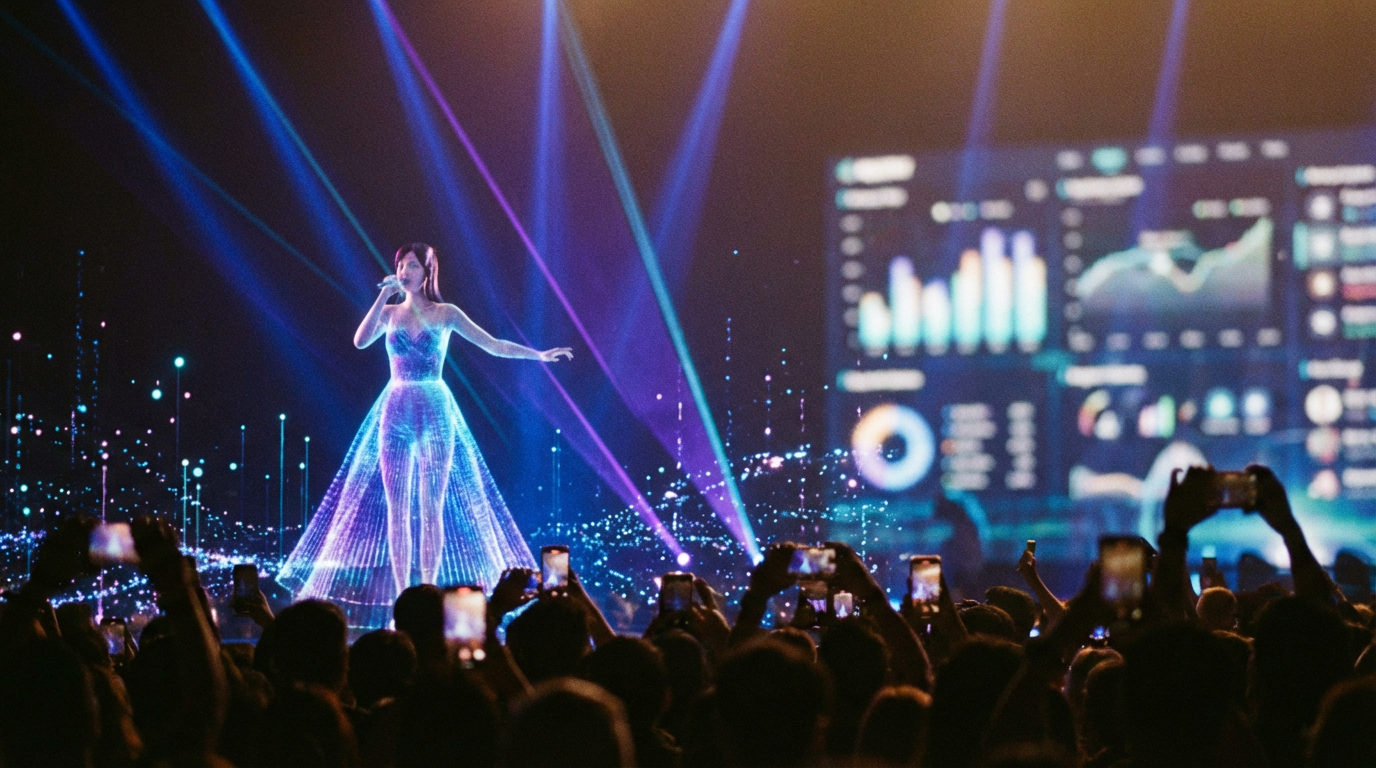
Five days ago, an R&B artist named IngaRose hit #1 on the iTunes charts in the US, UK, France, Canada, and New Zealand. Her song “Celebrate Me” went viral on TikTok, racked up over 300,000 video uses, and she’s amassed 251,000 Instagram followers and nearly a million monthly Spotify listeners.
There’s just one problem: IngaRose doesn’t exist.
The track was created by a synthetic R&B persona who does not exist in real life, powered by Suno, the generative AI music platform. And she’s not even the first phantom musician to pull this off. Before her, Dallas Little, a content creator from Greenville, South Carolina, unleashed Eddie Dalton — another AI creation that held ELEVEN spots on the iTunes top 100 simultaneously, plus the number three album on iTunes.
Meanwhile, Deezer announced that AI-generated tracks now represent 44% of all new music uploaded to its platform, with almost 75,000 AI-generated tracks arriving per day and more than two million per month.
The music charts aren’t being disrupted. They’re being colonized.
The IngaRose Phenomenon
Let’s break down what just happened, because it’s genuinely unprecedented.
“Celebrate Me” went viral on TikTok before hitting the top of the chart. Myers Music released it on March 31, and it climbed steadily through early April, signaling a shift in how AI content competes with human artists on commercial platforms.
IngaRose has more than 240,000 followers and 1.4 million likes on TikTok; 251,000 followers on Instagram; more than 90,000 subscribers on YouTube; and more than 942,000 monthly listeners on Spotify. Those are numbers that would make any indie artist weep with jealousy.
The project’s Spotify profile reveals that the human behind IngaRose is a songwriter called Ingrid for whom “this is her way of getting her work out into the world.”
The Instagram bio says the songs use “Human-written lyrics” and are “refined using Suno.”
So there’s at least some transparency here. But five of the current U.S. iTunes top 100 songs are attributed to the artist, and most listeners scrolling through TikTok had absolutely no idea they were vibing to a synthetic voice.
This is essentially the new playbook: write real lyrics, run them through Suno, build a polished artist persona with AI-generated visuals, and let TikTok’s algorithm do the rest. As Music Ally noted, the invitation to artists who want to record the songs or work with a songwriter emphasizes the fact that this is a “Suno as calling card” strategy.
Before IngaRose, There Was Eddie Dalton
If IngaRose is the headline, Eddie Dalton is the proof that this wasn’t a fluke.
A mysterious blues singer named Eddie Dalton took the iTunes charts by storm with a string of viral hits, and the “artist” behind the music is entirely artificial. The bot had at least three songs in the iTunes Top 10, including “Another Day Old,” “Running to You” and “Cheap Red Wine,” appearing on iTunes charts in the UK, Australia, Germany, Canada and the Netherlands.
According to Luminate, Eddie’s digital dominance comes from just 6,900 actual track sales, which reveals something crucial about how easily iTunes charts can be gamed. Unlike Spotify or Billboard, Apple’s iTunes Store still operates partly on a download-purchase model. Chart position is driven by sales volume over a given period. That means a coordinated purchasing campaign can propel tracks up the chart rapidly.
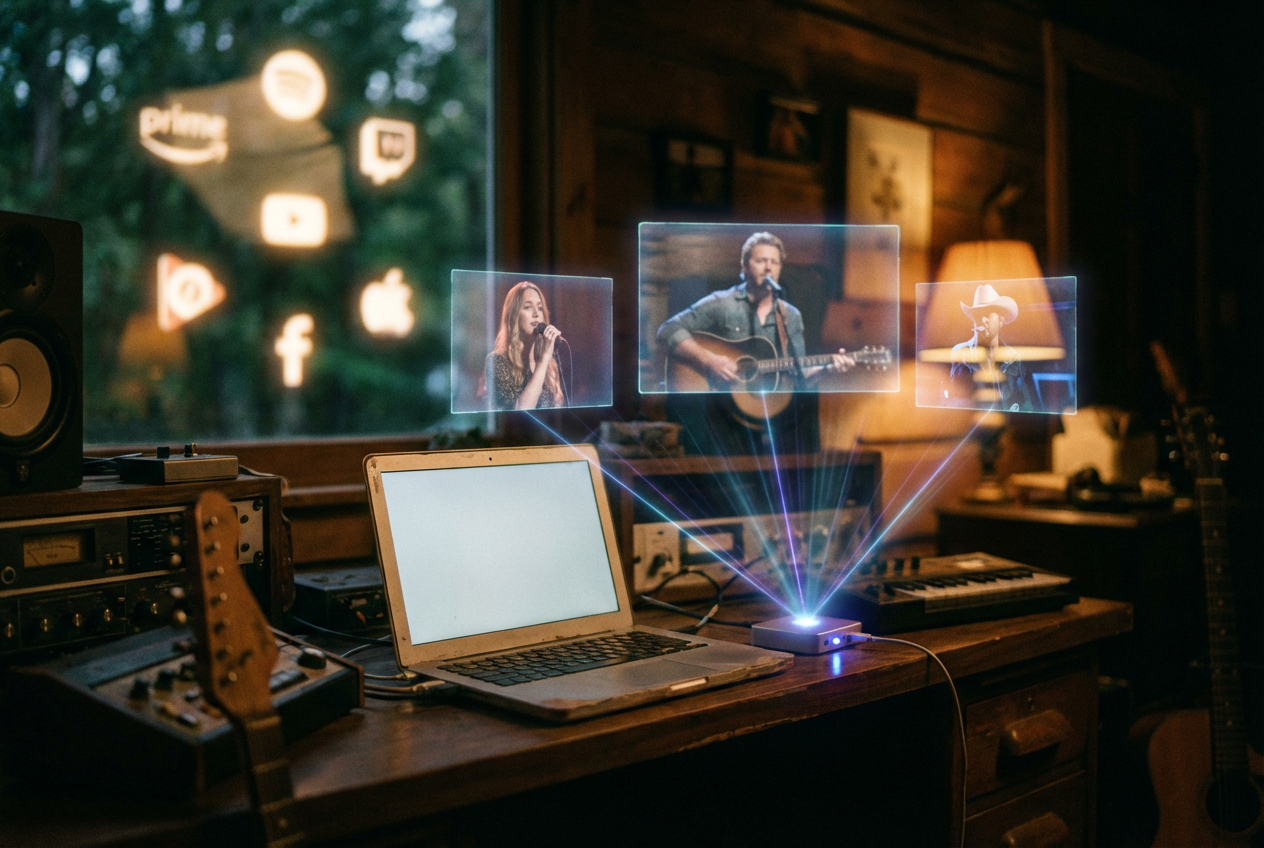
Dalton was created by content creator Dallas Little, who operates a company called Crunchy Records, producing AI-generated music and videos. And he didn’t stop at Eddie. Little also appears to be behind other AI personas including a country singer and characters with names like Cody Crotchburn and Cade Winslow.
The 44% Problem
While phantom artists game the charts from one direction, the sheer volume of AI music flooding streaming platforms is creating a crisis from another.
Deezer reported receiving around 60,000 AI tracks per day in January, up from 50,000 in November, 30,000 in September, and just 10,000 in January 2025, when it first launched its AI-music detection tool. The growth curve is exponential. At this rate, AI-generated uploads could outnumber human ones before the end of the year.
Here’s what makes Deezer’s data so important: the consumption of AI-generated music on the platform is still very low, at 1-3% of total streams, and 85% of these streams are detected as fraudulent and demonetized by the company. So the music is being uploaded en masse, but hardly anyone is actually listening — and when they do, most of the plays are fake.
Although fully AI-generated music currently accounts for only a small fraction of streams on Deezer — between 1-3% — it’s evident that the primary purpose of uploading these tracks to streaming platforms is fraudulent.
The financial threat is real. According to a study conducted by CISAC and PMP Strategy, nearly 25% of creators’ revenues are at risk by 2028, which could amount to as much as €4 billion.
And Deezer is the only major platform actually talking about it openly. Deezer emphasizes its unique position in the market because it explicitly labels AI-generated content. The company licenses its AI detection technology to third parties and claims it has achieved a false positive rate of less than 0.01%.
The Industry’s Messy Response
The music industry’s reaction to all this has been, to put it charitably, incoherent.
On one hand, Udio carved out settlements and partnerships with Universal Music Group and Warner Music Group last fall, and Suno managed to settle with WMG back in November. On the other, Sony, the only major label that hasn’t settled with either, remains in litigation with both companies.
Suno’s CEO is feeling good about it. “I don’t meet a lot of producers and songwriters who aren’t using Suno at least a little bit in their workflows,” Mikey Shulman told the Hollywood Reporter. “I think people are starting to be a little more comfortable being public and upfront about their use.”
Then there’s the Xania Monet saga from late 2025 that set the template. Xania Monet is the project of a Mississippi-based design-studio owner, who used Suno to turn her lyrics into music. One label offered $3 million to sign her.
The song “How Was I Supposed to Know?” was the first AI song to enter a Billboard radio airplay chart.
Artists like Kehlani and SZA pushed back hard. In a now-deleted TikTok video, Kehlani said, “Nothing and no one on Earth will ever be able to justify AI to me, especially not AI in the creative arts, in which people have worked hard for.”
But the chart numbers kept climbing anyway.
SIQA and the Birth of AI Music Charts
Perhaps the most pragmatic response has come from outside the traditional industry. The SIQA AI Music Top 100 and Top 100 AI Covers debuted January 30, 2026, creating a new standardized way to track and recognize trending AI-generated music.
Their Q1 2026 report is fascinating reading. Only 19% of submitted AI tracks are fully AI-generated; the remaining 81% break down into AI-assisted (48%), where humans lead the creative vision with AI filling other roles, and Human + AI Hybrid (33%), where artists use AI specifically to clone and reproduce their own voice.
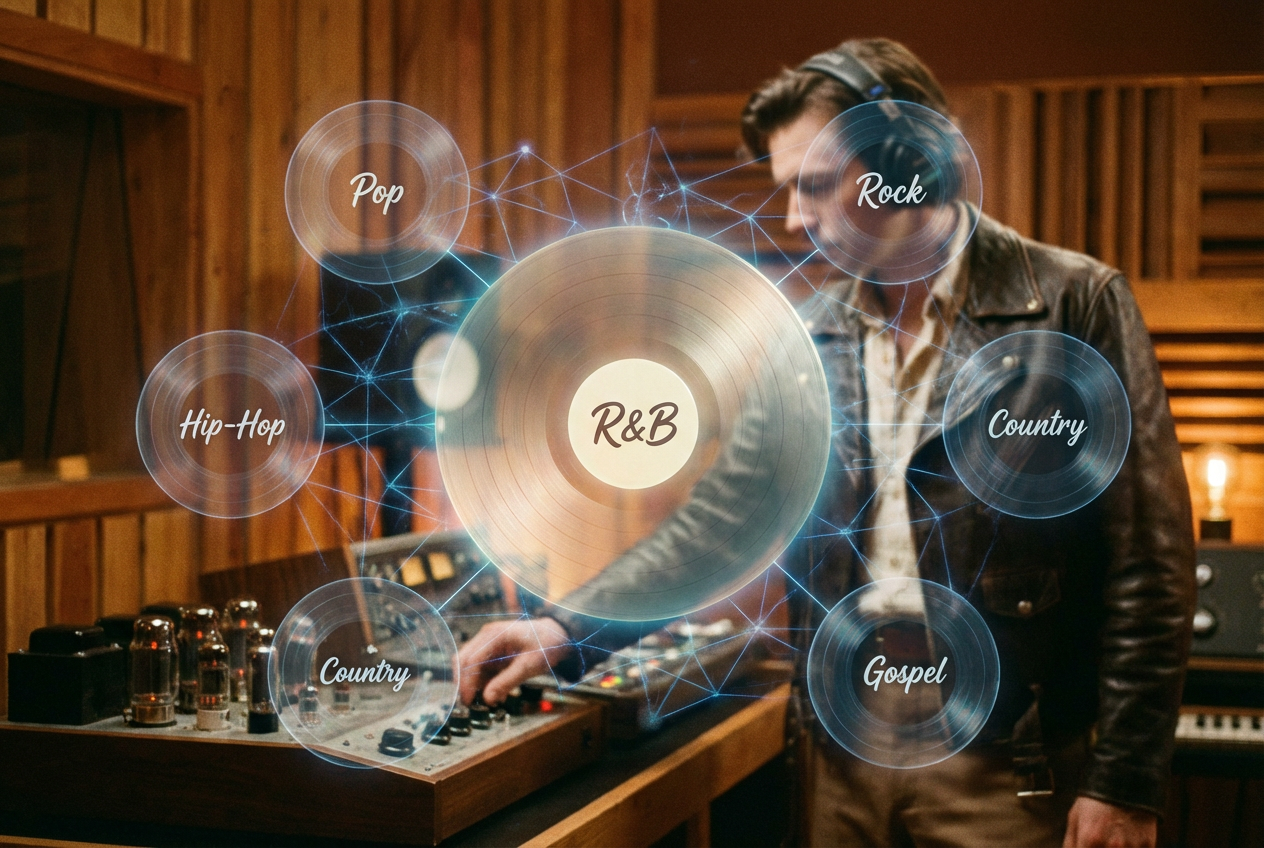
The genre breakdown challenges assumptions too. 31.7% of tracks submitted to SIQA are categorized as R&B/Soul — the biggest genre by a distance, ahead of pop (12.4%), hip-hop/rap (10.9%), rock/alternative (10.7%) and country (9.9%). Even gospel (8.7%) beats Electronic/EDM (5.5%).
That’s right: the AI music revolution is being led by R&B and gospel, not EDM. If you assumed robot music meant four-on-the-floor techno, think again.
SIQA found that 75.8% of submissions were using DistroKid as their distributor. For humans behind GenAI-artist projects, DistroKid is almost as big a power player as Suno.
What This Means for Real Musicians
Here’s the uncomfortable truth: the chart system was never designed for a world where one person in South Carolina can spin up a dozen fictional artists and flood iTunes with AI-generated blues tracks. The infrastructure of music discovery — charts, playlists, algorithmic recommendations — was built on the assumption that behind every song was a human artist investing time, money, and talent.
That assumption is now obsolete.
But there’s a flip side that the doomsday narratives miss. The Xania Monet story isn’t about a machine replacing an artist. It’s about a poet from Mississippi who couldn’t afford studio time finding a way to get her lyrics heard. The IngaRose project appears to be a songwriter using AI as a calling card to attract collaborators. These are humans using AI as a tool to bypass the traditional gatekeepers that have always locked independent creators out.
The real threat isn’t AI-assisted musicians who write their own lyrics and use Suno to bring them to life. It’s the content farms — operations like Crunchy Records that mass-produce phantom artists designed to game algorithms and dilute royalty pools. That’s the distinction the industry needs to draw, and fast.
If you’re an independent musician looking to compete in this landscape, you need to be smarter about visual content. Music videos are no longer optional — they’re how music gets discovered on TikTok, Instagram, and YouTube. Check out The Complete Guide to AI Music Videos in 2026 for a deep dive into what’s possible now.
The Visual Arms Race
Here’s something the IngaRose and Eddie Dalton stories make crystal clear: visual content is now inseparable from music distribution. Both projects leaned heavily on AI-generated videos and imagery to build their personas and fuel TikTok virality.
For independent artists — the real human ones — this means the bar for visual presence keeps rising. You’re competing not just with major-label production budgets, but with synthetic artists who can generate unlimited visual content at near-zero cost.
The good news? The same AI tools that power these phantom artists are available to you. Whether you’re making AI music videos for R&B, hip-hop, or country, the technology to create compelling visuals for your music has never been more accessible. Learn how to make an AI music video that can compete with anything the content farms are putting out — except yours will have a real story behind it.
The difference between an AI-assisted artist using tools to amplify their authentic creative vision and a content farm gaming algorithms with phantom personas? That’s the line the industry is drawing right now. AI music videos for indie artists aren’t a gimmick — they’re a survival strategy in a landscape where visibility is everything.
What Comes Next
The next six months will determine whether the music industry gets ahead of this or gets buried by it. On April 17, Spotify began allowing artists to voluntarily flag AI-generated vocals, lyrics, or production in song credits. Distribution partners include DistroKid, CD Baby, Amuse, and Believe. The feature is opt-in.
Voluntary labeling is a start, but as one industry observer noted, an opt-in system places the entire burden of transparency on the creator — the same creator who may have the strongest incentive to not disclose.
Deezer’s detection-first approach seems more sustainable, but they can’t hold the line alone. Other major streaming services, such as Spotify and Apple Music, take different approaches to AI-generated music, often combining the use of filters to identify low-quality AI music with other transparency efforts left up to the distributors.
Meanwhile, Judge Alvin K. Hellerstein of the Southern District of New York denied Udio’s motion to dismiss just last week, which means the copyright lawsuits that could define the legal framework for all of this are grinding forward.
And in the background, Producer.ai — the iterative AI music tool formerly known as Riffusion — was recently acquired by Google, folded into Google Labs and DeepMind, and rebranded as Google Flow Music. The biggest companies in tech are betting that AI music is going to be a core part of the creative stack, not a passing fad.
The Bottom Line
We’re watching the music industry’s Napster moment play out in real time — except this time, it’s not about distribution. It’s about creation itself. AI-generated artists are topping charts, Deezer is drowning in 75,000 synthetic tracks per day, and the infrastructure that determines what music gets heard was never designed for this.
For musicians, the move is clear: use the tools, don’t get used by them. Write your own lyrics. Build your own visual identity. Create music videos that tell YOUR story. And get them in front of audiences before the content farms drown you out.
Ready to make your music visible? OneMoreShot.ai lets you create stunning AI music videos in minutes — so you can spend less time fighting the algorithm and more time making the music that matters. Because in a world filling up with phantom artists, authenticity backed by great visuals is your strongest weapon.