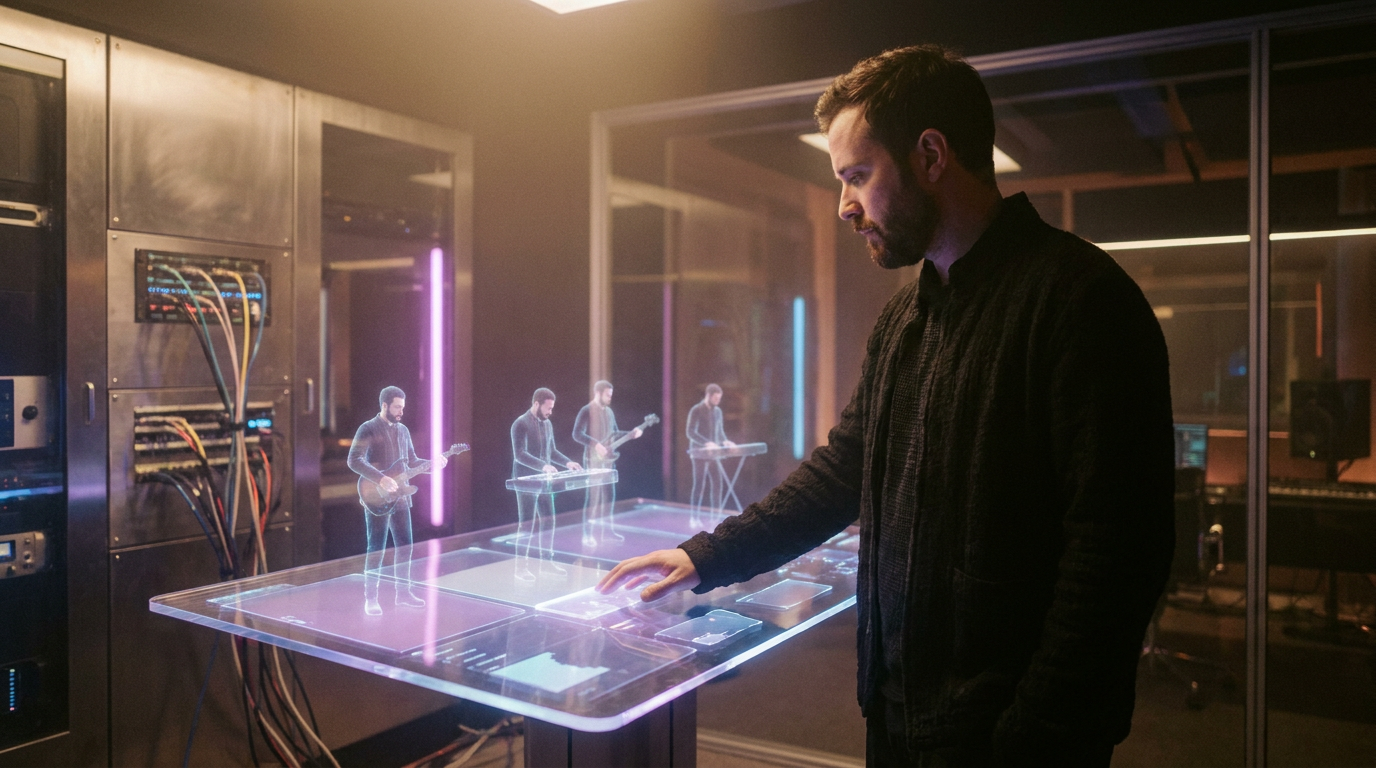
AI Likeness Deals Are Music's Next Frontier
Sunny Hostin just licensed her face to an AI studio. Val Kilmer’s family licensed his likeness from beyond the grave. Michael Caine handed over his voice for an AI audiobook. And all of it happened in the same week.
If you’re a musician watching this unfold and wondering what it means for you, the answer is: everything.
We’re witnessing the birth of a new asset class in entertainment — your likeness, your voice, your you — being packaged, licensed, and deployed by AI systems to create content you never physically appeared in. And while Hollywood is leading the charge, the implications for musicians making AI music videos are enormous.
The Deals That Started It All
Sunny Hostin, co-host of The View, has licensed her name and likeness to the AI startup Fountain 0, becoming one of the most high-profile figures to provide her image for use in AI-generated films and television shows.
The agreement allows the company, which has produced the AI-generated films “Dreams of Violets” and the “Odyssey” adaptation “Odysseus: The Fall,” to produce adaptations of her novels.
Here’s the kicker: the company said Hostin is the first major personality to agree to develop and produce films using the studio’s technology and to license her image and likeness for that purpose.
And she’s not alone. Sir Michael Caine recently licensed his well-known voice to be used for a new audiobook version of The Odyssey, and the family of the late actor Val Kilmer, who died in 2025, have licensed his likeness.
The dead actor will have a significant role in the upcoming film As Deep as the Grave.
That’s three major likeness deals in a single week. The pattern is unmistakable.
What Fountain 0 Proves About Cost and Access
Fountain 0 isn’t some vaporware startup. The 2026 Tribeca Festival set the world premiere of “Dreams of Violets,” a fully AI-generated film produced by studio Fountain 0.
The screening marked the first full-length, live-action film, completely generated by AI, to be accepted by a major film festival.
The budget? The feature-length film cost about $2,000 to make, according to Fountain 0.
Read that again. A 75-minute film. Tribeca-accepted. Two thousand dollars.
The project took three months — built entirely using tools such as Kling AI for video generation, Anthropic’s Claude AI for language-related editing, Google’s Gemini and Nanobanana for research and imagery and Fountain 0’s own technology for blocking and frame accuracy — all from Koosha’s home in London.
Now Fountain 0’s CEO Ash Koosha is actively recruiting talent to license their likenesses for AI productions. Fountain 0 and its Iranian CEO Ash Koosha are hoping budding actors will license their likeness to appear as an AI character in TV or films.
Signees can earn anywhere between $15 and $700 for their likeness to be used in AI content.
For musicians, this should set off alarm bells — and light bulbs — simultaneously.
Why This Matters for Musicians Specifically
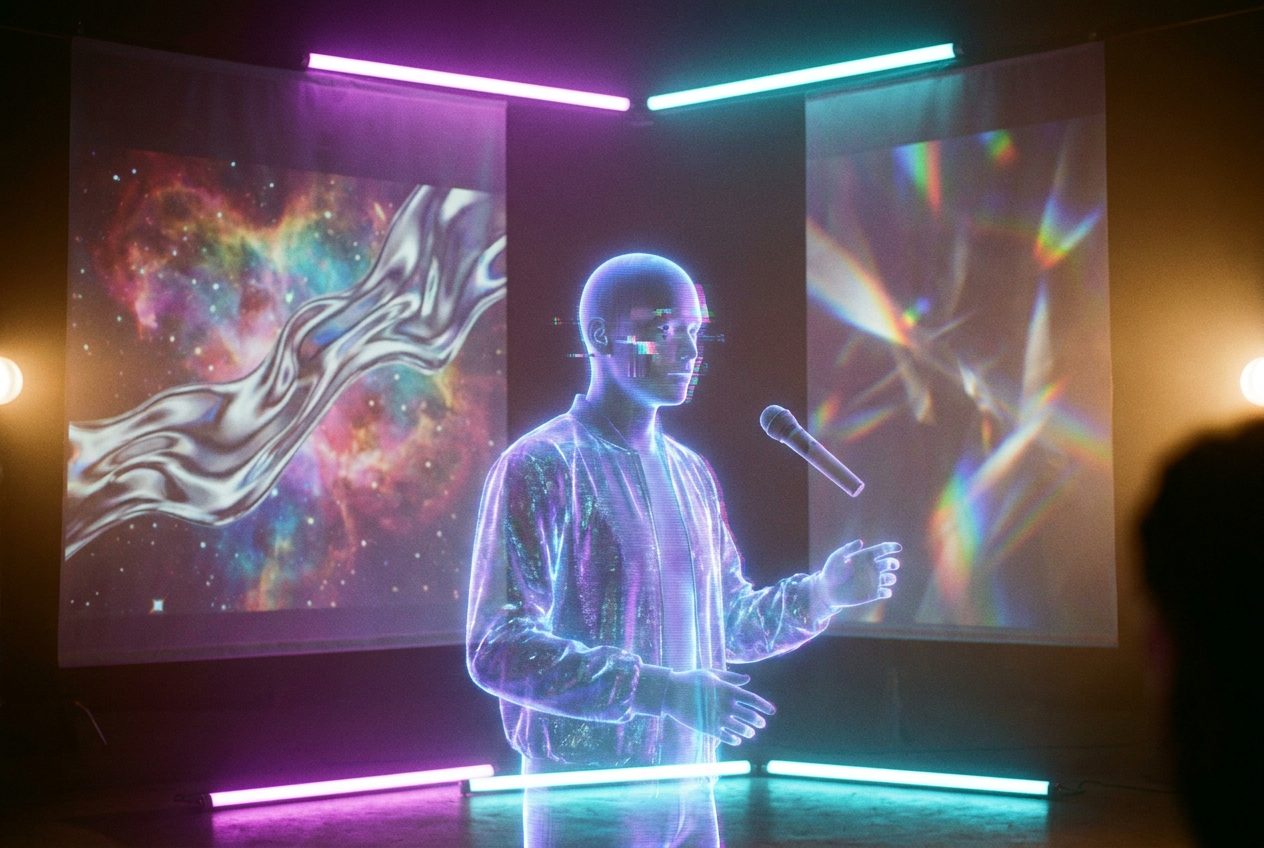
The conversation around AI likeness licensing has so far been dominated by Hollywood — actors, TV hosts, estates of deceased celebrities. But think about what musicians already do:
- You already have a visual brand. Album covers, press photos, Instagram presence, live show footage — your face is part of the product.
- Music videos demand your likeness. Unlike a novel adaptation where the author’s face is optional, music videos are built around the artist’s visual identity.
- You’re already creating AI music videos. If you’re using AI video generation tools to make visuals for your tracks, you’re one step away from inserting a licensed version of yourself into those visuals.
The gap between “I used AI to make a music video” and “I licensed my likeness so AI can generate me performing in any setting” is closing fast. And the musicians who understand this first will have a massive advantage.
If you’re already making AI music videos, you know the biggest limitation: keeping your actual face and body consistent across shots. Likeness licensing infrastructure solves that problem at the pipeline level.
The Hollywood Framework You Should Actually Care About
While Hostin was signing her deal, something else was happening behind closed doors. Blockbuster filmmakers, A-list actors, and the world’s top technologists have been meeting in secret for 3 years to discuss AI and filmmaking.
And now a plan has gone public.
A group of Hollywood filmmakers, executives and actors spent the last three years secretly meeting with Silicon Valley executives. The meetings were first convened in November 2023 by LucasFilm pioneer Kathleen Kennedy and American Film Institute dean Susan Ruskin.
Their output? A document called “Human Generative Workflows” that draws a critical line in the sand. The framework outlines that the acronym “AI” is “used in the same breath to mean a color grading assist in DaVinci Resolve and a prompted synthetic performance that replaces an actor.”
The group’s solution is a classification system that separates AI-assisted tools (things like upscaling, color grading, and motion capture cleanup) from AI-generated content (prompt-based synthetic performances that substitute for human creative work).
Why should you, as a musician, care about a Hollywood classification system? Because the “Human Generative Workflows” document is intended to “stimulate industry discussion and provide a common vocabulary for thinking about authorship in an era of generative AI.” And music is next.
This framework directly impacts how your AI music videos will be categorized. Did you use AI to generate background visuals while you performed on camera? That’s AI-assisted — and under this framework, your work is copyrightable. Did you prompt an AI to generate a synthetic version of yourself performing? That’s AI-generated — and the rules are murkier.
The Likeness Playbook for Independent Musicians
Here’s where it gets practical. The emerging likeness economy creates a tiered system that musicians can exploit right now:
Tier 1: Control Your Visual Identity in AI Video
Before you can license your likeness, you need to own it in the AI context. That means creating a reference pack — consistent photos, angles, expressions, and performance footage — that AI video tools can use to maintain your visual identity across shots.
This is already the biggest challenge in AI music video creation. Character consistency across a full music video has been the holy grail, and in the broader AI video industry, character consistency extending past 60 seconds is becoming standard.
Whether you’re making AI music videos for hip-hop, pop, or indie, your ability to maintain a consistent visual presence across every frame is what separates a professional-looking video from an obvious AI experiment.
Tier 2: Use AI Doubles for Content at Scale
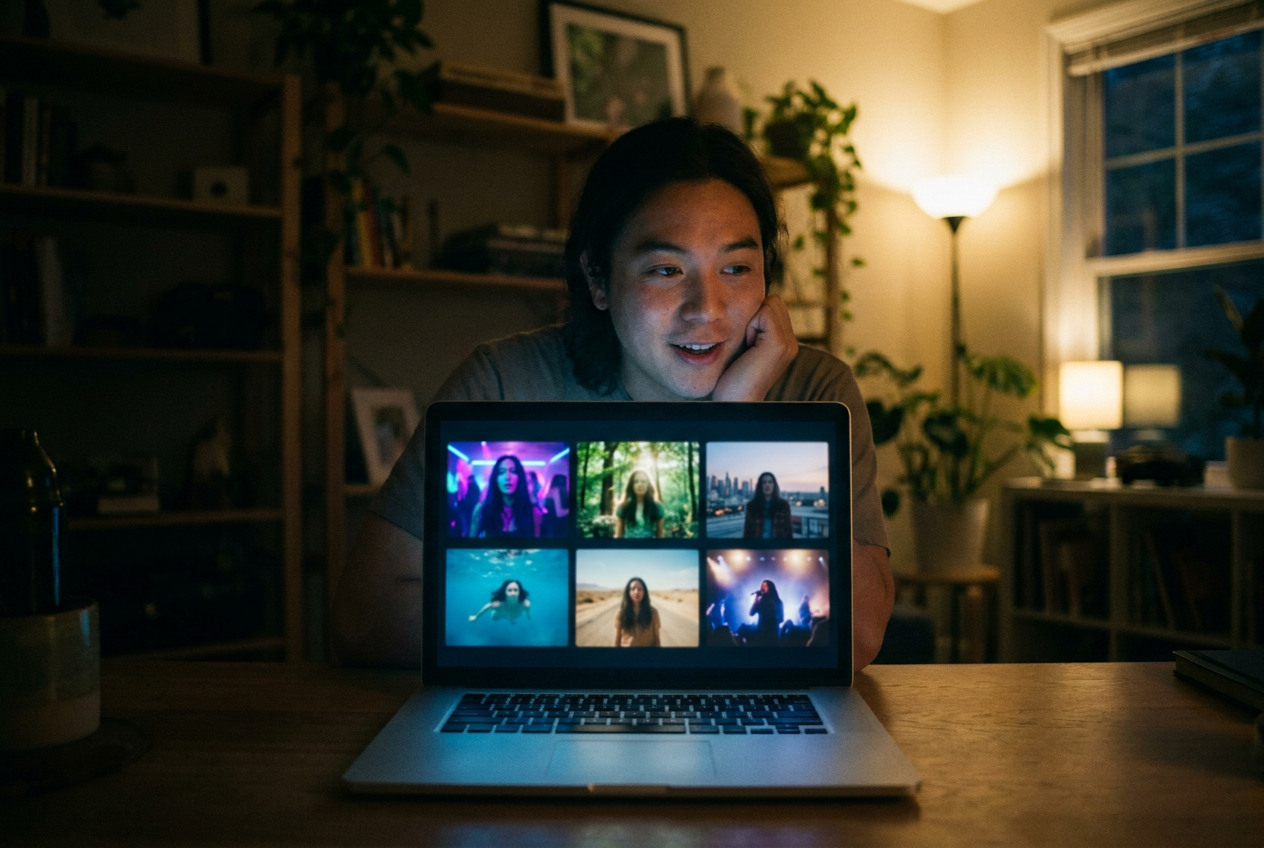
Imagine generating 10 different music video concepts for the same track — each in a different visual style — all featuring a consistent AI version of yourself. One in a cyberpunk cityscape for your EDM audience. One in a sun-drenched desert for your country crossover. One in a moody, rain-slicked street for your R&B fans.
This isn’t science fiction. The tools exist today. The workflow just needs the likeness infrastructure to catch up. Check out genre-specific approaches in our guides for EDM, country, and R&B.
Tier 3: License Your Likeness for Collaboration
This is the Hostin model applied to music. Imagine licensing your likeness to a visual album project. Or to a fan remix platform where fans can create music videos featuring your AI double performing their remixes of your tracks. Or to a sync licensing agency that can instantly generate a “performance” of your song in any visual context a brand needs.
The UMG-Hook deal already showed that fan remix licensing is viable at scale. Now add likeness licensing on top of that, and you’ve got an entirely new revenue stream.
The Risks You Can’t Ignore
Let’s not sugarcoat this. Likeness licensing carries real dangers:
Deepfake vulnerability. Once your likeness is in an AI system, the risk of unauthorized use skyrockets. Platforms now auto-flag content where AI-generated faces appear for more than 3 continuous seconds, reducing misinformation risks by 68%. But detection is always playing catch-up with generation.
Cheap replacements. Signees can earn anywhere between $15 and $700 for their likeness to be used in AI content. That’s not exactly a windfall. For emerging artists desperate for exposure, it could become a race to the bottom.
Loss of control. Hostin reportedly retains control over how her image is used. But not every deal will be structured that way, especially for artists without leverage. Sunny Hostin has ABC’s legal team behind her. You probably don’t.
The authenticity question. While there has been an aggressive backlash to AI from numerous artists, some have been attempting to embrace the technology. The question isn’t whether AI likeness deals will happen — they’re already happening. The question is whether your audience will accept an AI version of you, or whether it will feel like a betrayal.
How the Patent Landscape Shapes Everything
Here’s the infrastructure angle most musicians are missing. Music IP Holdings (MIH) unveiled a broad patent framework for generative AI, designed to drive responsible innovation while providing additional ways to protect artists, songwriters and their music.
The patents extend beyond music to a broad range of content, including audio, video, film, animation, images and text, as well as applications involving name and likeness.
That last phrase — “name and likeness” — is the connection point. The same patent framework that governs AI-generated music now explicitly covers likeness rights. Udio and GRAI are the first technology companies to license the MIH patents, supporting the development of licensed AI services including covers, remixes and a wide range of interactive music experiences.
As Udio’s CEO Andrew Sanchez put it: “With MIH, we’re partnering to implement the infrastructure that protects artists and establish the guardrails that ensure AI amplifies human creativity.”
The infrastructure for licensed AI likeness use in music is being built right now. The artists who engage with it early — understanding the terms, setting the precedents, shaping the norms — will have far more control than those who show up after the rules are written.
What You Should Do This Week
-
Audit your visual assets. Gather high-quality photos and video of yourself from multiple angles, in different lighting conditions, with different expressions. This is your likeness reference pack. You’ll need it.
-
Read your distribution agreements. Does your distributor or label claim any rights over your likeness? What about AI-generated derivatives? Most standard agreements weren’t written for this era. Know what you’ve signed.
-
Make AI music videos on your terms. The best way to establish your AI visual identity is to create it yourself, before someone else does. Start with tools like OneMoreShot.ai that let you generate music videos with creative control.
-
Watch the patent landscape. MIH’s patents cover likeness use in AI content. Whether you’re creating or licensing, understanding these frameworks protects you.
-
Talk to your fans. Before you drop an AI-generated music video featuring your digital double, gauge your audience’s comfort level. Transparency isn’t just good ethics — it’s good marketing.
The Big Picture
Hostin said something in her announcement that should resonate with every independent musician: “I have spent much of my career talking about who gets a seat at the table. What excites me about this technology is the possibility that creators may no longer have to wait for someone else to give them that seat. We may be able to build our own table.”
That’s the real promise of AI likeness licensing for musicians. Not replacing yourself — extending yourself. Being in the music video that would have cost $50,000 to shoot. Appearing in the visual content for every single in your catalog, not just the one your label funded. Performing visually in contexts you never could physically.
The AI likeness economy is coming to music. It’s not a question of if — it’s a question of whether you’ll be the one licensing your likeness, or whether someone else will be generating it without your permission.
The smart move is to start building your AI visual identity now, while you still control the terms. Tools like OneMoreShot.ai make it possible to create stunning AI music videos in minutes — and every one you make establishes your visual presence in the AI era. The musicians who move first won’t just survive the likeness revolution. They’ll own it.