AI Music Detectors Are Now the Biggest Weapon
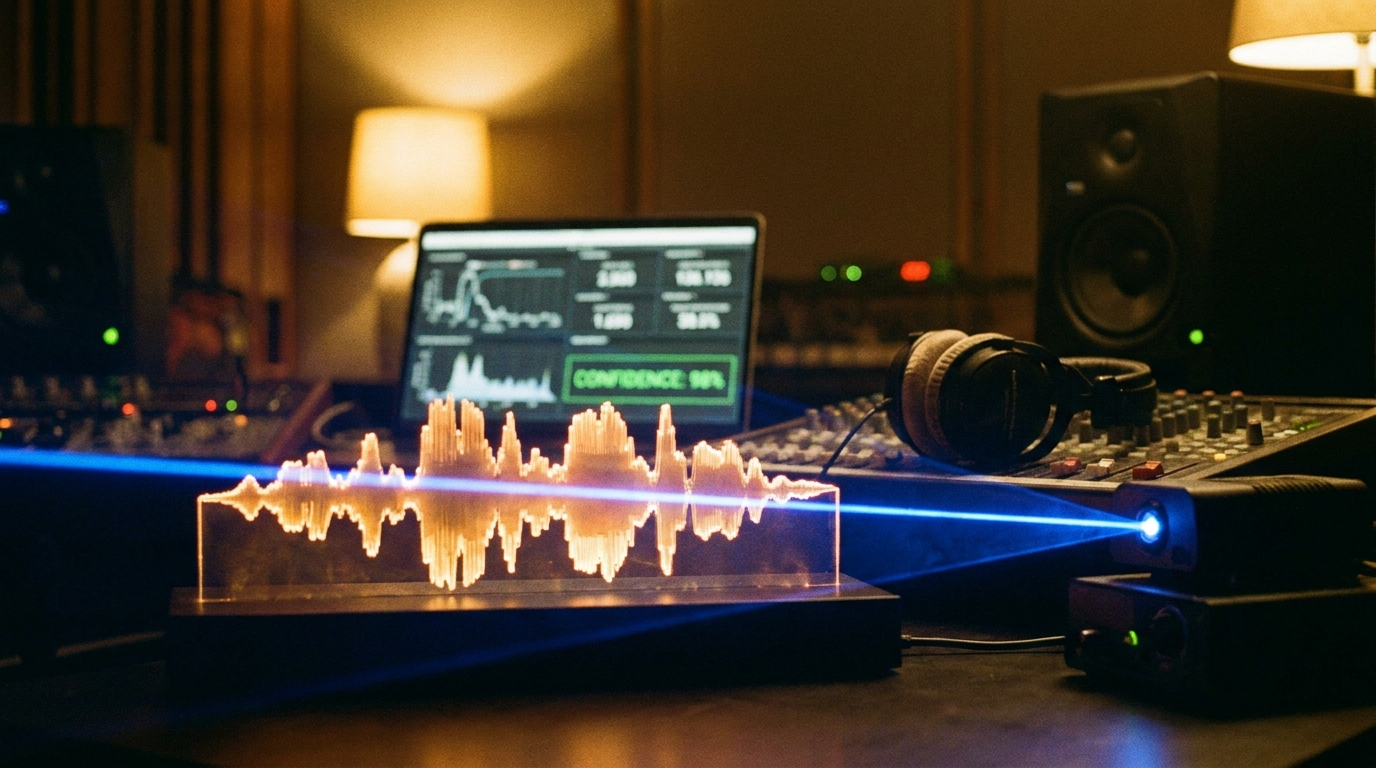
Two days ago, producer Medasin posted a single tweet that racked up nearly 200,000 views in hours. The target: Tyga’s brand-new album $TARFACE. The weapon: an AI music detection tool called Human Standard.
Welcome to the era where AI detectors — not labels, not critics, not journalists — decide whether your music is real.
The Tyga $TARFACE Accusation
Tyga surprised fans with an ‘80s-inspired direction via his new album and persona, $TARFACE. However, amid the commendations for this artistic shift, there were many folks immediately claiming this was AI-generated or assisted.
Then Medasin turned up the heat.
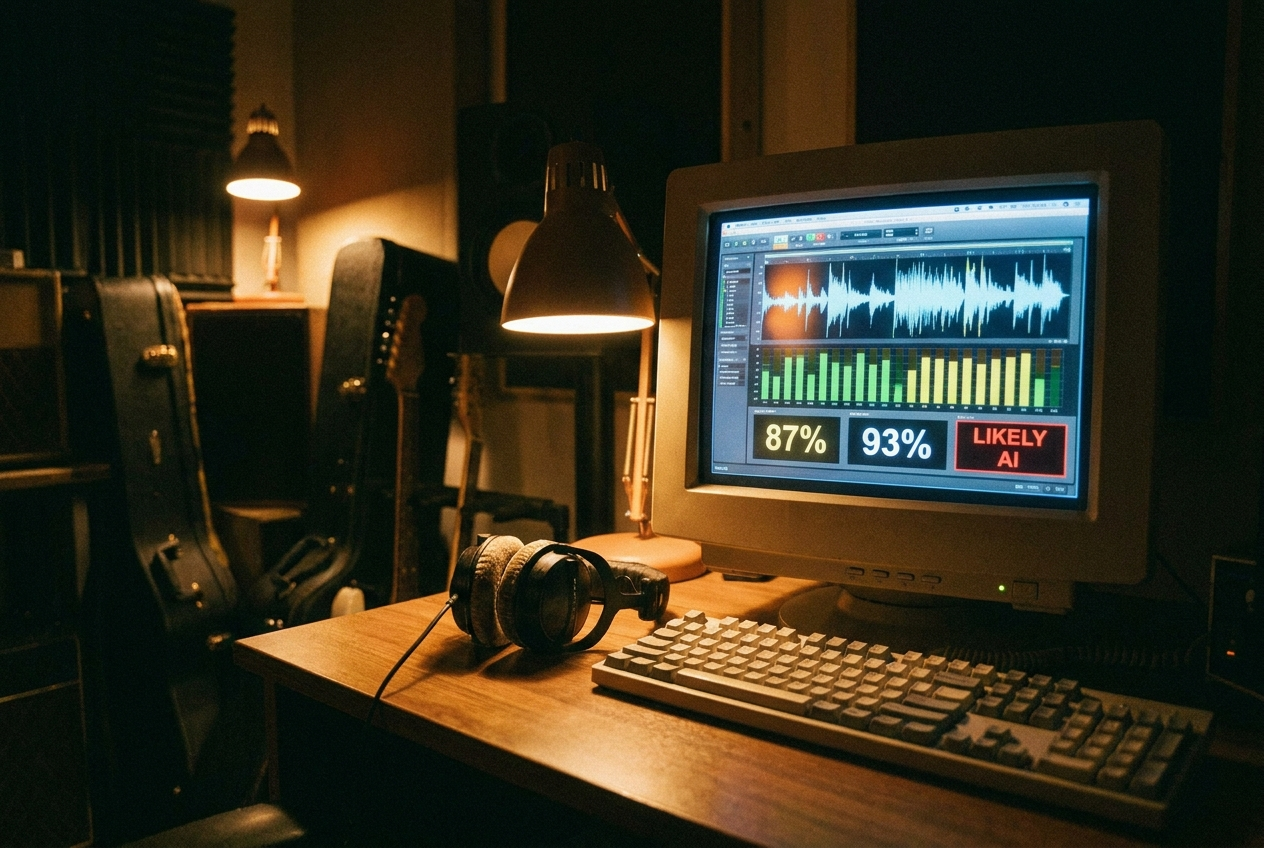
Producer Medasin, the same artist who previously claimed to expose Fenix Flexin’s “RUBBERZ” as AI-generated, publicly accused Tyga and his team of using artificial intelligence on $TARFACE. According to Medasin, he tested “AFFECTION” through an AI detection model created by @humanstandard_, which allegedly identified the song as “likely AI” generated with Treblo software.
These accusations also rest on the AI software program Treblo, Tyga linking up with Fenix recently, and the financial connection to EMPIRE.
Medasin highlighted EMPIRE’s role in distributing both “$TARFACE” and “RUBBERZ,” questioning if there is a financial link with Treblo.
Here’s the part that matters most for every musician reading this: Medasin pointed to other AI music detection models becoming popular, prevalent, and more effective, and warned artists that it will be much harder for them to obfuscate this information moving forward, saying their credibility is at risk if they don’t come clean from jump.
Neither Tyga himself nor his team have responded to these allegations at press time.
And Tyga isn’t the only one getting caught in the crosshairs.
Josh Fawaz and the Australian Chart Scandal
Across the Pacific, a different kind of AI detection drama has been unfolding for weeks. Australian DJ and producer Josh Fawaz was forced to add AI credits to his music. The decision followed an ABC investigation into his chart-topping single “Like a Prayer,” Fawaz’s cover of the Madonna classic which spent four weeks atop the Australian national airplay charts. Fawaz received widespread condemnation from the Australian music community over his use of generative AI tools in producing the song.
The numbers here are staggering. The track, which has been streamed more than 38 million times on Spotify alone, also made the ARIA Top 20 Australian Albums Chart. It is the No. 1 song on the latest ARIA Top 20 Australian Dance Singles Chart and also occupies the fourth spot on the ARIA Top 20 Australian Singles Chart after peaking at No. 2.
After the backlash, Fawaz added credits for generative AI vocals and AI drums to the song. His defense? “I use AI as a tool,” he said.
But the damage was already done. The move comes amid a wider reckoning unfolding across social media, where DJs en masse continue to call out Fawaz and other creators accused of using AI to fake their way into the scene and divert streams from real artists.
Now ARIA confirmed on August 3, 2026 it is “working through” what an AI chart change could look like for the official Australian charts. The framework under discussion would exclude generative AI recordings unless they use authorised infrastructure and show human-led artistry.
One producer with an AI detector. One investigation by a public broadcaster. And suddenly, the entire Australian chart system is being rethought.
The Rise of AI Music Detectors as a Category
This isn’t just about Tyga or Fawaz. AI music detection has quietly become one of the most important new categories in the music industry.
AI-generated music now accounts for approximately 39% of all daily uploads to streaming platforms, with an average of 60,000 AI tracks delivered every single day according to Deezer. For labels, distributors, and DSPs, detecting AI-generated content before it enters catalogs is no longer optional. It is a business requirement.
The AI music detection landscape in 2026 includes established solutions from Forward Digital (authio), ACRCloud, IRCAM Amplify, Deezer, Sightengine, and Pex, among others. And then there’s Human Standard — the tool Medasin used to go after both Fenix Flexin and Tyga.
Human Standard helps music platforms, labels, distributors, rights teams, and creators verify human authorship and detect AI-generated audio with transparent, evidence-based signals. Their system is designed for real-world moderation and trust workflows where false positives are costly and decisions need to be auditable. Instead of relying on a single opaque score, Human Standard analyzes music through multiple detection models to identify synthetic, human, and hybrid characteristics.
How Accurate Are These Tools?
Here’s where it gets interesting — and messy. By 2026, algorithmic refinements have raised the average reliability threshold dramatically. Current AI detectors achieve roughly 85–93% detection accuracy when analyzing professionally produced tracks.
That sounds good until you realize what it means in practice. An 85% accuracy rate on 60,000 daily uploads means thousands of tracks could be wrongly flagged — or wrongly cleared — every single day.
Technology for detecting pure AI music is becoming widely used. It can be accurate, but it can’t tell the difference between legitimate human-backed AI artistry and content intended for streaming fraud.
And that’s the core tension. A producer using AI as one creative tool among many — like Charli XCX’s team did with the Concatenator plugin on Music, Fashion, Film — could get flagged by the same systems designed to catch full-on AI slop. They worked with an “audio mosaicing” plugin called Concatenator, created by DataMind Audio, who describe their mission as “building an ecosystem of expressive instruments that treats creators as partners, not raw material.” Nobody’s accusing AG Cook of being a fraud. But where’s the line?
The Detection Arms Race
The AI detection space is now in a full-blown arms race, and both sides are getting more sophisticated.
ACRCloud’s neural network detects output from 8 specific platforms: Suno, Udio, Sonauto, ElevenLabs, Seed, MiniMax, Mureka, and Riffusion. What makes ACRCloud different from consumer-facing detectors is the segment-level analysis. Instead of giving you a single yes/no score, it identifies which specific segments of your track are AI-generated. This is powerful for hybrid productions where AI and human elements are layered together — it can tell you that the verse is human but the chorus was generated.
On the streaming side, Deezer went the furthest. The company built proprietary detection technology, tagged 13.4 million AI tracks in 2025, and began selling its detection tool to other companies in January 2026. Deezer holds two patents on its methodology.
The EU AI Act now requires major AI models to embed machine-readable watermarks into generated content. Apple Music has introduced optional AI content labeling for distributors. Spotify and Amazon are expected to adopt similar detection systems.
And on the consumer side, Spotify’s global head of artists, marketing, and policy Sam Duboff said the streaming behemoth was urging human artists who use AI to clearly declare so on the platform by using a new beta feature. This followed the removal of an astounding 75 million “spammy tracks” from Spotify’s database over the span of 12 months.
Meanwhile, Treblo (formerly Sonauto) is an AI music generator that turns text prompts into full-length songs in any style in seconds.
Curiously, Sonauto AI rebranded to Treblo two days before the release of “Rubberz.” The timing raised eyebrows, and it speaks to a growing dynamic: as detection tools improve, AI music generators are getting better at hiding their tracks, too.
What This Means for Musicians
If you’re a real musician — someone who writes, performs, and produces your own work — the rise of AI detectors is actually good news. But only if you understand how to navigate the new landscape.
1. Transparency Is No Longer Optional
Labels that distribute AI-generated content without proper verification risk demonetization, catalog removal, and legal liability. The Josh Fawaz case proved that even a chart-topping track can collapse under scrutiny when AI use goes undisclosed. Whether you’re using AI for vocal processing, drum patterns, or visual content, disclose it. The days of hoping nobody notices are over.
2. AI Detection Can’t Tell Intent
Here’s the nuance everyone misses: these tools detect what was used, not how or why. A musician who feeds their own live recordings through an AI processing tool gets flagged the same way as someone who typed a text prompt and called it a song. Modern music often blends live performance, digital production, and generative tools. The detection binary of “human” versus “AI” doesn’t capture the creative spectrum most musicians actually occupy.
3. Your Visual Strategy Matters More Than Ever
Here’s where things get practical. While AI audio detection is becoming weaponized, AI video remains in a completely different zone. Nobody’s running detection tools on music videos the same way they’re scanning audio. The RIAA’s recent AI labeling system explicitly exempts music videos. And visuals remain one of the strongest signals of authenticity — showing your face, your personality, your artistic vision.
This is exactly why investing in your music video strategy is one of the smartest moves you can make in 2026. A compelling visual presence says “real artist” in a way that audio alone can’t anymore.
The Bigger Picture: Trust Infrastructure for Music
What we’re watching isn’t just a series of scandals. It’s the construction of an entirely new trust infrastructure for the music industry.
Think about it:
- Detection tools scan the audio
- EU AI Act labeling mandates disclosure at the distribution level
- Chart eligibility rules gate what gets counted
- Platform policies determine what gets paid
- Social accountability (the Medasin model) fills the gaps where formal systems don’t reach
Every layer reinforces the others. Miss any one of them, and your credibility is exposed.
For musicians creating AI-assisted content the right way — using AI tools to enhance human creativity, not replace it — this is ultimately a good thing. The scammers get caught. The real artists get differentiated.
How to Stay on the Right Side
Whether you’re making hip-hop, pop, R&B, or indie, here’s the playbook for surviving the detection era:
Document your process. Keep project files, session recordings, and creative notes. If someone runs your track through a detector and gets a false positive, you’ll want receipts.
Disclose voluntarily. If you used AI anywhere in your workflow — even just for a drum pattern or a mastering chain — say so. Voluntary disclosure looks like professionalism. Forced disclosure after an investigation looks like fraud.
Build your visual identity. AI music detectors are scanning audio. They’re not scanning your music videos, your live performances, or your social content. Use visuals to tell your story and prove your authenticity. Our guide on how to make an AI music video walks you through the entire process.
Understand the tools. Know what Human Standard, ACRCloud, and Deezer’s detection tech actually do. Know their limitations. If you’re using AI plugins as creative tools (like AG Cook did with Concatenator), understand how your output might be interpreted by detection systems.
Lead with your humanity. At the end of the day, the artists who survive the detection era will be the ones who can point to their creative choices, their emotional intent, and their human fingerprint on every track. The detectors catch the lazy. They reward the genuine.
The Future No One’s Ready For
AI music detectors are about to become as standard as Content ID. Every platform will run them. Every distributor will require them. And every artist — from bedroom producers to Tyga — will have their work scanned before it reaches a single listener.
The rise of AI music detection models, such as Tidal’s efforts, are becoming more widespread and efficient. Artists could face a loss of credibility if they don’t disclose AI use upfront.
The question isn’t whether your music will be scanned. It’s whether you’re ready for the results.
For musicians who want to stay ahead of this shift, the smartest move is simple: make undeniably human music, and pair it with visuals that amplify who you are. Your video presence is the one place AI detectors can’t touch — and it’s the strongest proof of authenticity you’ve got.
Ready to build that visual identity? Create your first AI music video on OneMoreShot.ai and start showing the world what a real artist looks like.