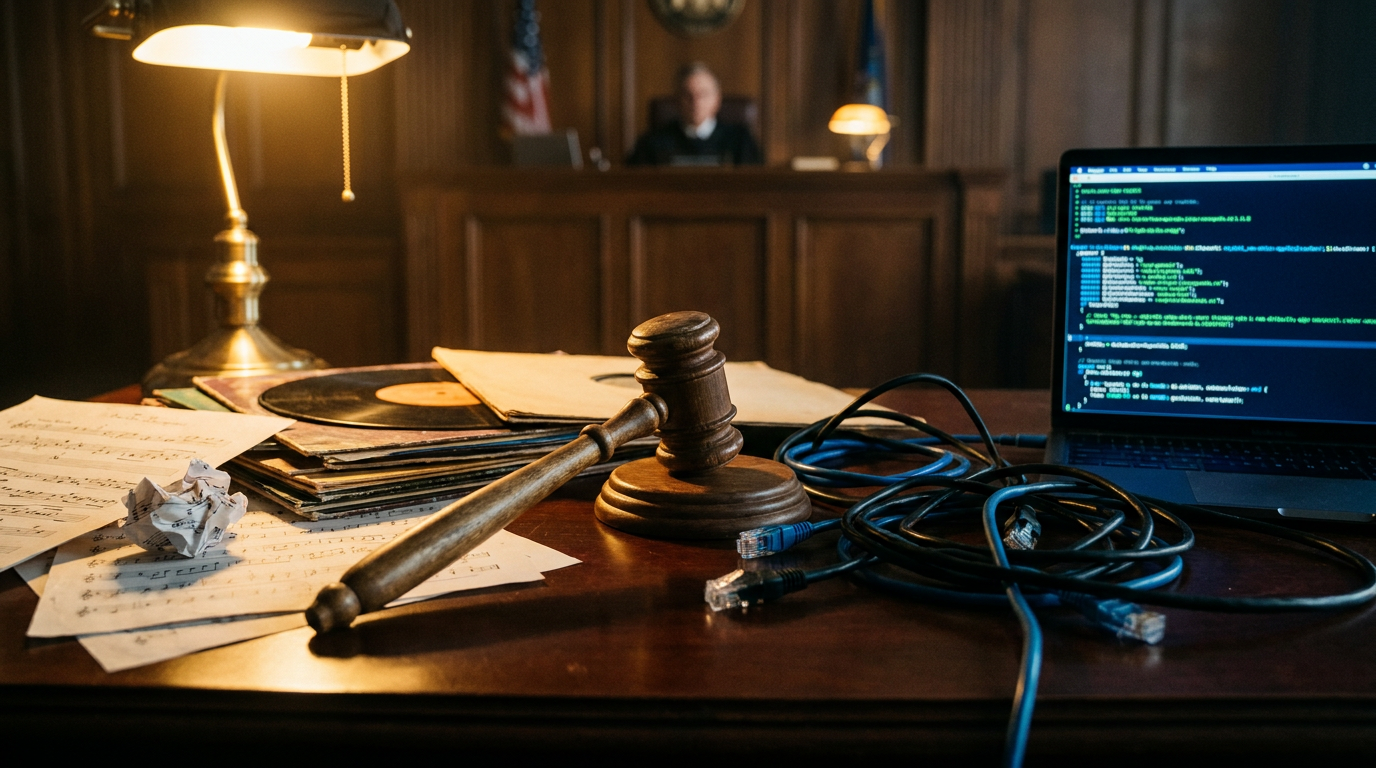
AI Music's $1B Lawsuit Targets the Supply Chain
The AI music copyright war just opened a second front — and this one goes after the companies that made the scraping possible in the first place.
On August 17, 2026, Round Hill Music filed copyright infringement lawsuits against Suno and Anthropic — and said it has no intention of settling either one. The suits seek damages that could potentially exceed $1 billion , covering songs by artists like Bonnie Tyler (“Total Eclipse of the Heart”), the Goo Goo Dolls (“Iris”), and more than 10,000 other compositions and recordings.
But here’s the detail that changes everything: the Suno complaint also names Israeli data firm Bright Data as a contributory infringer — the first time a scraping vendor has been pulled into an AI music case.
This isn’t just another lawsuit. It’s a strategic escalation. And if you’re a musician trying to understand where AI is headed, the supply chain is where you should be looking.
The Bright Data Bombshell
Until now, every AI music lawsuit followed the same script: rights holder sues AI company for training on copyrighted music without permission. Suno, Udio, Anthropic — they’ve all been on the receiving end. But the AI companies have always been the only defendants.
Round Hill just changed the rules. Round Hill alleges that Bright Data supplied the proxy networks and scraping tools that let Suno take music and lyrics from licensed platforms, making it liable for contributory infringement.
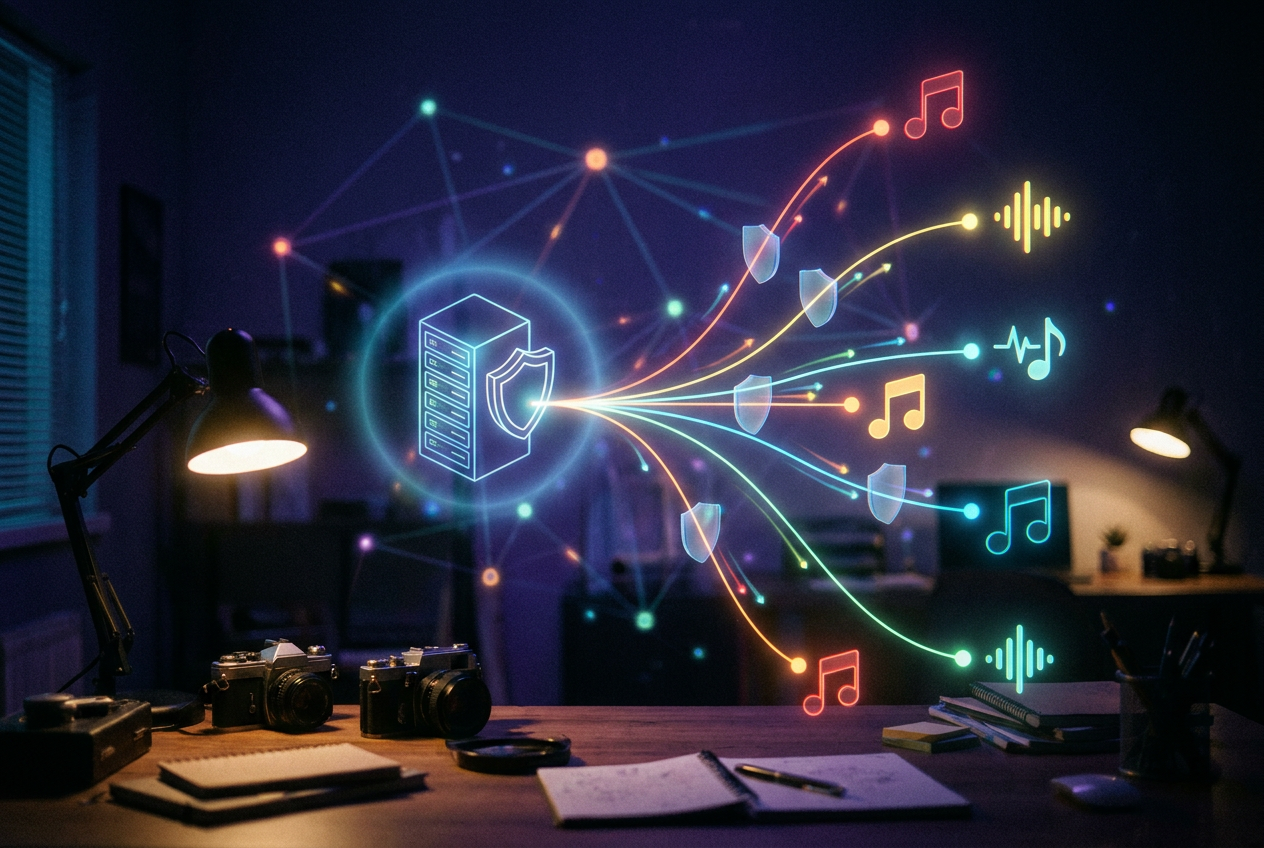
Why does this matter? Because it targets the infrastructure layer. Bright Data is a commercial proxy and web scraping service that routes requests through rotating IP addresses. The source code shared with investigative outlet 404 Media showed that Suno used commercial proxy services — specifically Bright Data — to route scraping requests through rotating IP addresses and bypass YouTube’s anti-bot protections.
Think of it this way: if Suno is the getaway driver, Round Hill is now also prosecuting the company that sold the car. And that analogy isn’t mine — it’s essentially what contributory infringement law is designed to address.
How the Scraping Actually Worked
The evidence comes from an unlikely source: a hack. The breach stemmed from compromised employee credentials. The attacker, who went by the alias ellie.191, accessed Suno’s code repository and extracted a file that logged 2,013,545 ingested clips. Within that file, dataset annotations assign 113,879 hours to YouTube Music, 62,117 hours to Pond5, 17,615 hours to Genius, and 12,287 hours to Deezer.
Let those numbers sink in. Over 113,000 hours of YouTube Music alone. That’s nearly 13 years of non-stop audio, scraped and fed into AI models.
The code also contains instructions for using proxy services — reported to be Bright Data — to download songs from YouTube, targeted searches for a cappella recordings, and an attempt to amass roughly one million podcast hours via PodcastIndex.
Suno’s spokesperson said the exposed code is “outdated and no longer in use.” But that line isn’t going to hold up well in court when the code matches exactly what the labels have been alleging for two years.
The DMCA Angle That Changes Everything
Here’s where it gets legally devastating for Suno. On the same day Round Hill filed its suit, Judge F. Dennis Saylor IV issued two orders in UMG Recordings v. Suno. Sony and Universal can now pursue a DMCA Section 1201(a) claim over Suno using YT-DL and YT-DLP to pull audio off YouTube.
This is a separate legal theory from copyright infringement, and it’s crucial. The practical significance: even if the Massachusetts federal court rules in 2027 that training generative AI models on copyrighted music is transformative fair use, that ruling cannot extinguish the DMCA anti-circumvention claims.
In plain English: Suno could win on fair use and still lose on the DMCA. Because under DMCA Section 1201, bypassing a technological measure that controls access to copyrighted works is independently prohibited — without a fair use exemption — regardless of what Suno ultimately did with the content.
The same week, a Massachusetts federal judge allowed independent recording artists to proceed with copyright claims that Suno created unauthorized derivative works and bypassed YouTube protections to obtain songs to train its platform.
That’s three major legal blows in a single week. Round Hill’s billion-dollar suit. The DMCA green light. And indie artists surviving dismissal.
Why Round Hill Won’t Settle
Most of the AI music lawsuit story so far has been about deals. Warner Music settled with Suno on November 25, 2025. UMG settled with Udio in October. The pattern has been: sue, negotiate, license.
Round Hill is explicitly breaking that pattern. Round Hill Music is demanding a jury trial, signaling (at least for now) it has no intention to follow the other music companies in settling or striking a licensing agreement with the AI generators.
Josh Gruss, Round Hill’s CEO, and the company’s legal team have made it clear they want precedent, not a payout. “Copyrighted works have been used to build multi-billion dollar businesses, and in the case of Anthropic a company now valued at more than a trillion dollars, while the songwriters and publishers who created the foundations of that value have received nothing. There is nothing fair about that use, and we look forward to making our arguments to the Court and in front of a jury.”
And the evidence backing their case keeps growing. The Suno filing says Bright Data’s role was not publicly known until 404 Media reported on July 15 that hacked Suno source code named YouTube Music, Deezer, and Genius among the platforms it scraped. The filing also cites the searchable music datasets The Atlantic published in June 2026.
Against Anthropic, Round Hill is using the AI’s own words. The complaint reproduces what it says was Claude’s response when asked to rewrite three of the songs at issue “for a modern audience.” Claude said of the results: “These renders keep landing very close to the originals.”
What This Means for the AI Music Landscape
The supply chain strategy is legally brilliant because it attacks the economic viability of unauthorized scraping at its root. If proxy vendors and scraping services face contributory infringement liability for helping AI companies grab copyrighted music, the cost of building unlicensed training datasets skyrockets overnight.
Here’s the landscape as it stands right now:
-
Sony is the last major still in court against both Suno and Udio, and court schedules now push any US fair-use ruling into 2027.
-
Round Hill is suing both Suno and Anthropic for up to $1B each and refusing to settle.
-
The DMCA stream-ripping claims have survived dismissal in both the Suno and Udio cases.
Anthropic faces suits from Universal Music Publishing, ABKCO, Concord, and BMG in addition to Round Hill.
Suno has been sued by all three major music companies.
The walls are closing in, and the “move fast, license later” strategy that Suno pioneered is looking increasingly expensive.

What This Means for Musicians
If you’re an independent musician, this lawsuit wave affects you in ways that aren’t immediately obvious. Here’s how to think about it:
1. Your Music Was Probably Scraped Too
The class action raises a problem the UMG settlement doesn’t solve: major-label deals only cover major-label catalogs. Independent artists who distribute through DistroKid, TuneCore, CD Baby, and similar aggregators have no seat at the licensing table. Their recordings were scraped from Spotify, YouTube, and SoundCloud alongside major-label tracks, but they’ll see none of the UMG settlement revenue.
Round Hill’s lawsuit matters for independent artists because it pushes for court precedent rather than private settlements. A jury verdict — especially one that assigns liability to the scraping supply chain — would establish rules that protect everyone, not just the artists whose publishers have billion-dollar legal budgets.
2. The Licensed vs. Unlicensed Split Is Accelerating
The AI music world is splitting into two camps. On one side: licensed platforms like Google DeepMind Lyria and Eleven Music, which have both started highlighting the legality of their training datasets and their commercial licensing capabilities. On the other: tools that scraped first and asked questions later.
For musicians, this means being intentional about which AI tools you use. When you create visuals for your music, you want to be on the right side of that line. Tools like OneMoreShot.ai for AI music videos operate on the visual side — generating video content from text prompts, not training on copyrighted audio. That distinction matters more every day.
3. AI Video Is Your Safest Creative Advantage
Here’s the irony in all this legal chaos: while AI-generated music faces an existential legal reckoning, AI-generated video for music is thriving. The lawsuits are about audio training data — scraping songs, memorizing melodies, reproducing vocals. AI music video generation works fundamentally differently.
When you use AI to create visuals for your original music, you’re using AI as a production tool, not a replacement for human creativity. You’re the artist. The AI is your video crew. That’s a completely different legal and ethical equation.
If you haven’t explored what’s possible, check out The Complete Guide to AI Music Videos in 2026 or learn How to Make an AI Music Video step by step. Whether you’re making hip-hop visuals, indie aesthetics, or EDM visualizers, the tools are ready and the legal ground is solid.
4. Disclosure Is Becoming Non-Negotiable
Spotify’s AI disclosure update is important because AI disclosure is no longer just an administrative step. It can affect how a release or artist profile is surfaced, recommended, promoted, and monetized.
The lesson: transparency wins. Label your AI-assisted work clearly. Use AI video proudly. But be honest about it. The artists who will thrive in this landscape are the ones who use AI as a tool while maintaining their authenticity as creators.
The Bigger Picture
We’re witnessing the most consequential week in AI music law since the original RIAA lawsuits in June 2024. The supply chain attack strategy — going after proxy vendors, not just AI companies — could reshape how every AI model gets built going forward.
For musicians, the practical takeaway is this: the legal system is slowly but aggressively establishing that your music has value, that scraping it without permission has consequences, and that those consequences now extend to everyone in the chain who made the scraping possible.
The licensed AI tools are winning. The unlicensed ones are fighting for survival. And musicians who lean into AI for what it does best — visual content, production efficiency, creative experimentation — are positioned on the right side of history.
Your songs deserve protection. Your visuals deserve to be stunning. And you don’t need to wait for a $1 billion lawsuit to resolve to start making AI music videos that elevate your art. Get started with OneMoreShot.ai and put AI to work for your music, not against it.