AI Music Videos Hit a Consent Crossroads in 2026
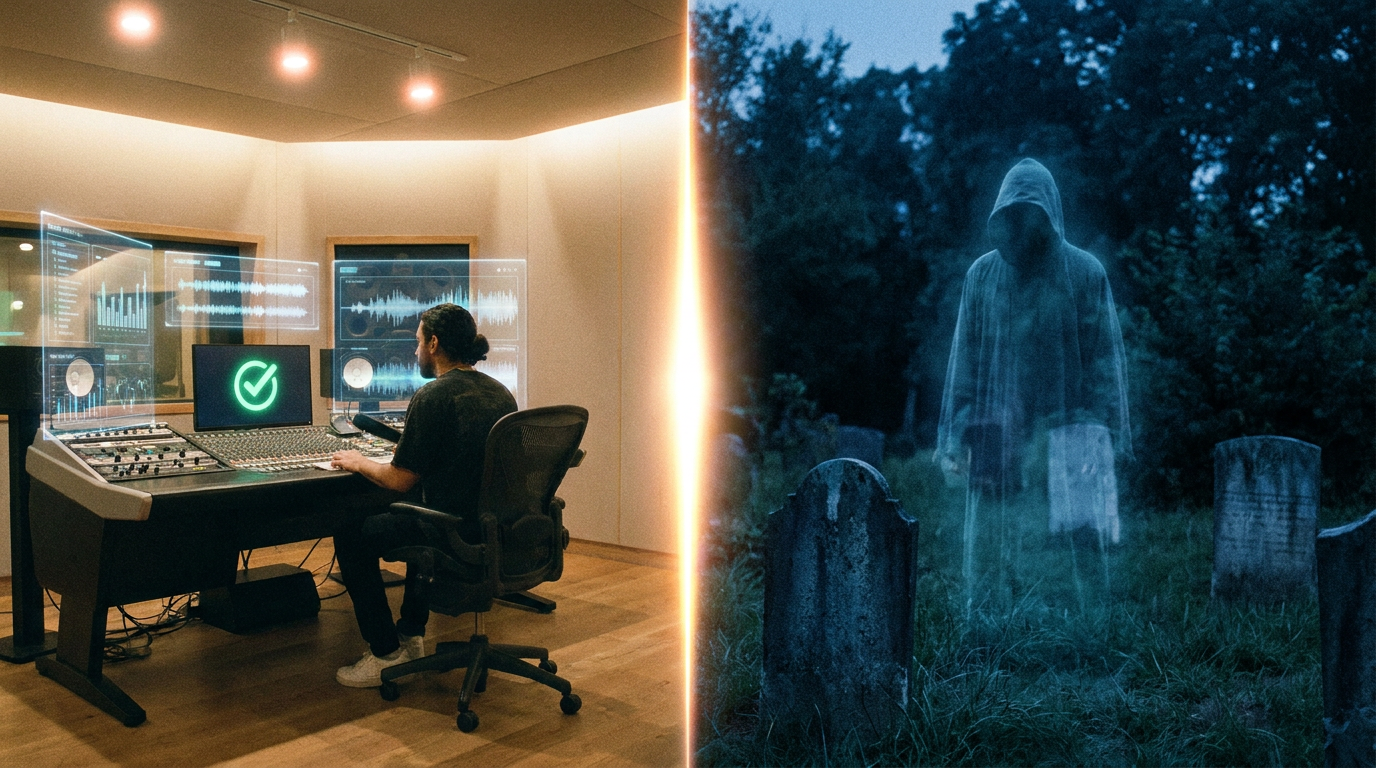
Last week, two things happened within 24 hours of each other that perfectly capture where AI music videos stand right now.
On Thursday, May 21, Spotify and Universal Music Group announced a landmark licensing deal to let fans create AI-powered covers and remixes of their favorite songs — with artist consent baked in from day one. Spotify’s stock surged 13%.
On Friday, May 22, Rich Homie Quan’s estate released “Still Dead,” a posthumous single featuring an AI-generated music video that recreated the late Atlanta rapper in scenes he never filmed — walking through a cemetery, hugging his children, taking phone calls in luxury cars. The internet erupted.
Same week. Same technology. Two radically different approaches to consent. And the gap between them is the defining story of AI music in 2026.
The Spotify-UMG Deal: Consent as a Business Model
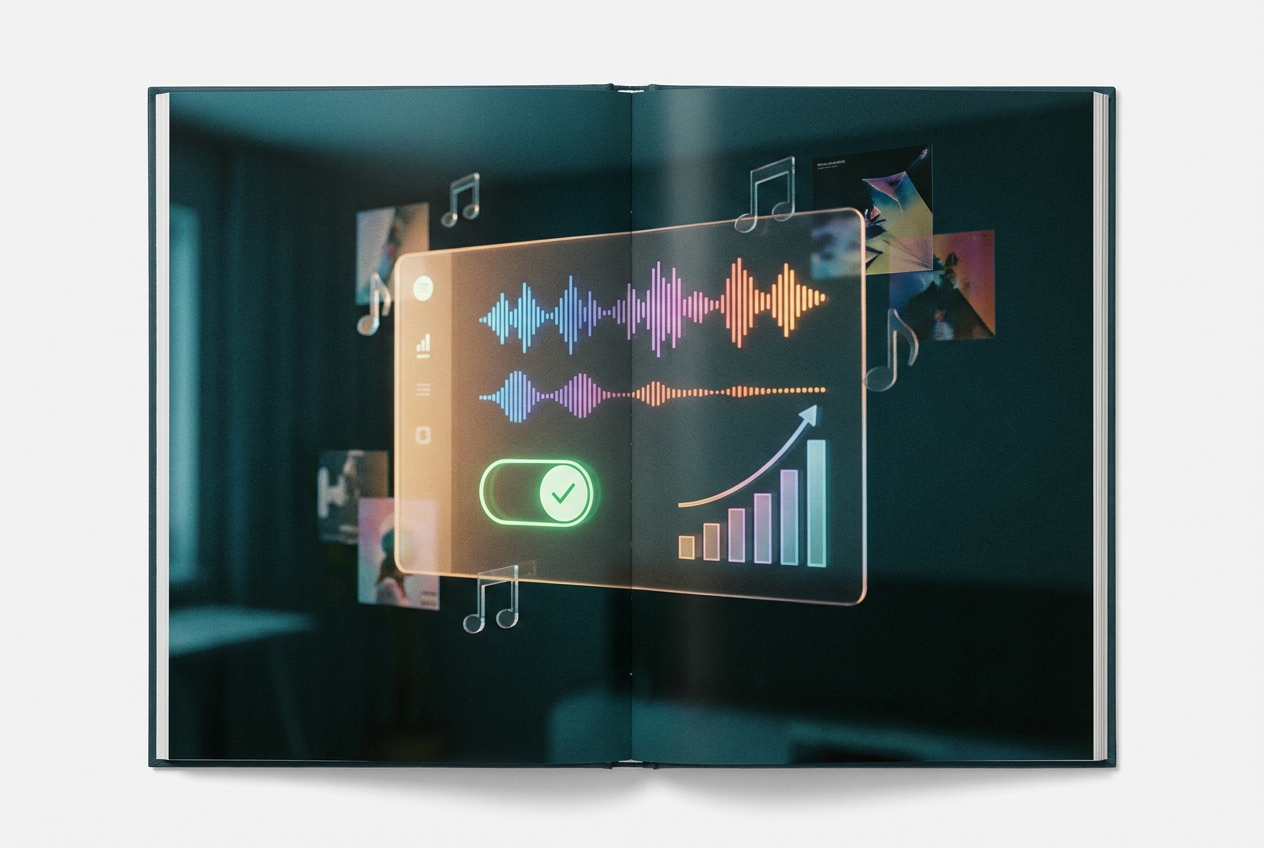
Spotify announced it has partnered with Universal Music Group to allow fans to use generative AI technology to create covers and remixes of their favorite songs. This isn’t some vague handshake. The tool will launch as a paid add-on available only to Spotify’s Premium subscribers and will offer a revenue share with participating artists for the AI-generated music based on their work.
The framework is built on three pillars that sound simple but represent a genuine sea change: consent, credit, and compensation.
Here’s why this matters: Participation is opt-in, so only those who choose to join will have their catalogues available for fan remixing and reinterpretation. Taylor Swift doesn’t want her music remixed by strangers? She doesn’t opt in. Drake thinks it’s cool? He does. The power stays with the artist.
Universal Music is home to artists including Taylor Swift, Ariana Grande, Drake and Billie Eilish. That’s not a niche catalog — that’s a significant chunk of the world’s most-streamed music.
The AI tools would be created through “upfront agreements, not by asking for forgiveness later,” Spotify said — a direct shot at companies like Suno and Udio that have been building their businesses on the “move fast and break things” playbook.
And the market noticed. Spotify’s share price surged 13% on Thursday, marking its best day in over three months. Wall Street apparently likes it when you build AI features on a foundation of licensing agreements rather than lawsuits.
Rich Homie Quan’s “Still Dead”: What Happens Without Consent
Now let’s talk about the other side of the coin.
Rich Homie Quan’s estate released “Still Dead” with an AI-generated music video that quickly prompted debate online.
Since Rich Homie Quan’s passing in 2024, fans have continued to revisit his catalog while watching how his team handles future releases.
The video is… a lot. The video opened with an AI-rendered Quan walking through a cemetery before shifting into scenes that place him in what appears to be a club, inside a home with his children, outside a residence near luxury cars, on a plane, in New York, and inside a hotel room.
One scene shows him being approached by law enforcement, which connects loosely to the song’s lyrics. Later, a child figure, presumed to be a young version of the late Atlanta rapper, is seen rapping in a bedroom before running to hug his older self.
The reaction was swift and brutal. Music critic Anthony Fantano wrote, “This is messed up as hell.” Fans were even more blunt: one user called the use of AI to show a deceased man interacting with his children deeply unsettling.
Many social media users criticized the decision to digitally recreate the rapper after his death. Several commenters expressed discomfort with the growing use of AI technology involving deceased artists who cannot personally approve how their image and likeness are being used.
Not everyone was outraged. Other fans defended the release, emphasizing that the project was authorized by Rich Homie Quan’s estate and that it helps provide financial support to his family, especially considering his role as the family’s primary earner before his death.
But here’s the thing that makes this case particularly uncomfortable: the conversation is especially sensitive because the song itself deals with danger, mortality, and the fear of not making it home to one’s children. The AI-generated visuals depict exactly the scenario the song fears — a man separated from his kids — using the face of someone who actually died. That’s not tribute. That’s something else entirely.
This Isn’t the First Time — And It Won’t Be the Last
The Rich Homie Quan video didn’t happen in a vacuum. Earlier this year in March, 50 Cent released a music video for his Max B collaboration “No More Tricks, No More Tries.” He used the video to troll several other artists including Jim Jones, Maino, Fabolous, and Dave East. And fans were not impressed by the use of AI in the video.
A few commenters noted the potential hypocrisy. They asked why the AI-generated Quan faces backlash when the Tupac hologram at Coachella in 2012 did not receive the same level of criticism.
It’s a fair question with a simple answer: context and technology have evolved. In 2012, the Tupac hologram was clearly a spectacle — everyone knew it was a projection at a live event. In 2026, AI-generated video can create scenes that look like someone actually filmed them. The uncanny valley isn’t a valley anymore. It’s flat ground. And that changes the emotional math entirely.
As one fan put it in a post that captured the broader mood: “It’s a debate about legacy, consent, and whether AI is preserving an artist … or replacing their voice with something that only looks like them.”
Spotify’s Bigger Play: The “Verified by Spotify” Badge
The UMG remix deal wasn’t Spotify’s only consent-forward move. Just three weeks earlier, on April 30, the company rolled out another significant feature.
As AI-generated artists and tracks flood music streaming platforms, Spotify is rolling out a new “Verified by Spotify” badge to help listeners more easily identify authentic human artists.
At launch, profiles that appear to primarily represent AI-generated or AI-persona artists are not eligible for verification.
At launch, more than 99% of artists that listeners actively search for will be verified.
The scale of the problem Spotify is trying to solve is staggering. Sony Music recently sought the removal of over 135,000 AI-generated tracks impersonating its artists across streaming platforms. Meanwhile, rival service Deezer reported that nearly 44% of new daily uploads on its platform are now AI-generated.
Read that again. Nearly half of new uploads on Deezer are AI-generated. We’ve gone from “AI might flood streaming platforms” to “AI has flooded streaming platforms” in about 18 months.
This is why Spotify’s twin moves — the verification badge and the UMG licensing deal — matter so much. They’re drawing a clear line: AI is welcome, but only with consent, attribution, and compensation. If you’re a musician trying to understand this landscape, our complete guide to AI music videos breaks down the tools and strategies that work on both sides of this line.
The Industry Is Choosing Sides
Spotify is leaning further into AI as it holds to its promise of reaching 1 billion active users by 2030. Executives laid out the planned pathway for hitting that number, as well as $100 billion in annual revenue, with new features including the ability to create AI-generated personalized podcasts, user-generated covers and remixes using AI and more.
Four years after introducing the concept of the Spotify Machine, the event mapped out the next evolution: a service moving from curation and recommendation into an era of generation.
Meanwhile, the lawsuit landscape continues to heat up. In May 2026, Poseidon Wave Media LLC, the corporate entity representing the independent ambient instrumental duo The American Dollar, filed a landmark copyright infringement lawsuit against Suno in the U.S. District Court for the Southern District of New York.
Sony Music Entertainment has maintained the strictest legal posture, refusing to settle with either platform and pursuing active litigation. Sony’s ongoing case against Udio is scheduled for a critical status conference on May 29, 2026.
The music industry is essentially splitting into two camps: those building consent-first AI systems (Spotify, UMG’s partnerships, Warner’s settlements) and those fighting over what was built without it.
For independent musicians, the choice is increasingly clear. If you’re making AI music videos for hip-hop or any other genre, the tools that respect artist rights and give you control over your creative output are the ones worth investing in. The Wild West era is ending.
What This Means for Your Music Videos
Here’s where it gets practical. If you’re creating visuals for your music in 2026, the consent question isn’t abstract — it directly affects your creative decisions.
Use your own likeness. The safest and most powerful AI music videos are the ones where you control the inputs. You can create wildly creative, genre-bending visuals without using anyone else’s face, voice, or copyrighted material. Whether you’re making AI music videos for pop, EDM, or indie, the creative possibilities with consent-first tools are essentially limitless.
Understand the licensing. If you’re using AI tools that pull from existing datasets, know what those datasets contain. The days of using AI models trained on stolen catalogs are over. Today, ethical artists use models trained exclusively on licensed or public-domain data.
Label your AI usage. Distributors like DistroKid have started requiring creators to disclose if their tracks are AI-assisted and categorize the level of AI generation. Transparency isn’t just ethical — it’s increasingly required for platform visibility.
Don’t recreate real people without permission. This should be obvious, but the Rich Homie Quan situation shows it apparently isn’t. It can be ethical only when consent and control are treated as the foundation. If the person clearly consented, the use is transparent, and the project stays within the boundaries they approved, some families find it meaningful. When consent is unclear, or when the audio generates new speech that the person never said, the risk of harm rises quickly.
The Bigger Picture
Music executives say the industry’s stance on AI is beginning to shift from fear toward more pragmatic adoption. However, they argue the technology will only gain broader acceptance if companies handle licensing, attribution and artist compensation responsibly — and keep human creators at the center of the work.
That’s the crux of it. AI isn’t going away. The technology is incredible. The generative AI in music market, valued at $642.8 million in 2024, is projected to reach $3 billion by 2030 with a CAGR of 29.5%. The question was never “will AI change music?” It was always “will the people making it get a say?”
Last week gave us both answers at once. Spotify and UMG showed the industry what consent-first AI looks like: opt-in participation, revenue sharing, and tools that make fans feel like collaborators rather than pirates. Rich Homie Quan’s estate showed what the absence of those guardrails looks like: backlash, heartbreak, and a debate about whether we’re honoring an artist’s legacy or hollowing it out.
If you’re making AI music videos, the lesson is clear. The technology is only as good as the ethics behind it. Create boldly. Use every tool available. Push the boundaries of what music videos can look like. But always start with consent — because in 2026, that’s not just the moral choice. It’s the smart one.
Start Creating With Consent Built In
The best part of the consent-first approach? It doesn’t limit your creativity — it unlocks it. When you own your inputs and control your outputs, you can create fearlessly.
OneMoreShot.ai lets you generate stunning music videos from your own music in minutes, with full creative control over every visual choice. No scraped datasets. No borrowed likenesses. Just your music, your vision, and AI that works for you. Try it today and see what consent-first creativity looks like.