AI Slop Now Accounts for 44% of New Music Uploads
The numbers are in, and they’re worse than anyone predicted.
Nearly half of all new music uploaded to streaming platforms is now fully AI-generated. Not “AI-assisted.” Not “co-written with AI.” Fully synthetic, prompt-to-publish, zero-humans-involved tracks flooding the catalog at industrial scale.
Deezer, the global music streaming platform, is now receiving almost 75,000 AI-generated tracks per day, representing roughly 44% of the daily uploads.
That amounts to more than 2 million AI-generated tracks uploaded per month.
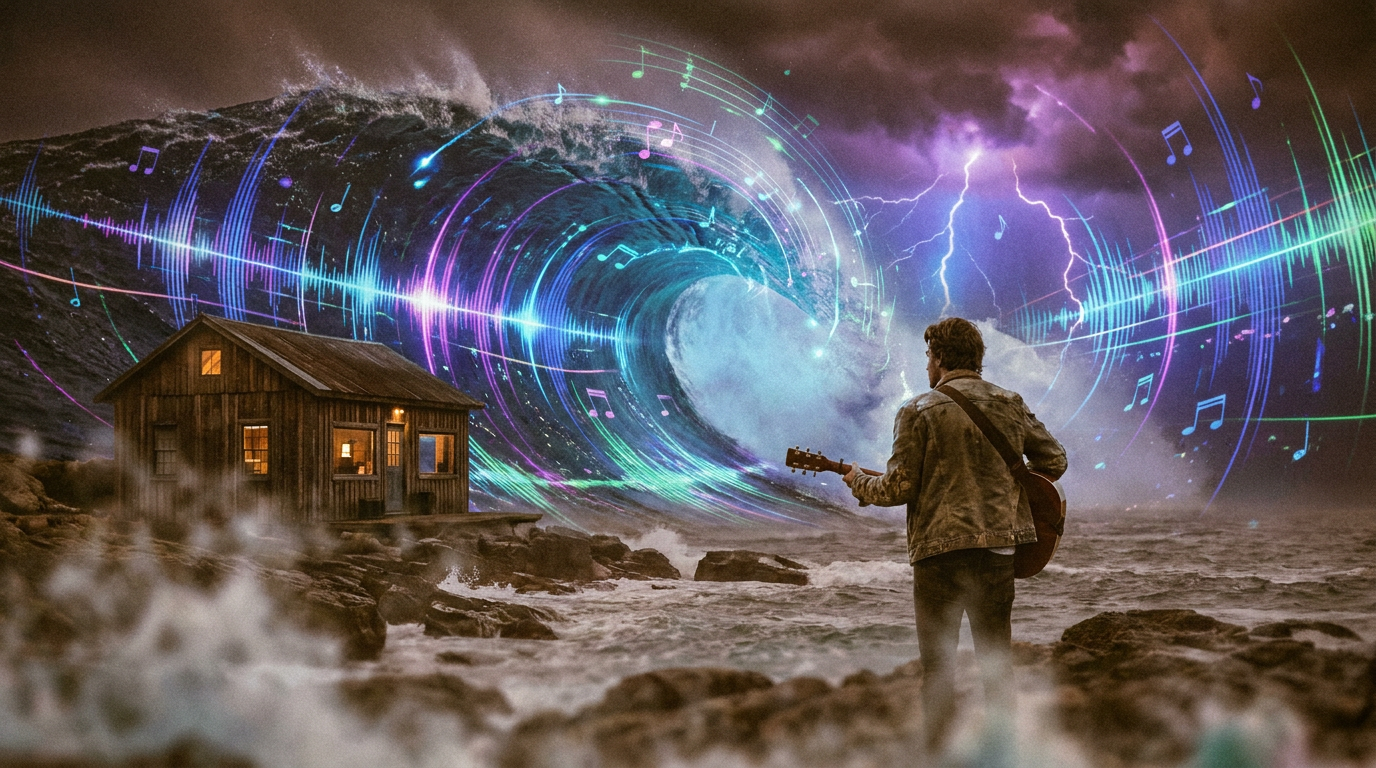
Let that sink in. Every month, an entire ocean of synthetic music — larger than most labels’ entire catalogs — appears out of thin air. And if you’re an independent musician wondering why your streams feel flatter than they should, this is a big part of the answer.
The Numbers Tell a Terrifying Story
The acceleration is what should scare you. The new figures mark a sharp escalation from the 60,000 tracks per day reported in January 2026 (when synthetic content represented 39% of daily deliveries), 50,000 in November 2025, 30,000 in September, and just 10,000 when Deezer launched its AI detection tool in January 2025.
Read that trajectory again. In 16 months, AI uploads went from 10,000 per day to 75,000. That’s a 7.5x increase. And the curve shows no sign of flattening.
The saving grace — if you can call it that — is that listeners aren’t actually listening to most of this stuff. Thanks to Deezer’s industry-unique measures, consumption of AI-generated music on the platform is still very low, between 1-3% of total streams.
In addition, a majority (85%) of these streams are detected as fraudulent and are demonetized by Deezer.
So it’s not that people are choosing AI music over yours. It’s that bots are streaming AI tracks in fraudulent schemes designed to siphon money from the royalty pool. Your royalty pool.
China’s “Industry Chaos” Warning
If you think this is just a Western problem, the situation in China makes Deezer’s numbers look tame.
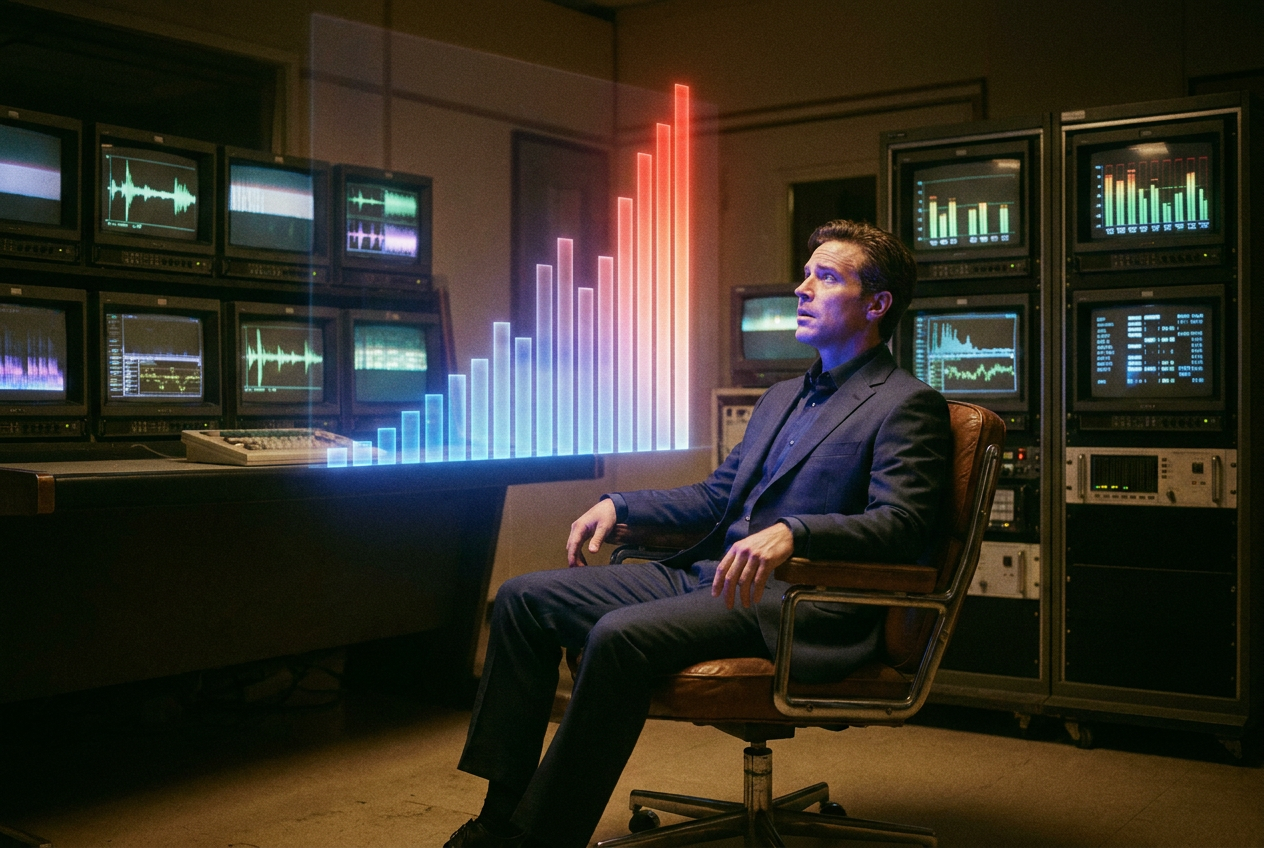
The Chinese music streaming market is facing “industry chaos” due to platforms allowing masses of copyright-infringing, AI-made tracks to fill up their catalogs. That’s the verdict of Tencent Music Entertainment’s Executive Chairman, Cussion Pang, and CEO, Ross Liang, delivered during TME’s Q1 2026 earnings call on Tuesday (May 12). Their comments represent one of the most direct warnings yet from industry leaders over the damage AI-generated content is doing to streaming subscription businesses in China.
Liang accused competitors of using infringing AI content “to quickly fill their music libraries” in a bid to attract users — a charge aimed directly at ByteDance’s Soda Music and NetEase Cloud Music. Think about that: major platforms are allegedly using AI-generated tracks as a competitive weapon, stuffing their catalogs to look bigger and draw subscribers away from legitimate services.
Tencent Music has explicitly blamed the “proliferation of unauthorized AI-generated content” for creating “headwinds” for its music subscription growth. When the biggest music company in China is telling investors that AI slop is hurting their bottom line, the problem has moved from theoretical to existential.
The Listener Trust Gap Is Widening
Here’s the part that matters most for real musicians: listeners are catching on, and they don’t like what they see.
According to Luminate media analyst Audrey Schomer, who authored the “Generative AI in Entertainment 2026” report, “Across the board, what we found is that consumers are net negative. All that means is that people are more likely to feel uncomfortable than to feel comfortable with AI use.”
Sentiments are particularly negative towards new songs created by AI in the style or sound of an existing artist. Major AI song generators including Suno and Udio have faced copyright lawsuits for training their models on artists’ music without authorization — but several labels and publishers, including Warner Music Group and Universal Music Group, have struck licensing deals with these same AI tools.
And here’s the kicker: A Deezer survey found that 97% of participants couldn’t tell the difference between fully AI-generated music and human-made music. People can’t tell it’s AI, but when they find out, they feel uncomfortable about it. That’s a trust crisis brewing in plain sight.
Meanwhile, an AI-generated track topped the iTunes charts in the United States, United Kingdom, France, Canada, and New Zealand. So the flood isn’t just diluting catalogs — it’s competing for chart positions.
The Industry Is Fighting Back (Sort Of)
To their credit, some platforms are taking action. Deezer has been the most aggressive, claiming to be the first streaming platform to independently detect and tag AI-generated music at the platform level.
Deezer is doubling down on its combat against AI slop and will no longer store hi-res versions of these tracks.
Other platforms are taking different approaches. In September 2025, Spotify removed 75 million AI-generated tracks in a fraud crackdown.
Bandcamp banned AI-generated music from its platform entirely earlier this year.
On the legislative front, at GRAMMYS On The Hill 2026, the Recording Academy championed three bipartisan bills designed to bring accountability, transparency, and protection into the AI era: the NO FAKES Act, the TRAIN Act, and the CLEAR Act.
And then there’s Taylor Swift, doing what Taylor Swift does — blazing a trail. On April 24, Swift’s company filed three trademark applications with the U.S. Patent & Trademark Office. Two relate to sound trademarks covering her voice: one is “Hey, it’s Taylor Swift,” and the other is “Hey, it’s Taylor.” The strategy is novel. Trademark law doesn’t just stop identical uses (like copyright law): it stops anything that is confusingly similar to the registered trademark. That’s a much broader right and more powerful tool in an AI world.
The Major Label Pivot: From Suing to Licensing
Perhaps the most telling sign of how the landscape has shifted is the major labels’ strategic 180. Warner Music Group and AI music generator Suno struck what they call a “first-of-its-kind partnership,” claiming the deal will “open new frontiers in music creation, interaction, and discovery, while both compensating and protecting artists, songwriters, and the wider creative community.” The deal also settles previous litigation between the companies.
When the new models launch in 2026, the current models will be deprecated. Moving forward, downloading audio will require a paid account. Songs made on the free tier will not be downloadable and will instead be playable and shareable. Paid tier users will have limited monthly download caps with the ability to pay for more downloads.
But ownership? That’s where things get murky. The updated documentation takes a markedly different position: even when users are granted commercial use rights, they are “generally not considered the owner” of the songs, because the output is generated by Suno’s system.
So the labels went from suing AI companies to licensing to them, while the AI companies went from claiming users owned their creations to… not exactly that anymore. The result is a system where everybody makes money except possibly the independent artist whose style got scraped for training data.

What This Means for Independent Musicians
Here’s where I stop doom-scrolling the data and start being useful. Because amid the flood, there’s an opportunity that most musicians are missing completely.
Your Music Isn’t Enough Anymore
When 75,000 AI tracks hit streaming platforms every single day, the audio-only strategy is dead. Your song might be brilliant, authentic, and deeply human — but it’s a needle in a haystack that grows by 2 million pieces of hay every month.
The musicians who are thriving right now are the ones who understand that visual identity is the moat AI can’t easily cross. A compelling music video, a consistent visual brand, a face and story that fans connect with — these are the things that algorithms can’t replicate and bots can’t fake.
This is exactly why we built our complete guide to AI music videos. Not because we think AI should replace human creativity (clearly, we don’t), but because musicians need visual tools to cut through the noise.
Use AI for Visuals, Not to Replace Your Art
Here’s the irony: the same AI technology flooding streaming with synthetic music can be your greatest weapon for fighting back. The smart play is using AI to create visuals that amplify your human-made music.
Think about it. A $50,000 traditional music video is out of reach for most indie artists. But an AI-generated music video that captures your song’s mood, tells your story, and gives fans something to share? That’s accessible right now.
Whether you’re making hip-hop, indie, country, or R&B, the visual layer is what separates a real artist from an AI-generated profile picture with 10,000 bot streams.
Transparency Is Your Superpower
Several self-disclosed AI projects, including Xania Monet and Breaking Rust, have already landed on the Billboard charts. Monet is the artificially created avatar behind Mississippi poet Telisha “Nikki” Jones, who uses Suno to turn her words into R&B compositions. According to Billboard, Monet signed a multimillion dollar record deal with Hallwood Media.
The artists who are transparent about their process — “I wrote this, AI helped me visualize it” — are building trust while the shadows are full of fraud. Lean into your humanity. Show your face. Tell your story. Let people know a real person is behind the art.
The Road Ahead
According to a study conducted by CISAC and PMP Strategy, nearly 25% of creators’ revenues are at risk by 2028, which could amount to as much as €4 billion.
That’s the bad news. The good news? The platforms are finally waking up. Detection tools are improving. Legislation is moving. And listeners — despite not being able to hear the difference — consistently prefer knowing there’s a human behind the music.
The musicians who will win this era aren’t the ones who ignore AI or the ones who surrender to it. They’re the ones who use every tool available to amplify what makes them irreplaceable: their voice, their story, their visual identity, their humanness.
The flood of AI slop is real. The numbers don’t lie. But a flood also clears away the weak foundations and leaves the solid ones standing.
If you’re ready to build your visual moat — to create stunning music videos that prove you’re real, you’re here, and you’re making art that matters — OneMoreShot.ai can help you get there in minutes. Because in a world where nearly half of new music is generated by machines, the most powerful thing you can do is show up as unmistakably human.