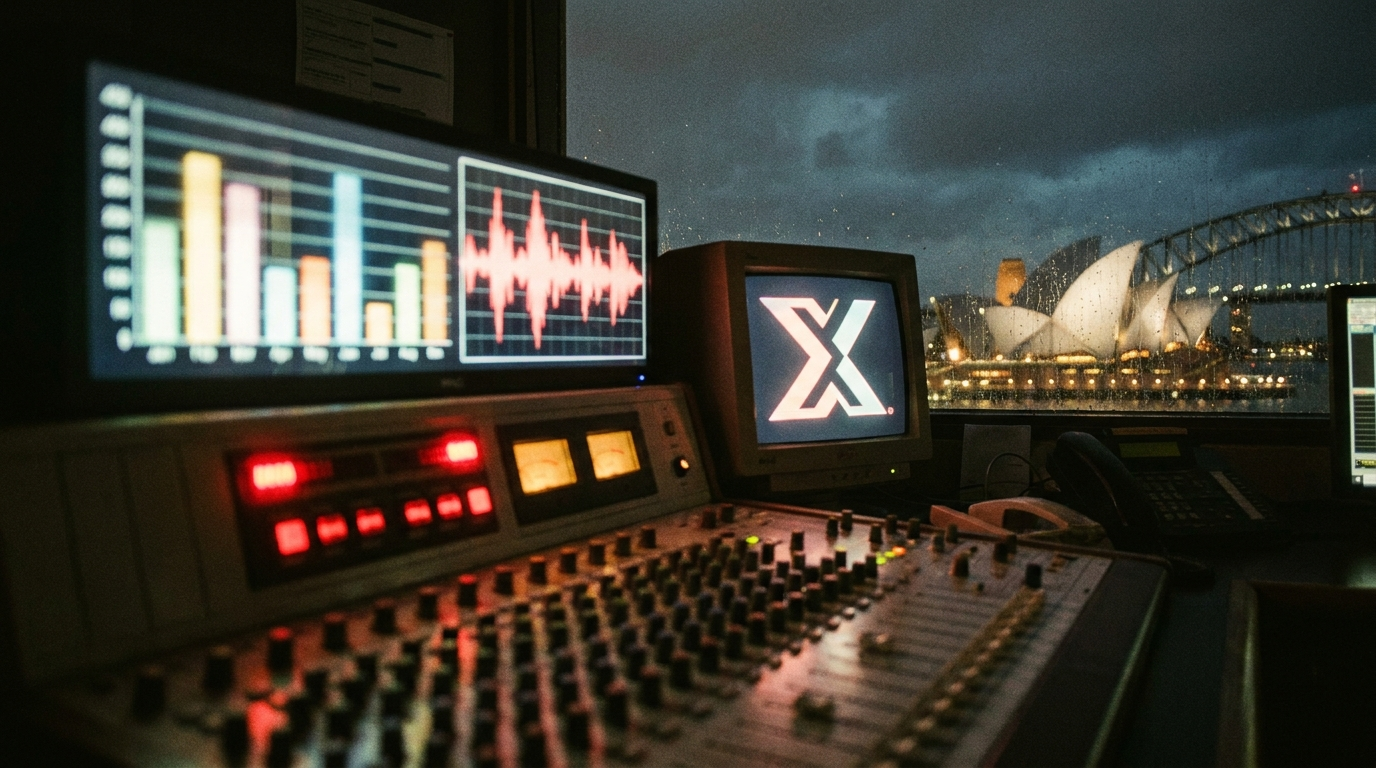
An AI Song Hit #2 in Australia. Then Came the Ban.
Yesterday, Australia became the first country to actually ban AI-generated music from its national charts. Not propose it. Not form a committee about it. Ban it.
Music made by artificial intelligence will be banned from Australia’s top charts under new guidelines aimed at protecting “the human nature of artistry,” with ARIA requiring music to be “substantially human made” to be eligible. The new rules take effect this Friday.
And unlike the global proposals we’ve seen floated for months, this ban was triggered by something specific and wild: a variation of Madonna’s pop hit “Like a Prayer” created by an Australian producer using AI-generated vocals and drums spent 16 weeks in the Australian top 20 , racking up over 48 million Spotify streams and sparking a national controversy.
Here’s the full story — and why it matters whether you’re making AI music, AI music videos, or both.
The Song That Broke the Charts
Queensland-based DJ Josh Fawaz released his cover of Madonna’s “Like a Prayer” earlier this year. It sounded like a polished dance remix. It went everywhere. The Madonna cover spent four weeks at the number one spot on Australia’s national airplay charts.
The cover hit the top of the Australian music charts in July after spending weeks in the top 20.
It reached number two on Australia’s overall singles chart, #1 on ARIA’s Dance Singles chart, and more than 48 million Spotify streams.
There was just one problem: the Australian music community started to suspect something was off. Fawaz was criticised by those in the music industry who believed he was using generative AI to make music.
The decision to add AI credits followed an ABC investigation into his chart-topping single. Under pressure, Fawaz added credits for generative AI vocals and AI drums to the song.
His defense? “I use AI as a tool,” Fawaz said. “What I care about [is] providing my listeners with good music.”
Sound familiar? That’s the exact same argument every musician using AI tools makes — and it’s the one ARIA just decided needs guardrails.
What the ARIA Ban Actually Says
Let’s break down the actual rules, because the nuance matters.
ARIA declared that “wholly AI-generated tracks will not be eligible for the ARIA Charts,” excluding songs that use AI “to generate the entirety or the primary portion of the creative elements.” But “recordings that use generative AI in a supporting role remain eligible.”
That distinction — AI-generated vs. AI-assisted — is the whole ballgame. ARIA lists two requirements for eligibility: “It is substantially human made” and “It raises no stream or chart manipulation concerns.”
Tracks can be eligible only if “humans wrote the song and performed the lead vocal and the primary instruments,” among other requirements.
And it’s not just the charts. Wholly AI tracks are also banned from eligibility for ARIA’s Music Awards. That means AI-generated music can’t win an ARIA award at the upcoming 40th anniversary ceremony in November.
Eligible music must also be produced using legal AI services — a quiet but significant clause that puts unlicensed AI generators on notice.
ARIA CEO Annabelle Herd put it bluntly: “A chart that rewards unlicensed AI output would ‘undercut the very basis of the recorded music we exist to present.’”
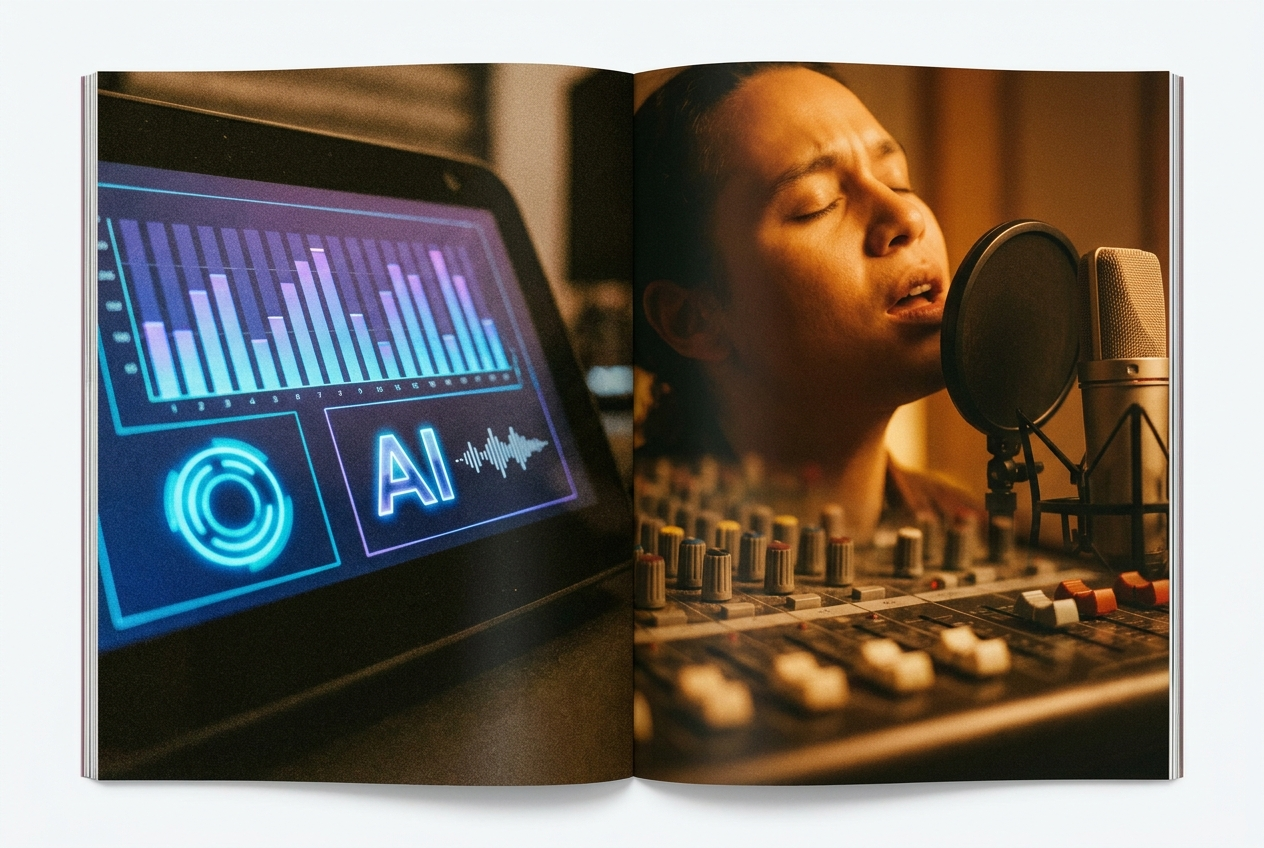
Why This Matters More Than Previous Proposals
Back in late July, a coalition of 11 labels proposed global rules to keep AI off charts. That was talk. This is action.
Australia is now the first country to draw a legal line between AI-generated and AI-assisted music in its official chart system. And the timing isn’t accidental.
On July 15, 2026, Australian Prime Minister Anthony Albanese announced a world-leading artificial intelligence framework designed to ensure that Australia can capture the opportunity of AI while keeping Australians safe.
The government ruled out any exemption that would allow AI companies to train on Australian content without permission.
The Prime Minister stated: “Australian writers, musicians, artists and journalists must retain ownership and control of their work.” He called anything less “theft.”
So the ARIA chart ban isn’t an isolated move. It’s one piece of what’s becoming the most artist-friendly AI framework in the world. The federal government is working on new rules for AI and data centres that would include “strong copyright protections for Australian creators.”
The “Tool” Argument and Where It Falls Apart
Fawaz’s defense is the same one that musicians everywhere are navigating: I’m a human using AI as a tool. Is that so different from using Auto-Tune, a drum machine, or a sample pack?
Here’s where it gets interesting. In 2026, media reporting and industry discussions identified Fawaz as an entirely artificial intelligence-generated artist profile rather than a human musician. That goes way beyond “AI as a tool” — it raises questions about whether the artist identity itself is authentic.
An ARIA spokesperson told the ABC that the IFPI rules would likely disqualify music with lead vocals or key instrumentals that were AI-generated, suggesting Fawaz’s song may not qualify under the new framework.
But here’s the plot twist: Fawaz, who has defended the use of AI as a “tool” in his music, described ARIA’s new rules as a “great move.” He’s not fighting it. He seems to recognize the industry needs guardrails.
And that’s the right attitude. The ban doesn’t kill AI use in music. It kills undisclosed, fully automated AI content masquerading as human artistry on the charts. There’s a massive difference.
What This Means for Musicians Using AI Video
Here’s where the ARIA ban directly connects to what you’re doing with AI music videos.
The ARIA framework draws its line on the music itself — lead vocals, primary instruments, songwriting. It’s explicitly about whether the audio content is substantially human-made.
That means AI-generated visuals exist in a completely different category. You can write your song, perform your vocals, play your instruments — all human — and then use AI to create a stunning music video. Under ARIA’s rules (and every framework we’ve seen globally), that’s totally fine. Your music is human. Your video is AI-assisted visual content.
This is exactly why the smartest musicians in 2026 are leaning into AI video while keeping their music authentic. Your voice, your melodies, your lyrics — that’s the human core. The visuals? That’s where AI tools give you superpowers without compromising your artistic credibility.
If you’re a hip-hop artist who writes bars but can’t afford a $5,000 video shoot, AI video is your answer. If you’re an indie musician self-releasing from your bedroom, AI video levels the playing field. If you’re a pop artist competing with major-label visuals, AI video lets you punch above your weight.
The ARIA ban actually reinforces this strategy. It says: the music must be human, but it creates no barriers for AI-assisted visual production.
The Global Domino Effect
Australia’s move is going to trigger copycats. Count on it.
ARIA’s rules take into account global principles governing AI music set out by the International Federation of the Phonographic Industry (IFPI). That means the IFPI framework — which covers dozens of countries — is already the template.
Under that framework, recordings can be classified as either “AI-Generated” or “AI-Assisted,” depending on how extensively artificial intelligence was involved in the creative process.
We’re watching a pattern form: the EU AI Act’s labeling requirements hit on August 2. Apple Music announced mandatory “Made With AI” labels. Spotify is rolling out AI Persona badges in September. And now Australia has gone from labeling to outright chart exclusion.
Every major market is tightening the screws on undisclosed, fully AI-generated music. The musicians who will thrive aren’t the ones avoiding AI — they’re the ones using it transparently, strategically, and in ways that enhance rather than replace their human creativity.
The Blueprint for Smart AI Use
Here’s what the ARIA ban teaches every musician:
1. Your voice is your moat. If you write and perform your own vocals and primary instruments, no chart ban, labeling rule, or AI policy can touch you. You’re human. You’re safe. Period.
2. AI tools are fine. AI replacement isn’t. Using AI for drums in a supporting role? Probably fine under ARIA’s rules. Using AI to generate your entire vocal and calling it yours? That’s where you get banned.
3. Disclosure isn’t optional anymore. Fawaz didn’t disclose his AI use until an ABC investigation forced his hand. The cover features AI-generated vocals and drums, prompting fierce backlash from the Australian music community. Don’t wait to be caught. Disclose voluntarily and build trust.
4. AI video is your competitive advantage. While AI music is getting restricted everywhere, AI video remains the open lane. Every framework distinguishes between the audio (which must be human) and the visuals (where AI assistance is accepted). If you need help getting started, check out our guide on how to make an AI music video.
5. Think globally. The rapid development of generative AI has raised broader questions about copyright, intellectual property and compensation for musicians. These rules are coming everywhere. Build your workflow now so you’re ahead when your country follows Australia’s lead.
The Bigger Picture
“Many large commercial AI music generation companies have assumed they can scrape training data without permission, and so are potentially predatory on artists,” said Oliver Bown, an associate professor at the University of New South Wales.
“I believe people can do great artistic work using AI respectfully, but there is also a predatory phenomenon whereby you can just go fishing for plays and profits.”
That’s the cleanest summary of where we are. AI in music isn’t inherently bad. AI that replaces human musicians while profiting from their scraped data — that’s what the industry is shutting down.
And the visual side of music? That’s where AI remains a pure creative multiplier. When you use AI video tools to bring your human-made music to life with stunning visuals, you’re not replacing anyone. You’re extending your creative vision into a format that was previously locked behind five-figure budgets.
Whether you’re making country, R&B, EDM, or any other genre, the equation is the same: keep your music human, make your visuals extraordinary.
What to Do Right Now
Australia just showed the world where the line is. More countries will follow. The September ARIA Awards eligibility cycle, new IFPI guidelines, and the EU AI Act are all converging to create a global framework that rewards human musicians who use AI smartly.
So here’s your move: write your songs. Perform your music. Own your art. And when it’s time to create the visual layer that gets your music seen, shared, and discovered — that’s where AI becomes your best ally.
If you’re ready to turn your human-made music into professional music videos without the five-figure price tag, OneMoreShot.ai makes it happen in minutes. Upload your track, describe your vision, and let AI handle the visuals while you handle the art.
Because in 2026, the winning formula isn’t AI or human. It’s human music, AI visuals, full transparency. Australia just proved it.