Apple Music's AI Labels Change the Game
Apple just drew a line in the sand. And if you’re a musician using AI anywhere in your workflow — including your music videos — you need to pay attention.
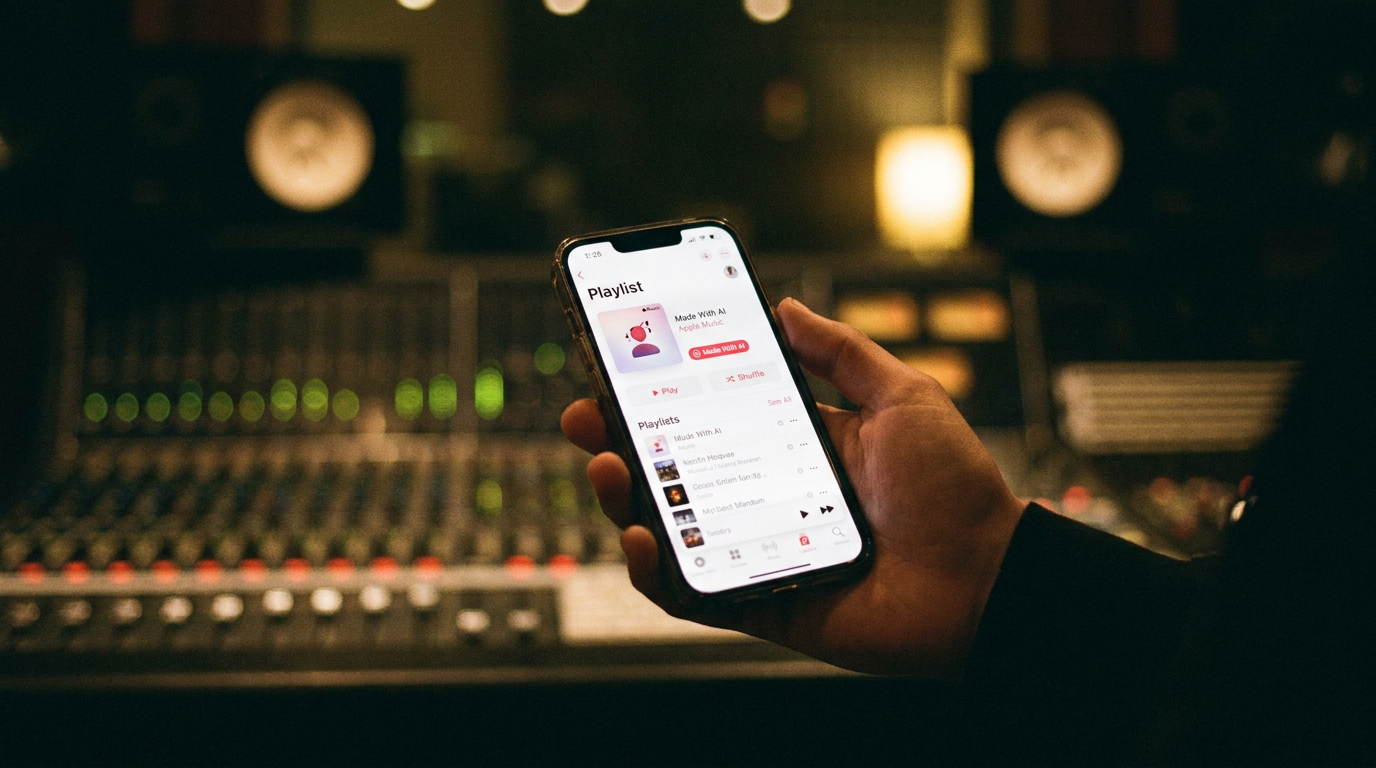
Apple Music will begin labeling songs on the platform derived from AI platforms, adding a “Made With AI” label to such songs later this year. The announcement came via a note to its industry partners viewed by Variety, where the service said that record labels and distributors will be required to tag songs in which “a material portion of the content” was created using AI.
This isn’t optional anymore. And it doesn’t just apply to audio. It covers music videos too.
What Changed: From Optional to Mandatory
Back in March 2026, Apple introduced Transparency Tags for Apple Music. These were entirely optional disclosure labels, used to indicate that specific content was “materially generated” with the help of artificial intelligence.
That was the polite version. The new version has teeth.
The tone in Apple’s latest email is noticeably firmer. AI Transparency Tags are now required “in any instance where AI was used to create a material portion of the content, including tracks that are AI platform generated.”
Apple said AI-platform-generated content is defined as “anything that is primarily derived from a generative AI service.”
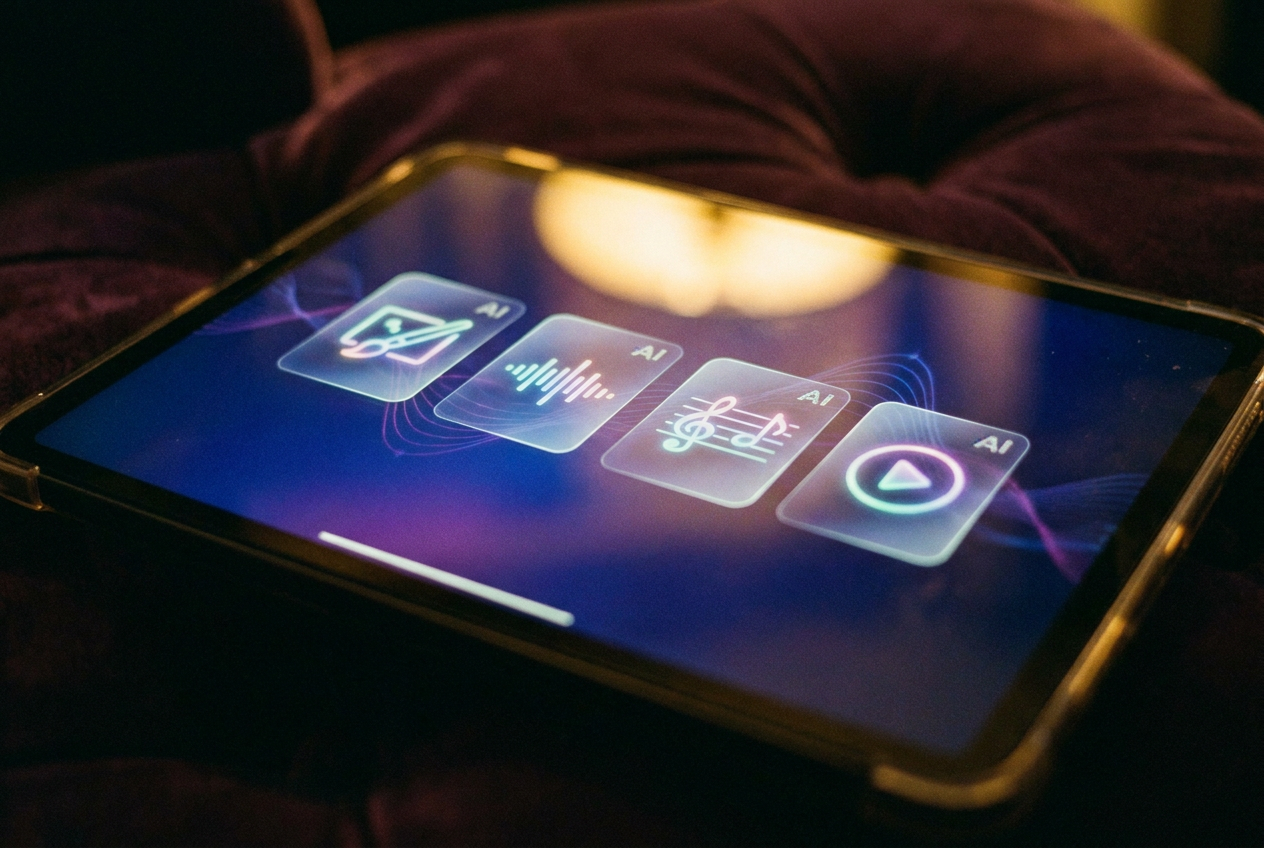
The shift from “you can disclose if you want” to “you must disclose” is significant. Apple introduced Transparency Tags in March as a voluntary system that let creators disclose AI involvement in four categories: artwork, track, composition and music video. The new policy removes that choice.
The Four Categories Every Musician Should Know
Here’s the part most coverage is burying: Apple’s labeling system doesn’t just cover audio. The spec already lists four disclosure types: Artwork, Track, Composition, and Music Video. Artwork covers a material portion of static or motion graphic artwork at the album level. Track is available at the track level only, for a material portion of a sound recording. Composition covers lyrics or other components of a composition. Music Video covers visual elements on bundled or standalone videos.
Read that last one again: Music Video covers visual elements on bundled or standalone videos.
If you’re uploading a music video to Apple Music and any material portion of the visuals were generated with AI, you’ll need to disclose it. That includes AI-generated backgrounds, characters, effects, transitions — basically anything that came from a generative AI model rather than a camera or a traditional VFX pipeline.
Why This Matters More Than Spotify’s Move
We covered Spotify’s AI Persona badge a couple of weeks ago, and it was a big deal — Spotify will badge AI-generated artist profiles and block them from recommendations starting in mid-September. But Apple’s approach is fundamentally different, and in some ways more interesting.
Spotify’s policy targets fake artists — AI personas pretending to be real people. Apple’s policy targets content — regardless of who uploaded it. A completely real, verified, human musician who uses Suno for a demo stem, AI for cover art, or an AI video generator for their music video could all be affected.
The other critical difference: The iPhone maker does not use any machine learning systems to detect AI-generated content in music. Instead, it’s relying on creators and labels to declare this. That leaves room for mislabeled or undisclosed songs. Rival streaming service Spotify is taking a stricter approach than Apple to AI content in music.
Well, sort of. Speaking to Billboard’s On the Record podcast in April, Apple Music executive Oliver Schusser said the company had quietly built its own detection system. Apple has the tech — they’re just choosing to let the industry police itself first. Whether that holds is anyone’s guess.
The Numbers Behind the Decision
Why is Apple doing this now? Because the flood has become impossible to ignore.
Back in April, Apple Music VP Oliver Schusser dropped a pretty striking number on Billboard: more than a third of monthly uploads to Apple Music are 100% AI-generated. At the same time, AI music accounted for less than 0.5% of actual listening time, a pretty clear sign that the sheer volume of AI uploads isn’t finding much of a real audience.
Let that ratio sink in. Over 33% of uploads. Under 0.5% of plays. That’s not an audience problem — it’s a spam problem. And that gap suggests AI-generated music is filling Apple’s catalog far faster than it is attracting listeners.
Schusser also warned: “You should know that every label in the world is delivering AI, [even if] they might not know about it.” Labels themselves are unknowingly distributing AI content from artists who don’t disclose it. Mandatory labeling is Apple’s attempt to get the entire supply chain to clean up.
As part of ongoing efforts, the company has doubled its fraud penalty this year. Schusser revealed that since implementing this penalty four years ago, Apple Music has observed a 60% reduction in fraudulent uploads.
What This Means for AI Music Videos
This is where things get really interesting for musicians who are using AI video tools — which, if you’re reading this blog, is probably you.
Apple Music hosts music videos. It’s not just a streaming audio service. And the “Music Video” disclosure category means that if you’re creating visuals with AI and distributing through Apple Music, you need to tag them.
But here’s the nuance that matters: there’s a massive difference between a music video that is “primarily derived from a generative AI service” and one that uses AI as part of a broader creative workflow.
If you’re using AI to make a music video where you’re directing every scene, selecting reference images, editing cuts, adding real footage, and using AI as one tool among many — that’s AI-assisted, not AI-generated. If you type a prompt and let Suno’s video feature or a random text-to-video tool spit out four minutes of unedited footage and ship it to Apple Music, that’s a different story.
The distinction matters because Apple’s policy specifically targets content where AI created a “material portion” of the work. The company wants the tags to give listeners clearer visibility into how much AI was involved in a track, while leaving the disclosure process in the hands of labels and distributors.

The Enforcement Gap (And Why It’s Actually Your Advantage)
Let’s be honest about the elephant in the room: The party with the commercial incentive to under-tag is the party doing the tagging, and Apple has said it holds a tool capable of checking the answer. A listener looking at an unlabelled track will not be able to tell whether it is human-made or simply undeclared.
This is the fundamental weakness of a self-disclosure system. But it’s also your opportunity as a real musician.
If you use AI tools transparently — especially for visuals — and you disclose honestly, you build trust. If you’re creating AI music videos for pop, rock, or hip-hop, and you’re upfront about your process, you’re ahead of everyone gaming the system. Because when Apple eventually cross-references its own detection tools with disclosure tags (and they will), the dishonest actors will get caught. The honest ones will look like the professionals they are.
The Bigger Picture: Every Platform Is Picking a Side
Apple isn’t operating in a vacuum. Look at what’s happened in just the last few weeks:
- Spotify is badging AI Persona profiles and blocking them from recommendations starting mid-September
- Apple Music is mandating “Made With AI” labels across tracks, artwork, compositions, and music videos
- Deezer has been deleting AI tracks outright
- TIDAL banned fully AI-generated tracks from royalty payouts
Global industry groups including the Recording Industry Association of America (RIAA) and SAG-AFTRA have jointly campaigned for standardized labeling
The trend is unmistakable: streaming platforms are building walls between AI-generated content and human-made content. If you’re a real musician, that wall protects you. But it also means you need to understand the rules.
That Spotify update is important because AI disclosure is no longer just an administrative step. It can affect how a release or artist profile is surfaced, recommended, promoted, and monetized.
The same principle applies on Apple Music. Disclosure isn’t paperwork — it’s strategy.
How Musicians Should Respond Right Now
1. Audit Your Workflow
Know exactly where AI touches your content. Did you use an AI mastering service? AI-generated cover art? An AI video generator for your music video? Map it all. Apple’s four categories — Artwork, Track, Composition, Music Video — are your checklist.
2. Understand the Threshold
Apple’s threshold is “material portion.” That’s deliberately vague, but it means using an AI filter on your cover photo probably doesn’t count. Generating your entire album art in Midjourney probably does. For music videos, a few AI-enhanced transitions are different from a fully AI-generated visual narrative.
3. Talk to Your Distributor
In the email obtained by Billboard, Apple emphasized the key role of content providers, noting they are “best positioned to know how their content was created” and which AI Transparency Tags apply. Your distributor is the one actually submitting the tags. Make sure they know your process and can tag accurately.
4. Use AI Video as a Creative Tool, Not a Crutch
The musicians who will thrive in this environment are the ones using AI video to enhance their vision — not replace it. If you’re directing scenes, choosing aesthetics, editing footage, and using AI as one instrument in your creative orchestra, you’re creating genuine art. Learn how to make an AI music video the right way with templates for every genre, from EDM to indie to K-pop.
5. Don’t Fear the Label
Here’s a counterintuitive take: a “Made With AI” label on a visually stunning, creative music video might actually help you. It shows innovation. It shows you’re using cutting-edge tools while still being the creative force. The label only hurts if the underlying content is lazy.
The Bottom Line
Apple Music’s shift from optional to mandatory AI disclosure is part of a massive industry-wide reckoning. Every platform is asking the same question: how do we keep the benefits of AI creation while protecting real artists from AI spam?
For musicians, the answer is simple: be real, be transparent, and be creative. Use AI tools to make better content faster, not to flood platforms with garbage. Disclose when you use AI. And make sure the content behind the label is good enough that no one cares how it was made.
The platforms are building the guardrails. Your job is to make music — and music videos — that blow people away regardless of what label is attached.
Ready to create AI music videos that showcase your creative vision? Try OneMoreShot.ai to build stunning visuals for your music in minutes — with you as the creative director, not a prompt-and-pray generator.