Mötley Crüe's AI Video Backlash Is a Lesson
Mötley Crüe just gave every musician a masterclass in how not to use AI video. And they didn’t even mean to.
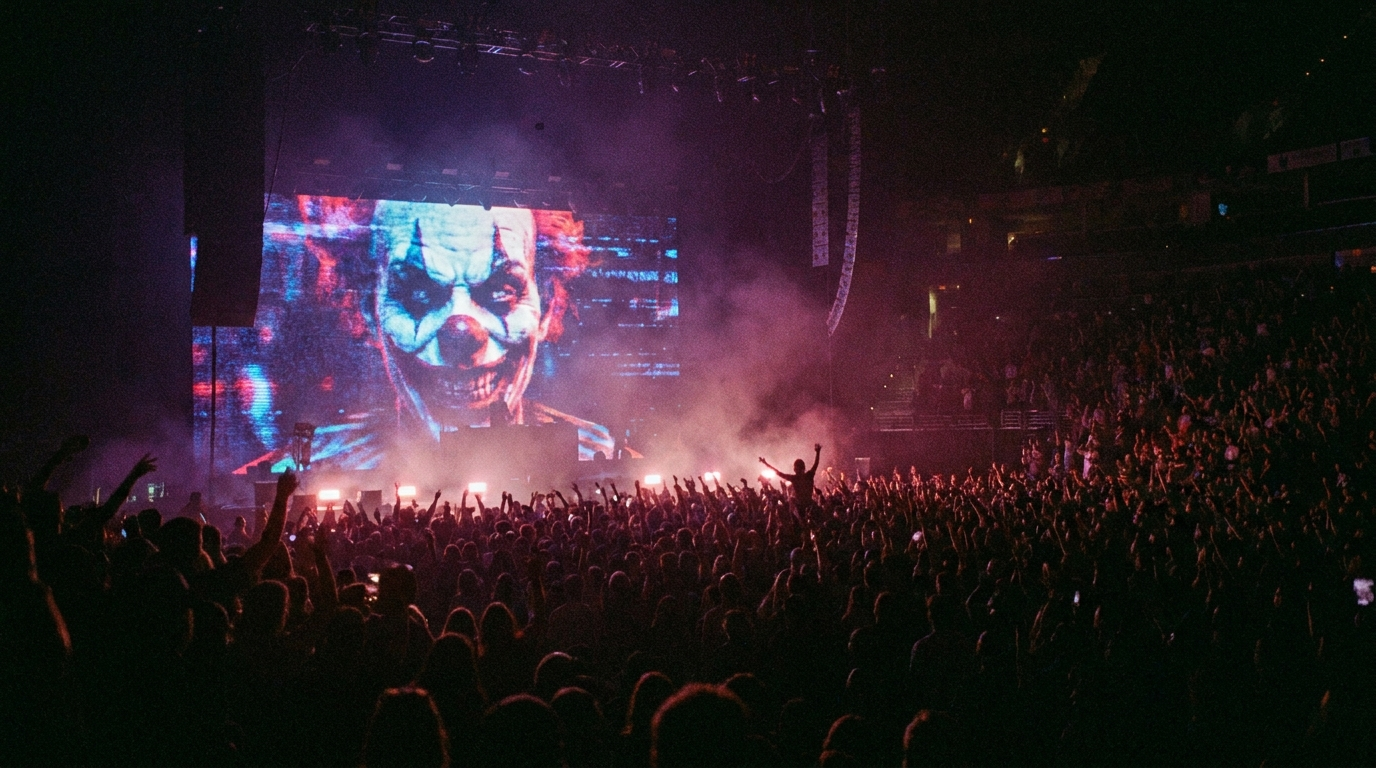
A video from the band’s 2026 North American tour featuring an eerie AI-generated introduction has gone viral among concertgoers — but for all the wrong reasons. Concertgoers noticed what many believe is an AI-generated introduction played before the hit ’80s group took the stage, featuring a sinister clown welcoming fans to the band’s long-running “Carnival of Sins” theme.
The internet did what the internet does: it went ballistic.
Many viewers believe the high-quality visuals of the intro video resemble other AI-generated content circulating online, sparking criticism from some fans who expected a more traditional live performance. And the band’s response? At this time, the band has not confirmed the use of AI in their tour and has not responded to requests for comment.
Silence. In 2026. When everyone can spot AI video from a mile away.
Here’s the thing: Mötley Crüe didn’t do anything technically wrong. They used AI video as a pre-show hype reel. It looked cinematic. It matched their brand. But the execution triggered every anti-AI alarm bell audiences have right now — and the lesson here matters for every musician thinking about incorporating AI visuals into their work.
What Actually Happened
The concert intro is part of Mötley Crüe’s 2026 North American tour, which kicked off in July to celebrate both the 20th anniversary of the band’s original Carnival of Sins tour and its 45th anniversary. The 33-date tour will wrap September 26 in Ridgefield, Washington.
The intro itself is a dark, carnival-themed sequence. The eerie sequence features a menacing clown welcoming the crowd before declaring, “The only prizes you’ll win tonight are nightmares.” Its glossy, uncanny visuals led viewers to speculate that artificial intelligence had been used to create the opener.
Fans started posting clips. TikTok lit up. Comments ranged from disappointed to outright angry. One fan noted, “I’m not the biggest fan of this band but just imagine how much more engaging this intro would go if they got a real actor.”
And to make things worse, this wasn’t even the only AI embarrassment for the band that week. Mötley Crüe frontman Vince Neil was getting roasted online after leaving a very public two-word message for an account that appears to be an AI bot posting sensitive adult content. The interaction happened on Threads on Friday, August 7, where Neil responded to a post from an account using an AI-generated woman rather than a real person.
You can’t make this stuff up. The band that built its entire legacy on rebellion and authenticity got caught looking cheap and out of touch — twice in one week — because of AI.
The Will Smith Precedent
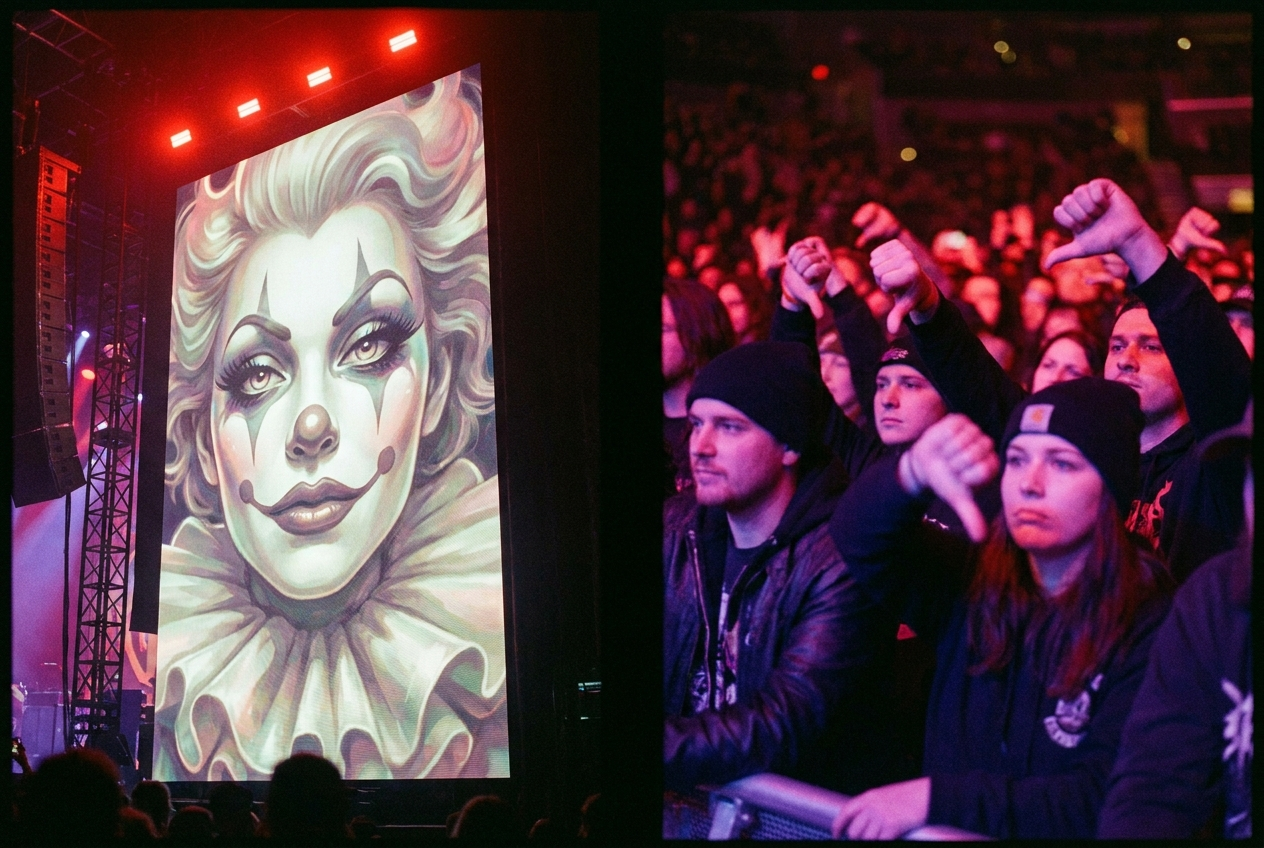
Mötley Crüe isn’t the first act to stumble into this trap. Will Smith was at the centre of much online ridicule over AI-generated images of his tour. Ahead of the UK leg of his tour, promoting his first studio album in 20 years, a video was shared from his official YouTube channel and Instagram. The clip gained attention for all the wrong reasons, as many claimed it makes heavy use of AI — specifically faked footage of his fans and their homemade signs.
Faces appeared blurred or melting, while body parts were impossibly distorted. Smith was accused of falsifying the crowds and by extension the hype surrounding his comeback tour.
Smith’s response was actually kind of genius: Smith clapped back by posting another AI-generated video. This time with AI cats. He leaned into the joke. He owned it.
Mötley Crüe went the other direction: total silence. And in the current climate — where fans, critics, and fellow musicians are actively debating AI’s role in music every single day — silence reads as guilt.
Why This Backlash Hits Different in 2026
A year ago, audiences were still figuring out what AI video looked like. In August 2026? Everyone’s an expert.
AI video generation news in 2026 is no longer about one breakthrough model beating every other model. The category has split into a larger platform war across cinematic generation models, avatar video platforms, enterprise creative suites, social video tools, and provenance systems.
The tools are everywhere. AI video generation models in 2026 can produce 30-second videos with synchronized audio while reducing render times by 83% compared to 2025. Audiences have seen enough AI-generated content on TikTok, Instagram, and YouTube to develop a sixth sense for it. The uncanny valley isn’t a theory anymore — it’s a reflex.
This is the paradox: AI video has never been better, but audiences have never been more suspicious. The gap between what AI can do and what audiences accept is widening, not shrinking.
For musicians, this creates a genuine strategic question: How do you use AI video without triggering the backlash?
The Three Rules of AI Video That Won’t Get You Cancelled
Here’s what Mötley Crüe got wrong — and what you can get right.
1. Don’t Replace What Should Be Human
The Crüe used AI to create a carnival barker character for their concert intro. A clown. A host. A person. That’s exactly the kind of content where audiences expect a real human being — or at least practical effects.
The fix is simple: use AI video for environments, textures, transitions, and abstract visuals. Use it for the stuff that can’t exist in the real world. Psychedelic landscapes. Surreal cityscapes. Time-lapse mood pieces. The moment you try to replace a human performer with an AI-generated one, you’re playing with fire.
This is where music-specific AI video tools shine. They’re designed for visual storytelling that enhances your music, not for generating fake performers. A well-crafted AI music video that leans into stylization rather than realism avoids the uncanny valley entirely.
2. Be Transparent (Or Be Ready to Be Exposed)
At this time, the band has not confirmed the use of AI in their tour. In 2026, this is the worst possible strategy.
We’re living in an era where Spotify is literally badging AI-generated content. Starting mid-September, listeners will begin to see an AI Persona badge on some artist profiles. The badge signals to listeners that an artist’s identity may be AI-generated and does not represent a real person.
The D’Addario scandal showed us what happens when a brand denies AI use and gets caught. The Mötley Crüe situation is playing out the same way. Fans don’t hate AI — they hate being fooled.
If you’re using AI video in your work, say so. Frame it as a creative choice. Frame it as innovation. Frame it however you want. But don’t pretend it’s something it’s not.
3. Match AI’s Strengths to Music’s Needs
Here’s the honest truth: AI video is incredible for music content. It’s arguably the single best use case for the technology. Music videos are inherently stylized, abstract, emotional, and rhythmic — all things AI excels at. Nobody watches a music video expecting photorealism. They’re watching for feeling.
Whether you’re making hip-hop visuals with moody street scenes, EDM videos with pulsing neon geometries, or indie dreamscapes with watercolor landscapes, AI video tools are purpose-built for this kind of creative expression.
The Mötley Crüe mistake wasn’t using AI. It was using AI to do something mundane (a talking head intro) when they could have used it to do something spectacular.
What Smart Musicians Are Doing Instead
While Mötley Crüe was catching heat, plenty of musicians have been using AI video brilliantly this year — and getting praised for it.
The key difference? They’re using AI as a visual instrument, not a cost-cutting shortcut.
The most successful approach we’re seeing in 2026 follows a simple formula:
Real music + AI visuals + intentional style = no backlash
When fans see an AI music video that’s clearly stylized — trippy transitions, impossible camera moves, dreamlike environments — they don’t just accept it. They love it. It’s the same reason animated music videos have always worked. Nobody watches Gorillaz and complains they’re not real people.
If you want to explore this approach, check out our guides on how to make an AI music video or browse real examples across genres to see what’s working right now.
The Concert Stage Opportunity
Here’s what makes the Mötley Crüe situation even more frustrating: AI video at live shows is a massive opportunity. It’s just that the Crüe chose the worst possible application.
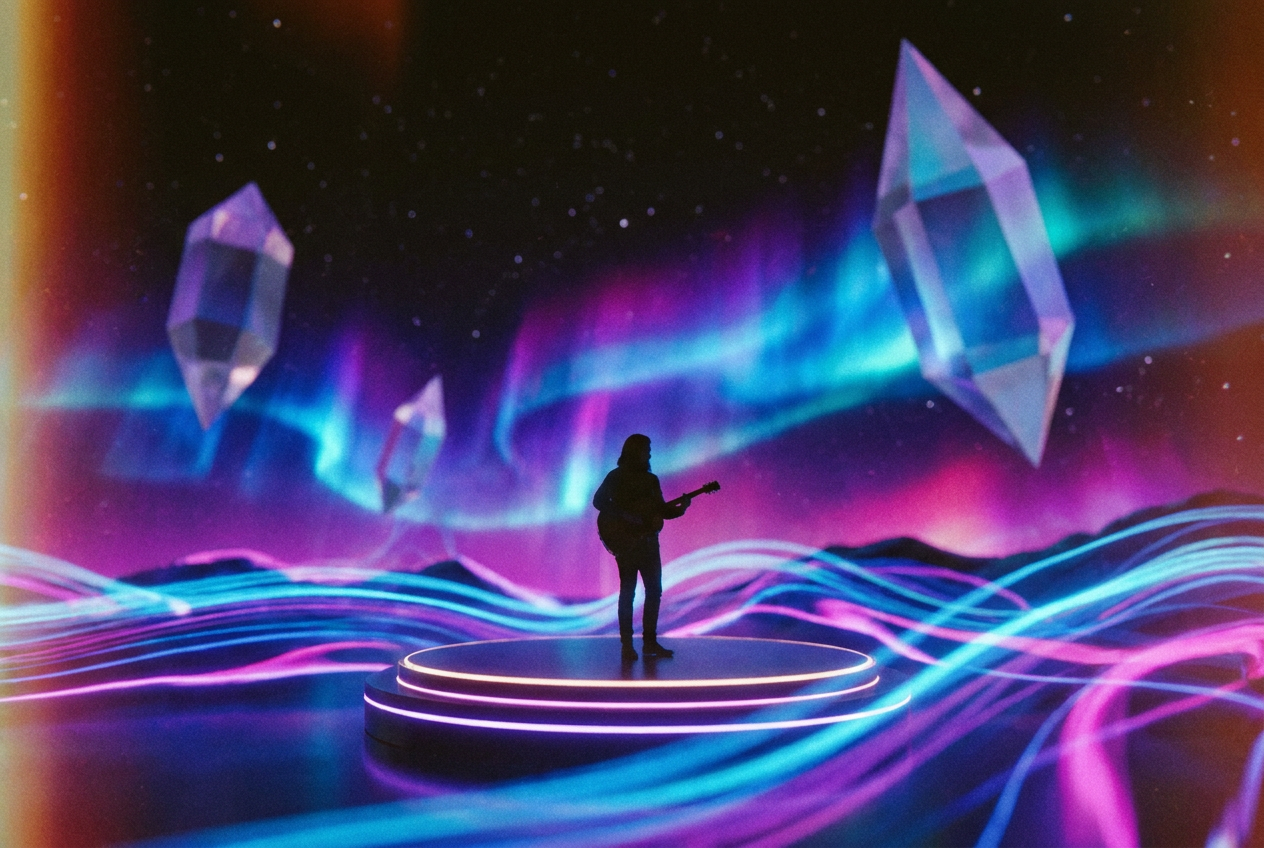
Imagine instead: AI-generated visuals that react to the music in real-time. Immersive environments that shift with every song. Abstract art that pulses with the bass. That’s the future of AI at concerts, and it’s already happening with forward-thinking artists.
The difference between Mötley Crüe’s backlash and a crowd going absolutely wild over AI visuals comes down to one word: intention.
A pre-rendered AI clown that replaces a human feels lazy. A real-time AI visual system that transforms the stage into an impossible world feels electric. Same technology. Completely different audience response.
The Bigger Picture: AI Authenticity in Music
This controversy lands in the middle of the biggest authenticity crisis music has ever faced. Generative AI is challenging the entire system that the music industry built over the past century.
Last year, Deezer implemented an AI detection tool to track and label how much “synthetic content” is uploaded to its streaming platform. Deezer reported that approximately 44% of daily uploads are now AI-generated tracks.
With nearly half of all music uploads coming from AI, audiences are primed to be skeptical. They’re looking for signals of authenticity everywhere — and when a legacy rock band’s concert intro triggers their AI-detection instincts, the reaction is swift and unforgiving.
But here’s the nuance everyone misses: the backlash isn’t about AI itself. It’s about deception and laziness. Audiences have repeatedly shown they’re fine with AI when it’s:
- Disclosed (tell them what you’re doing)
- Additive (enhancing something, not replacing someone)
- Creative (doing something that couldn’t be done otherwise)
Mötley Crüe failed on all three counts. They didn’t disclose. They replaced a human performer. And they used AI for something a real actor could have done better.
Your Playbook: Using AI Video Without the Backlash
If you’re a musician thinking about incorporating AI video into your releases, live shows, or social content, here’s your cheat sheet:
For Music Videos: This is AI video’s sweet spot. Lean into stylization. Use templates that match your genre. Nobody expects music videos to be “real” — they expect them to be interesting. AI gives you a million-dollar visual budget for basically nothing.
For Social Content: AI-generated lyric videos, visualizers, and promotional clips perform incredibly well on TikTok and Instagram. They look intentionally crafted, not accidentally fake.
For Live Shows: If you’re going to use AI visuals on stage, make them abstract, reactive, and immersive. Don’t generate fake people. Generate impossible worlds.
For Everything: Be transparent. Put “AI-assisted visuals” in the credits. Not because you have to (although in the EU, you might — the AI Act is actively enforcing labeling requirements as of August 2). Because it positions you as innovative rather than deceptive.
The Takeaway
Mötley Crüe spent $150+ on concert tickets to put fans in seats, then greeted them with an AI clown. That’s the joke — and the lesson.
AI video technology in 2026 is extraordinary. The average render time for a 30-second clip has dropped to 12 seconds among top-tier tools. The quality is cinematic. The cost is negligible. Musicians have never had more visual creative power at their fingertips.
But power without intention is just noise. And in a world where audiences are increasingly sensitive to AI deception, intention is everything.
Use AI to make visuals that couldn’t exist otherwise. Use it to bring your music to life in ways that would have cost tens of thousands of dollars a year ago. Use it to create the music video you’ve always imagined but could never afford.
Just don’t use it to replace a person with a digital clown and hope nobody notices.
Ready to create AI music videos that audiences actually love? Try OneMoreShot.ai — where your music drives the visuals, not the other way around.