Meta's Muse Fiasco Is a Warning for Musicians
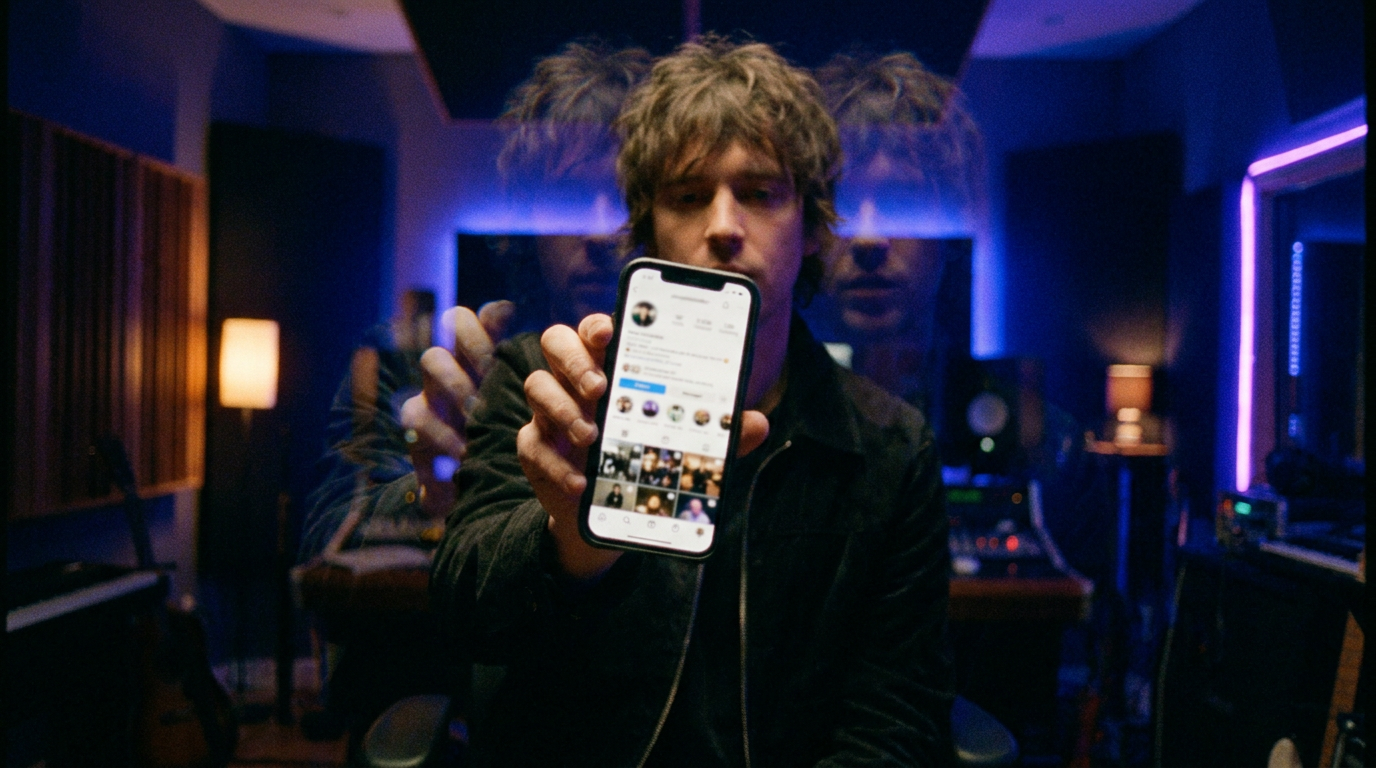
Meta just learned what happens when you treat every musician’s Instagram as an open buffet for AI.
On July 7, Meta Superintelligence Labs launched Muse Image — its most advanced image generation model — directly inside Instagram, WhatsApp, and the Meta AI app. Three days later, the company pulled the feature’s most controversial capability after a swift, brutal backlash from Hollywood’s biggest players.
And Muse Video — the sibling model that generates video with native audio — is still on the way.
If you’re a musician who uses Instagram to promote your work (which is, well, all of you), this saga matters more than any AI video benchmark or model release this month. Here’s the full breakdown of what happened, what it means, and what you should do right now.
What Meta Actually Launched
Meta introduced Muse Image and provided an early preview of Muse Video on July 7, 2026 — the first media generation models developed by Meta Superintelligence Labs.
Muse Image launched in the Meta AI app, on meta.ai, in Instagram Stories for U.S. users, and in WhatsApp in select countries. Meta described it as its most advanced image generation model.
But the image model was only half the story. Muse Video, also previewed on July 7, shares the same pretraining base as Muse Image. Both are tuned for prompt adherence, visual fidelity, and temporal consistency.
What makes Muse Video different from most competitors? Most video models hand you a silent clip. Muse Video composes sound effects, ambience, and dialogue in the same generation pass as the visuals, and adds grounded physics, reusable character identity, and clip remixing on top. That single difference removes an entire post-production step.
And the model isn’t a joke, either. Within days of its preview, Muse Video entered the community-voted Text-to-Video Arena at rank No. 3 with a preliminary score of 1459 ± 15 across 2,152 votes — ahead of established engines.
So Meta built a genuinely competitive AI video model with native audio, plugged it into the social network where 2 billion people share photos daily, and then made one catastrophic decision about consent.
The Opt-Out Design That Blew Everything Up
Here’s where things went sideways.
Meta rolled out the first photo and video tools to come out of its Superintelligence Labs, but along with the tools, Meta also said that all public Instagram profiles would be opt-out, not opt-in, and other users could pull in those accounts that didn’t opt out and create new content using their profiles.
Read that again. Muse Image allowed users to generate AI images using photos from public Instagram accounts. As long as a person’s profile was public, another user could tag that account and use their images as part of an AI-generated creation.
It applied automatically to public Instagram accounts belonging to users aged 18 and over, with private accounts and those of under-18s excluded. Public Instagram account holders had to “opt out” to be excluded, rather than “opt in” to express consent.
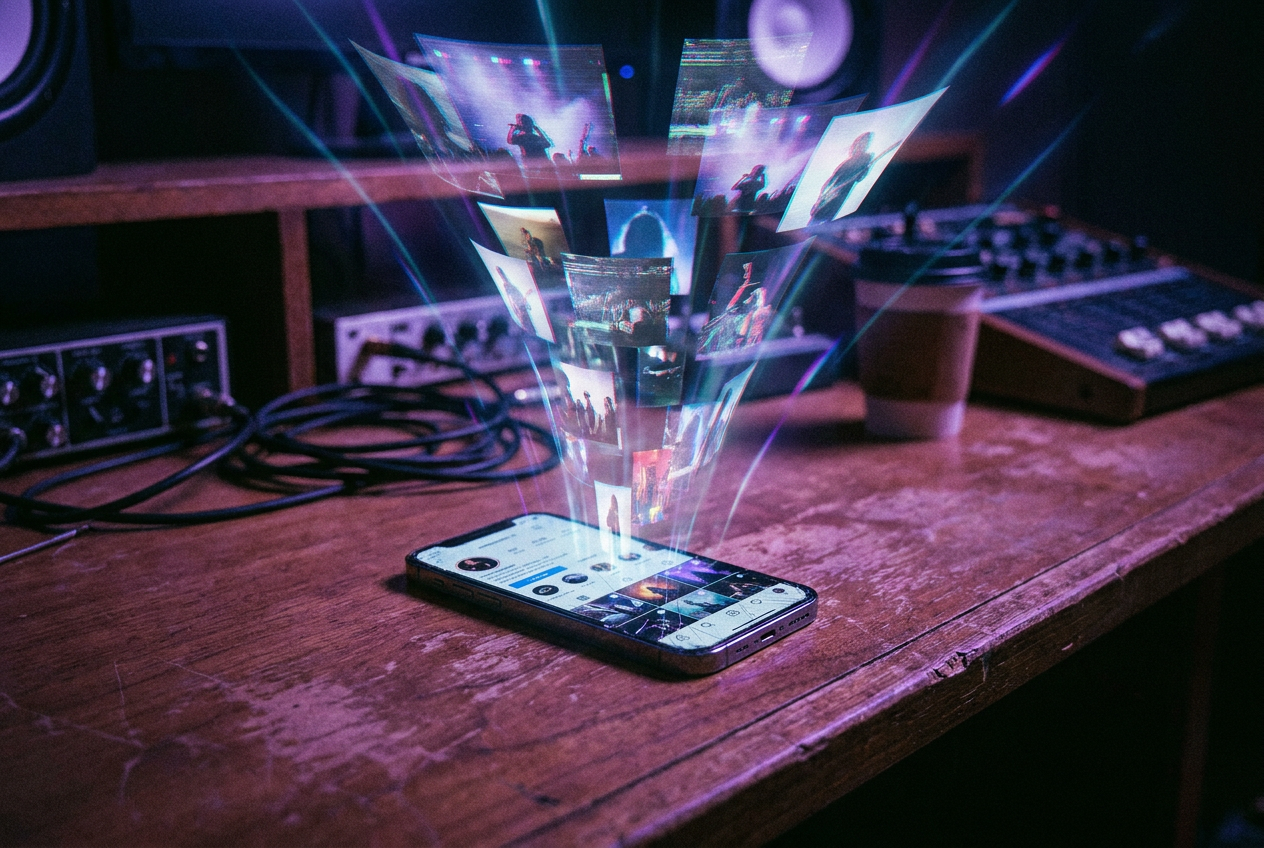
For musicians, this was an especially raw deal. Your Instagram is your visual brand. Album artwork, live show photos, studio shots, behind-the-scenes content — it’s all right there, public by necessity because discoverability is the entire point of being on the platform. Making your account private to protect yourself from AI remixing defeats the purpose of having an Instagram at all.
In terms of audio, users could also block the option for others “to create with and reuse your original audio on Meta AI.” But a simpler way to limit Muse access to content was for users to make their Instagram feeds private — which significantly limits the reach of posts.
It’s the oldest trick in Big Tech’s playbook: give you a “choice” where both options serve the platform and neither serves you.
Hollywood Fires Back — Fast
The backlash was immediate and coordinated.
CAA released a statement calling out the privacy risks of Meta’s new AI model Muse Image, which gave users the ability to create an AI photo of someone just by plugging in their public Instagram handle. The AI model operated on an opt-out policy, meaning users had to manually block access if they didn’t want others to “remix” their Instagram feeds.
CAA, which boasts a client list of megastars like Tom Cruise, Brad Pitt, Zendaya and Meryl Streep, identified the obvious copyright risks and called for Meta to change Muse Image so users are automatically opted out.
Then SAG-AFTRA — the union representing more than 160,000 performers — went further. SAG-AFTRA wrote on social media: “Meta now lets anyone use your Instagram photos in AI images without your consent,” adding the organization “recommends that members (and all Instagram users) opt-OUT of Meta’s new AI image generation tool, Muse Image. Take action to protect your likeness.”
SAG-AFTRA didn’t mince words about the design decision itself. SAG-AFTRA reinforced the demand for prior consent, calling the rollout an “utter miscalculation of public sentiment.”
The architecture drew an immediate comparison to Meta’s broader pattern of treating user data as opt-out rather than opt-in. For actors, musicians, and creators whose professional value is tied to their image and likeness, the default was commercially threatening.
Meta Blinks
It took three days. The company confirmed the feature was “no longer available” on Friday, July 10, following criticism from talent agency CAA and performers’ union SAG-AFTRA.
Meta issued a statement: “Earlier this week, we announced that one way for people to generate images in Meta AI is by @-mentioning public Instagram accounts that they want to reference. Our intent was to provide a useful creative tool and to give people control over whether their public content could be referenced in this way.”
SAG-AFTRA welcomed the retreat, but with a pointed reminder. “With the dangers of nonconsensual digital replicas well known to all, a feature that encouraged that behavior is unwise,” SAG-AFTRA said. “We appreciate its discontinuance. It is the responsible thing to do.”
SAG-AFTRA updated their original post with: “A win is a win. Following widespread backlash — including SAG-AFTRA’s call for members to opt out — Meta has withdrawn the feature.”
A win is a win. But here’s the thing musicians need to understand: this isn’t over.
Why This Matters More for Musicians Than Anyone
The Muse Image controversy centered on photos. But Muse Video is still in preview and still coming.
Muse Video is not publicly available yet. Meta says it is “coming soon to creators and in Meta AI.”
When Muse Image made its debut, Meta’s chief AI officer also announced the preview of Muse Video, which will allow users to create video content as well.
Think about what that means for musicians. Your Instagram isn’t just photos — it’s Reels. It’s live performance clips. It’s studio session snippets. It’s music video teasers. If Muse Video launches with similar opt-out defaults (and Meta hasn’t confirmed otherwise), anyone could potentially reference your video content to generate AI clips.
And remember: Muse Video composes sound effects, ambience, and dialogue in the same generation pass as the visuals. This isn’t just about your image anymore. It’s about your sound.
The backlash mirrors the opposition to OpenAI’s short-lived Sora video model, which operated on a similar opt-out policy before it was shut down earlier this year. The Sora comparison matters. That platform is dead. Meta’s is very much alive.
The Bigger Pattern Musicians Must See
This isn’t an isolated incident. It’s part of an accelerating pattern where every major tech company treats creative content as raw material first and asks permission never.
Consider the landscape musicians are navigating right now:
- Instagram/Meta: Muse let anyone remix your public content (pulled, but Muse Video is incoming)
- YouTube/Google: Google has argued that YouTube’s terms of service already give them the right to train AI models like Lyria 3 on your music
- Streaming platforms: Deezer reports that AI-generated tracks now account for over 50% of daily uploads at peak, drowning real artists
- Training datasets: Millions of songs have been exposed in AI training databases without artist consent
The Muse fiasco was notable because it was visible. You could see someone tag your account and generate AI content from it. Most AI training happens in the dark — your songs scraped, your voice cloned, your style replicated — and you never even know.
What You Should Do Right Now
Whether or not Meta brings back the remixing feature (and in some form, they probably will), here’s your action plan:
1. Audit Your Instagram Settings Today
Go to your Instagram settings and check the AI-related controls. Even though the @-mention remixing feature was pulled, Meta’s underlying AI infrastructure isn’t going anywhere. Review your settings for:
- AI image generation permissions
- Audio reuse permissions
- Content training opt-outs
2. Don’t Go Private — Go Strategic
Making your account private kills your discoverability. Instead, be intentional about what you post publicly. Your Instagram should be a curated showcase, not an unguarded archive of every creative asset you own.
3. Watermark and Brand Everything
Visual branding isn’t just marketing anymore — it’s protection. When your aesthetic is distinctive and consistent, unauthorized AI remixes become obviously inauthentic to your audience. This is one more reason why investing in professional-quality visuals — including AI music videos — actually strengthens your brand rather than weakening it.
4. Own Your Video Content Outside Instagram
Instagram is rented land. You don’t control the terms of service, and those terms can change overnight (as Muse just proved). Build your visual presence across platforms you can control — your own YouTube channel, your own website, your own video library.
This is where having a catalog of professional music videos matters. When you create and own your visual content, you control how it’s used. When you let a platform own it, you’re at their mercy.
5. Watch the EU AI Act Deadline
The EU AI Act’s Article 50 provisions take effect on August 2, 2026 — just days from now. These new rules require AI-generated content to be labeled and watermarked. For musicians operating in or distributing to European markets, this adds another layer of protection (and compliance requirements) to think about.
The Silver Lining for Smart Musicians
Here’s the counterintuitive take: the Muse controversy actually helps musicians who are already using AI intentionally.
Why? Because it forces a public conversation about consent, ownership, and the difference between AI for creators and AI against creators.
When you use AI tools to create your own music videos, you’re making a deliberate creative choice. You control the prompts, the aesthetic, the narrative. You own the output. That’s fundamentally different from a platform scraping your content to let strangers remix it without asking.
The musicians who thrive in this environment will be the ones who use AI proactively — to build their visual brand across genres, whether that’s hip-hop, pop, indie, or R&B — while aggressively defending their content from being used without consent.
That’s the difference between being an AI user and being AI used.
What Happens Next
The Muse episode fits a recurring dynamic for Meta: launching AI features that treat user data as freely available by default, then retreating when the backlash arrives.
But retreating doesn’t mean abandoning. Meta has billions invested in Superintelligence Labs. Muse Video is still coming. And Meta flags open gaps in audio-video synchronization and physically accurate fast motion — which means the model is being actively improved, not shelved.
The question isn’t whether Meta will try again. It’s whether they’ll learn the right lesson: that consent has to come before the feature, not after the outrage.
For musicians, the takeaway is simple but urgent. Your visual identity — your photos, your videos, your aesthetic, your likeness — is now as vulnerable as your audio ever was. The same forces that scraped millions of songs for AI training are coming for your Instagram, your YouTube, your TikTok.
The best defense is a strong offense: own your creative output, build your visual brand intentionally, and don’t wait for platforms to protect you. They won’t.
Ready to take control of your visual content? OneMoreShot.ai lets you create stunning AI music videos in minutes — videos you own, built from your creative vision. No one remixes your work without your say. That’s how AI should work for musicians.