
NYC's AI Music Week Just Rewrote the Rules
There are weeks where nothing happens in the music industry. And then there’s the week of June 8–11, 2026 in New York City — where roughly everything happened at once.
In the span of four days, the National Music Publishers’ Association announced the first-ever industry-wide AI licensing deals. The musicians’ union sued two of the three major labels. Potential damages against Suno crossed the $9 billion threshold. Congress got a new AI music bill. And hundreds of indie label executives packed into Times Square to figure out what it all means.
If you’re a musician making AI-assisted music, creating AI music videos, or just trying to understand where the industry is headed, this was the most consequential week of 2026 so far. Let’s break it all down.
The NMPA Drops the Biggest AI Bomb of the Year
Yesterday — literally yesterday, June 10 — NMPA president and CEO David Israelite announced the “first-ever industry-wide AI licensing deals” for publisher members with AI music firms Udio and KLAY at the organization’s annual meeting.
This is not a small deal. This is the publishing side of the equation finally clicking into place.
Here’s why it matters. Previous AI licensing deals from Universal and Warner covered sound recordings — the actual master recordings owned by labels. But Israelite noted in his speech that these AI deals offer publishers equal compensation to record labels on the AI training side. That’s a first, and it addresses a long-standing grievance that songwriters get short-changed relative to labels.
Israelite framed the move as a dual strategy: “Litigating against bad AI actors and licensing good AI partners is not in conflict. NMPA will do both… There has been hesitancy to make mistakes in these early deals, but there has not been any deal offered across the entire market until today.”
Translation: the publishing industry just opened the door for AI companies to legally use songs — but only the ones that play by the rules.
Udio has shifted its platform from creating new AI songs to remixing licensed, pre-existing songs — and received support from the music business in doing so.
In the last year, Udio has inked licensing deals with Universal Music Group, Warner Music Group, and Kobalt, as well as Merlin on the sound recording side. Adding the NMPA’s publisher network now gets Udio closer to what you might call “full stack” legitimacy.
Israelite also announced the AI Songs Summit, a gathering in Nashville this fall that will bring together songwriters, publishers, streaming services and other stakeholders to discuss the opportunities and challenges of AI.
But here’s what makes this week truly wild: at the exact same time the industry was building bridges with AI, it was also burning them.

The Musicians’ Union Just Sued UMG and Warner
On June 5 — right before NYC music week kicked off — the American Federation of Musicians filed a lawsuit against Universal Music Group and Warner Music Group over the labels’ recent moves to settle their lawsuits with AI music generators Suno and Udio, arguing that the settlements’ benefits aren’t reaching the musicians themselves.
The core argument is devastating in its simplicity. The AFM contends that the AI arrangements triggered the “new uses” provision of its collective bargaining agreement, which requires major labels to pay musicians when their work is put to new commercial applications.
In other words: when UMG and Warner settled with Suno and Udio, they got paid. The session musicians whose actual performances were copied into the AI training data? They got nothing.
The AFM stated: “While the Defendants protected their own interests and created a significant source of new revenue with the retrospective settlements and prospective licenses, they have refused to compensate the musicians whose work – created with their own instruments and through their talent, creativity, and hard work – is fed into AI machines for profit.”
As one legal analysis put it, the AFM complaint exposes a governance contradiction: labels opposed unauthorized AI extraction when the labels were uncompensated, but allegedly accepted licensed AI extraction once the labels were paid.
That’s an uncomfortable look. The same companies that screamed about AI infringement turned around and licensed the same recordings for AI training — keeping the settlement money while session musicians who played guitar, drums, and bass on those tracks saw zero.
Both labels pushed back, with a UMG spokesperson saying the company has been “at the forefront of protecting the rights and advancing the interests of artists and songwriters in the age of AI.” But the legal exposure is real, and the optics are rough.
The $9 Billion Question: Suno Under Siege
While the publishing world was making peace and the union was declaring war, the ongoing Suno litigation escalated to staggering heights.
Sony Music and Universal Music want to expand the formal list of recordings that they reckon Suno copied without licence when training its generative AI model, from 560 tracks to 61,026.
Under US law, rights owners can ask for up to $150,000 per infringed work in copyright cases. By expanding the Suno infringement list from 560 to 61,026, the potential damages rise from $84 million to more than $9.1 billion.
And even that number is modest. Suno and Udio have actually used tens of millions of tracks to train their respective models, so potential damages could theoretically be in the trillions.
Meanwhile, Suno has raised a $400 million Series D round at a $5.4 billion valuation — more than double its previous round — essentially daring the legal system to stop them. Suno is fighting on fair-use grounds in the U.S. District Court for the District of Massachusetts, where a key summary-judgment hearing is scheduled for July 2026.
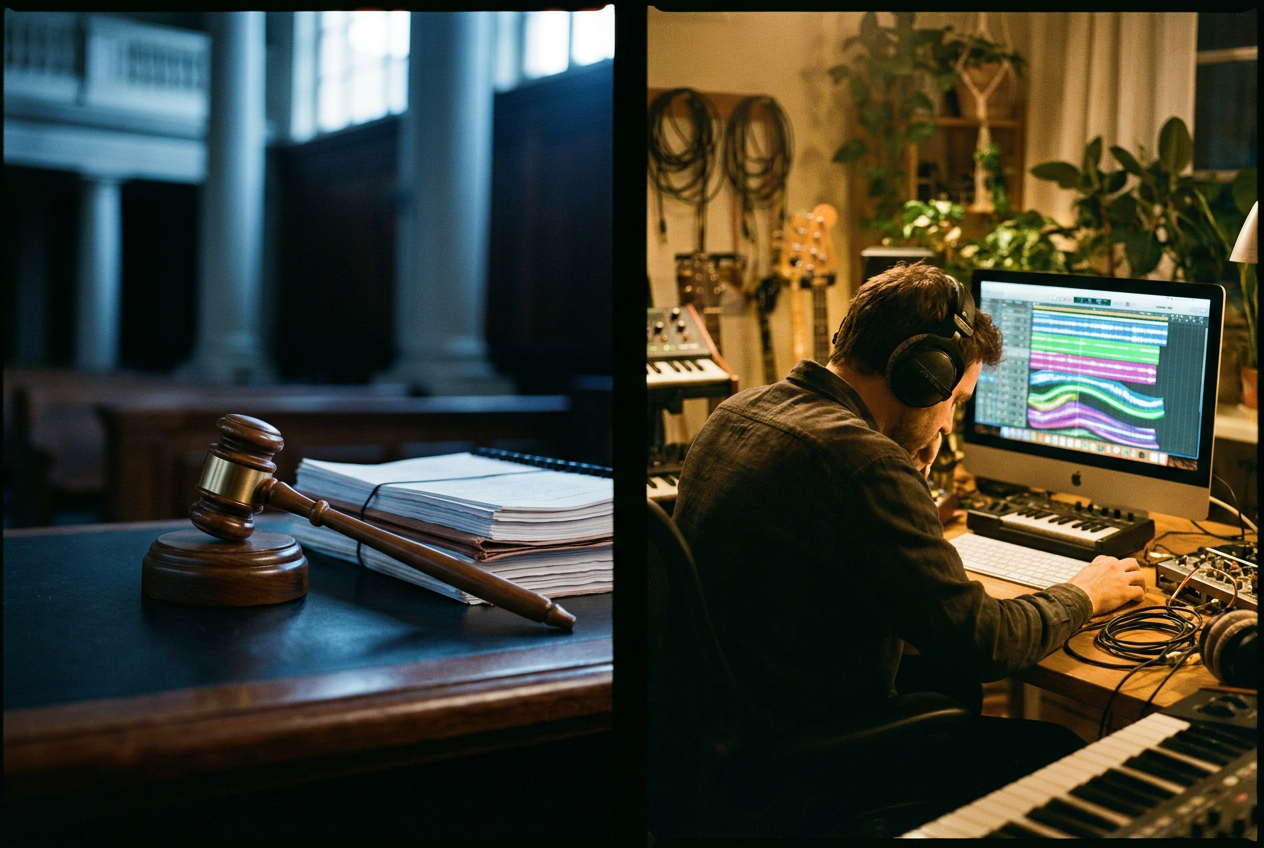
The split screen is almost cinematic: venture investors betting billions that Suno will win, while record labels bet in court that it’s built on infringement.
A2IM Indie Week: Where Indie Labels Made Their Stand
Running alongside all of this, the 18th annual Indie Week conference took place June 8–11 at the InterContinental New York Times Square.
The conference features strategic conversations, networking, and forward-looking programming focused on the future of ownership, AI, fan monetization, and the evolving economics of independence.
For independent musicians and labels, the conversations happening at Indie Week were arguably more important than any single deal.
The event included a full-day Continuing Legal Education program curated by Perkins Coie featuring timely discussions on music litigation cases, privacy considerations for music services and distributors, and AI music licensing.
The Copyright Office’s Register of Copyrights, Shira Perlmutter, was a keynote speaker. Think about that timing for a second — the person who oversees US copyright policy, speaking to indie label executives the same week the NMPA announces AI licensing deals and the musicians’ union sues the majors. You couldn’t write a more loaded agenda if you tried.
Meanwhile, the Protect Working Musicians Act was reintroduced in Congress, allowing independent musicians and labels to collectively negotiate with AI companies and large digital streaming platforms. The legislation has been updated for the AI age and is aimed at addressing the power imbalance between working musicians and major technology companies.
A2IM CEO Ian Harrison described the current landscape as “an uneven playing field” for independent creators trying to negotiate with massive tech companies.
What This Means for Independent Musicians
OK, deep breath. That was a lot. Let’s translate this into practical takeaways.
1. Licensed AI Music Is Now the Default Path
The NMPA deals with Udio and KLAY mean that both the recording and publishing sides are building licensed infrastructure. If you’re using AI tools that operate within these licensed frameworks, you’re on safer ground than ever. If you’re using tools that haven’t secured licenses… you’re taking on risk that’s growing by the month.
For AI music videos, this distinction matters less — visual AI tools that generate imagery for your music don’t face the same training-data controversies as audio AI tools. That’s one reason why AI music video creation has been the fastest-growing part of the AI-assisted music workflow. You bring the music you own; the AI creates the visuals.
2. The “Who Gets Paid” Question Is Exploding
The AFM lawsuit reveals a crack in the music industry’s AI strategy that’s going to widen. Labels settled for themselves. Publishers are now settling for themselves. But the actual performers — the session musicians, the background vocalists, the instrumentalists — are being left behind.
If you’re an independent artist who owns your own masters and publishing, this actually puts you in a stronger position. You don’t have a label middleman cutting deals with AI companies behind your back. You control your licensing directly. The complete guide to AI music videos covers how independent artists are building visual content strategies that don’t depend on anyone else’s licensing framework.
3. The Fair Use Fight Has a Deadline
Suno’s key summary-judgment hearing is scheduled for July 2026. That ruling could set the precedent for whether AI training on copyrighted music is legal in the US. If the court rules against fair use, every unlicensed AI music tool becomes legally radioactive. If it rules in favor, the floodgates open wider.
Either way, musicians who are building with AI-powered visuals rather than AI-generated audio are insulated from the worst-case scenarios. Whether you’re making hip-hop visuals, indie aesthetics, or electronic music content, AI video generation sits on the “safe” side of the copyright line.
4. Streaming Fraud Is Now a “National Security Issue”
This one flew under the radar, but it’s worth highlighting. At the NMPA meeting, Israelite warned that “AI is being used to hypercharge streaming fraud.” He continued: “And that fraud is not just stealing from songwriters and artists, but also can be used for a more nefarious purpose. There is growing concern by the U.S. government that it is being used to launder money for organized crime and even to finance terrorism.”
That’s the NMPA president calling streaming fraud a national security issue. At an industry meeting. On the record. If platforms crack down on AI-generated audio content flooding streaming services, having legitimate, human-made music with professional AI-generated visuals becomes an even bigger competitive advantage.
5. Tool Choice Is Now a Rights Strategy
As one forecast noted: “Tool choice is becoming part of rights strategy. Where you make the song may matter almost as much as what the song sounds like.”
This is the new reality. The AI music tool you use carries legal and reputational weight. Licensed tools like Udio (post-pivot) and KLAY are building within the system. Unlicensed tools are rolling the dice on a fair-use defense that may not hold up in court.
For visuals, the calculation is simpler. AI video generators that create original imagery from text prompts aren’t copying anyone’s copyrighted recordings. That’s why the visual side of AI music — creating music videos for pop, R&B, country, or any genre — has remained largely controversy-free even as the audio side turns into a legal battlefield.
The Bigger Picture: Three Lanes Are Forming
What NYC’s music week revealed is that the AI music industry is splitting into three distinct lanes:
Lane 1: Licensed and Legit. Udio, KLAY, and companies that build within licensed frameworks. They pay for training data. They share revenue with rights holders. They’re slower to market but legally bulletproof.
Lane 2: Fight and Build. Suno, which has $5.4 billion in backing and a fair-use defense it’s willing to take to trial. High risk, high reward, and an outcome that won’t be clear until at least late 2026.
Lane 3: Visual AI. Tools that generate original visuals from prompts — music video generators, image creators, and video AI platforms. These don’t use copyrighted music for training and don’t face the same legal exposure. This is the lane where independent musicians can operate with the most creative freedom and the least legal risk.
If you’re an indie artist trying to navigate this chaos, lane three is the most immediately useful. You own your music. You generate visuals to match it. You control the entire pipeline. No label deals needed. No licensing drama. Just your songs and your vision, translated into professional visual content.
What Happens Next
The July summary-judgment hearing in the Suno case could reshape everything. The NMPA’s new deals will start rolling out to member publishers next week. The AFM lawsuit will work its way through the courts. And the Nashville AI Songs Summit this fall will be the next major convening of all the stakeholders.
For musicians who want to stay ahead of it all, the smartest move right now is to keep making music and keep making visuals. The legal wars will sort themselves out. The question of who owns what and who pays whom will eventually get answered. But the artists who are building audiences today — with great songs and stunning visuals — will be in the strongest position no matter how the legal chips fall.
Ready to turn your music into professional visuals while the industry figures out the rest? OneMoreShot.ai lets you create AI music videos in minutes — no licensing drama, no legal gray areas, just your track and your creative vision brought to life. While the lawyers argue about audio, your visuals can already be everywhere your fans are looking.