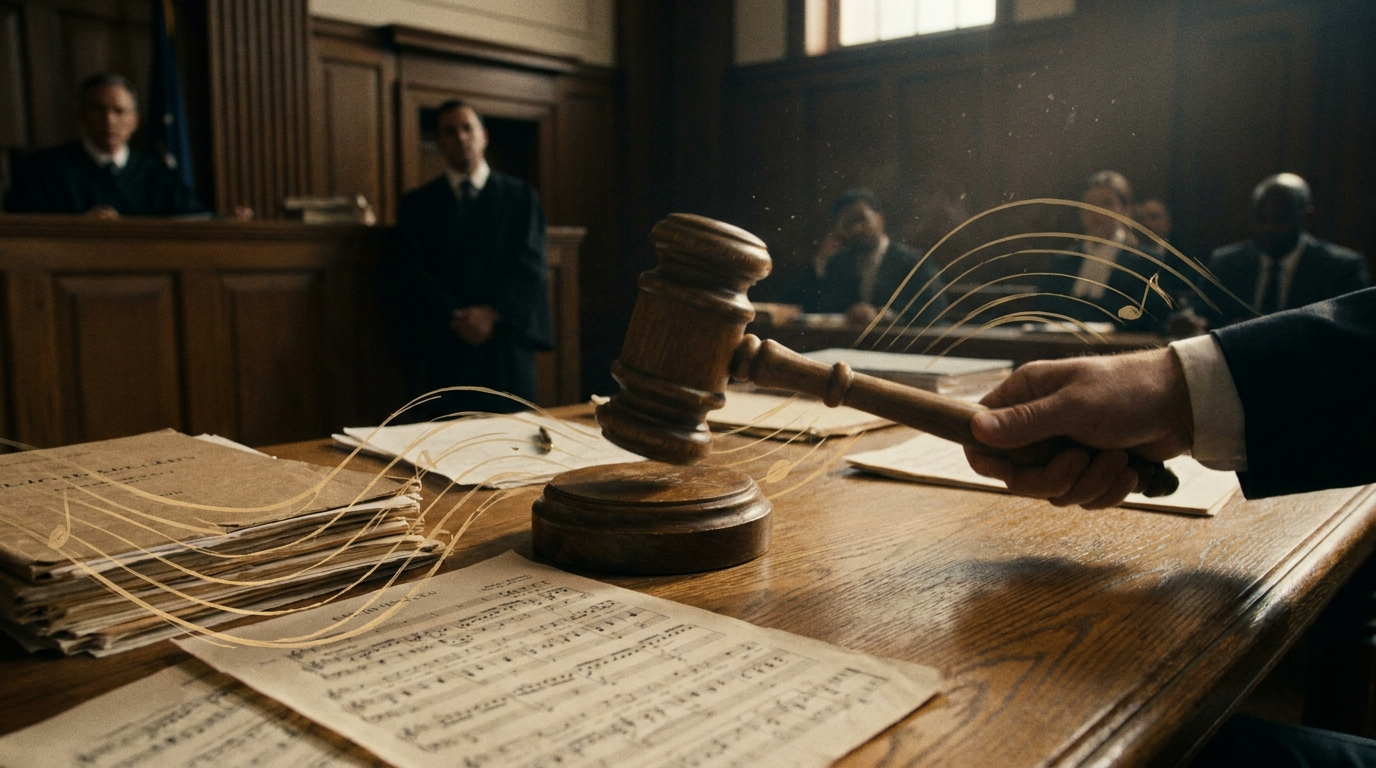
Sony's $4.5B Udio Lawsuit Changes Everything
Everyone else made peace. Sony chose war.
On July 20, 2026, Sony Music Entertainment filed a second copyright infringement lawsuit against Udio, asserting 30,117 sound recordings it says the AI music company copied without permission to train its generative AI models. The complaint was filed in the US District Court for the Southern District of New York — and the implications for every musician making AI-powered content are enormous.
This isn’t a tweak to an existing case. This is a full-blown escalation that pushes Udio’s potential damages from roughly $50 million to as much as $4.5 billion , and it comes at the worst possible moment for anyone hoping AI music’s legal drama would quietly sort itself out.
Let’s break down what happened, why it matters, and what musicians should actually do about it.
Sony Is the Last Major Label Standing
Here’s what makes this lawsuit different from every other AI music legal battle: Sony is now the only one of the three major labels still fighting Udio in court.
Universal Music Group and Warner Music Group each dropped their claims after settling and signing licensing deals with the startup in late 2025. That was the pattern everyone expected. Sue, negotiate, settle, license. Repeat.
Sony didn’t follow the script.
Sony’s choice to escalate rather than settle turns the case into a test of whether litigation still carries leverage once most of the market has moved to licensing. Think about that for a second. When your competitors have already made deals with the defendant, filing a bigger lawsuit is either brilliant or insane. Sony is betting it’s brilliant.
And they might be right. Udio has since signed training licences with Universal, Warner, Kobalt, Merlin, Believe, and a US publishers’ group. That, Sony argues, proves a licensing market plainly exists. In copyright law, that’s a devastating argument. If Udio is willing to pay everyone else, it’s hard to claim training on Sony’s catalog was “fair use.”

From 333 Songs to 30,117
The original 2024 lawsuit named 333 tracks. That already felt like a lot. The new complaint? The new complaint, filed July 2026 in Manhattan federal court, asserts 30,117 recordings. That is a staggering jump from the 333 tracks named in the original 2024 suit, and Sony alleges the newly listed works are only a subset of hundreds of thousands of recordings Udio infringed.
Read that again: Sony says 30,117 is just a “small portion” of the actual damage.
How did they get these numbers? Sony says it used audio fingerprinting technology to match the material. During discovery — the legal process where each side gets to inspect the other’s evidence — Sony claimed that discovery for the case revealed 30,117 tracks were found among Udio’s training datasets.
The catalog reads like a greatest-hits-of-everything-ever. Sony alleged Udio illegally copied recordings including works tied to Alicia Keys, Dolly Parton, Elvis Presley, Beyoncé, and Michael Jackson. These aren’t obscure deep cuts. These are some of the most recognizable recordings in music history.
Why a Second Lawsuit?
Sony didn’t plan to file a separate case. They wanted to add these 30,000+ tracks to the existing lawsuit. The court said no.
It follows a June 29 ruling in which the same court denied Sony’s bid to add more than 30,000 of those recordings to its existing case against Udio. But here’s the legal judo move: in its June 29 ruling, the court denied Sony leave to add the recordings to the original case but recognized that “Plaintiffs have the right to seek to stop infringement of, and recover damages for, all copyrighted works.” The court held only that “there is no requirement that it be done in [that] lawsuit.”
So Sony took the judge at their word and filed a brand-new one. It’s the legal equivalent of being told “you can’t bring that through the front door” and immediately walking around to the back.
The Fair Use Showdown
The heart of the case is fair use, the defence Udio leans on to justify training on unlicensed songs. Courts weigh whether that use harms a market for the original work, and Sony has found a sharp answer.
This is the question that will define the entire AI music industry. When an AI company scrapes thousands of copyrighted recordings to train a model that generates competing music, is that “fair use” — or is it theft on an industrial scale?
The fact that Udio has already licensed with other major labels actually works against them here. If a licensing market exists (and it clearly does, since Udio is paying Universal, Warner, and others for the privilege), then bypassing that market for Sony’s catalog becomes much harder to defend as fair use.
For independent musicians watching from the sidelines, this matters more than you might think. If Sony wins, it establishes a precedent that all training data must be licensed — and that precedent protects indie catalogs too, not just major-label superstars.
The Bigger Picture: AI Music’s Legal Pressure Is Mounting
Sony’s Udio bomb didn’t drop in isolation. Sony Music Entertainment is the last major record label still in court , but the legal pressure on AI music companies is coming from every direction.
The GEMA v. Suno ruling in Munich is expected on July 31. If that goes against Suno, it could be the first European ruling requiring AI companies to license training data. And in Massachusetts, a key summary-judgment hearing in the Massachusetts case is scheduled for July 2026 in the Suno litigation.
Meanwhile, on the platform side, the streaming services are tightening their own policies. Deezer just announced that 90,000 AI-generated tracks per day now represent over 50% of all new music uploads on Deezer at peak level in June, 2026. That’s up from 75,000 in April. And moving forward, Deezer will systematically take down AI-tracks used for streaming fraud, and those that haven’t been streamed for at least 6 months.
The era of “upload anything and see what happens” is ending. Courts are closing in on fair use. Platforms are actively deleting AI tracks. And the last major label holdout is betting $4.5 billion that the law is on the side of creators.
What This Means for Musicians Making AI Music Videos
Here’s where this gets practical for anyone using AI in their music workflow.
The Sony lawsuit — and the entire legal landscape around AI music — is about one thing: audio. The recordings. The songs themselves. The AI-generated music that sounds like Beyoncé or Elvis because it literally trained on Beyoncé and Elvis.
AI music videos? Completely different territory.
When you use AI to generate visuals for your own original music, you’re not touching anyone’s copyrighted recordings. You’re not training on someone else’s catalog. You’re taking a song that you own — that you wrote, produced, or licensed — and creating visual content to promote it.
That’s a critical distinction, and it’s why tools built specifically for musicians, like OneMoreShot.ai, exist in a fundamentally different legal category than AI music generators. You bring your music. The AI creates the visuals. No one’s catalog gets scraped in the process.
If you’re an independent artist trying to navigate this increasingly complex landscape, the safest and most effective strategy is clear: make your own music, then use AI to amplify it visually. Check out our Complete Guide to AI Music Videos in 2026 for a deep dive on how to do exactly that.

The Smart Play for Independent Artists in 2026
Whether Sony wins its $4.5 billion gamble or not, the direction is clear. AI-generated music is facing unprecedented legal, regulatory, and platform-level resistance. AI-generated visuals for your music? That’s where the opportunity lives.
Here’s what you should be doing right now:
1. Own Your Music
If you’re using Suno or Udio to generate tracks, understand the legal uncertainty you’re walking into. The copyright status of fully AI-generated music is unsettled, and it’s getting more contentious by the month. Write your own songs. Produce your own beats. Collaborate with other humans. That’s the content that will never face a takedown or a licensing dispute.
2. Use AI for Visuals, Not Audio
This is the playbook that keeps you on the right side of every lawsuit, every platform policy, and every regulatory framework. Take the music you actually own and give it a visual identity with AI. Whether you’re making hip-hop videos, EDM visuals, indie content, or pop promos, AI video generation for your own music is legally clean and creatively powerful.
3. Move Fast on Visual Content
With 90,000 AI tracks flooding streaming platforms every single day, standing out with audio alone is nearly impossible. Fully AI-generated music accounts for between 1% and 3% of all streams on the platform, according to Deezer. The vast majority of AI slop gets zero traction. The artists who break through are the ones pairing real music with compelling visual stories.
Our guide on How to Make an AI Music Video walks you through the entire process, from uploading your track to generating a finished video you can drop on YouTube, Instagram, or TikTok today.
4. Watch the July 31 GEMA Ruling
The Munich court’s decision on GEMA v. Suno could reshape the entire AI music industry in Europe. If GEMA wins, AI music companies will need to license training data across the EU — and the ripple effects will hit globally. Stay informed.
The Bottom Line
Sony is making a bet that the law still means something in the age of AI. By refusing to settle, by filing a second lawsuit covering 30,117 recordings, and by pushing potential damages north of $4 billion, they’re forcing a courtroom reckoning that the entire music industry has been trying to avoid.
For musicians, the takeaway isn’t about picking sides in a corporate lawsuit. It’s about understanding where the risk is and where the opportunity lives.
The risk is in AI-generated music — the legal ground is shifting under everyone’s feet, and it’s shifting fast.
The opportunity is in AI-generated visuals for your music. Every song deserves a music video. And in 2026, every musician can afford to make one.
Start creating yours at OneMoreShot.ai — bring your music, and let AI handle the visuals. No scraped catalogs. No copyright drama. Just your song, looking as good as it sounds.