Suno Just Lost in Court. Here's What It Means.
It happened.
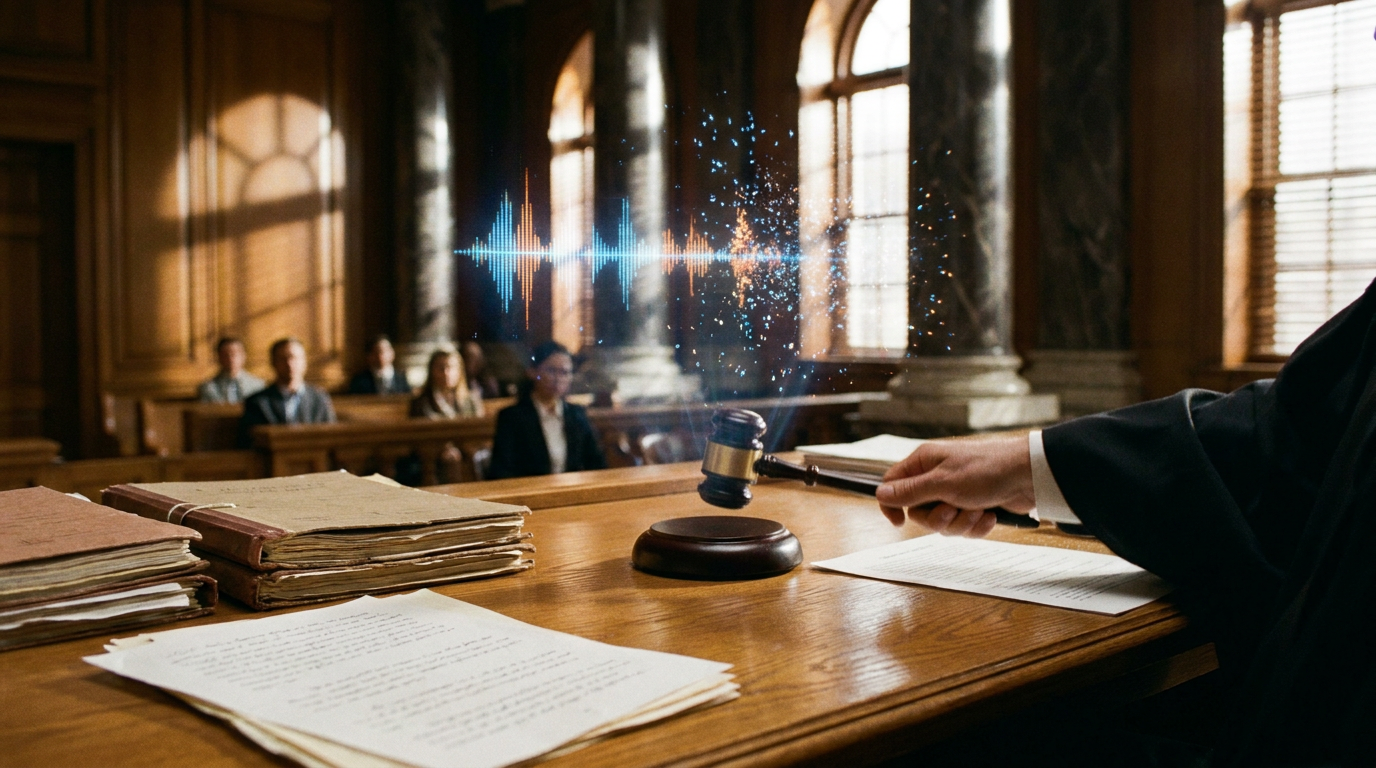
At 9:00 AM this morning in courtroom 270 of Munich’s Justizpalast, the 42nd Civil Chamber of the Munich Regional Court delivered the verdict the entire music industry has been bracing for. The court ruled that U.S. AI music firm Suno violated copyright by memorizing and reproducing six GEMA-represented songs and must disclose illicit revenue details.
This is the first major European court ruling confirming that AI music platforms need authorization to train on copyrighted compositions. Not “maybe.” Not “we’ll see.” The court said it. Suno broke the law.
If you’re a musician using AI tools — or competing against people who do — this ruling changes the game. Here’s what you need to know right now.
What Happened in Munich
The case, filed by GEMA in January 2025, argues that Suno trained its AI models on copyrighted music without obtaining licences or compensating rightsholders.
Representing more than 95,000 composers, lyricists and music publishers in Germany, along with over 2 million rights holders worldwide, GEMA asked the court to rule that AI training on protected music requires permission from copyright owners.
The case zeroed in on six specific songs that everyone knows: “Atemlos,” “Daddy Cool,” “Rasputin,” “Big in Japan,” “Forever Young,” and “Mambo No. 5.” Both parties agreed that these pieces were used for training purposes and that the defendant accessed them on YouTube.
That last detail matters. In order to extract the musical works from the YouTube platform, Suno used so-called stream ripping techniques, circumventing technical protection measures implemented by YouTube.
So Suno ripped songs from YouTube, fed them into a model, and when users typed simple prompts, the model spit out material that sounded remarkably close to the originals. GEMA was able to generate numerous audio contents with Suno that are confusingly similar to the original musical works and sound recordings.
The court agreed. That’s copyright infringement.

Why This Ruling Has Teeth
Here’s the part that should make every AI music company’s legal team very nervous.
Under German law, a first-instance judgment can be enforced immediately, even if an appeal is filed.
If GEMA prevails, it could seek an injunction affecting Suno’s European operations while appeals continue.
That’s not a typo. Suno can appeal — and almost certainly will — but GEMA can start enforcing today. An injunction against Suno’s European operations is now on the table. Right now. While the lawyers file paperwork.
This is the same 42nd Civil Chamber that ruled against OpenAI in November 2025 over song lyrics in ChatGPT. In that landmark first-instance ruling, the court largely upheld GEMA’s claims for injunctive relief, disclosure and damages. The Suno case extends that same logic from text (lyrics) to audio (full compositions). The precedent chain is building fast.
And the revenue disclosure requirement is a killer. A German court ruled that Suno has violated copyright rules and has to provide information on illicit revenues. Suno now has to open its books and show exactly how much money it made from content built on copyrighted training data. For a company that just raised $400M at a $5.4B valuation, those numbers could be enormous — and damaging.
The Ripple Effect Across Every AI Music Case
This ruling doesn’t exist in a vacuum. It lands in the middle of a legal firestorm that’s been building all year.
Audible Magic fingerprinting found more than 61,000 specifically identified copyrighted recordings inside Suno’s training corpus, which Suno itself admitted in court was built on “tens of millions” of recordings. That’s the evidence sitting on the table in the U.S. case too.
Warner Music Group already struck a licensing deal with Suno and Universal Music Group already licensed its catalog to Udio — which means a functioning market for exactly this kind of AI music training now exists.
Under the fair use doctrine’s fourth factor, the existence of that licensing market is precisely the evidence that turns an otherwise contested transformativeness argument into a much harder case for the defendant to win.
Translation: the fact that some labels already license their catalogs to AI companies makes it harder for Suno to argue in the U.S. that it didn’t need a license. If you can buy it, courts expect you to buy it.
And then there’s Sony’s separate $4.5B lawsuit against Udio. The Hagens Berman class actions from independent artists. Two class-action indie suits against Suno and Udio got real firepower in June when Hagens Berman, the firm that extracted $260 billion from Big Tobacco, joined the plaintiffs’ team, while the American Federation of Musicians sued Universal and Warner, alleging the labels pocketed AI settlement money without compensating the session players.
Today’s Munich ruling gives every one of those plaintiffs ammunition.
What This Actually Means for Musicians
Let’s get practical. You’re a musician. You might use Suno or Udio to generate ideas. You might use AI video tools for your visuals. You might be an independent artist who just wants to know if the AI flood drowning your streams is finally going to slow down.
Here’s the honest breakdown:
If You Use AI Music Tools
Your Suno account still works. This ruling doesn’t flip a switch and shut anything down overnight. But it signals where the legal winds are blowing — toward mandatory licensing, higher costs for AI platforms, and potentially more constrained outputs in European markets.
The ruling will not decide whether every Suno song is legal, but it shapes how courts treat AI training, memorization, recognizable musical outputs, and licensing across the European market.
If Suno has to license training data, that cost gets passed somewhere. Either to you through higher subscription prices, or through more limited feature sets in regions where licensing gaps exist. The free-for-all era of training on everything is dying in real time.
If You’re Competing Against AI Slop
This is genuinely good news. Figures from Deezer show the volume of AI-generated music reaching streaming services is still climbing, with the Paris-based platform saying it took in nearly 90,000 fully AI-generated tracks a day in June, making up more than 50% of all new tracks uploaded to the platform on peak days.
But the legal and platform walls are closing in. Courts are ruling against unlicensed training. Platforms are deleting AI uploads. Chart eligibility rules are being proposed. The combination of today’s ruling, streaming platform crackdowns, and proposed AI labeling requirements creates real friction for low-effort AI slop.
If You Make Music Videos
Here’s the thing nobody’s talking about enough: this landmark decision advances legal precedent on AI-generated music. Music. Not music videos.
AI-generated music faces an existential legal challenge. AI-generated music videos made from your own original music? That’s a completely different legal territory. When you use an AI video tool to create visuals for your song — a song you wrote, recorded, and own — you’re not training on anyone’s copyrighted material. You’re creating new visual art for work you already control.
This is exactly why the visual layer has become the smartest investment a musician can make in 2026. The music itself is getting legally radioactive if it touches unlicensed AI training data. But the video? That’s where AI tools operate in the clear.
If you haven’t started building a visual strategy around your music, check out our Complete Guide to AI Music Videos in 2026 or learn How to Make an AI Music Video with your own tracks as the foundation.
The Bigger Picture: Licensing Is Coming for Everyone
The aim of these lawsuits is to obtain a licence fee for the authors and music publishers on whose works the AI models and systems are based. The success of AI models and systems is based on the content with which they have been trained. It is therefore only fair that those who created this content should receive a share of the revenues generated.
GEMA isn’t trying to kill AI music. They’re trying to get paid. And after today, they have the legal backing to make that happen.
This likely accelerates the licensing era that’s already forming. Warner has a deal with Suno. UMG has a deal with Udio. The NMPA has its own arrangement. Today’s ruling just made the argument for not licensing dramatically weaker. Every collecting society in Europe — SACEM in France, PRS in the UK, SIAE in Italy — now has a Munich precedent to point at.
If the Munich verdict goes against Suno, it arrives at a moment when the industry’s voluntary compliance architecture is still forming — adding urgency to what would otherwise be a patient, deliberate process.
That urgency just became real.

What Smart Musicians Should Do Right Now
The dust from this ruling won’t settle for months. Appeals will be filed. More cases will follow. But here’s what you can do today:
1. Register your catalog properly. When licensed AI deals close, payouts will route through registration records and market-share data, so clean metadata is what puts you in line to get paid. Make sure your PRO registrations are current and your metadata is clean across every platform.
2. Double down on visual content. AI-generated music is legally contested. AI-generated visuals for your music are not. Whether you make hip-hop, pop, indie, or EDM, music videos built on original songs are your competitive moat.
3. Document your creative process. When anyone can generate a track, the value is no longer in the act of generation alone — the value is in the human direction behind the work. A trusted creator can explain why the song exists, who it is for, what inspired the lyrics, and how the final release supports a larger creative goal.
4. Watch the U.S. cases closely. The Munich ruling gives momentum to plaintiffs in the Sony v. Suno case in Massachusetts and the Sony v. Udio case in New York. If U.S. courts follow similar logic, the licensing landscape shifts globally.
5. Treat your music videos as your moat. In a world where 90,000 AI tracks hit streaming platforms every single day, the song alone isn’t enough anymore. The visual layer is what separates you from the noise. That’s not changing — if anything, today’s ruling makes it more true.
The Verdict After the Verdict
Today’s ruling is historic, but it’s not the final word. Suno will appeal. The case will likely climb to Germany’s Higher Regional Court. A reference to the Court of Justice of the European Union also remains possible. This legal battle has years left in it.
But the direction is clear. Courts are siding with creators. Platforms are building licensing deals. The era of scraping everything and asking for forgiveness later is ending — not with a whimper, but with a gavel.
For musicians, the takeaway is both simple and urgent: own your music, build your visual brand, and make sure your creative work stands on a foundation that no court ruling can take away from you.
The smartest play right now? Turn your original music into visual content that cuts through the noise. That’s exactly what OneMoreShot.ai is built for — letting you create stunning music videos from your own tracks in minutes, no legal gray area required. While the AI music world battles it out in courtrooms, your visuals can be out there working for you today.