
Suno's $5.4B Bet Reshapes AI Music Creation
Eighteen months ago, Suno was a scrappy AI music startup getting sued by every major record label on the planet. Today, it’s worth $5.4 billion, has 2 million paying subscribers, and is about to launch the first AI music models built with the industry that tried to destroy it.
That’s not a pivot. That’s a full-speed U-turn on a highway, and the music world is still processing the whiplash.
If you’re a musician — whether you’re using AI tools, competing against them, or somewhere in the confused middle — the Suno story is the single most important thing happening in your industry right now. Not because one company raised a lot of money, but because of what that money represents: AI music just went from rebel technology to institutional infrastructure.
Let’s break down what happened, what’s coming, and what it actually means for you.
From Lawsuit to $5.4 Billion in Record Time
Suno pocketed $400 million in its latest funding round, valuing the company at $5.4 billion. The round was led by Bond Capital, with IVP, Forerunner, Union Square Ventures, Alkeon Capital Management, and Quiet joining the mix.
Previous investors including Matrix, Lightspeed, Menlo Ventures, and Schroders Capital also participated in the Series D.
To appreciate how absurd this trajectory is, consider the timeline. The funding more than doubles the company’s $2.45 billion valuation reached in November 2025 following a $250 million funding round. Before that, Suno raised $125 million in 2024. So in roughly 18 months, Suno went from “interesting experiment” to one of the most valuable AI startups on earth — in any category, not just music.
Suno doubled its valuation while two of the three companies that own most of the recorded-music catalog in the Western market are still suing it. Universal Music Group and Sony Music Entertainment continue to pursue copyright litigation. The labels recently sought to broaden their complaint, adding allegations that upward of 61,000 songs were fed into Suno’s training data without authorization.
And yet the checks keep getting bigger. The investors writing these checks are pricing in an outcome where Suno is not litigated out of existence, but instead ends up paying for licenses the same way Warner already agreed it should.
That’s the key insight here. The smart money isn’t betting on Suno avoiding licensing — it’s betting on Suno becoming the licensed platform.
The Warner Deal Changes Everything
The turning point came in November 2025. Warner Music Group became the first major label to strike a deal with Suno. The agreement brought news of Suno’s plans for “new, more advanced and licensed” models in 2026.
This isn’t a handshake agreement about “exploring possibilities.” It’s a structural overhaul of how Suno works. When the new models launch in 2026, the current models will be deprecated. Moving forward, downloading audio will require a paid account. Suno will introduce download restrictions — songs made on the free tier will not be downloadable and will instead be playable and shareable.
Artists and songwriters will have full control over whether and how their names, images, likenesses, voices, and compositions are used in new AI-generated music.
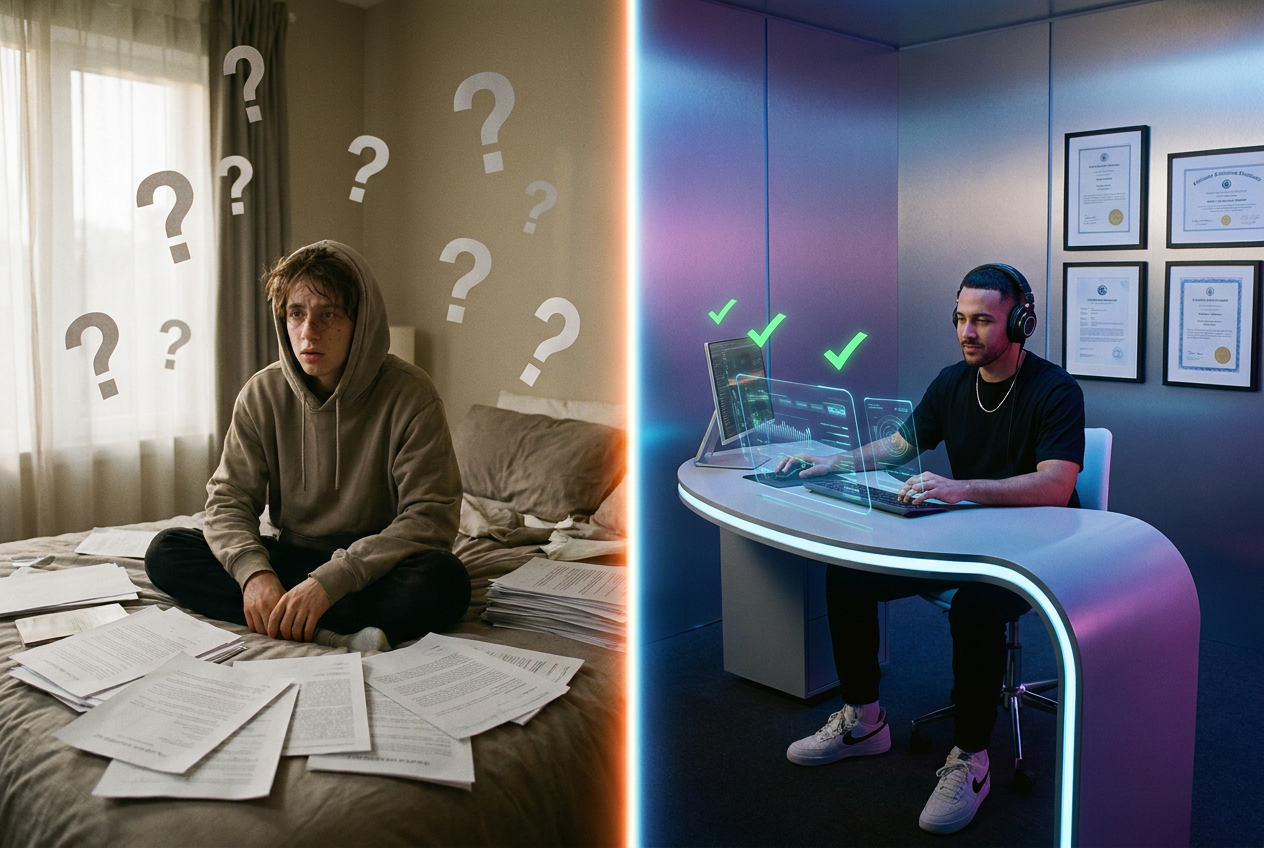
This is the end of the Wild West. The free-tier Suno that let anyone generate unlimited downloadable songs is being deprecated. What replaces it is something more controlled, more expensive, and — crucially — more legitimate.
For musicians who’ve been skeptical about AI music tools, this is actually good news. A licensed Suno means the songs it generates won’t carry the same legal ambiguity that made labels nervous about the whole category. For musicians already using Suno, it means your workflow is about to change, and you need a plan.
2 Million Subscribers and $300 Million in Revenue
The raw numbers tell a story the headlines sometimes miss. As of February, Suno had surpassed two million subscribers and was projecting $300 million in annual revenue.
CEO Mikey Shulman said the capital will fund new product launches, expanded offerings, and workforce growth of up to 70 percent before year-end, scaling from a current headcount of around 200.
Two million paying subscribers. Not free accounts. Not “monthly active users.” People pulling out credit cards to generate AI music every month. That’s a user base roughly the size of a mid-tier streaming service, except instead of listening to music, they’re making it.
Shulman wrote: “We’ve seen Suno used by professional producers and songwriters, but also by millions of people making music for the first time — because music creation is no longer the domain of a niche few.”
This is the part that should make every independent musician sit up and pay attention. Those 2 million creators aren’t just tinkering — they’re releasing music. And some of them are getting serious results.
The IngaRose Problem (And Opportunity)
Need proof that AI-created music has crossed into the mainstream? “Celebrate Me,” a TikTok-viral song created with the AI music generator Suno, reached No. 1 on the iTunes chart in the United States and several other countries.
IngaRose is not a real person. The project operates as a fully AI-constructed artist persona, with an Apple Music artist page, dozens of videos on YouTube, and a growing 228,000 Instagram followers.
The track initially gained traction on TikTok, where it was used in more than 300,000 user videos, before converting that attention into paid downloads.
Now, here’s where this gets interesting for real musicians rather than terrifying. IngaRose didn’t go viral because of AI music quality alone. It went viral because of visual content strategy. The TikTok presence, the Instagram account, the YouTube videos — all of it worked together to create a complete artist experience that audiences engaged with.
The lesson isn’t “AI is replacing musicians.” The lesson is that visual content is now inseparable from music distribution. Whether you’re a human artist or a synthetic persona, the formula is the same: great music + compelling visuals + platform-native content = discovery.
This is exactly why AI music videos have become essential for independent artists competing in this landscape. If a virtual persona with no live performance ability can top the charts through video content, imagine what a real artist with real stories can do with the same tools. Our complete guide to AI music videos walks through exactly how to build this kind of visual strategy.
Suno v5.5: The Voice Cloning Pivot
The version that will carry Suno into the licensed era is v5.5. Released on March 26, 2026, Suno v5.5 launched alongside features that let users showcase their musical identity: Voices, Custom Models, and My Taste.
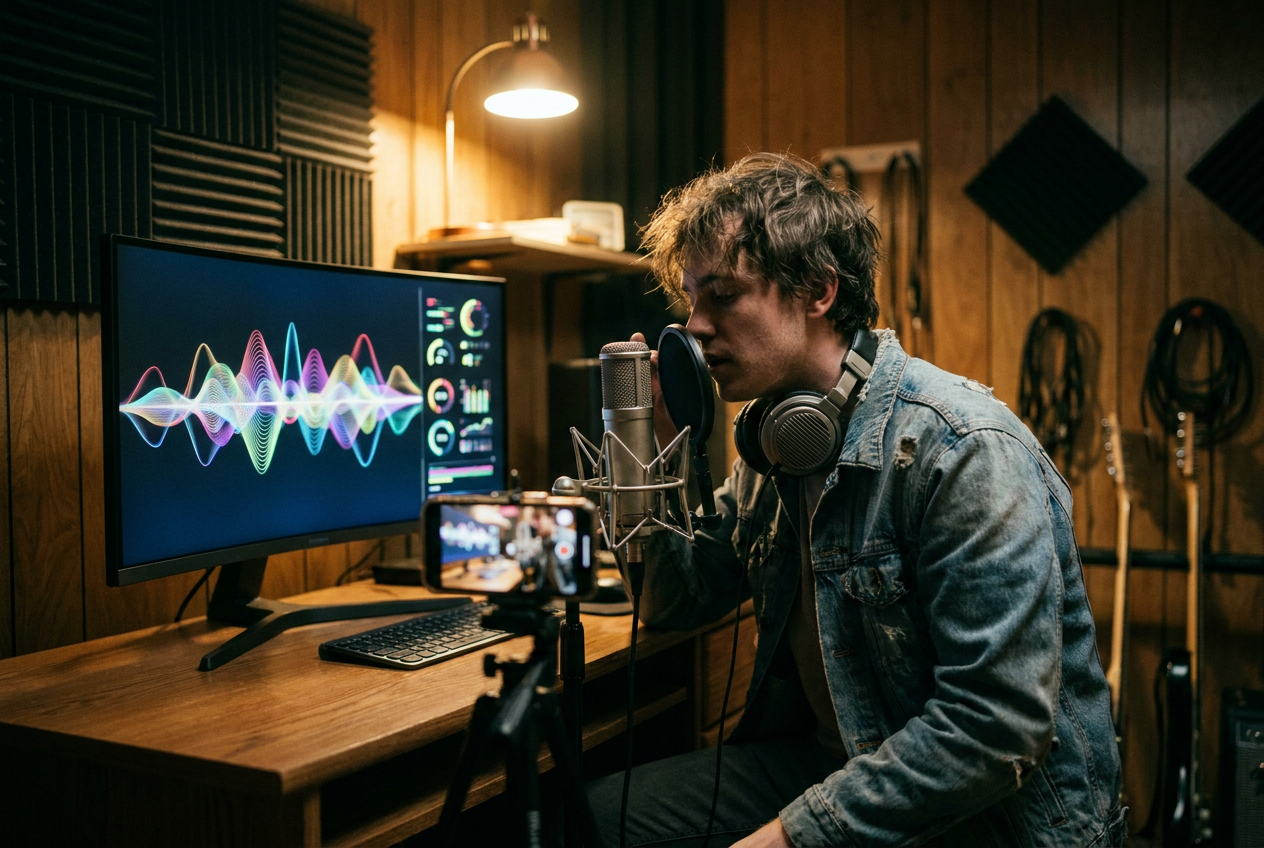
The voice capture feature, called ‘Voices’, lets users record or upload audio of themselves singing and incorporate that vocal identity into tracks generated by Suno.
The feature is limited to Pro and Premier subscribers, and Suno has developed a verification layer that matches a voice to a random phrase that creators are prompted to speak.
This is a fundamentally different product than what Suno was even six months ago. Suno v5.5 isn’t a pure audio-quality bump — it’s an identity upgrade. Instead of generating songs that sound like “somebody else,” you can now generate songs that sound like you.
For musicians, this shifts AI from competitor to collaborator. You’re not being replaced by a generic AI voice — you’re using AI to scale your own voice across more songs, more experiments, more content than you could produce alone.
And when you pair that with AI-generated music videos? That’s when things get really powerful. A hip-hop artist using AI visuals can now produce a track in their own voice and have a complete visual package ready for TikTok the same day. An indie musician can prototype five different songs with five different visual directions in a single weekend.
What the Licensed Model Era Means for Your Music
Let’s get practical. Here’s what’s actually changing and what you should do about it.
1. The Free Ride Is Ending
Songs made on the free tier will not be downloadable and will instead be playable and shareable.
Paid tier users will have limited monthly download caps with the ability to pay for more downloads. If you’ve been using Suno’s free tier to generate tracks for your content, that window is closing. Budget accordingly.
2. Licensed Models Mean Cleaner Rights
A jointly developed music model with Warner Music Group is expected to reach users within months. When it does, the music generated through licensed models will carry less legal risk than anything produced on the pre-licensed versions. If you’re releasing AI-assisted music commercially, waiting for the licensed models might be worth the patience.
3. Voice Cloning Opens New Doors
With Suno v5.5’s Voices feature, you can build a library of songs in your actual voice. But a song without visuals is invisible in 2026. Pair your AI-generated tracks with AI-generated music videos to create a complete content engine. Here’s how to make an AI music video that actually looks professional.
4. The Visual Content Arms Race Is Real
Every AI persona that’s charted — IngaRose, Eddie Dalton, Breaking Rust, Solomon Ray, Xania Monet — did so with heavy visual content strategies. Xania Monet made history as the first AI act to enter a US Billboard radio airplay chart.
Breaking Rust’s track “Walk My Walk” topped the Billboard Country Digital Song Sales chart.
These aren’t anomalies anymore. They’re the new playbook. And real musicians with real stories have a massive advantage over synthetic personas — if they show up with visual content.
Whether you’re making R&B, country, or pop, the formula is the same: your music needs a face, a mood, and a visual identity that travels across platforms.
The Bigger Picture: AI Music Is Becoming Infrastructure
Professional AI producers are moving away from fully automated music creation and towards hybrid production workflows that combine artificial intelligence with traditional production skills. The strongest releases today rarely come from a single AI prompt. Successful creators generate ideas using AI before refining arrangements inside professional DAWs, applying manual editing, vocal processing, mixing, mastering, and creative decision-making.
When anyone can generate a track, the value is no longer in the act of generation alone. The value is in the human direction behind the work.
That’s the real meaning of Suno’s $5.4 billion valuation. It’s not a bet on AI replacing musicians. It’s a bet on AI becoming infrastructure — the layer underneath a new generation of music creation where the tools are cheaper, faster, and more accessible, but the human judgment, taste, and storytelling still determine what rises above the noise.
A $400 million round at a $5.4 billion valuation confirms that serious money sees AI music as a durable category, not a passing trend. The open questions are about rights, attribution, and how generated audio fits into professional production.
What Smart Musicians Are Doing Right Now
The musicians who’ll thrive in the post-Suno-licensing era aren’t panicking about AI. They’re building systems:
- Creating with voice identity. Using Suno v5.5’s Voices to make AI-generated music that sounds like them, not a generic bot.
- Pairing every track with visuals. No song drops without at least a visualizer, a TikTok clip, and ideally a full music video.
- Building proof of process. Documenting their creative workflow so they can demonstrate the human direction behind AI-assisted work.
- Preparing for licensed models. Budgeting for paid tiers and planning their release strategies around the cleaner rights that licensed Suno models will offer.
- Treating AI as a production layer, not a replacement. Using AI to accelerate ideation and demo creation while bringing human craft to arrangement, mixing, and storytelling.
It almost feels like the more artificial things become, the more people crave work that actually has a nervous system behind it. That’s your competitive advantage as a human musician. AI can generate the notes. Only you can generate the meaning.
Your Move
Suno’s $5.4 billion moment is a signal, not a threat. The AI music infrastructure is being built whether you participate or not. The question is whether you’ll use it to amplify your art or let synthetic personas outrun you on content volume alone.
The answer, for most independent musicians, starts with visual content. Your music deserves to be seen, not just heard. AI music video tools have made it possible to create stunning visuals in minutes — no budget, no film crew, no excuses.
Ready to give your music the visual identity it needs to compete? Try OneMoreShot.ai and turn your next track into a music video that actually gets discovered.