TikTok's AI Song Explosion Changes Music Forever
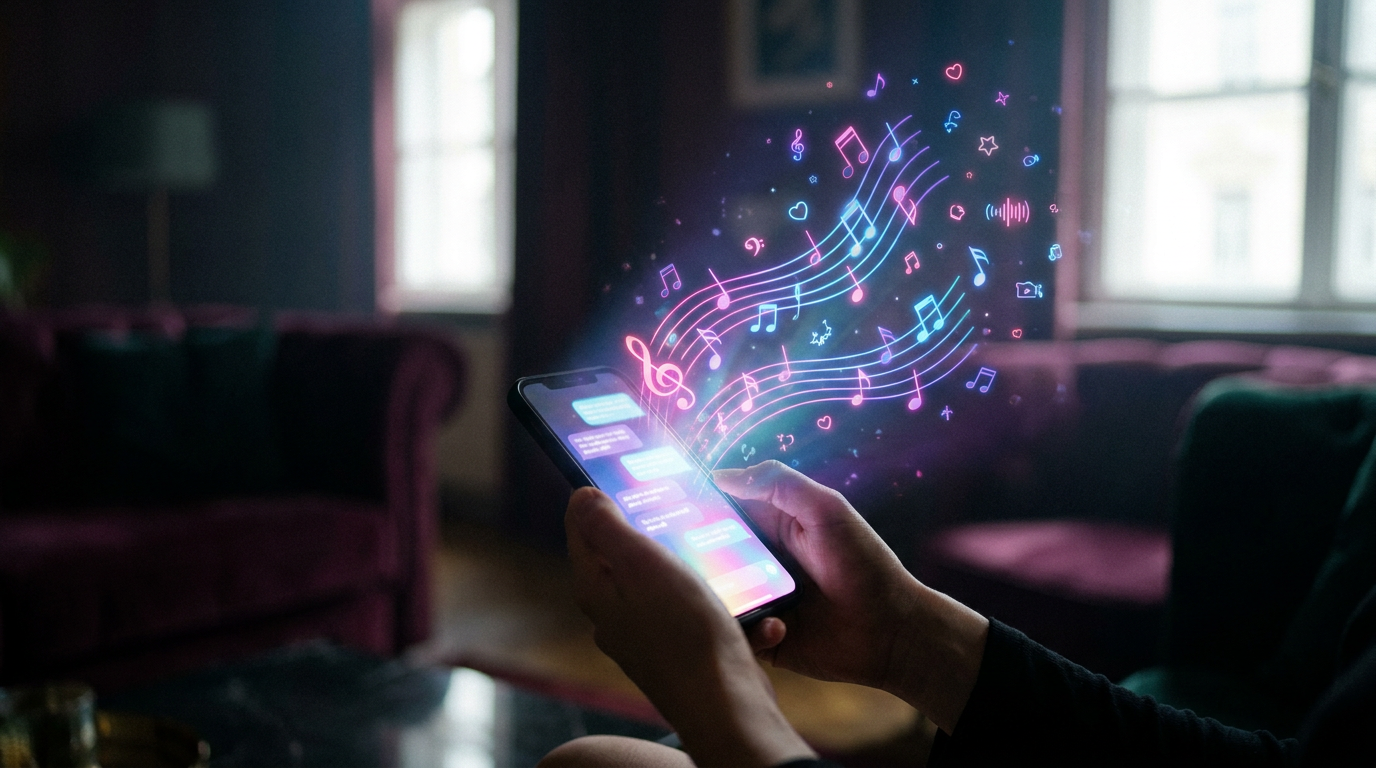
You know that feeling when a cultural shift happens so fast you can barely track it? That’s what’s happening on TikTok right now — and it involves your group chat, an AI music app, and the biggest question the music industry has faced in a decade.
It’s become one of the hottest music trends on TikTok: friends, family members, acquaintances, and (sometimes) enemies turning their text histories into the lyrics to AI-generated songs. At the same time, an AI-generated “Puerto Rico Song” has already been used in over 46,000 TikTok posts, with some calling it a strong contender for the “song of the summer.”
These aren’t separate stories. They’re two faces of the same tectonic shift: AI music has gone from niche curiosity to mainstream cultural force — and it happened in about six weeks.
The Text-to-Song Trend: How Your Group Chat Became a Hit Factory
The premise is almost stupidly simple. You screenshot a text conversation — with your mom, your ex, your unhinged group chat — paste it into Suno’s AI music generator, pick a genre, and hit create. Sixty seconds later, you have a fully produced song with vocals, instruments, and a chorus that has no business being as catchy as it is.
The “text to song” trend has users turning their text histories with friends, family, and exes into the lyrics of AI-generated songs, often tagged #texttosong. One creator, Illinois travel agent Justice Washam, built a song from her 11-year-old daughter’s texts in an Avril Lavigne style, reached 9.8 million views, gained nearly 200,000 followers, and earned around $4,000 in a month from longer-form TikTok ad revenue.
Let that sink in. A mom from Illinois downloaded an app, pasted in her daughter’s Starbucks-obsessed text messages, and made more money in a month than most independent musicians see from a single release.
Thanks to the trend — sometimes flagged with hashtags such as #texttosong and #textmessage — downloads of the Suno app quadrupled week over week in the U.S. in April, temporarily making it the most downloaded music app on the U.S. and U.K. Apple App Stores. Looking to pour gasoline on the fire, Suno’s product and tech teams crashed a new feature that partially automates turning screenshots of text into songs.
Suno’s Chief Product Officer, Jack Brody, says they built that feature “in about a week.”
The viral hits from this trend are genuinely hilarious. One of the most epic viral hits tracks texts between best friends when one of them is stuck in the bedroom of a man while his live-in girlfriend comes home. The original video has gotten 23 million views, and the song has become the soundtrack to more than 28,000 other videos.
There’s a whole subgenre now. Some of the songs produced this way are therapeutic, like the one from a woman who made a Broadway-style song out of texts from a man asking her to refund him for dinner and an Uber because she didn’t go home with him. There is a subgenre of songs made from Slacks from pesky bosses.
The Puerto Rico Song: An AI Hit That Has Luke Combs Dancing
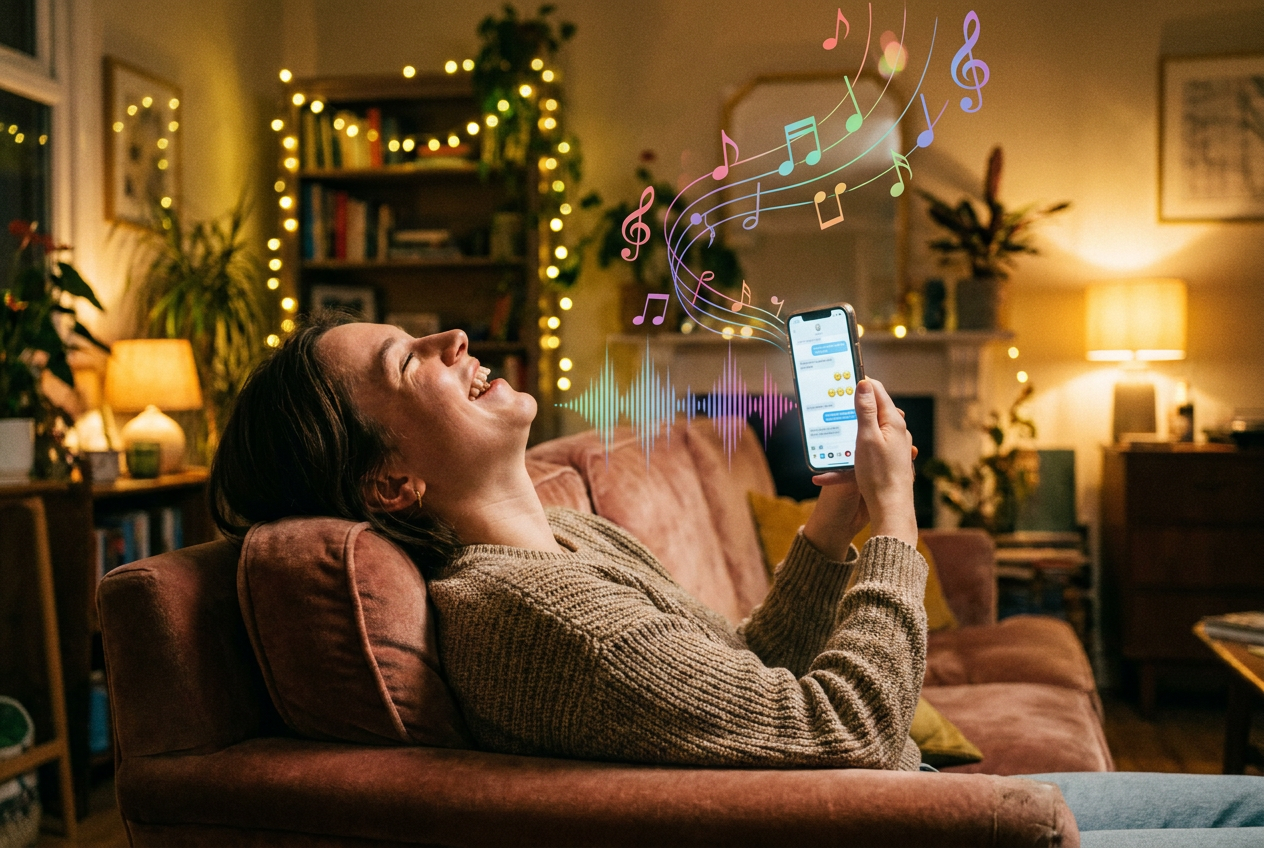
If the text-to-song trend is AI music’s comedy wing, the “Puerto Rico Song” is its feel-good summer anthem — and it might be the first AI-generated song of the summer.
An AI-generated song about Puerto Rico has gone viral across TikTok, and the man behind the tune is speaking out. Bill Stiteler of Pittsburgh, Pennsylvania, told ABC News he has been impressed by the song’s reach since sharing it in a TikTok post in April.
Celebrities like O-Town, Charlie Puth, Luke Combs, and Jennifer Love Hewitt have jumped on the trend, recording themselves lip-synching and dancing to the track. Yes — Luke Combs is doing TikTok dances to an AI-generated song. We are living in the future, and the future is weird.
The creator himself is refreshingly honest about what he is: “I’m not a musician, baby. I’m a slob,” he told TMZ. “I don’t claim this to be music.”
Stiteler said he came up with the lyrics after being inspired by a trip to Puerto Rico, and the rest was created by Suno, an AI music generator app he has been using for the past two years. He said he input the lyrics and then gave the program a prompt describing what he wanted the song to sound like.
Stiteler said he started generating AI songs — including a series of songs inspired by trips to different cities and countries — as a way to be creative and fill time during his sobriety journey. He said he is upfront about using AI to create the songs and includes the “sunomusic” hashtag and the Suno account tag in his captions.
And now? On the heels of his song’s viral success, Stiteler said he’s now receiving opportunities he never thought possible, including meeting and discussing plans with Puerto Rico’s tourism marketing organization.
A non-musician from Pittsburgh is now in talks with a government tourism board because of an AI-generated song. Read that sentence again.
Why This Matters More Than You Think
Here’s what’s easy to miss in all the fun: these viral moments represent a fundamental shift in who gets to participate in music culture.
The timing of the trend is serendipitous for Suno, which is in a legal battle with two of the three major record companies over how their model was trained. What if, instead of replacing musicians and producers, AI song-generation tools end up becoming something closer to, say, a Snapchat filter?
That’s actually the most interesting question in music right now. The text-to-song trend isn’t competing with Beyoncé or Kendrick Lamar. It’s creating an entirely new category of content — one that lives at the intersection of comedy, personal storytelling, and music.
Meanwhile, the data behind the scenes is staggering. Deezer announced that AI-generated tracks now represent 44% of all new music uploaded to its platform. The company said it’s receiving almost 75,000 AI-generated tracks per day and more than two million per month. The consumption of AI-generated music on the platform is still very low, at 1-3% of total streams, and 85% of these streams are detected as fraudulent and demonetized.
The figures mark a sharp escalation from the 60,000 tracks per day reported in January, when synthetic content represented 39% of daily deliveries. It also marks a significant jump from the 50,000 AI tracks in November, 30,000 in September, and just 10,000 when Deezer launched its detection tool in January 2025.
From 10,000 to 75,000 AI uploads per day in 18 months. That’s a 650% increase. And that’s just one platform.
What This Means for Real Musicians
OK, so if you’re an actual musician reading this — someone who writes, records, and performs their own music — you might be feeling some combination of fascination and existential dread. That’s fair. But here’s the nuance most hot takes miss:
The viral AI songs are not your competition
The text-to-song trend and the “Puerto Rico Song” are entertainment content first, music second. They go viral because of the story — the hilarious texts, the travel video, the absurdity of hearing your mom’s nagging set to gospel. Nobody is choosing these over your carefully produced EP.
But they ARE changing audience expectations
What these trends prove is that audiences don’t care how music is made — they care how it makes them feel. A Deezer study found that 97% of listeners couldn’t tell the difference between AI-generated and human-made music. That’s a sobering stat, but it also means the bar for visual presentation has never been higher. If the audio alone can’t differentiate you, the visual experience of your music becomes your competitive advantage.
This is exactly why AI music videos have become essential for independent artists. When the audio playing field gets leveled, your visual storytelling becomes the thing that makes people remember you.
The music video is now your moat
Think about it: the “Puerto Rico Song” went viral partly because of the video — the travel content, the personality, the visual context. Same with the text-to-song trend: every viral hit combines the AI audio with a compelling visual format. If you’re learning how to make an AI music video, you’re already ahead of the curve.
For genre-specific approaches, whether you’re making hip-hop, pop, or Latin music, the visual component is what transforms a song from background noise into a cultural moment.
The Bigger Picture: AI Music’s Mainstream Moment
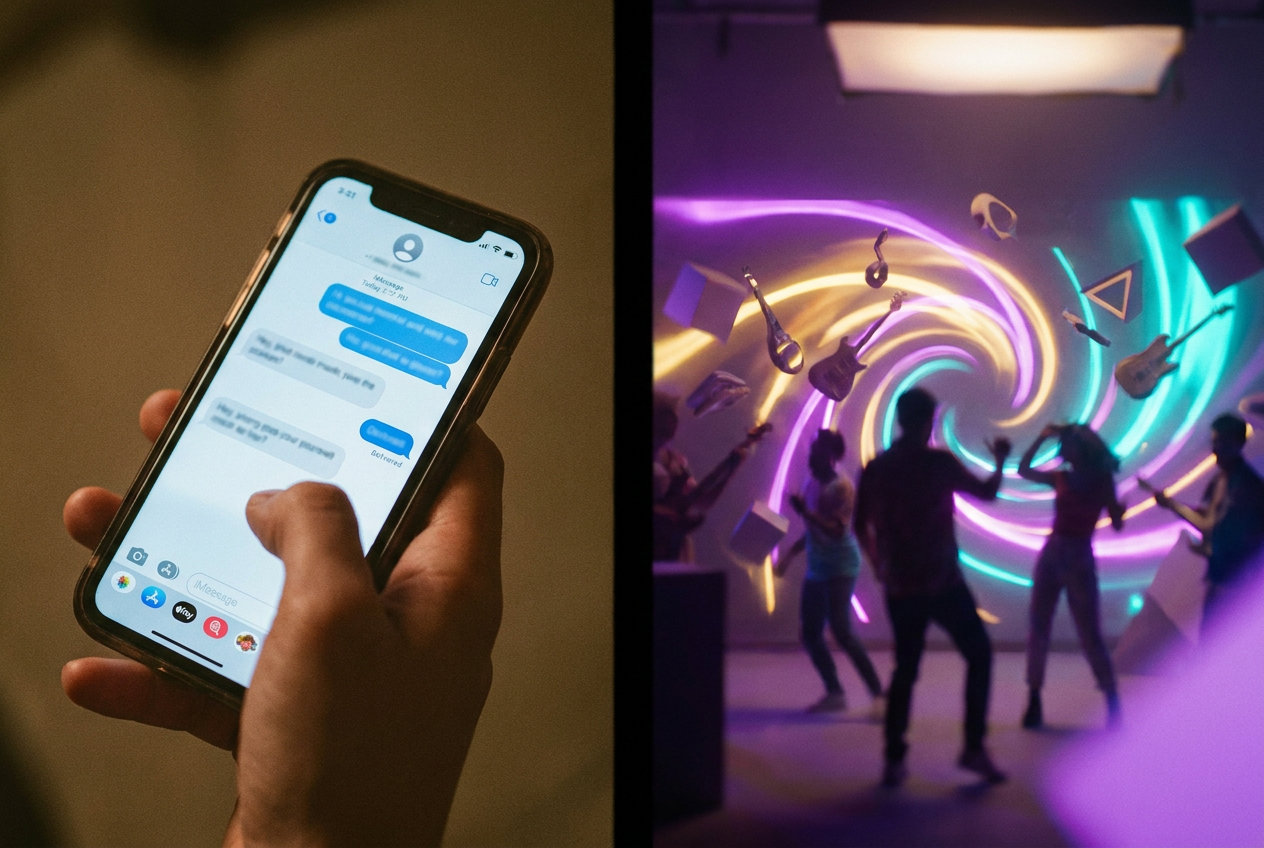
What we’re witnessing isn’t just a TikTok trend. It’s AI music’s transition from industry controversy to mainstream consumer behavior. Consider what’s happened in just the past few months:
There’s a vibe shift happening in how the music industry is coping with its AI revolution, according to Suno CEO Mikey Shulman. “I don’t meet a lot of producers and songwriters who aren’t using Suno at least a little bit in their workflows. I think people are starting to be a little more comfortable being public and upfront about their use.”
The war could be de-escalating. Udio carved out settlements and partnerships with Universal Music Group and Warner Music Group last fall, and Suno managed to settle with Warner back in November.
An AI-generated track topped the iTunes charts in the United States, United Kingdom, France, Canada, and New Zealand.
The industry is rapidly moving from “ban everything” to “figure out how to license this.” And while the legal battles continue (Sony is still suing both Suno and Udio), the cultural adoption is moving far faster than the courtroom.
How Musicians Can Ride This Wave
Instead of panicking, here’s how to actually benefit from this moment:
1. Use AI for content, not just music
The text-to-song creators aren’t musicians — they’re content creators who found a new tool. You’re a musician who already has the hardest part: the actual music. Pair your existing songs with AI-generated visuals and you have content that’s both authentic and visually stunning.
2. Make your music video the main event
When anyone can generate an AI song in 60 seconds, a polished, visually distinctive music video becomes your biggest differentiator. Whether you’re going for a cinematic rock video or a dreamy lo-fi aesthetic, the visual layer is what separates you from the flood.
3. Lean into the trend instead of fighting it
Some musicians are already turning the text-to-song format on its head — using their own actual DMs and texts as creative inspiration, then pairing the result with professional-quality visuals. It’s a way to participate in the cultural moment while showcasing your real artistic identity.
4. Speed matters more than ever
In 2026, social platforms like YouTube Shorts, TikTok, and Instagram Reels are driven by AI-enhanced creativity. Among the top emerging formats propelling creators into viral fame are AI music videos. These dynamic, algorithm-assisted videos combine artificial intelligence with music, visuals, and creator storytelling to produce content that stands out instantly.
The musicians winning right now are the ones releasing visual content at the speed of culture, not the speed of traditional production.
The Bottom Line
The TikTok AI music explosion isn’t a threat to real musicians — it’s a signal. It tells us that audiences are hungry for music-driven content, that the barriers to audio creation are essentially gone, and that visual storytelling is the new frontier of musical competition.
What if, instead of replacing musicians and producers, AI song-generation tools end up becoming something closer to a Snapchat filter? That’s exactly what’s happening. And just like Instagram filters didn’t kill photography — they created an explosion of visual culture that professional photographers could ride — AI music tools are creating an explosion of audio culture that real musicians can leverage.
The question isn’t whether AI will change music. It already has. The question is whether you’ll use these same tools to make your real music cut through the noise.
If you’re ready to turn your music into scroll-stopping visual content, OneMoreShot.ai lets you create stunning AI music videos in minutes — no film crew, no six-figure budget, no waiting. Just your track and your creative vision. Because in a world where anyone can make a song from their text messages, the artists who look different are the ones who win.