Udio's NMPA Deal Rewrites AI Music Licensing
The AI music industry just had its biggest week in years — and depending on who you are, it was either a breakthrough or a betrayal.
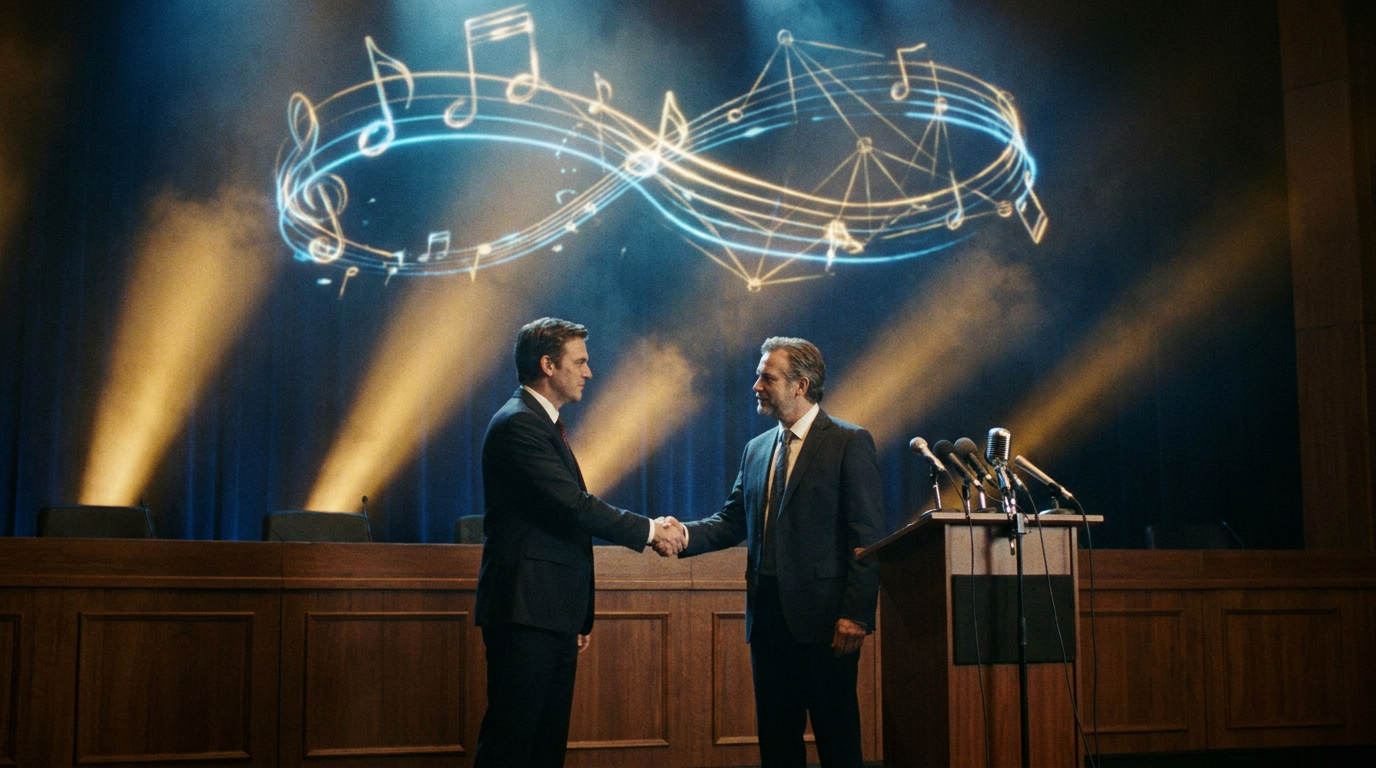
On June 10, the National Music Publishers’ Association dropped a bombshell at its annual meeting in New York: the Udio deal is not only the first industry-wide licensing deal with a major AI company, but the first that will value songs and sound recordings equally when it comes to AI training . A second deal with AI startup Klay was announced alongside it.
Five days earlier, on June 5, the American Federation of Musicians had filed a federal lawsuit against Universal Music Group and Warner Music Group, centering on the labels’ settlements and licensing deals with Suno and Udio, contending those arrangements triggered the “new uses” provision of its collective bargaining agreement, which requires major labels to pay musicians when their work is put to new commercial applications .
Two seismic events. Same week. Same city. Completely opposite vibes.
Welcome to the era where AI music licensing isn’t theoretical anymore — it’s actually happening, and the fallout is already messy.
The NMPA Deal: What Actually Changed
Let’s start with the good news, because there genuinely is some.
During its Annual Meeting at Lincoln Center’s Alice Tully Hall, the National Music Publishers’ Association (NMPA) announced two industry-wide AI music deals with Udio and Klay Media . NMPA CEO David Israelite called this a landmark moment, and for once, the hype might be warranted.
Here’s why this matters so much: AI licensing income gets divided equally between the song (writers and publishers) and the sound recording (artists and labels). Streaming pays recordings more than 3 times what songs receive, so equal treatment in AI licensing is a precedent songwriters and indie publishers have demanded since the first major-label AI deals .
That 50/50 split is genuinely historic. In the streaming economy, songwriters have always gotten the short end of the stick. If this structure holds as AI licensing scales, it could fundamentally rebalance how music creators earn money from AI.
Independent US music publishers can opt in to license their catalogs to Udio or Klay for AI training and platform use, instead of negotiating individual deals . That’s a huge door opening for smaller publishers who’d never have the leverage to negotiate one-on-one with a well-funded AI company.
Meanwhile, Klay is one of very few companies to secure licenses prior to launching its platform. Klay’s Large Music Model will be trained entirely on licensed music and the deal with NMPA will launch later this summer .
Think about that for a second. We’ve gone from “sue first, ask questions later” to AI companies actually building licensed-from-the-ground-up platforms. That’s a tectonic shift in less than two years.

Udio’s Transformation: From Defendant to Licensed Partner
Udio’s journey is one of the wildest arcs in recent tech history. In June 2024, the RIAA, on behalf of Universal Music Group, Sony Music and Warner Music Group, sued Udio and rival platform Suno for “mass infringement” of copyright .
Then the settlements started falling like dominoes. That litigation began to unwind in October 2025, when Universal Music Group settled its case and agreed to build a licensed AI music platform with Udio. Warner Music Group settled in November 2025, followed by independent licensing body Merlin in January 2026 and publisher Kobalt in April 2026 .
Now with the NMPA deal, the NMPA deal lands as Udio completes a shift from copyright defendant to licensed industry partner .
The licensed Udio platform, which will be launched in 2026, will be powered by new cutting-edge generative AI technology that will be trained on authorized and licensed music. The new subscription service will transform the user engagement experience, creating a licensed and protected environment to customize, stream and share music responsibly .
Udio’s redesigned subscription service will introduce innovative creative tools that allow users to produce remixes, covers, and original songs using the voices and compositions of participating artists and songwriters. Importantly, the platform will ensure proper credit and payment for contributors .
But here’s the catch — and it’s a big one. Sony Music remains the only major music company yet to reach a deal with Udio, and its portion of the RIAA-led case is ongoing . So even as the licensed era dawns, there’s still a major holdout.
The AFM Lawsuit: Musicians Say They Got Cut Out
Now for the other side of the coin — and it’s not pretty.
The American Federation of Musicians of the United States and Canada (AFM) has filed a lawsuit against Warner Music Group and Universal Music Group in federal court in Manhattan, alleging the record labels improperly allowed artificial intelligence companies to use union musicians’ recordings for AI training without securing compensation for the performers. The lawsuit centers on licensing arrangements tied to settlements the music companies reached with AI music generators Suno and Udio. The union argues those agreements permitted the continued use of recordings created by its members while failing to provide payment or obtain authorization from the musicians themselves .
The core argument is devastating in its simplicity. As the complaint puts it: “Defendants have failed to share in the settlement proceeds and future revenue with those same artists whose music was copied, used for training, and incorporated into the development of the AI models and platforms now being commercially exploited” .
What makes this lawsuit particularly sharp is that the AFM complaint smartly uses the labels’ own prior rhetoric against them: the labels described AI music generation as a threat to human artists and the music market; AFM now says the labels settled and licensed that same threat without sharing the benefits with musicians .
Both labels pushed back on the suit, with a UMG spokesperson saying the company has been “at the forefront of protecting the rights and advancing the interests of artists and songwriters in the age of AI.” They added that the AFM “chose this route during our collective bargaining negotiations” and that UMG intends to resolve outstanding issues through those talks .
So we have a situation where the labels are being praised for building a licensed AI future and simultaneously being sued for not sharing the proceeds with the people who actually played the music.
The Bigger Picture: Two Lanes Forming
If you zoom out from the daily drama, a pattern becomes clear. June may continue to separate the AI music market into two lanes: companies fighting over past training data and companies trying to build licensed future creation systems. Do not assume all AI music tools carry the same risk or the same permission structure .
The NMPA deals represent the “licensed future” lane gaining serious momentum. Israelite told the crowd that the NMPA would continue to litigate against “bad actor” AI companies and announced an upcoming “AI Songs Summit” in Nashville set for this September for the publishing industry to convene and align on AI policy .
Meanwhile, this was happening during a packed NYC music week. The music industry descended on New York this week for Indie Week and a flurry of parallel gatherings. The conversations kept circling back to the same handful of anxieties: generative AI, streaming fraud, underpaid songwriters, and the organisations meant to protect them. Four issues, in particular, dominated the agenda .
The tension between “deals are getting done” and “musicians are getting left behind” is going to define the rest of 2026. As one analysis pointed out, even if the court hesitates on damages, it may be sympathetic to the idea that the union is entitled to know which recordings were licensed, which musicians were implicated, and when the transfers occurred. Without that information, “responsible AI licensing” becomes a black box .

What This Means for Independent Musicians
If you’re an independent musician or creator, here’s the practical reality:
The licensing infrastructure is becoming real
Deals negotiated and settled by NMPA in the past fiscal year, including those AI deals, have led to the distribution of approximately $110 million to its members . That’s real money flowing to publishers and songwriters. If you’re working with a publisher who opts into these deals, you could start seeing AI-related royalties.
Tool choice now equals rights strategy
Creator takeaway: tool choice is becoming part of rights strategy. Where you make the song may matter almost as much as what the song sounds like . Using a fully licensed AI platform versus an unlicensed one isn’t just an ethical choice anymore — it has real business implications.
Your visual content strategy matters more than ever
While the licensing wars rage over AI-generated music, AI-generated visuals for music are in a completely different legal space. No one is suing over AI music videos created from original prompts. If anything, the visual side is where independent artists have the clearest advantage right now.
This is exactly where tools like OneMoreShot.ai fit into the picture. While the music licensing landscape sorts itself out through lawsuits and negotiations, you can create stunning visuals for your tracks today — no licensing headaches, no legal grey areas.
Whether you’re making visuals for hip-hop tracks, EDM bangers, or indie releases, the AI music video space is the one area where the tools are unambiguously useful and legally clean. Check out our complete guide to AI music videos for a deeper dive into what’s possible.
Metadata and disclosure are no longer optional
If you are independent, you need independent-level systems: clean metadata, clear identity, release notes, and a real reason for listeners to care . The era of throwing AI content at the wall and hoping nobody notices is ending fast.
The Suno Wild Card
One name conspicuously absent from the NMPA announcement: Suno. Suno reportedly reached 2 million paid subscribers and USD 300 million in annual recurring revenue in early 2026 , making it the biggest AI music generator by a wide margin. But it hasn’t struck the same kind of industry-wide publishing deal that Udio just landed.
Warner has a deal with Suno. Universal Music has settled with Udio, while Warner Music Group has opted to license both Udio and Suno . But the broader NMPA template deal? That’s Udio’s win for now.
And the broader market numbers are staggering. Research and Markets estimates the generative AI in music market at USD 0.57 billion in 2026, with projected growth to USD 1.34 billion by 2030. Grand View Research also reported that the global generative AI in music market generated USD 569.7 million in 2024 and is expected to reach USD 2.79 billion by 2030 .
That’s the prize everyone’s fighting over. And the fight is only going to intensify.
What Happens Next
Three things to watch:
The AFM case. If the court sides with the musicians’ union — or even signals sympathy — it could force labels to renegotiate every AI licensing deal with performer compensation baked in. That would reshape the economics entirely.
The NMPA AI Songs Summit in Nashville this September. He also announced the AI Songs Summit, a gathering in Nashville this fall that will bring together songwriters, publishers, streaming services and other stakeholders to discuss the opportunities and challenges of AI . This will be where the next round of policy battles play out.
Udio’s licensed platform launch. Per The Verge, the new platform will officially launch in Q2 2026. It will combine AI generation, artist partnerships, and safe remixing tools marking a historic shift toward legal AI creativity . When it actually goes live, we’ll see whether the “licensed AI” model works in practice — or whether users flee to whatever remains unlicensed.
The Bottom Line
We’re witnessing the AI music industry grow up in real time. Two years ago, it was the Wild West. Now there are licensing frameworks, 50/50 splits, industry-wide template deals, and active litigation over performer rights. The infrastructure of a legitimate AI music economy is being built — messily, contentiously, but undeniably.
For musicians and creators, this is actually good news, even if it doesn’t feel like it. Every licensing deal, every lawsuit, every policy negotiation is creating the framework that will determine whether AI helps musicians or replaces them.
The smartest move right now? Keep creating. Use the tools that are clearly in the clear — especially for visuals. If you’ve been wanting to make an AI music video for your latest track, there’s never been a better time. The visual side of AI is where the opportunity is widest and the legal risk is lowest.
Head to OneMoreShot.ai and turn your music into something people can watch, share, and remember — while the lawyers sort out everything else.