AI Ghost Artists Hit #1. Here's How to Fight Back
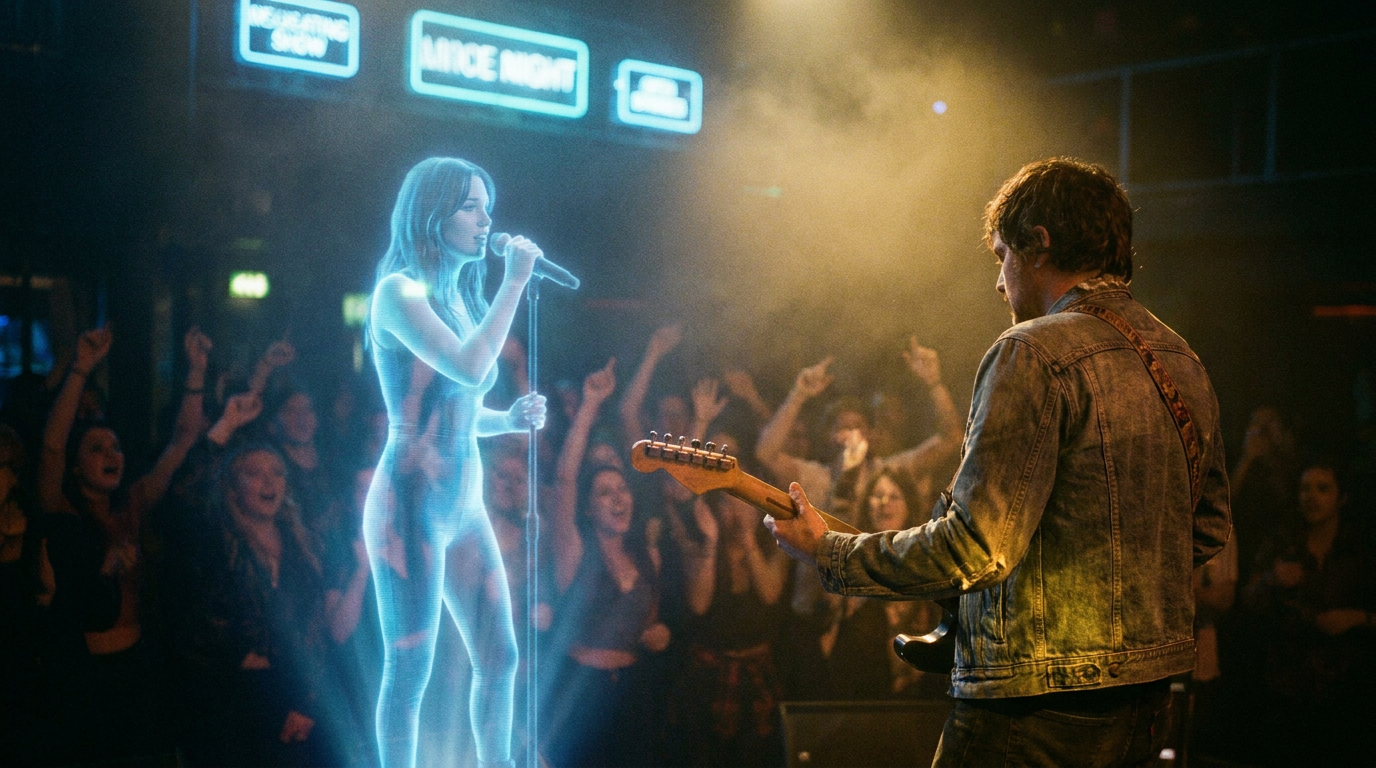
They don’t have faces. They don’t play shows. They don’t even exist. And they’re beating you on the charts.
In the past six weeks, AI-generated “artists” have pulled off something that would’ve been science fiction two years ago: an AI-generated artist called IngaRose climbed to the top of the iTunes charts, with a track called “Celebrate Me” reaching No. 1 globally. Before that, a performer called “Eddie Dalton” held the number 1 position on the U.S. iTunes Top Songs chart with a track called “Another Day Old,” while two more of Dalton’s songs sat in the top 10 simultaneously.
Neither of these “artists” is a real person. And the music industry is losing its collective mind.
This isn’t an abstract think piece about what might happen. It’s happening right now, and if you’re an independent musician trying to build a career, you need to understand the game that’s being played — and why doubling down on your visual identity might be the best move you make all year.
The Rise of the AI Ghost Artist
Let’s start with the facts, because they’re wild enough without embellishment.
Eddie Dalton is not a person. He is an AI-generated musical act — a fully artificial performer with no human identity behind him.
The project is distributed by Crusty Records, a label based in Greenville, South Carolina that has been releasing AI-generated music for approximately two years.
Eddie Dalton racked up 11 songs in the iTunes Top 100, with his album reaching the #3 position.
Then came IngaRose, from the same creator. “Celebrate Me” by IngaRose, a synthetic R&B performer who does not exist in real life, reached number one on April 17, and Suno, the generative AI music platform, created the track.
Crucially, the song went viral on TikTok before hitting the top of the chart.
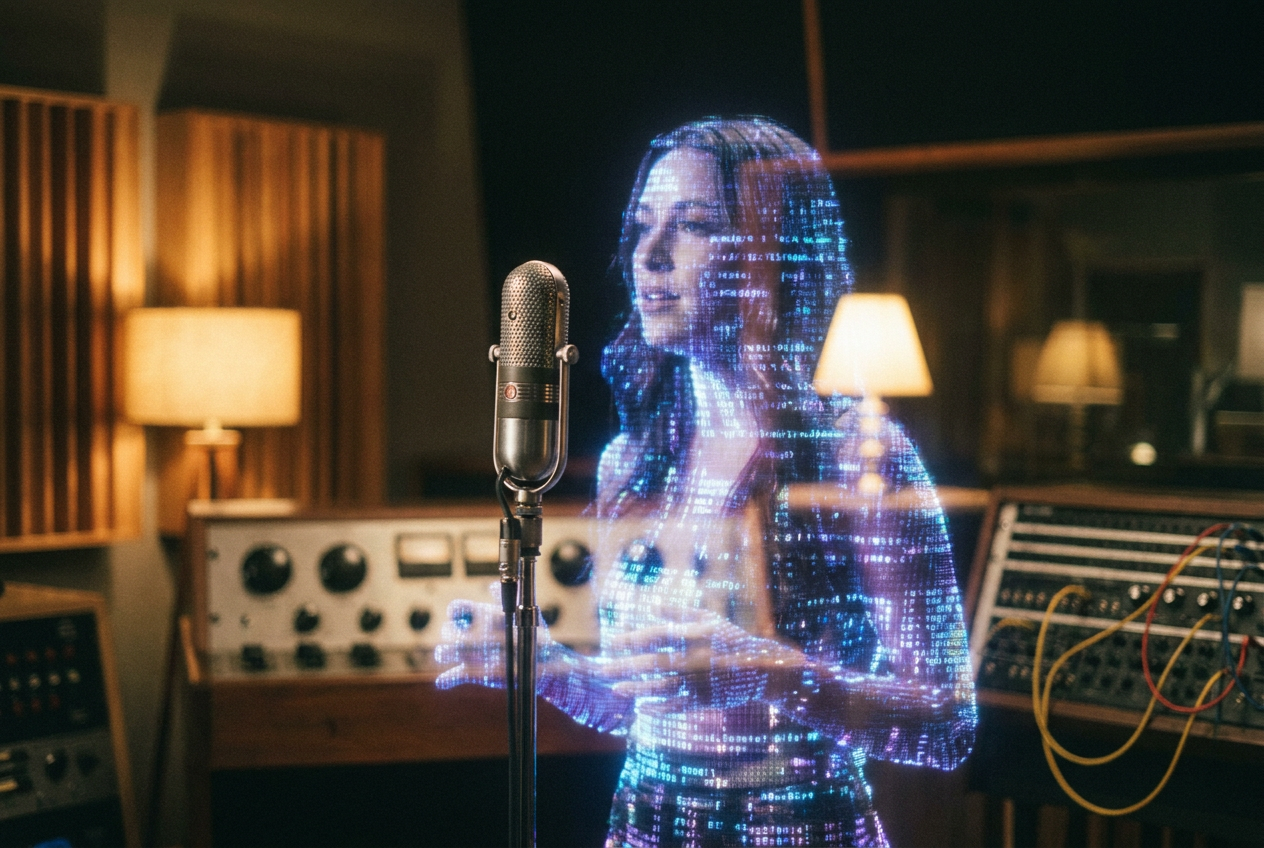
IngaRose is not a real person — the project operates as a fully AI-constructed artist persona, with an Apple Music artist page, dozens of videos on YouTube, and a growing 228,000 Instagram followers.
Read that last part again. 228,000 Instagram followers. For someone who doesn’t exist.
The Streaming Platforms Are Drowning
If you think Eddie Dalton and IngaRose are isolated stunts, the data tells a much darker story.
Deezer is now receiving almost 75,000 AI-generated tracks per day, representing roughly 44% of the daily uploads — amounting to more than 2 million AI-generated tracks uploaded per month. The growth curve is staggering: the daily upload count was around 10,000 when the detection tool launched in January 2025. By September 2025 that number had hit 30,000. November pushed it to 50,000. January 2026 reached 60,000. The latest figure of 75,000 a day represents 44% of all new uploads.
Here’s the kicker that should make every working musician furious: although fully AI-generated music currently accounts for only a small fraction of streams on Deezer — between 1-3% — Deezer has found that up to 85% of the streams generated by fully AI-generated tracks were in fact fraudulent. In other words, most of this isn’t even real listening. It’s bots farming royalties.
And according to a study conducted by CISAC and PMP Strategy, nearly 25% of creators’ revenues are at risk by 2028, which could amount to as much as €4 billion.
That’s not a typo. Four billion euros potentially siphoned away from human artists.
In September 2025, Spotify removed 75 million AI-generated tracks in a fraud crackdown.
Bandcamp banned AI-generated music from its platform entirely earlier this year. But the flood keeps coming.
The Industry Is Playing Both Sides
Here’s where things get genuinely confusing — and fascinating. The same week Udio made a shocking legal admission, Google doubled down on putting AI tools directly in musicians’ hands.
AI music startup Udio denied Sony Music Entertainment’s copyright infringement claims while acknowledging that it used audio scraped from YouTube to train its models. The filing was blunt: “Udio admits that it obtained audio data from YouTube for use as training data.”
Udio also admitted that it acquired some of its training data by utilizing YT-DLP — that’s a well-known stream-ripping tool.
Meanwhile, just two days later, Believe partnered with Google to offer the tech giant’s AI music creation platform, Google Flow Music, to artists across Believe and TuneCore.
Flow Music works as a creative collaborator, helping with lyrics, toying with new melodies or genres and even creating new instruments.
Google’s newest music generation model, Lyria 3 Pro, is the engine behind Flow Music’s cutting-edge capabilities.
And in perhaps the most telling move of all, YouTube creators have been able to swap out music struck with copyright claims with royalty-free alternatives, and now that process is becoming easier with the help of AI to quickly match and replace audio with a generated royalty-free instrumental track.
So let me get this straight: Udio trained on YouTube audio (without permission). Google is giving AI music tools to indie artists (with permission). And YouTube itself is generating AI replacement tracks (making licensed music less necessary). All in the same week.
The message is unmistakable: AI music is now the water, not the fish. It’s everywhere and it’s not going away.
Why Visual Identity Is Now Your Biggest Competitive Edge
Here’s the thing about Eddie Dalton and IngaRose: their music is competent. It’s polished. It sounds like real music because, well, it was trained on real music. In a Deezer-commissioned study, 97% of respondents couldn’t tell the difference between fully AI-generated music and human-made music in a blind test.
Let that sink in. Ninety-seven percent. Your ears literally can’t tell the difference.
So if the music itself can’t be the differentiator anymore — at least not at the surface level — what can?
You. Your face. Your story. Your vibe. Your visual identity. Your realness.
This is why music video has suddenly gone from “nice to have” to “survival strategy.” When a ghost can make a hit, the only thing that proves you’re not a ghost is showing up — visually, consistently, authentically.
Think about it: R&B singer SZA told i-D that she feels “at war” with AI and the kind of content being created with it, noting that “it’s happening disproportionately with Black music.” She’s right to be concerned. The solution isn’t to ignore visuals — it’s to own them so completely that no AI persona can replicate what you do on screen.
The Musician’s Anti-Ghost Playbook for 2026
Here’s your concrete, actionable plan for fighting back against the AI ghost artist wave:
1. Make Music Videos for Everything
Not just your singles. Your B-sides. Your snippets. Your process videos. The barrier to entry for music video creation has plummeted thanks to AI video generation tools. If you’re not already exploring how to make an AI music video, you’re leaving your biggest competitive advantage on the table.
AI ghost artists can generate a track in 30 seconds. What they can’t do is create a compelling visual narrative rooted in a real human experience. That’s your lane. Stay in it.
2. Build a Visual Signature Across Every Genre
Whether you’re making hip-hop, R&B, country, or indie, your visual language should be as recognizable as your sound. Consistent color palettes, recurring motifs, a visual world that fans can recognize instantly.
Eddie Dalton has a profile picture generated by Midjourney. You have a real face and a real story. Use them.
3. Flood the Zone (But With Quality)
IngaRose’s “Celebrate Me” was used in nearly 300,000 TikTok videos. That’s how it went viral. The ghost artist won with volume and visual content on social platforms.
You can fight volume with volume — but your volume comes with authenticity baked in. Create visual content at scale using AI tools for the production heavy-lifting while keeping your actual self at the center. The complete guide to AI music videos in 2026 breaks down exactly how to do this without sacrificing quality.
4. Lean Into the “Proof of Human” Movement
80% of people surveyed agree that 100% AI-generated music should be clearly labeled to listeners.
52% of respondents said 100% AI-generated songs shouldn’t be included in charts alongside human-made songs.
Your audience wants to know you’re real. Give them proof. Behind-the-scenes content. Studio footage. Live performance clips. AI-generated visuals can enhance your music video production, but the star of the show should always, unapologetically, be you.
5. Use AI Video Tools to Compete on Visual Output
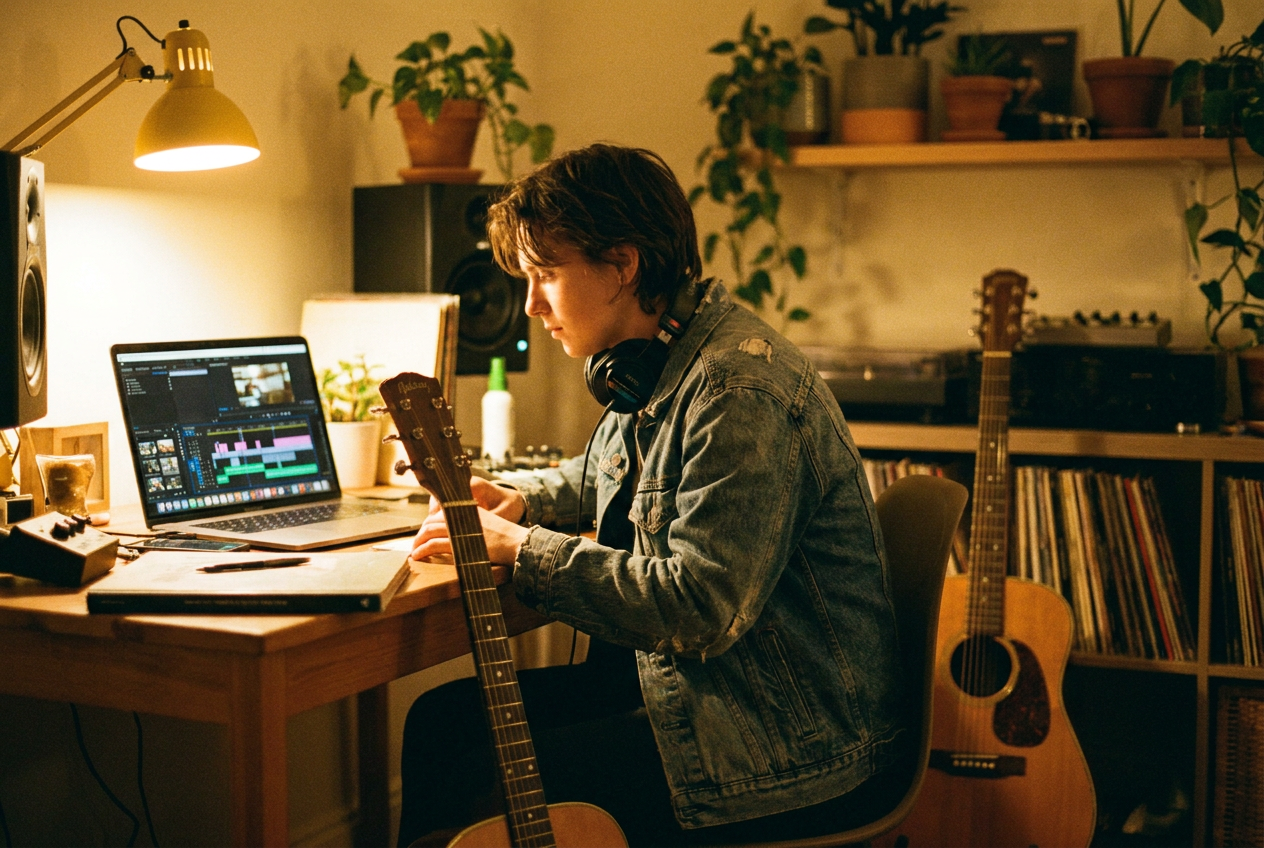
Here’s the beautiful irony: you can use AI to fight AI. The same technology that enables ghost artists to exist also enables real artists to create stunning visual content at a fraction of the traditional cost.
Tools like OneMoreShot.ai let you generate music videos in minutes — not to replace your identity, but to amplify it. Instead of spending $10,000 on a single music video, you can create visuals for your entire catalog and maintain the kind of consistent visual presence that streaming algorithms reward.
Check out genre-specific approaches in our guides for pop, EDM, and lo-fi to find templates that match your sound.
The Chart Problem No One Wants to Solve
Here’s what’s particularly maddening about the Eddie Dalton and IngaRose situation: iTunes sales charts track paid digital downloads and purchases, not streams. A determined effort can move a song to the top of an iTunes chart with a relatively modest number of purchases.
The charts weren’t designed for this. They were designed for a world where making and distributing music required significant investment, which naturally limited who could compete. That world is gone.
Believe founder and CEO Denis Ladegaillerie told MBW that the company is automatically blocking the distribution of AI-generated tracks produced on unlicensed “pirate studios.” That’s a start. Deezer actively removes AI-generated tracks from its recommendation algorithms and editorial playlists, and has adopted a policy of demonetizing these tracks. That’s also a start.
But these are downstream defenses. The upstream problem — that anyone with $10/month and a Suno subscription can create a synthetic artist with a plausible catalog — isn’t going away. It’s accelerating.
The Silver Lining You’re Not Seeing
I know this sounds bleak. A musician reading this might feel like the ground is shifting under their feet. But here’s the counterintuitive truth:
A Luminate report found that “across the board, consumers are net negative” about AI music — meaning “people are more likely to feel uncomfortable than to feel comfortable with AI use.”
People don’t want ghost artists. They want real ones. AI songs account for less than 3% of total streams on Deezer, and a majority of those streams have been deemed fraudulent, meaning they’re likely driven by bots rather than human listeners.
The demand for authentic, human-made music isn’t declining. It’s the supply of fake music that’s exploding. And that means the artists who can prove their authenticity — through visual storytelling, through genuine connection, through showing their face and their process — will be more valuable than ever.
The ghost artists are winning a numbers game. You can win the trust game. And in the long run, trust wins.
Start Your Visual Counterattack Today
Every day you don’t have visual content working for you is a day the ghost artists gain ground. The tools to fight back are already in your hands.
Head to OneMoreShot.ai and start building the visual identity that no algorithm can replicate. Create your first AI-powered music video in minutes, maintain a consistent visual presence across every release, and show the world what a real artist looks like in 2026.
Because in a world of ghosts, being real is your superpower.