AI Music's Tipping Point Has Arrived in 2026
Something snapped this month.
In the span of two weeks, a legendary Portland record store canceled an AI musician’s listening party after community outrage, Berklee College of Music students revolted against an AI songwriting course, The Hollywood Reporter declared the music industry had crossed an “AI tipping point,” and Suno’s CEO went on a press tour claiming most producers and songwriters are already using his platform.
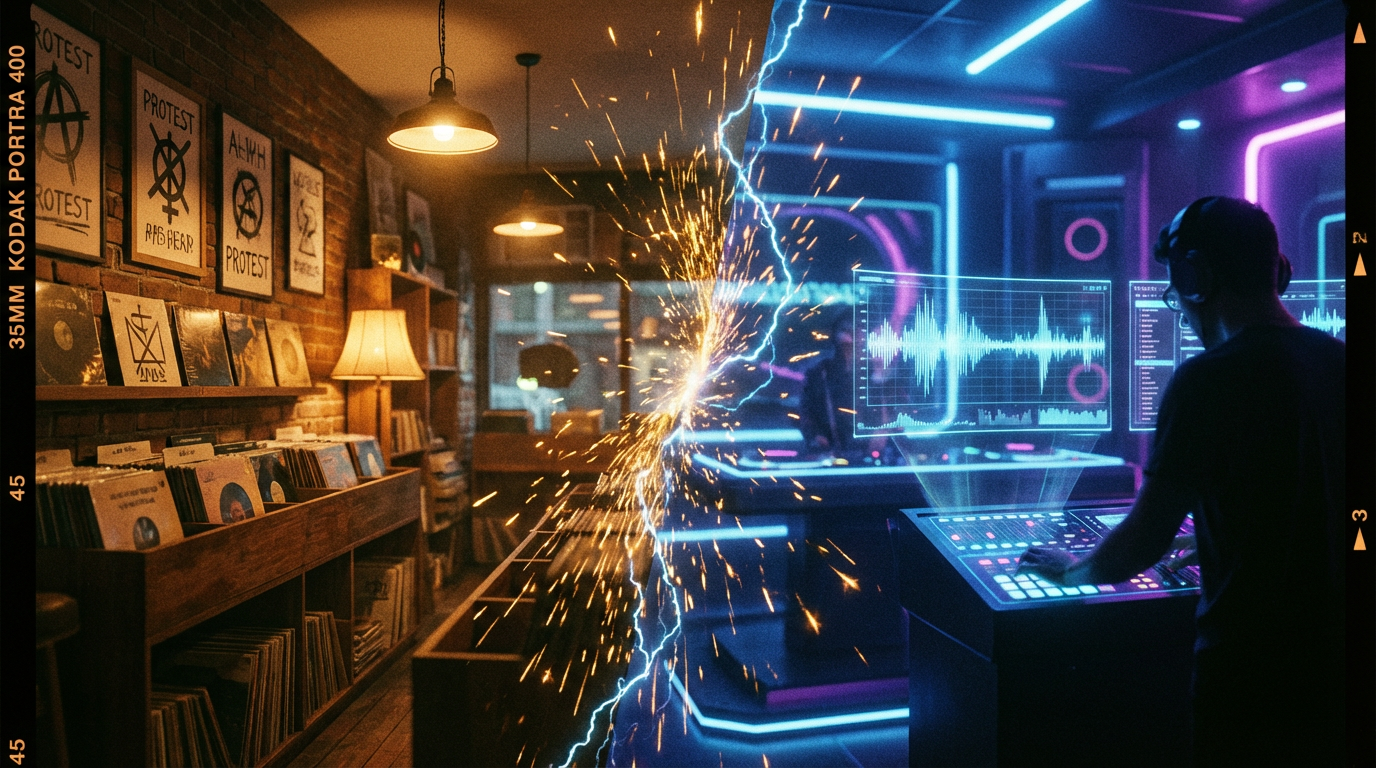
We’re not in the “is AI coming for music?” era anymore. We’ve blown past that. April 2026 is the month the music industry stopped debating whether AI would change everything — and started fighting over what that change actually looks like.
Let’s unpack what’s really happening.
The Acceptance Wave: Suno Goes Mainstream
There’s a vibe shift going on in how the music industry is coping with its ongoing AI revolution , according to a Hollywood Reporter feature published just hours ago. And it’s coming straight from the top of the AI music world.
Suno CEO Mikey Shulman says it “wasn’t even happening at the end of last year, but in the past couple months since the beginning of this year.” He adds: “I don’t meet a lot of producers and songwriters who aren’t using Suno at least a little bit in their workflows.”
The numbers back up the swagger. Suno now has 2 million paid subscribers and has surpassed $300 million in annual recurring revenue.
The company is fresh off a $250 million Series C fundraise and a $2.45 billion valuation.
According to investor pitch documents obtained by Billboard, users create a Spotify catalog’s worth of music on Suno every two weeks — roughly 7 million songs per day.
That’s not a niche tool. That’s a platform reshaping how music gets made at an industrial scale.
And it’s not just bedroom producers. At a secret Suno songwriting camp during Grammy Week, Billboard found Timbaland, Gino the Ghost, and Grammy-winning producer Om’Mas Keith (who has worked with Frank Ocean, Erykah Badu, and Jay-Z) using AI as a core part of their creative process.
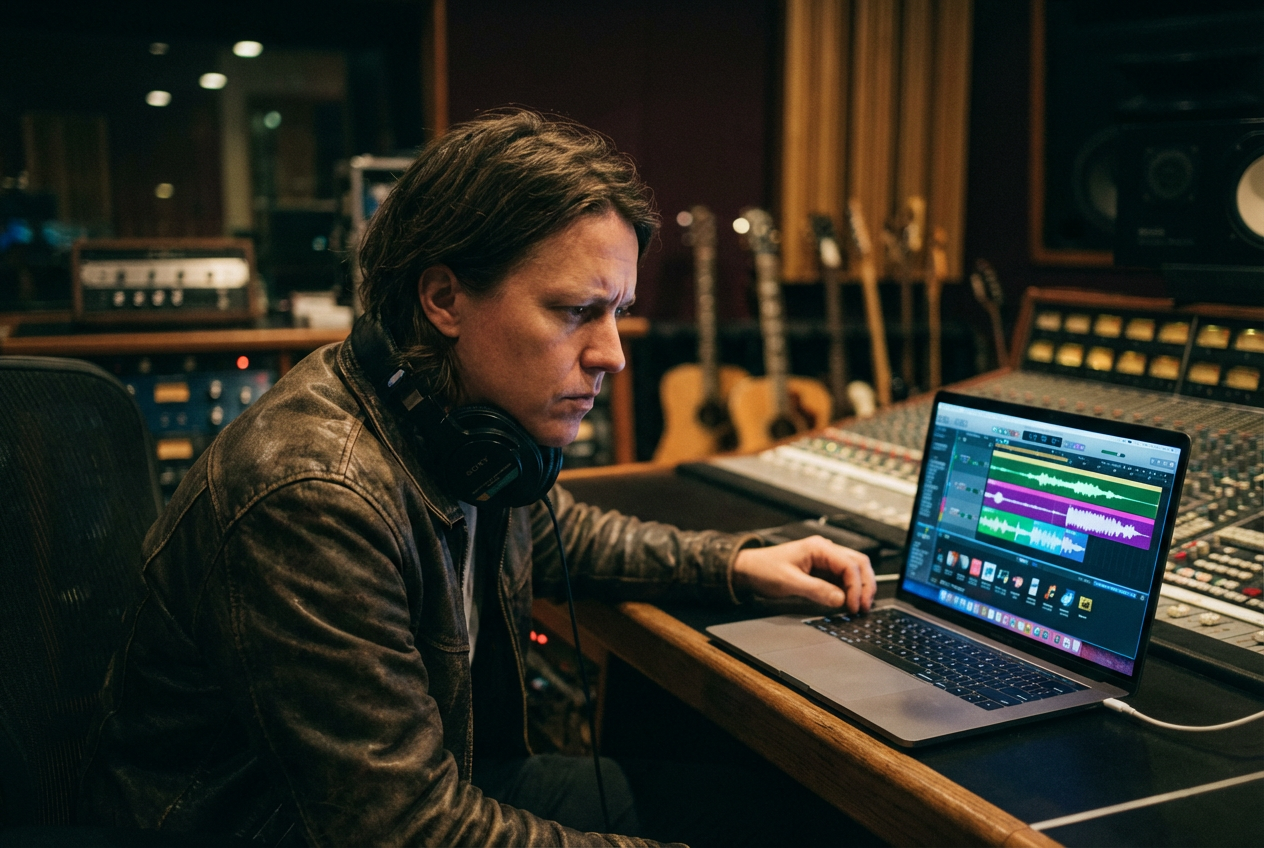
Here’s the fascinating part: what started with a prompt and some lyrics became a master recording in 30 minutes. But by the end, approximately 90% of it was human-recorded. The only AI piece left was the vocals, which would eventually be rerecorded too.
In other words, the pros aren’t using AI to replace themselves. They’re using it as the world’s most intuitive brainstorming tool, then rebuilding the song with human hands. That’s a wildly different narrative from the “robots are coming for your job” panic.
The Resistance: Record Stores, Students, and Open Letters
But here’s where April 2026 gets truly interesting. While the industry’s power players quietly adopt AI behind closed studio doors, the grassroots is in open revolt.
The Music Millennium Incident
Music Millennium, Portland’s most iconic record store, canceled a listening party at the last minute after a social media uproar. Brandon Carmody, a longtime Portland musician, was set to have a CD release party for his new album literally titled AI. Carmody wrote partial lyrics and melodies, which AI software expanded into full songs, with all vocals AI-generated.
What happened next was an uproar on social media, with commenters saying they were disappointed in the store and calling it hypocritical for an independent record store to promote “robot-created music.”
Music Millennium owner Terry Currier says employees came to him opposing the event, and he heard customers were planning a protest. He pulled the plug two days before the show.
The irony is thick. Currier remembers a similar uproar at Music Millennium when synthesizers and drum machines came out. History doesn’t repeat, but it sure does rhyme — through a vocoder, apparently.
Berklee’s “Bots and Beats” Revolt
Meanwhile, in Boston, students at Berklee College of Music — paying up to $85,000 a year — are furious about the school’s new AI songwriting elective course.
The elective, titled “Bots and Beats: AI and the Future of Songwriting,” explores “how music makers can use the latest AI tools to expand their craft.” But students aren’t buying the framing.
A third-year student majoring in jazz composition helped organize a meeting with the songwriting department dean, saying “It’s really upsetting to think that people will stop being able to use their imagination and creativity to express their personal identity.”
Here’s the plot twist that made this blow up: the course is being taught by Ben Camp, an associate professor who also lists himself on LinkedIn as a part-time adviser to Suno. Students raised this as a potential conflict of interest in their meeting with the dean.
An online petition, which has amassed more than 425 signatures, calls on the school to disband the course entirely. The petition’s argument cuts straight to the bone: there is no place for generative AI at art school.
The “Say No to Suno” Coalition
And it goes even higher. Last month, a coalition of prominent artist advocates published an open letter called “Say No To Suno,” comparing the company to thieves who stole jewels at the Louvre, deeming the AI model “the hijacking of the world’s entire treasure-trove of music.”
The letter, written for The Trichordist blog, was signed by the Music Artists Coalition, the European Composer and Songwriter Alliance, the Artist Rights Alliance, and several other organizations known for pro-copyright stances.
The Middle Ground Nobody Talks About
Here’s the thing that gets lost in the noise: most working musicians are neither full-throated AI evangelists nor torch-wielding opponents. They’re somewhere in the messy middle.
Songwriter Autumn Rowe, who has worked with artists like Jon Batiste, Dua Lipa, and Ava Max, has begun experimenting with Suno by remixing older unreleased songs. But she worries: “I’ve got concerns with AI, I worry about younger writers who use Suno before they’ve spent the many, many hours crafting songs.”
Gino the Ghost, a writer-producer for Sabrina Carpenter and The Chainsmokers, says he uses Suno “like a more intuitive Splice” and that he’s “not worried” about its implications for his career. But even he hedges — he’s “torn as someone who’s a big proponent of songwriter rights and us being paid fairly.”
A comprehensive Sonarworks survey of nearly 1,200 music professionals found that 58% see AI’s eventual role as primarily supportive, with human producers retaining creative control. Only 9% expected full automation.
That’s the reality underneath the headlines. Most producers see AI as a powerful assistant, not a replacement — but they’re rightfully worried about what happens when the assistant gets good enough that labels stop calling humans altogether.
The Legal Landscape: Settlements and Standoffs
The corporate chess game adds another layer to this tipping point. Udio carved out settlements with Universal Music Group and Warner Music Group last fall, and Suno settled with WMG in November. Sony remains in litigation with both companies — the only major label that hasn’t settled with either.
As part of its settlement with Warner, Suno will roll out a new version of its model trained only on licensed music, and the old model will be phased out. Whether that new model will be nearly as effective remains to be seen, and it’s unclear how participating artists and songwriters will specifically get paid.
This is the billion-dollar question nobody can answer yet. The settlements exist. The licensing frameworks are being built. But the plumbing — how money actually flows back to creators — is still mostly theoretical.
What This Means for Independent Musicians
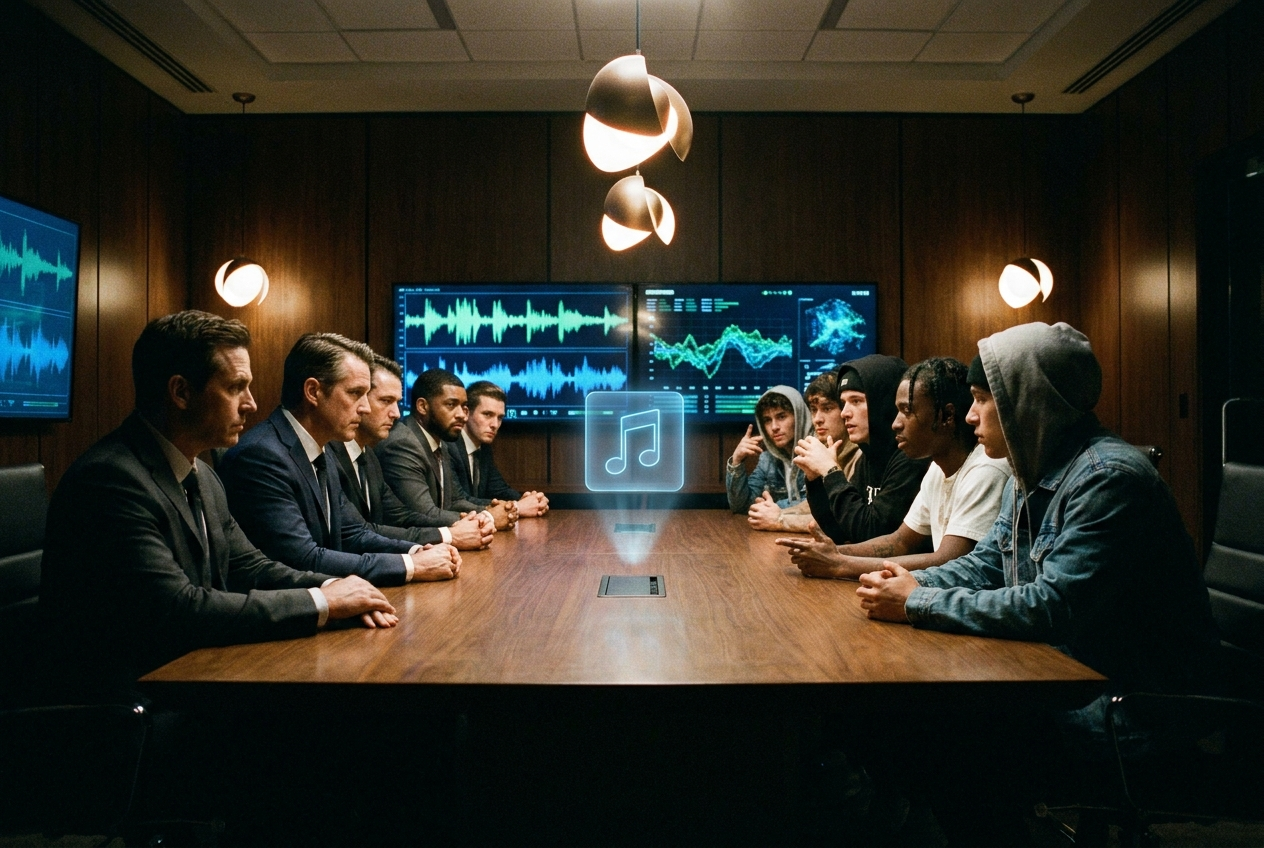
If you’re an indie artist reading this, here’s the real talk: the tipping point isn’t about choosing a side. It’s about understanding that the tools available to you right now are more powerful than what major labels had access to five years ago.
According to a 2026 Sonarworks survey of over 1,100 producers, 60% use AI as an ideation tool for generating melodies, chord progressions, and arrangement ideas, while 30% use it as a co-producer actively integrated into final tracks.
The visual side is evolving just as fast. If you can make AI music, you can also make AI music videos. Check out our complete guide to AI music videos for a deep dive into what’s possible right now. Whether you’re making hip-hop visuals, EDM content, or indie aesthetics, the barrier to entry has collapsed.
The artists who win in this environment aren’t the ones who reject all AI or blindly embrace it. They’re the ones who use AI to move faster while keeping their creative vision distinctly human. Use it for demos. Use it for brainstorming. Use it to create music videos that would have cost $10,000 last year. But make the final product unmistakably yours.
The Story of Xania Monet
Perhaps no story captures this tipping point better than Xania Monet. A 31-year-old poet from Mississippi who had never worked with a label or landed a record deal created an AI artist that hit #1 on Billboard and signed a deal worth $3 million. Telisha “Nikki” Jones didn’t have industry connections, a manager, or a voice she felt was “good enough.” What she had was poetry, a Suno subscription, and a story worth telling.
Love it or hate it, that’s a genuine creator using AI to overcome barriers that the traditional music industry placed in front of her. She wrote the words. She shaped the emotion. She directed the vision. AI was the instrument she couldn’t afford to hire.
That’s exactly the tension at the heart of this tipping point: is this democratization or degradation? The answer, frustratingly, is probably both — depending entirely on how the tools get used.
Where We Go From Here
If 2025 was the year artificial intelligence came to the forefront both technologically and culturally, 2026 is the year it truly makes a monumental impact on the music business.
The settlements will keep coming. The protests will continue. Berklee will probably keep its AI course. More record stores will face impossible choices about what they’re willing to stock and host. And somewhere, right now, a bedroom producer is using AI to sketch out a melody that’ll become a hit they record with real instruments tomorrow morning.
The tipping point isn’t a single moment — it’s the messy, beautiful, infuriating process of an entire industry figuring out new rules in real time. Whether you’re a pop artist building visual content, a country songwriter wondering about AI on the charts, or a rock musician who just wants to make videos without a film crew, the tools are here. The question is how you’ll use them.
One thing’s for certain: standing still isn’t an option anymore.
Ready to jump in? Whether AI music excites you, terrifies you, or somewhere in between, you can start creating stunning music videos for your tracks right now with OneMoreShot.ai. Upload your song, choose a visual style, and have a professional-quality music video in minutes — no film crew, no $10K budget, no arguments about whether your art is “real” enough. Just your music, brought to life visually.