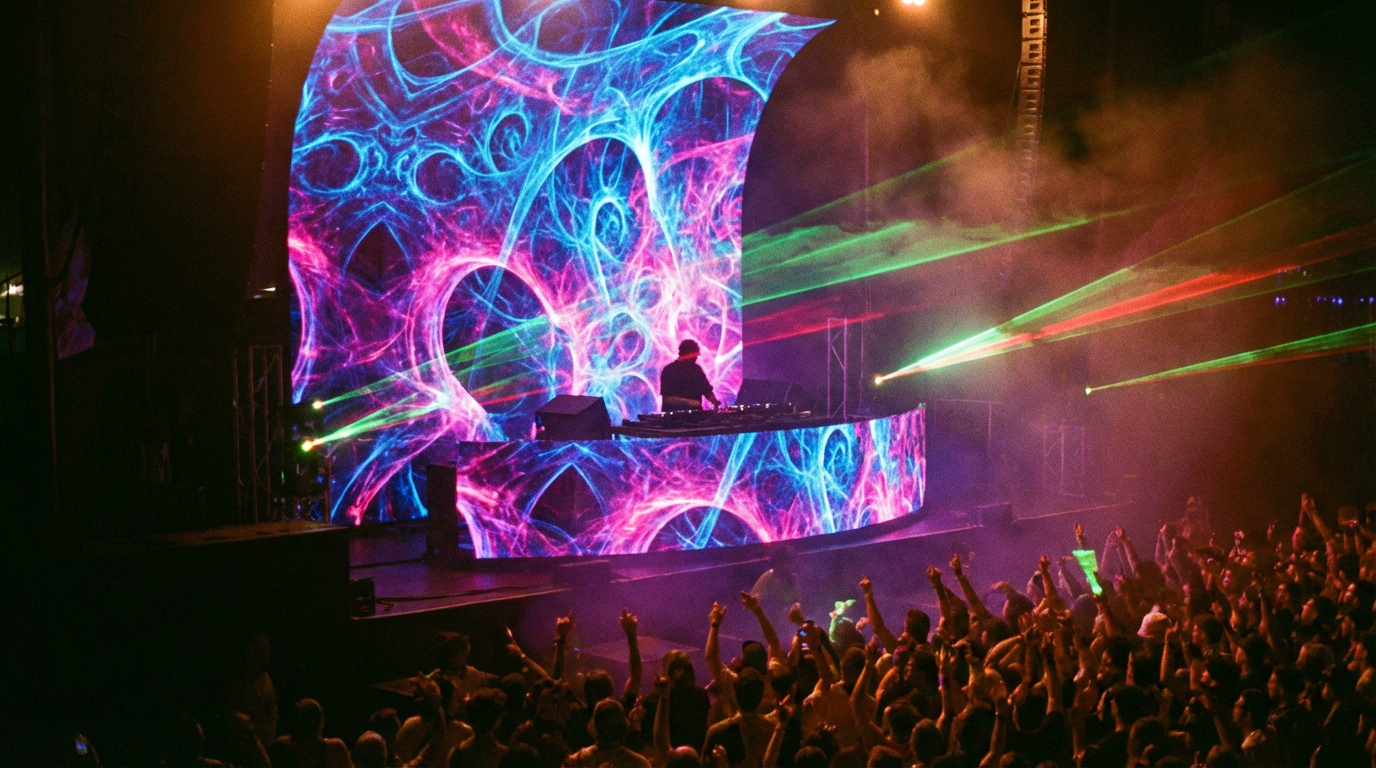
Best AI Music Video Examples for EDM
Best AI Music Video Examples for EDM
Electronic dance music has always lived at the bleeding edge of technology. From the first drum machines to stadium-sized LED walls, EDM artists have historically been the earliest adopters of whatever visual tech the world throws at them. In 2026, that frontier is AI-generated music video — and the results are nothing short of breathtaking.
The global AI video generation market is projected to reach $18.6 billion by the end of 2026, up from $5.1 billion in 2023. Much of that explosive growth is being fueled by musicians — and EDM producers in particular — who are racing to turn their tracks into immersive visual experiences without six-figure production budgets. Thousands of artists have already made over two million videos on Neural Frames alone , and platforms specifically designed for audio-reactive visuals are multiplying fast.
This new wave of EDM doesn’t sound like the neon, bass-heavy era of the 2010s — dance music is merging with cinematic sound design, emotional atmospheres, and hybrid orchestral textures to create something entirely new. The visuals are evolving just as dramatically. AI-generated music videos for electronic music now span everything from pulsing abstract fractals to fully rendered sci-fi narratives — all generated in minutes rather than months.
This curated gallery showcases the best examples of AI music videos in the EDM space, organized by visual style and platform. Whether you’re a bedroom producer or a touring DJ, these examples will show you exactly what’s possible — and inspire you to create your own.
Gallery by Style
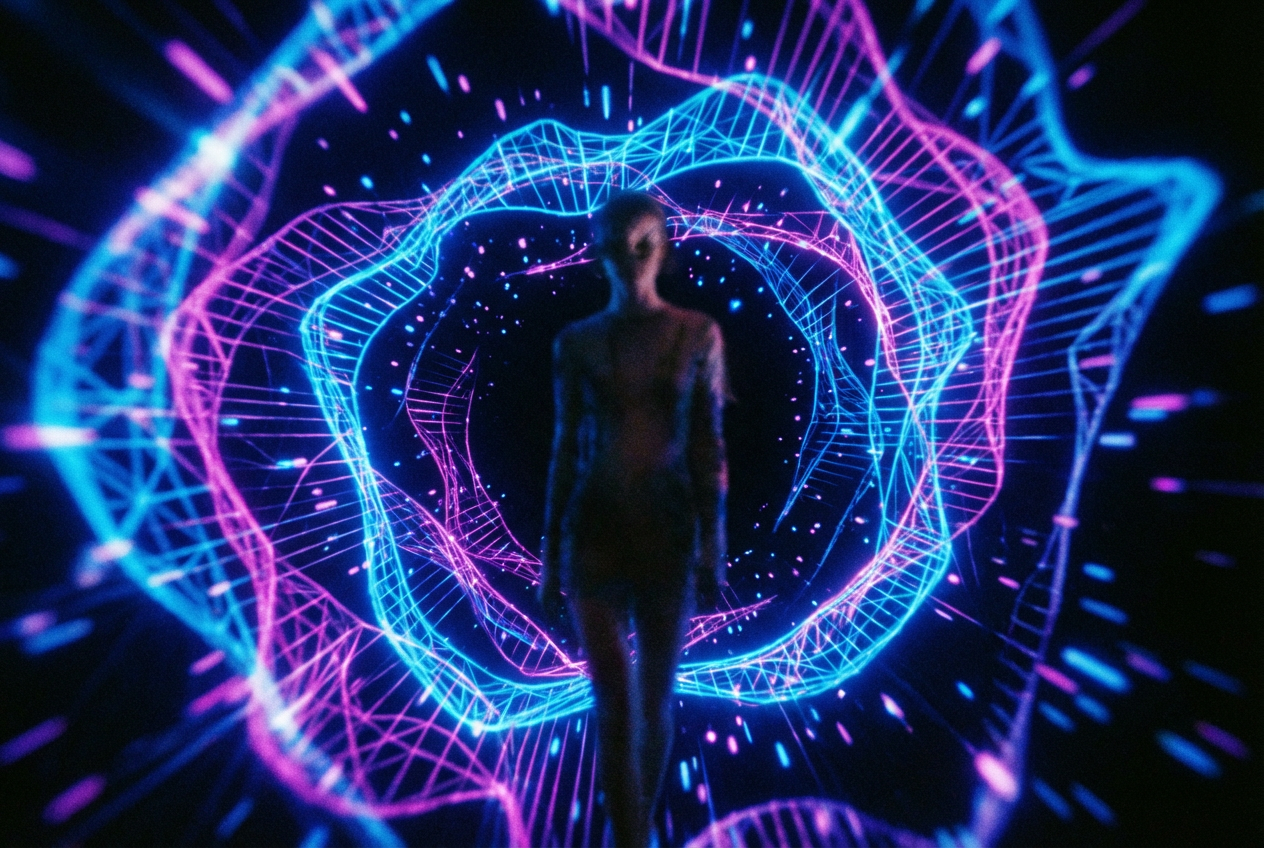
EDM is one of the most visually diverse genres in music, and AI tools have unlocked even more creative possibilities. Here are the standout visual styles dominating AI EDM music videos in 2026, with real examples and descriptions of what makes each approach work.
1. Audio-Reactive Abstract Visualizer
The Style: Pulsing geometric shapes, fractal patterns, and fluid simulations that morph in perfect sync with every kick drum, snare hit, and synth swell. This is the quintessential EDM visual language — updated for the AI era.
Standout Example: Neural Frames — Bass-Heavy EDM Visualizer
Neural Frames is the only AI music video generator that behaves like a visual synthesizer: every kick, snare, and vocal stab drives a cut, zoom, or color flash in real time. When Techloy stress-tested it against a 128 BPM EDM track, the engine split the track into eight channels and mapped each one to motion parameters for frame-perfect sync, exporting a bass-heavy EDM track at 3840 × 2160 without artifacts.
Imagine this: the bassline triggers cascading waves of deep violet that roll across the screen like tidal surges. Hi-hats scatter golden particles that shimmer at the edges. During the buildup, everything contracts — colors desaturate, geometry tightens — and then the drop detonates a kaleidoscopic explosion of neon, every shape shattering and reforming in perfect lockstep with the beat.
Why it works: EDM is fundamentally rhythmic, and audio-reactive visuals make the rhythm visible. The viewer doesn’t just hear the drop — they see it shatter the screen. Audioreactive visuals can vibrate, pulse, change colors, or move in accordance with the beats, melodies, and intensity of the music, adding depth and impact to the overall viewing experience.
Tool: Neural Frames (8-stem audio analysis, Autopilot mode)
2. Cinematic Sci-Fi Narrative
The Style: Fully rendered scenes with characters, environments, and story arcs — think Blade Runner meets a music video. AI now generates these at a quality that would have required a VFX studio just two years ago.
Standout Example: Don Diablo — “BLACKOUT”
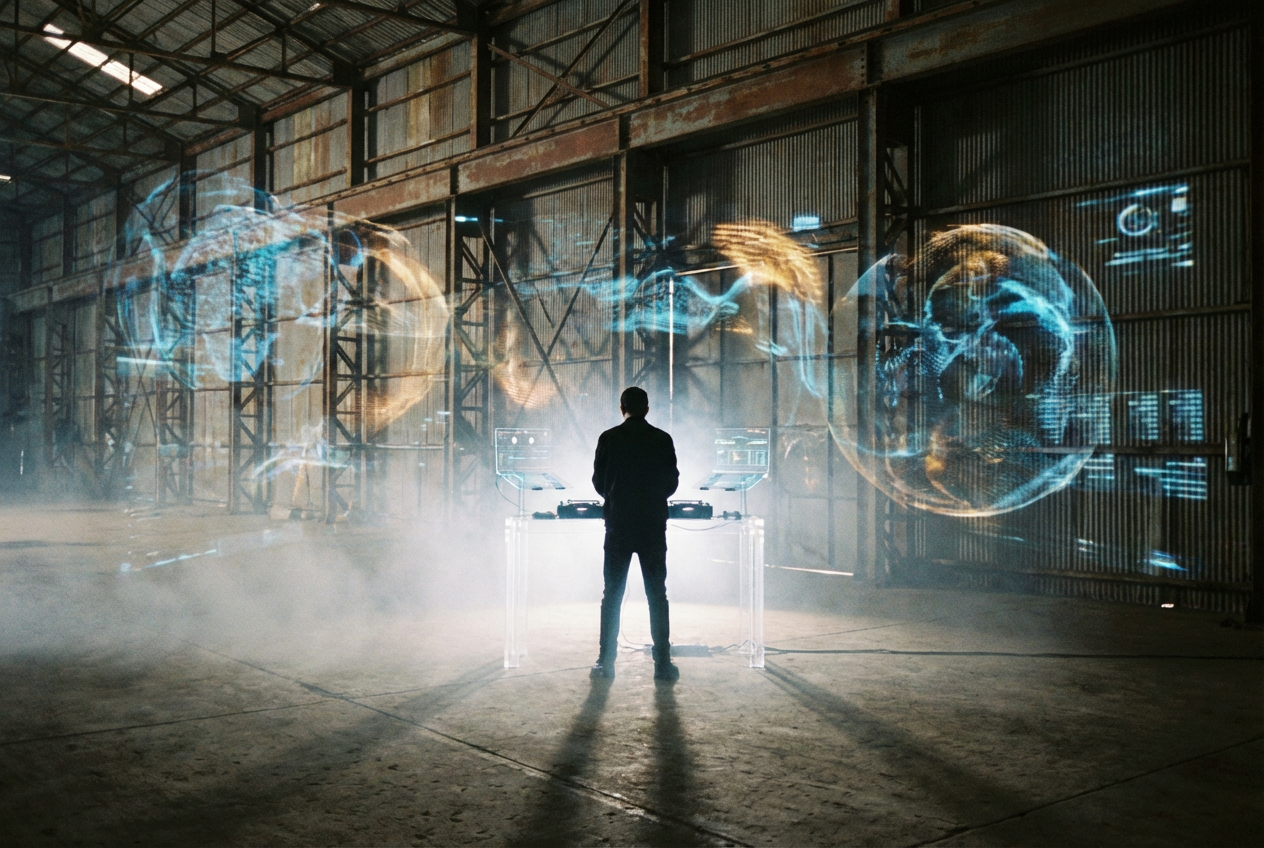
Electronic music icon Don Diablo’s music video for “BLACKOUT” explores using generative AI, combining NVIDIA RTX-powered and cloud-based tools in a hybrid workflow. Set inside an industrial warehouse, the video features Diablo performing in front of an immersive, AI-generated environment — blending stylized effects, a cinematic mood, and personalized elements.
The image creation and experimentation was done locally on a desktop powered by an NVIDIA GeForce RTX 5090 GPU, while the final animation was rendered using Kling AI, a cloud-based generative video tool. To maintain visual consistency, a custom model was trained on a facial dataset of Diablo using low-rank adaptation, then loaded into ComfyUI and integrated into a Stable Diffusion pipeline for stylized image generation. An identity-embedding node ensured consistent facial features across frames.
As Don Diablo himself put it: “Working with these new AI tools literally feels like stepping into my own mind. We were able to creatively raise the bar, shape the visuals in real time and stay focused on the story.”
Why it works: The video doesn’t try to look “real” — it leans into a stylized, dreamlike aesthetic that perfectly matches the track’s dark electronic energy. It’s one of the first major mainstream music videos to use 100% AI-generated visuals.
Tool: ComfyUI + FLUX (local, RTX 5090), Kling AI (cloud rendering)
3. Psychedelic Morph / “Trippy” Style
The Style: Continuously transforming visuals where one image flows seamlessly into the next — faces melt into landscapes, cityscapes dissolve into oceans, geometry ripples like liquid. This style has become a signature of AI-generated EDM content on social media.
Standout Example: Kaiber Audio-Reactive EDM Morphs
A popular Kaiber prompt reads: “Colorful geometric shapes pulsing to EDM beat, camera zooming slowly, glitch art style.” The result is mesmerizing: imagine neon triangles and hexagons that breathe with the bass, camera pushing forward through an infinite tunnel of transforming geometry, each transition triggered by a beat change.
Kaiber Labs has been involved in several high-profile projects — including co-producing visuals for Yaeji’s headline summer performance in New York and creating six hours of AI-generated video art for an event in Los Angeles.
They partnered with the Berlin-based label Live From Earth to design visuals for international rave stages, and produced visuals for Boiler Room at major summer festivals.
Why it works: The constantly morphing aesthetic mirrors the feeling of being on a dance floor — sensory overload, time dilation, and a hypnotic pull that keeps you locked in. It’s inherently shareable and performs exceptionally well as short loops.
Tool: Kaiber (Audio Reactivity feature, Flipbook or Motion animation styles)
4. AI Performance Video with Lip-Sync
The Style: An AI-generated character or avatar performs the track with synchronized lip movements and dynamic stage presence — no camera, no studio, no crew required.
Standout Example: Freebeat — Stage Performance EDM Videos
Freebeat creates rhythm-perfect AI dance videos where motion naturally follows the beat and musical structure. It works as an AI director that plans, shoots, and edits your music video automatically, turning creative ideas into structured storylines, cinematic shot plans, and complete music videos in one flow.
Picture a futuristic DJ avatar standing behind holographic decks in a cavernous club. The character moves to the beat, hands sweeping over virtual controls. The camera orbits in a smooth drone-style arc, pulling back during the breakdown to reveal a massive crowd of AI-generated silhouettes before pushing in tight for the drop. Every frame follows the music’s pulse, not generic timelines — visuals automatically sync to BPM, beats, drops, and song sections across the entire track.
Why it works: Performance videos build parasocial connection. Even when the “performer” is AI-generated, the sense of a living, breathing artist on screen makes the music feel more human and engaging.
Tool: Freebeat (Stage Performance mode), OneMoreShot.ai (lip-sync technology)
5. Lyric Video with Dynamic Typography
The Style: Song lyrics rendered as animated text that pulses, morphs, and flows in sync with the vocal line — overlaid on AI-generated backgrounds that match the track’s energy.
Standout Example: EDM Lyric Videos with Mootion
Mootion is one of the best AI lyric video makers available, offering automatic audio-to-lyric synchronization, beat detection, customizable text animations, and genre-specific visual templates.
In recent benchmarks, Mootion generated a full 3-minute lyric video in under 2 minutes compared to the industry average of 6 minutes.
For EDM, imagine this: the vocal chop “Let me go” appears in glowing sans-serif type against a dark backdrop of AI-generated storm clouds. On the drop, the text explodes into fragments that scatter like bass-driven shrapnel, then reassembles for the next phrase. The background shifts between cosmic nebulas during verses and pulsing neon cityscapes during choruses.
Why it works: Lyric videos dominate YouTube for single releases — they’re the most common video format for new tracks. AI-generated lyric videos let producers release a polished visual the same day as the track.
Tool: Mootion, OneMoreShot.ai
6. Anime / Stylized Illustration
The Style: AI-generated visuals rendered in anime, manga, or stylized illustration aesthetics — hugely popular in bass music, future bass, and melodic dubstep communities.
Standout Example: Future Bass Anime Visual on YouTube
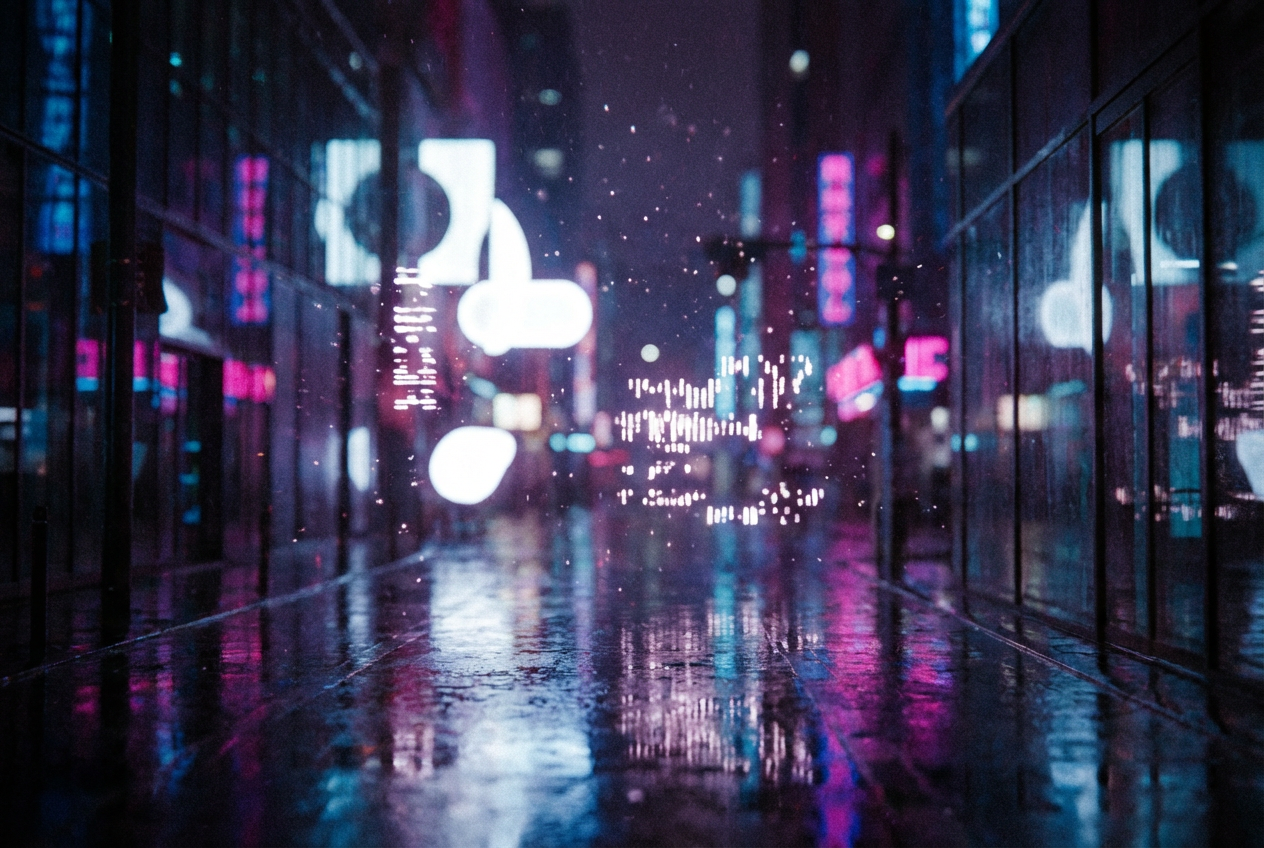
The overlap between anime culture and EDM fandom is massive, and AI tools have made this style accessible to any producer. Think: a hand-drawn-style character with oversized eyes and flowing hair standing on a rooftop at sunset, city lights beginning to sparkle below. As the track builds, cherry blossoms swirl upward. When the drop hits, the character leaps into the sky, and the art style shifts — lines become sharper, colors more saturated, speed lines radiating from the center of the frame.
This style is especially popular on YouTube channels that combine AI-generated music (often from Suno or Udio) with AI-generated anime visuals. Many of these audiovisual works are created through hybrid processes involving AI music generation platforms using prompt-based inputs, targeting feel-good EDM and positive electronic dance tracks.
Why it works: The anime aesthetic carries enormous cultural cachet in the EDM community, particularly among future bass and melodic dubstep fans. It instantly signals a specific emotional register: nostalgia, wonder, bittersweet beauty.
Tool: Kaiber (style transfer), LTX Studio (persistent characters), Runway ML
7. 3D Immersive Environment
The Style: Fully three-dimensional worlds that the camera flies through — crystalline caves, neon-lit tunnels, alien landscapes, underwater palaces. This is the festival main-stage visual translated into a music video format.
Standout Example: Grimes — AI-Powered Coachella Visuals
Kaiber Labs developed AI models and outputs for Grimes’ acclaimed Coachella set, elevating the performance with dynamic, futuristic visuals.
XiteLabs and Grimes orchestrated a dynamic creative technology pipeline for the set, including production design, XR & AR visuals, VJ services, and live visuals. XiteLabs delivered captivating XR and AR visuals as a Grimes fairy broke free from the DJ booth and flew above the Sahara Stage in a breathtaking finale.
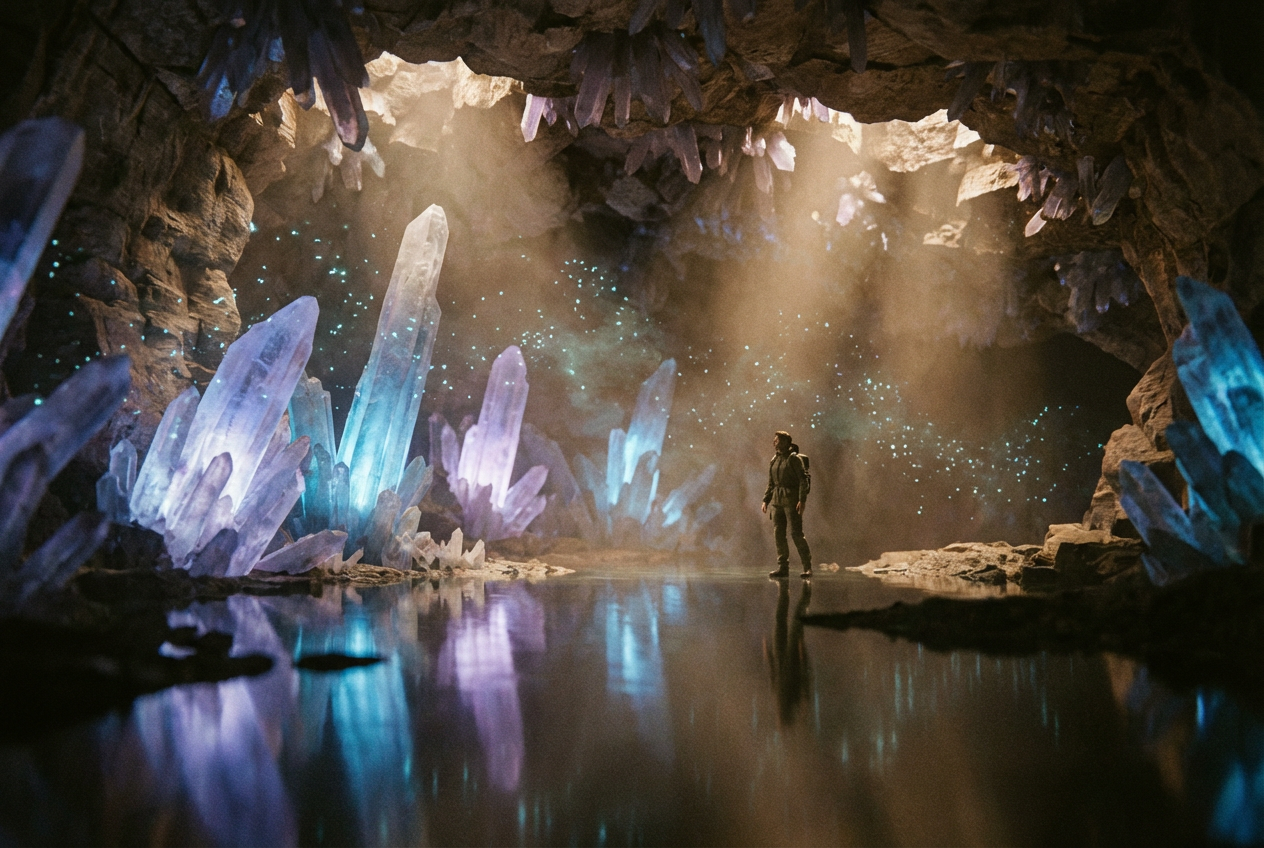
While this was a live performance application, the same techniques now power standalone music videos. Imagine: the camera dives into a portal and emerges in a crystal-encrusted cavern. Stalactites pulse with bioluminescent light timed to the hi-hats. The ground is a reflective pool that ripples with each bass hit. As the track transitions to the breakdown, the entire cave dissolves into stardust, reforming as an alien forest where trees are made of light.
Why it works: 3D immersive environments offer a sense of place that other styles don’t. They transport the viewer, making the music feel like a destination rather than just a sound.
Tool: Kaiber Labs, ComfyUI + Kling AI, OneMoreShot.ai
Gallery by Platform
Not every visual style performs equally across platforms. Here’s what the best EDM creators are doing on each, based on what we’re seeing in 2026.
YouTube: Long-Form Visual Experiences
YouTube remains the home of the full-length AI music video. YouTube remains unparalleled in connecting visuals and music. The platform’s hybrid nature — part streaming service, part social network — encourages active discovery rather than passive listening.
What works best on YouTube for EDM:
- Full-length audio-reactive visualizers (3–7 minutes) — The #1 format. Producers upload their entire track with AI-generated visuals that evolve across the full song structure. These accumulate plays over months as listeners use them for background listening.
- Cinematic narrative videos — Story-driven pieces like Don Diablo’s “BLACKOUT” perform well because YouTube’s algorithm favors higher watch time. A compelling visual narrative keeps viewers engaged through the entire track.
- Lyric videos — Essential for release day. AI makes it possible to have a lyric video live within hours of a track going live.
- “1 Hour” ambient/study mixes — AI-generated looping visuals paired with continuous EDM mixes. These are a massive category on YouTube and perfect for AI generation.
YouTube reached 29 billion videos as of December 2025, with growth driven by Shorts, AI-generated content, and expansion in markets such as India. Standing out requires visual quality that matches the audio — and AI tools are leveling that playing field for independent producers.
TikTok: Vertical, Loop-Driven, Hook-First
TikTok demands a completely different approach. Most tools now default to a 9:16 aspect ratio, which is the native format for TikTok, Instagram Reels, and YouTube Shorts.
What works best on TikTok for EDM:
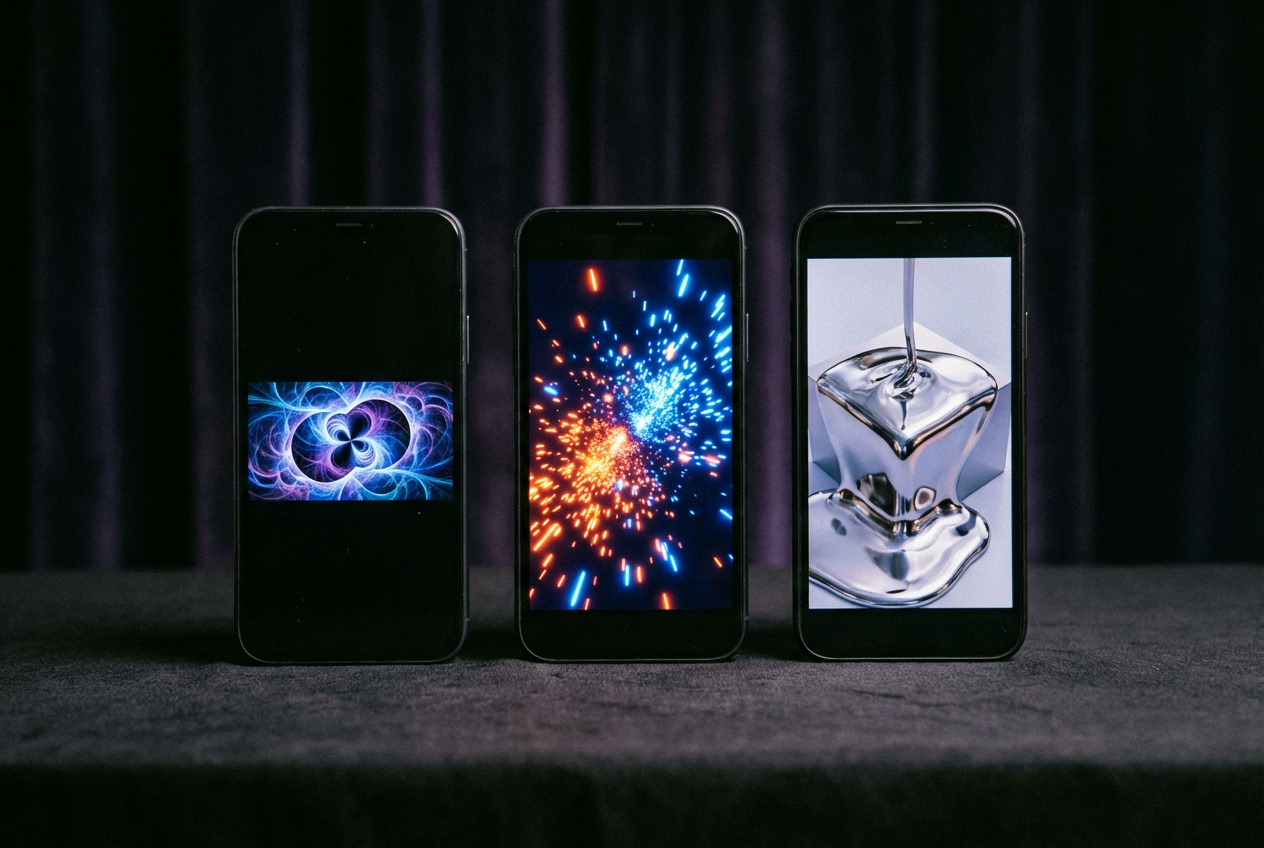
- 15–30 second drop clips — Start at the buildup, hit the drop at second 3–5, let the visual explode. The psychedelic morph style dominates here because it’s immediately eye-catching and infinitely loopable.
- “Watch till the drop” teasers — A simple setup (text on screen: “wait for it…”) with an AI-generated visual that transforms dramatically at the drop. These are engagement magnets.
- Beat-synced transitions — Quick cuts between wildly different AI-generated scenes, perfectly timed to the beat. The contrast between scenes (underwater → space → neon city → forest fire) keeps viewers watching.
- AI dance videos — Rhythm-perfect AI dance videos where motion naturally follows the beat and musical structure, with choreography staying aligned with tempo and energy throughout.
Instagram Reels: Aesthetic-Forward, Brand-Building
Instagram sits between YouTube and TikTok — it rewards polish and aesthetic consistency.
What works best on Instagram for EDM:
- Mood-driven aesthetic loops — 15-second clips of AI-generated visuals that match a specific vibe: “neon noir,” “cosmic minimal,” “liquid chrome.” These build a producer’s visual brand.
- Album art animations — Take your release artwork and animate it with AI. The result is a perfect Reel that promotes the track while looking like a piece of visual art.
- Behind-the-scenes process clips — Show the AI generation process itself: the prompt, the rendering, the final result. EDM fans are tech-curious and love seeing how things are made.
For more on genre-specific visual strategies, check out our guides for hip-hop, pop, and lo-fi — each genre has its own visual language and platform sweet spots.
Common Techniques Behind the Best Examples
After analyzing dozens of standout AI EDM music videos, clear patterns emerge in what separates the good from the exceptional. Here’s what the best creators are doing.
1. Audio-First Workflow
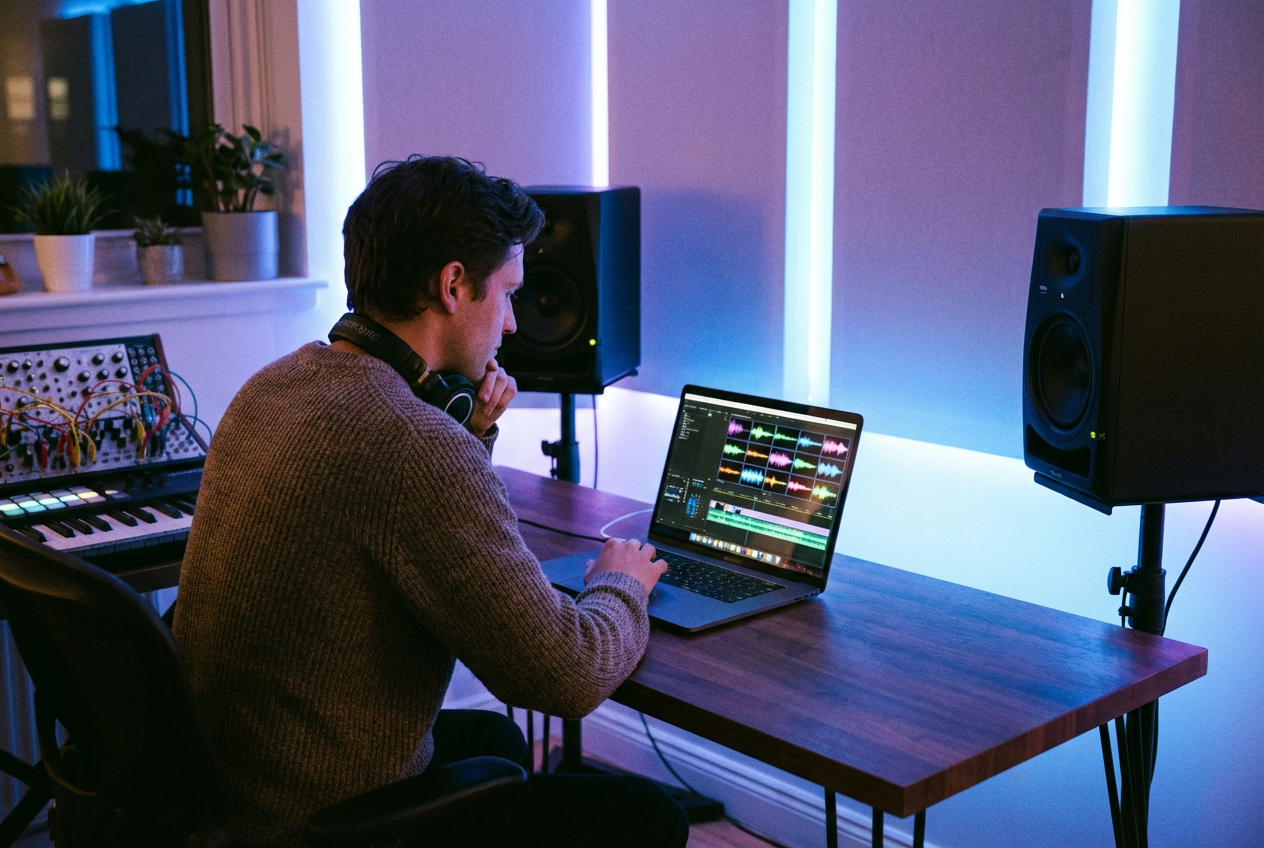
Every standout example starts with the music, not the visuals. The best tools analyze rhythm, structure, and mood to generate visuals that align with the song rather than applying template motion. This means uploading your finished (or near-finished) track and letting the AI extract BPM, energy mapping, and structural cues before generating a single frame.
For EDM specifically, you need reliable beat-sync for drops, builds, and breakdowns — styles that match your sound design, not random noise — and tools that handle full songs, not only micro loops.
2. Prompt Engineering for EDM
The best AI EDM videos use specific, evocative prompts rather than generic descriptions. Compare:
- ❌ “Abstract electronic music video”
- ✅ “Neon wireframe city shattering into particles on the drop, deep space background, electric blue and hot pink, camera pushing forward through debris, glitch artifacts”
The AI interprets subtle descriptive terms — for example, “foggy shoreline chillwave” creates richer moods than “ambient electronic.” The same applies to EDM: “pounding warehouse techno with strobing industrial textures” will produce dramatically different results than simply saying “techno.”
3. Drop-Mapped Scene Changes
The hallmark of a great EDM music video — AI or otherwise — is visual events that align with structural moments in the track. The best creators manually map their drops, builds, and breakdowns to scene transitions, even when using automated tools.
For that festival feel, use tags like [intro], [verse], [build-up], and [drop] to tell the AI exactly how to structure the visual experience. This ensures the visual payoff hits at precisely the same moment as the sonic payoff.
4. Style Consistency Across Releases
Artist identity is becoming central to AI music video creation. Instead of generic outputs, creators can align visuals with their personal aesthetic — color palettes, motion styles, and visual signatures that remain consistent across releases.
The most successful EDM producers using AI visuals maintain a recognizable look: same color palette, similar motion language, consistent level of abstraction vs. realism. This builds brand recognition across releases.
5. Hybrid Human + AI Workflows
The most impressive examples aren’t pure AI output. They involve human creative direction at every stage. Don Diablo described his process: “With a traditional production, you usually start with a locked-in script, scout locations, build sets, shoot, edit, repeat. Here? We were sketching visual dreams – then letting the AI fill in the surreal blanks. The storyboard wasn’t static, it was alive. I’d describe it more like sculpting fog.”
This is the key insight: AI is the instrument. You’re still the artist. The best results come from strong creative direction — knowing what you want the video to feel like — and using AI to execute that vision at a speed and scale that would otherwise be impossible.
For a deep dive into these techniques, read our Complete Guide to AI Music Videos in 2026 and our step-by-step How to Make an AI Music Video tutorial.
Create Your Own AI EDM Music Video
You’ve seen what’s possible. Now it’s your turn.
Every example on this page — from pulsing audio-reactive visualizers to cinematic sci-fi narratives — represents a style you can create today with AI tools. You don’t need a production budget. You don’t need video editing experience. You don’t even need more than five minutes.
OneMoreShot.ai is built specifically for musicians who want stunning music videos without the complexity. Here’s how it works:
- Upload your EDM track — MP3, WAV, or paste a link from Suno, Udio, or YouTube
- Choose your visual style — Abstract visualizer, cinematic narrative, performance, lyric video, or anime
- Let AI do the heavy lifting — Our engine analyzes your track’s BPM, energy, structure, and mood to generate perfectly synchronized visuals
- Export for any platform — Horizontal for YouTube, vertical for TikTok and Reels, square for social posts, looping for Spotify Canvas
The best AI EDM music videos share one thing in common: they started with a producer who decided to stop waiting and start creating. Your next visual is one upload away.
→ Create your free AI music video now
For genre-specific tips on maximizing your EDM visuals, explore our AI Music Videos for EDM guide and grab a ready-made starting point from our EDM Music Video Template page.
Looking for inspiration in other genres? Check out our AI Music Video Examples for Hip-Hop gallery for a completely different visual language.