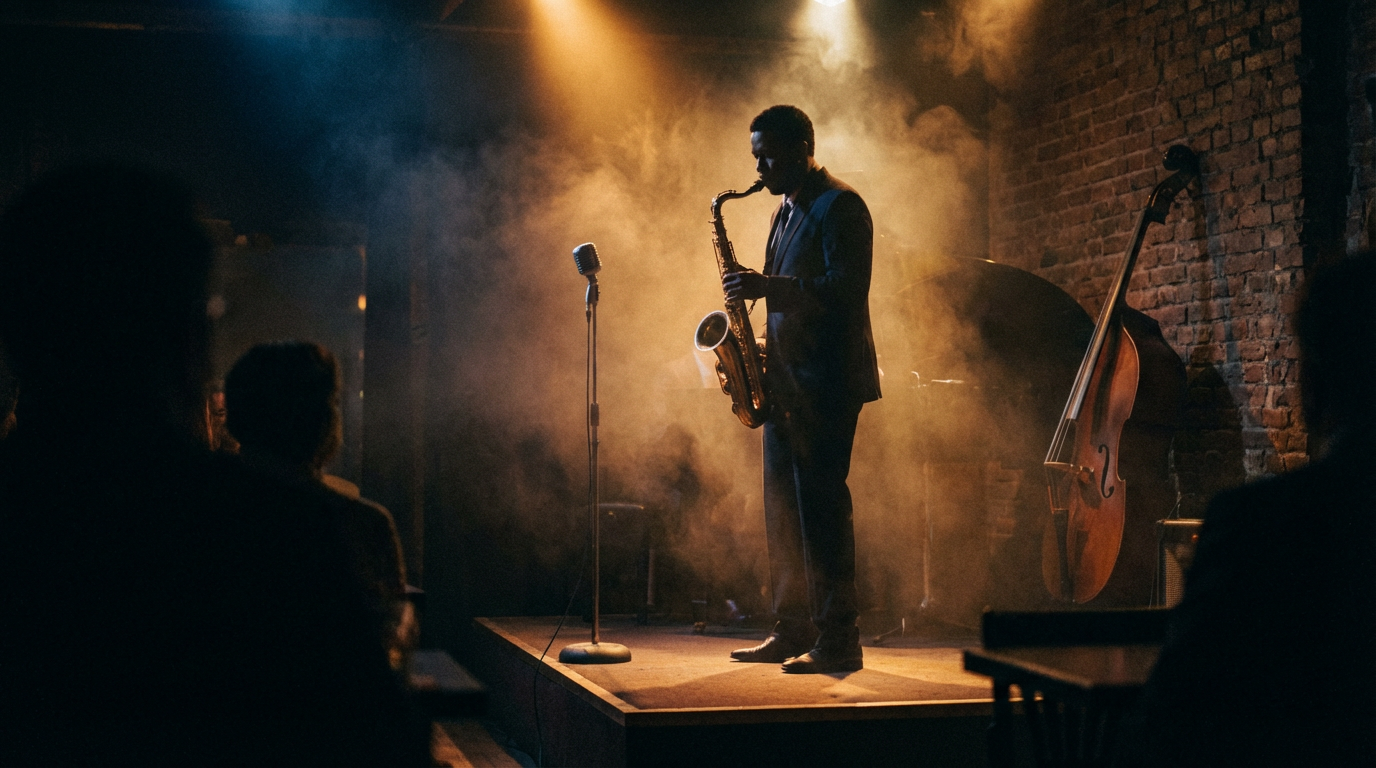
Jazz AI Music Video Examples & Inspiration
Jazz has always been about feel — the smoky club, the brush on the snare, the moment a saxophone solo lifts and lands somewhere entirely unexpected. Now, AI music video generators are translating that ephemeral spirit into visuals that pulse, breathe, and improvise alongside the music itself.
The generative AI in music market, valued at $642.8 million in 2024, is projected to reach $3 billion by 2030 with a CAGR of 29.5%.
The AI-generated video market is expected to grow by 35% annually, reaching $14.8 billion by 2030, with 54% of major artists already using AI visuals. Jazz — a genre deeply rooted in atmosphere and visual storytelling — is one of the most exciting frontiers in this creative explosion.
This gallery showcases the most compelling AI jazz music video styles emerging right now, from noir-drenched club scenes to abstract audio-reactive visualizers. Whether you’re a jazz musician exploring your first visual release or a seasoned creator looking for fresh inspiration, these examples will show you what’s possible — and how to make your own. For a deeper genre breakdown, see our full guide to AI music videos for jazz.
Gallery by Style: The Visual Language of AI Jazz Videos
Jazz is unique among genres because it carries an entire visual vocabulary — smoky clubs, rain-streaked streets, neon signs, Art Deco stages, and the intimate silhouette of a performer in a single spotlight. AI tools have become remarkably adept at rendering these worlds. Here are the standout visual styles shaping jazz AI music videos in 2026.
1. Film Noir & Smoky Club
The quintessential jazz aesthetic — and AI’s sweet spot.
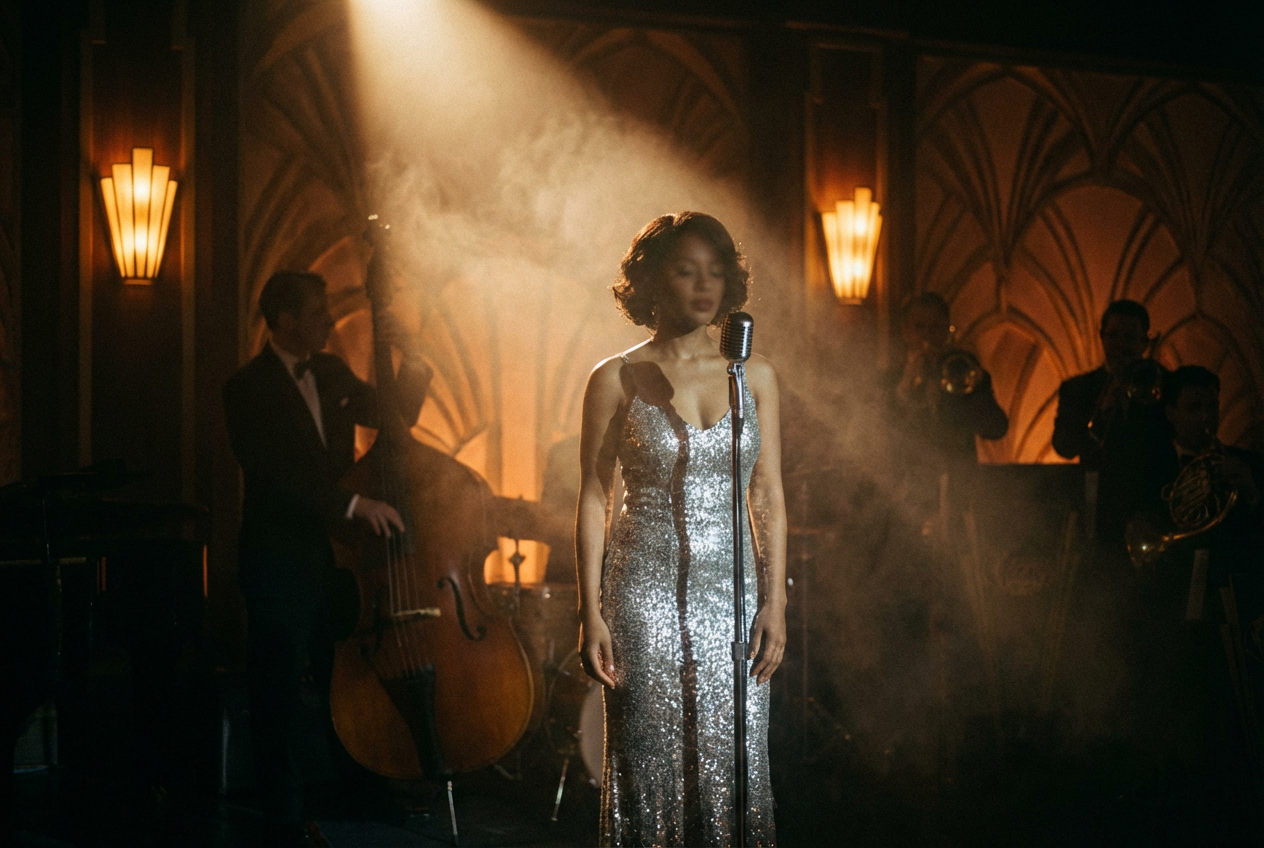
Film noir is the visual soulmate of jazz. AI generators have latched onto this pairing with stunning results, producing videos that feel like lost reels from a 1940s detective film — all shadow play, rain-slicked alleys, and cigarette haze catching a beam of amber light.
Tools like VIVAGO.AI now craft hyper-realistic noir-style animations featuring smoky underground clubs, swaying singers in shimmering dresses, saxophonists in amber glow, and atmospheric shadows, transforming prompts into cinematic, audio-ready visuals with fluid movement.
What makes this style work for jazz: The interplay of light and shadow mirrors the dynamic range of the music itself — a whispered verse bathed in darkness gives way to a brassy chorus flooded with warm light. AI excels here because text prompts describing mood and atmosphere translate naturally into the visual language of noir.
Revid AI’s Jazz Video Generator lets you select from AI-generated animated videos, moving AI images, curated stock jazz footage, or upload your own clips — choosing media styles that include rainy city scenes, smoky clubs, neon lights, or custom imagery.
Typical prompt structure: “A mysterious jazz musician playing saxophone under a single spotlight in a smoky club, deep shadows and dramatic lighting, cinematic mood, film noir atmosphere.”
Best tools for this style: Revid AI, VIVAGO.AI, Neural Frames, OneMoreShot.ai
2. Abstract Audio-Reactive Visualizers
Where jazz improvisation meets visual improvisation.

Abstract visualizers are perhaps the most natural pairing with jazz. Unlike narrative or performance videos, audio-reactive abstract visuals become the improvisation — every snare brush triggers a ripple of color, every bass note warps the geometry, every trumpet cry sends tendrils of light spiraling outward.
Neural Frames enables creators to generate AI music videos with up to 10 minutes at 4K resolution, and thousands of artists have made over two million videos with the platform.
Neural Frames offers the most advanced audio-reactive system available — it automatically extracts 8 different stems from your track (drums, bass, vocals, melody, etc.) and gives you precise control over how visuals respond to each element. With 10+ modulation parameters, you can make colors pulse with the kick drum, transitions follow the melody, or effects intensify with vocals.
What makes this style work for jazz: Jazz’s complex layering — walking bass lines, ride cymbal patterns, piano comping, and horn solos all happening simultaneously — gives audio-reactive systems incredibly rich material to work with. Map the bass to color shifts, the drums to zoom effects, and the saxophone to morphological transformations, and you get a visual that’s as complex and interwoven as the music itself.
Best tools for this style: Neural Frames, OneMoreShot.ai, Freebeat
If you’re new to AI music video creation, our guide on how to make an AI music video walks through the full process from track upload to final export.
3. Narrative & Cinematic
Full stories, told in the language of jazz.
The landmark example of narrative AI music video remains Washed Out’s “The Hardest Part,” directed by Paul Trillo using OpenAI’s Sora. The four-minute music video was made entirely with OpenAI’s text-to-video model, Sora.
Trillo explained that he “leaned into the hallucinations, the strange details, the dream-like logic of movement.” While Washed Out is a chillwave artist rather than straight jazz, the dreamy, surreal infinite-zoom technique Trillo pioneered has become a defining template for atmospheric, jazz-adjacent narrative videos.
What makes this style work for jazz: Jazz tells stories — of late nights, heartbreak, city life, longing. AI narrative tools now allow solo musicians to visualize these stories without a film crew. LTX Studio turns scripts into full storyboards — camera moves, shot lengths and all — before a single pixel renders. For a jazz ballad about lost love, you can specify verse-by-verse scene descriptions and let AI generate a consistent cinematic narrative.
Best tools for this style: LTX Studio, Sora, Runway, OneMoreShot.ai
4. Lyric Videos with Jazz Atmosphere
Typography meets tempo.
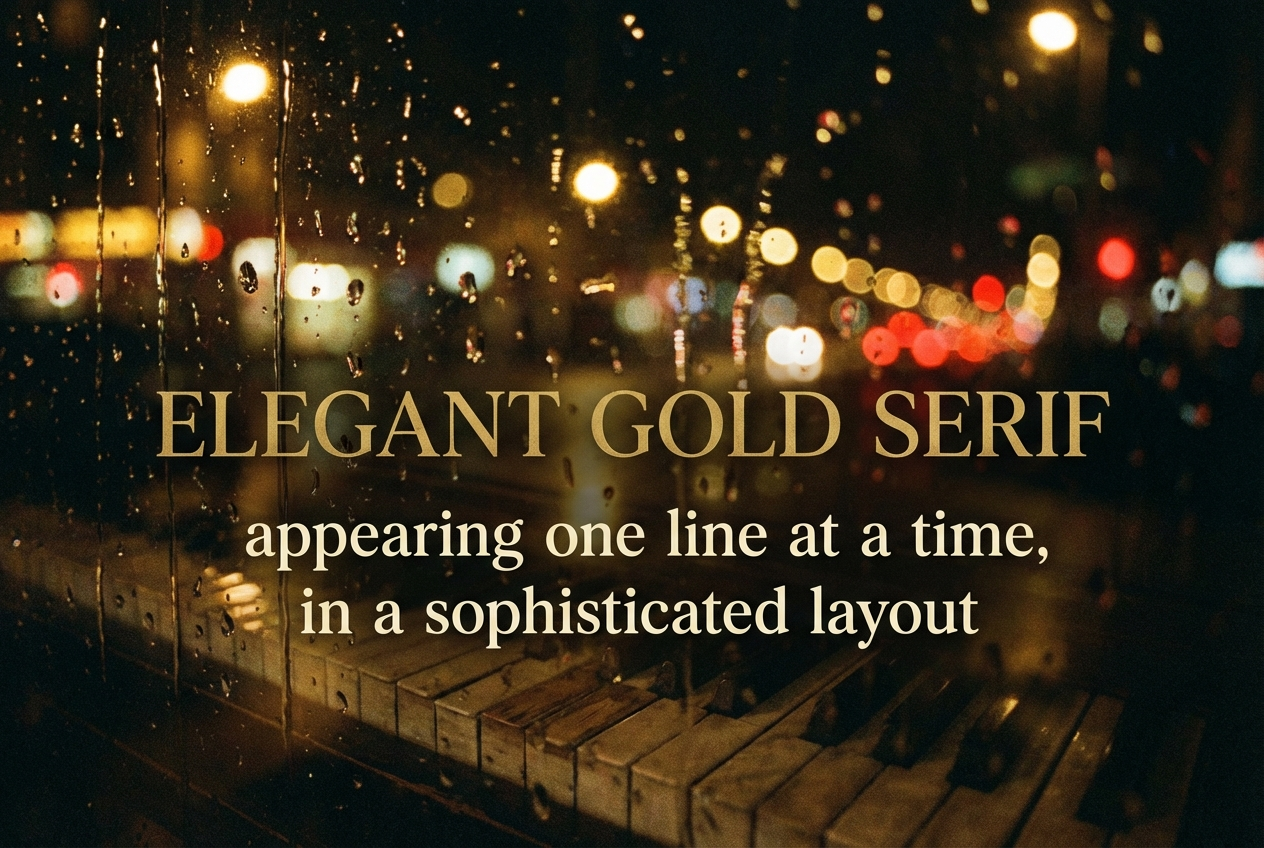
For vocal jazz tracks, AI lyric videos are a powerful format. MakeSong’s One-Click AI Lyric Video Maker automatically syncs every word perfectly with your music and selects high-quality video backgrounds — ideal for meditation, jazz music, lo-fi music, and all genres where sound matters more than visuals.
The best AI jazz lyric videos pair elegant typography — think vintage serif fonts in gold or cream — against atmospheric backgrounds: rain on glass, flickering candles, slowly drifting city lights. The text appears timed to the phrasing of the vocal, breathing with the music rather than snapping mechanically to beats.
What makes this style work for jazz: Jazz vocals are about phrasing and space. AI lyric sync tools that detect natural speech rhythm rather than just BPM produce much more elegant results for jazz than for genres with rigid, quantized timing.
Best tools for this style: Revid AI, MakeSong, OneMoreShot.ai
5. Vintage & Retro Animation
Hand-drawn warmth, generated in minutes.
The jazz-animation connection runs deep — from Fleischer Studios’ rotoscoped Cab Calloway in the 1930s to the lo-fi hip-hop “study girl” phenomenon. AI is now generating original animated jazz videos in styles ranging from Harlem Renaissance-inspired illustrations to mid-century modern graphic design.
On TikTok, creators are producing animated jazz sessions — “When the city sleeps, the jazz stays awake. 🎷 I animated this black-and-white jazz session so you can feel every note – brass, drums, bass and city lights moving in sync.”
What makes this style work for jazz: Animation removes the uncanny valley problem entirely. AI-generated illustrated characters playing instruments feel charming rather than unsettling. The hand-drawn aesthetic also pairs beautifully with jazz’s warmth and analog soul — it feels like a vinyl record sleeve come to life.
Best tools for this style: Neural Frames (Stable Diffusion models), BeatMV, OneMoreShot.ai
6. 3D & Surreal Dreamscapes
Where bebop meets the impossible.
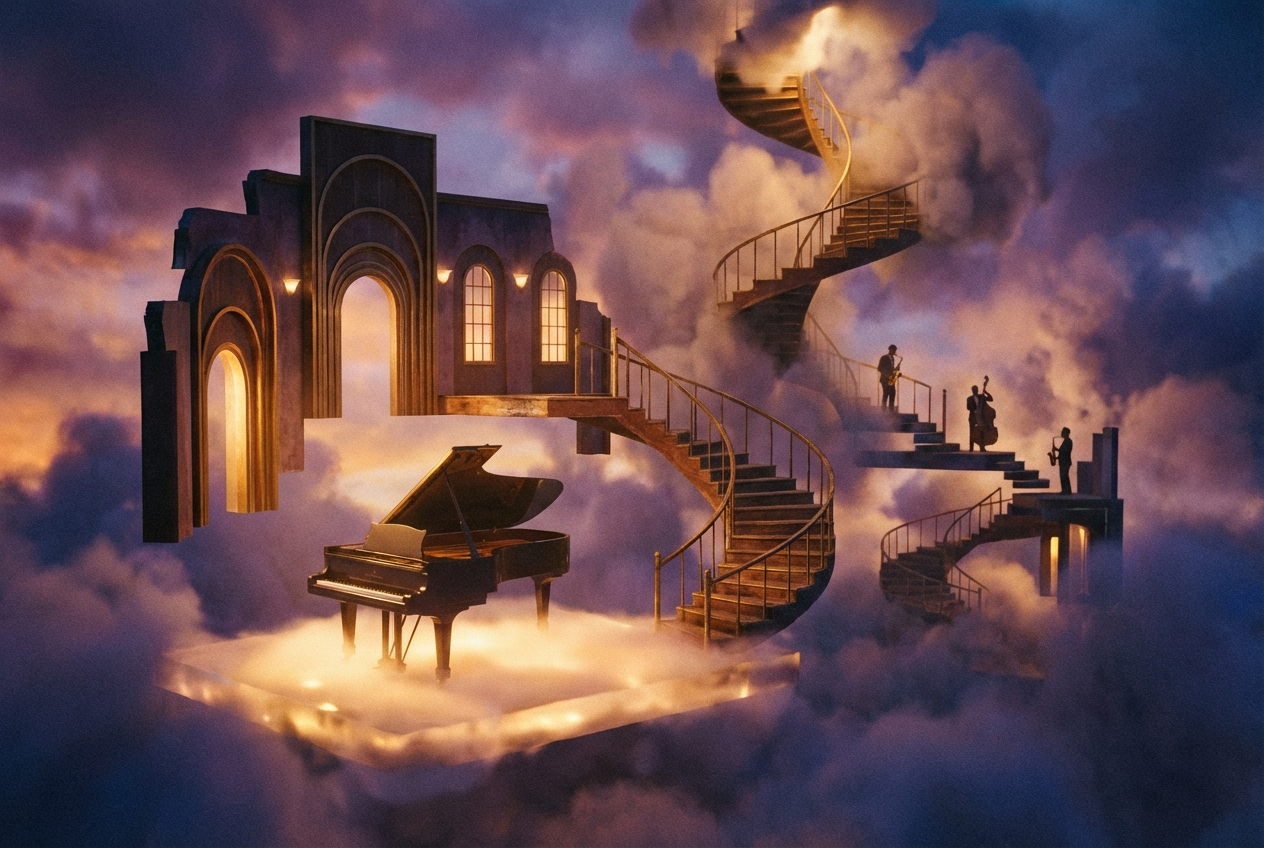
Free jazz and fusion have always pushed into the experimental, and AI-generated 3D environments take that spirit to its visual extreme. Think: a saxophone solo performed on a floating stage above city clouds. A drummer playing inside an Escher-like geometric space where gravity shifts with the time signature. A bass player walking through an infinite corridor of mirrors.
AI video generators now produce these impossible spaces by combining text-to-video models with depth mapping and camera motion controls. LTX Studio ranks among the best because it gives you precise control over timing, motion, and style while the AI handles complex scene generation — matching visuals to every beat and lyric without frame-by-frame manual editing.
Best tools for this style: LTX Studio, Runway, Neural Frames, OneMoreShot.ai
7. Performance & Virtual Artist
Your AI jazz avatar takes the stage.
The latest generation of AI music video tools can generate consistent virtual performers — a jazz singer who looks the same from scene to scene, a pianist whose hands move with the music, a full quartet on a candlelit stage.
OneMoreShot.ai lets you create a virtual artist using a photo or just a description, then generate social media content and music videos with a consistent, recognizable identity.
OneMoreShot.ai hosts the best lip-syncing model available to ensure your singing scenes look completely natural and perfectly in sync.
For vocal jazz, this is a game-changer. You can create an AI-generated singer performing in a dimly lit club, complete with synchronized lip movements, consistent wardrobe, and atmospheric staging — all without filming a single frame.
Best tools for this style: OneMoreShot.ai, Freebeat, BeatMV, Neural Frames
Gallery by Platform: What Works Where
Different platforms reward different visual approaches. Here’s how the best AI jazz videos are optimized for each destination.
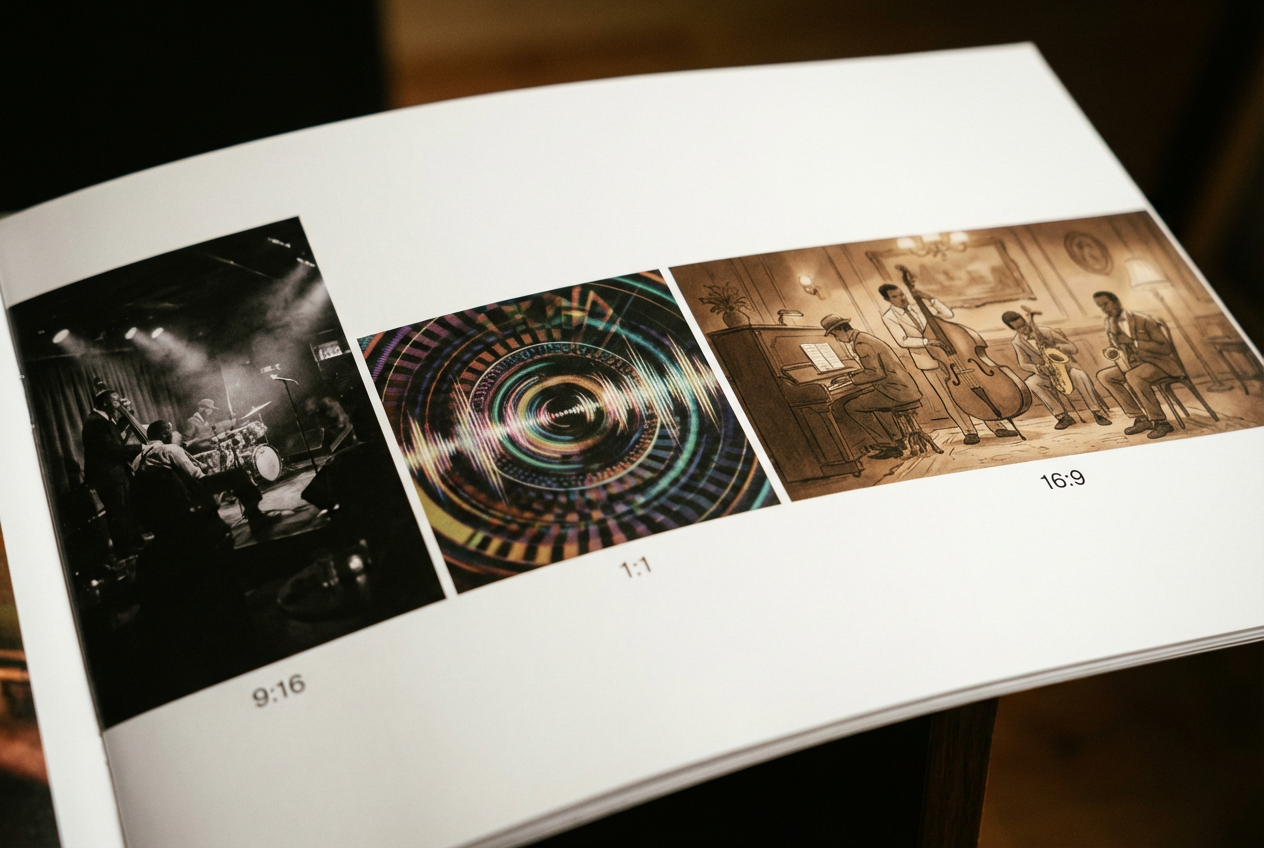
YouTube (16:9 Landscape)
YouTube remains the home of the full-length jazz music video experience. For musicians on a budget, AI tools can be a huge game-changer. Instead of releasing just one music video for an album’s lead single, you can create unique visualizers for every track. That can dramatically increase your engagement on platforms like YouTube and Instagram, where visual content is king.
What performs best: Long-form abstract visualizers (8–15 minutes) and full narrative videos. Jazz listeners on YouTube tend to settle in — they want atmospheric, immersive experiences that function as both visual art and background ambiance. Audio-reactive visualizers paired with album art transitions perform exceptionally well for instrumental jazz, often accumulating hundreds of thousands of views through “jazz for studying” and “late-night jazz” search queries.
Format: 16:9, 1080p minimum (4K preferred), 3–15 minutes
TikTok (9:16 Vertical)
Jazz on TikTok is thriving, driven by the “jazz club aesthetic” trend. With the younger digitally savvy generation making jazz their own through social media, TikTok, and streaming destinations, jazz noir has a brand new audience who appreciate its visual and emotional impact.
What performs best: Short noir-style clips (15–30 seconds), animated jazz loop visualizers, and lyric snippets with atmospheric backgrounds. The #jazztok and #smoothjazz hashtags drive discovery. Vertical format forces tight composition — a single spotlight on a saxophone, close-up of hands on piano keys, or an animated character in a smoky club.
Format: 9:16, 15–60 seconds, front-loaded visual hook
Instagram Reels & Stories
Instagram sits between TikTok’s urgency and YouTube’s depth. Jazz content here tends toward the aesthetic and curated.
What performs best: Visually polished 30–60 second clips that emphasize the look — Art Deco typography, warm color grading, elegant transitions. Carousel posts pairing AI-generated album art with short video clips also perform well. One of the most practical advantages of using an AI music video generator is the ability to produce multiple creative versions of the same song quickly, switching between visual styles to see which direction resonates best. For artists promoting releases across TikTok, Instagram Reels, and YouTube Shorts simultaneously, this means testing different creatives without separate production runs.
Format: 9:16 or 1:1, 30–90 seconds, high visual polish
For cross-genre inspiration, explore our galleries for AI music video examples in lo-fi (jazz’s closest visual neighbor) and AI music video examples in R&B.
Common Techniques Behind the Best Examples
After studying dozens of AI jazz music videos across platforms, clear patterns emerge in what separates the exceptional from the generic. Here’s what the best creators are doing.
1. Audio-Reactive Mapping That Respects Jazz Dynamics
The biggest mistake in AI jazz video creation is mapping visual changes too aggressively to transients. Jazz isn’t EDM — there are no four-on-the-floor kicks to anchor your cuts. The best jazz videos use subtle audio reactivity.
The best AI music video generators parse your song’s full structure: intro, verse, chorus, bridge, outro. When the chorus hits, the visuals shift. When a beat drop lands, the cut happens. When energy drops into a breakdown, the pacing follows.
For jazz, this means mapping the ride cymbal to a gentle luminosity shift rather than a hard cut, or linking the bass to a slow color temperature change. Tools like Neural Frames and OneMoreShot.ai give you this granular control. The goal is visual breathing, not visual punching.
2. Prompt Engineering for Jazz Atmosphere
The most effective jazz video prompts don’t just describe what’s in the frame — they describe the feeling. Compare:
- Generic: “A jazz band playing on a stage”
- Atmospheric: “A dimly lit jazz club at 2 AM, a single trumpeter in a worn fedora playing a mournful melody under a warm amber spotlight, wisps of haze drifting slowly through the beam, empty tables with half-finished drinks, deep shadows on brick walls, melancholy and intimate”
You can pick from various jazz sub-genres like smooth jazz, lounge, noir, piano bar, or describe your own style for the AI to follow. The more specific your prompt, the better the AI can match your musical vision.
3. Style Consistency Across Scenes
One of the biggest technical challenges in AI video generation is maintaining visual consistency. The best jazz videos solve this by:
- Choosing a single dominant color palette (amber/shadow for noir, deep blue/gold for cool jazz, warm sepia for vintage)
- Using AI platforms with character consistency features that keep performers looking the same across scenes
- Limiting style shifts to structural changes in the music (verse vs. chorus) rather than every few seconds
Neural Frames lets you train the AI on your unique visual style in minutes — upload reference images, artwork, or photos to create a signature look that’s unmistakably yours.
4. Embracing the Dreamlike Quality
Paul Trillo, director of the landmark Washed Out AI video, deliberately “leaned into the hallucinations, the strange details, the dream-like logic of movement.” This lesson applies directly to jazz: don’t fight AI’s tendency toward the surreal. Jazz has always lived in the liminal space between structure and chaos, and AI’s occasional drift toward the unexpected can become a feature, not a bug.
The best AI jazz videos treat visual artifacts as improvisations — just as a jazz musician might stumble into a “wrong” note that becomes the most emotionally resonant moment in a solo.
5. Multi-Platform Export Strategy
Short-form platforms reward creators who post frequently. Automated AI workflows enable rapid output without sacrificing quality.
Create your jazz video once at high resolution, then export multiple versions: a full-length 16:9 for YouTube, a 30-second 9:16 highlight for TikTok and Reels, and a looping square for Spotify Canvas. Most modern AI video tools — including OneMoreShot.ai — support multi-format export natively.
For more on video creation strategy across genres, check out our complete guide to AI music videos in 2026.
Create Your Own AI Jazz Music Video
You’ve seen the styles. You’ve studied the techniques. Now it’s time to create.
OneMoreShot.ai makes it effortless to turn your jazz track into a stunning music video in minutes. OneMoreShot.ai uses artificial intelligence to automatically create professional music videos from your audio tracks — it analyzes your music and generates synchronized visuals, effects, and animations that match the rhythm, mood, and style of your song.
Here’s how to get started:
- Upload your jazz track — MP3, WAV, FLAC, or paste a link from Suno, Udio, or YouTube
- Choose your visual style — noir, abstract, animated, cinematic, or performance
- Let AI generate your video — beat-synced, mood-matched, and platform-ready in minutes
- Refine and export — adjust scenes, swap visuals, and export for YouTube, TikTok, Instagram, or Spotify Canvas
Most music videos are generated in just 2-5 minutes, depending on the length of your track and the complexity of the visuals you choose.
Whether you’re releasing a smooth jazz single, a bebop album, or an experimental fusion EP, OneMoreShot.ai gives you the visual layer your music deserves — without a production budget, crew, or weeks of editing.
Start creating your jazz music video now →
For genre-specific templates and prompt guides, explore our AI music video jazz template and complete jazz genre guide. And if you’re working across genres, our galleries for hip-hop, EDM, and pop offer additional inspiration for cross-genre visual techniques.