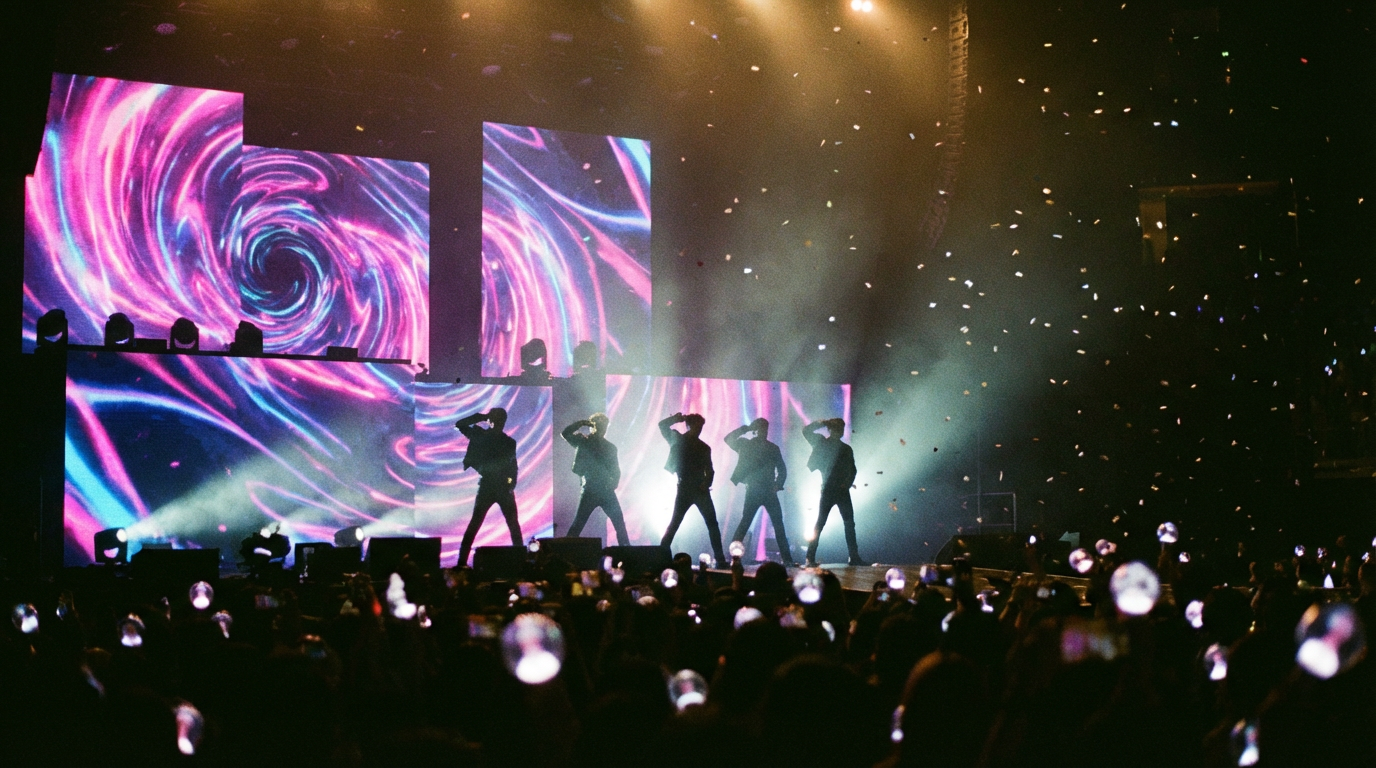
Best AI Music Video Examples for K-Pop
K-Pop has always been the most visually ambitious genre in music. Now, artificial intelligence is rewriting the rules of what a K-Pop music video can look like — and who can make one.
In December 2025, Galaxy Corporation CEO Choi Yong-ho declared that generative AI in K-Pop music videos is now the new normal: “Most music videos will be created by artificial intelligence except for lead singles.”
South Korea was the biggest consumer worldwide of AI-generated video content last year, and a 2025 survey found 70 percent of South Koreans believed AI would have a positive effect on society.
From SM Entertainment releasing a fully AI-generated music video for one of K-Pop’s biggest groups, to entirely virtual idol acts selling out 37,000-seat arenas, to independent creators building their own AI boy bands on TikTok — the examples are everywhere. This page showcases the most notable, instructive, and inspiring AI K-Pop music videos available today, organized by visual style and platform so you can study what works and create your own.
For a step-by-step breakdown of how to create these visuals yourself, read our complete K-Pop AI music video guide. For foundational workflows, start with How to Make an AI Music Video.
Gallery by Style
K-Pop’s visual vocabulary is staggeringly diverse — from neon-drenched cyberpunk to pastel-hued cuteness, from dark cinematic fantasy to hyperreal virtual performance. AI tools are now capable of producing work across all of these styles. Below, we’ve organized the best examples into the key visual categories that define K-Pop music videos in 2026.
1. Virtual Idol Performance — MAVE: “Pandora”
Style: Hyperreal 3D CGI Performance
Tool/Technique: Deep learning, 3D CGI rendering, motion capture
What makes it stand out:
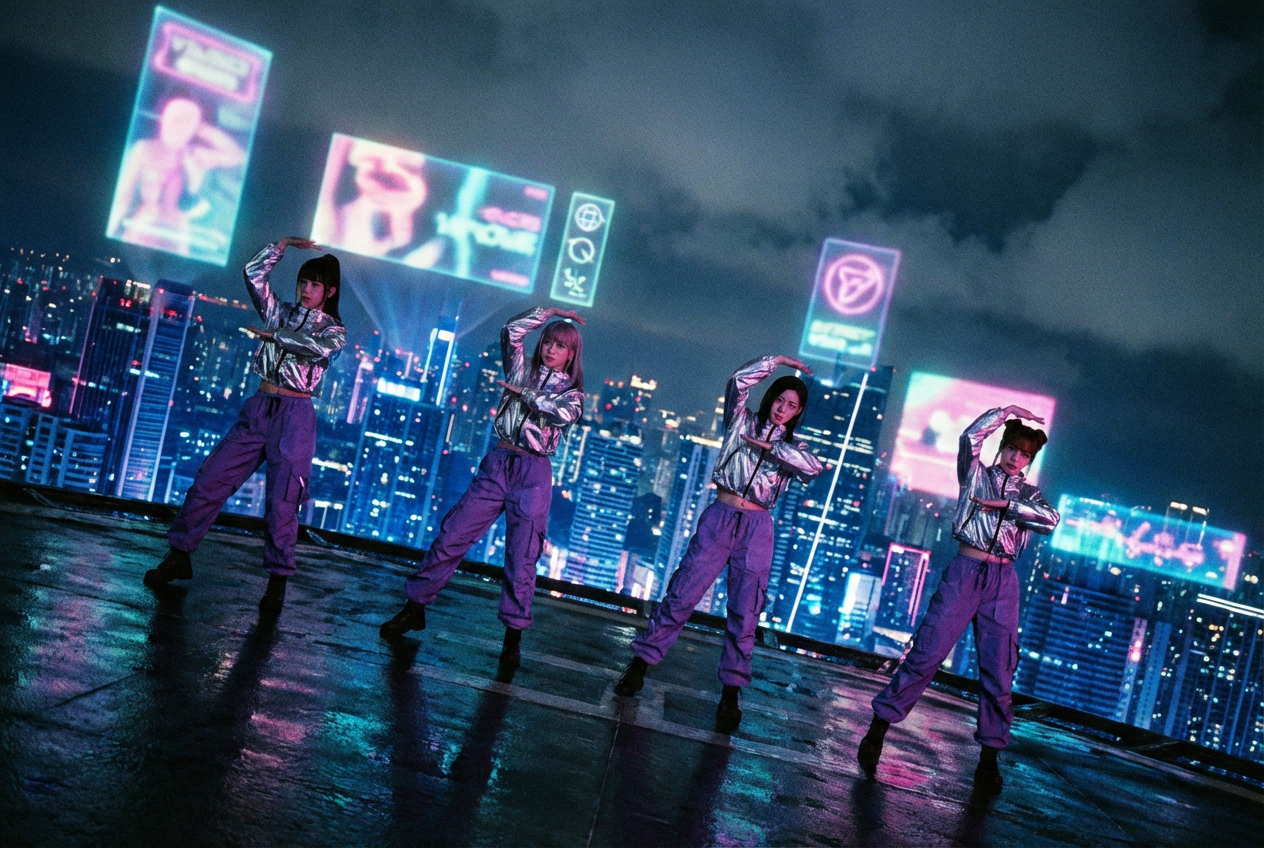
MAVE: is a South Korean virtual girl group formed in 2023 by Metaverse Entertainment, consisting of Siu, Zena, Tyra, and Marty — hyper-realistic, 3D CGI members created using machine learning, deepfake, and 3D production technology.
The “Pandora” music video is a masterclass in what AI-augmented virtual performance can look like at production scale. The video features crisp renderings of each virtual member in solo shots, smooth choreography (likely via motion capture), and fantastical cyberpunk city landscapes. The quartet use their digital existence to their advantage, leaping off buildings, performing stunts with hover-cars, and flitting between worlds with ease.
MAVE:’s debut single “Pandora” accumulated over 50 million views on YouTube, establishing them as frontrunners in the virtual idol space.
The visual blueprint here — hyper-polished 3D characters moving through impossible environments with cinematographic lighting — is now replicable at a fraction of the cost using AI video generation tools.
2. AI-Generated Narrative — aespa “Rich Man (Yellow Claw Remix)”
Style: Fully AI-generated video (no human performers on screen)
Tool/Technique: Google Flow (powered by Veo, Google DeepMind’s AI video technology)
What makes it stand out: This is arguably the most significant — and controversial — example of AI in K-Pop to date.
The music video for Yellow Claw’s remix was produced with Flow, a film production tool powered by Veo, the advanced AI video technology developed by Google DeepMind. The project came to life through a collaboration between SM Entertainment, Studio Realive, YouTube and Google DeepMind.
SM Entertainment released the remix with a music video created entirely by AI. Instead of delivering a cohesive narrative, the video depicted random everyday people — a girl riding a bike, a chef, a sanitation worker, a scientist, a violinist — none of which had any connection to the theme of “Rich Man” or the pulsating remix. Netizens criticized the visuals as awkward, soulless, and poorly executed.
The lesson for creators: This example reveals a critical pitfall. Even with cutting-edge tools from Google DeepMind and a Big 4 label behind it, AI-generated visuals fail when they lack conceptual coherence and emotional resonance. The technology was there — the creative direction wasn’t. When creating your own AI K-Pop music video, concept comes first. The tool is only as good as the vision guiding it.
3. AI Virtual Character — nævis “Done”
Style: Hybrid AI/VFX — multiple visual formats (hyperreal, 3D casual, toon style)
Tool/Technique: AI-synthesized voice (SM Entertainment), generative AI visuals (LG Uplus Ixi-Gen), VFX studios
What makes it stand out:
Naevis is a virtual idol created by SM Entertainment using generative AI. She first appeared in 2020 in universe-building content for K-Pop girl group aespa. Naevis’s role expanded to be independent of the group in 2024 with the release of her first single “Done”.
Naevis’s voice is AI synthesized, while visuals, including music videos and short-form videos, are created in partnership with LG Uplus, utilizing the company’s Ixi-Gen generative AI product.
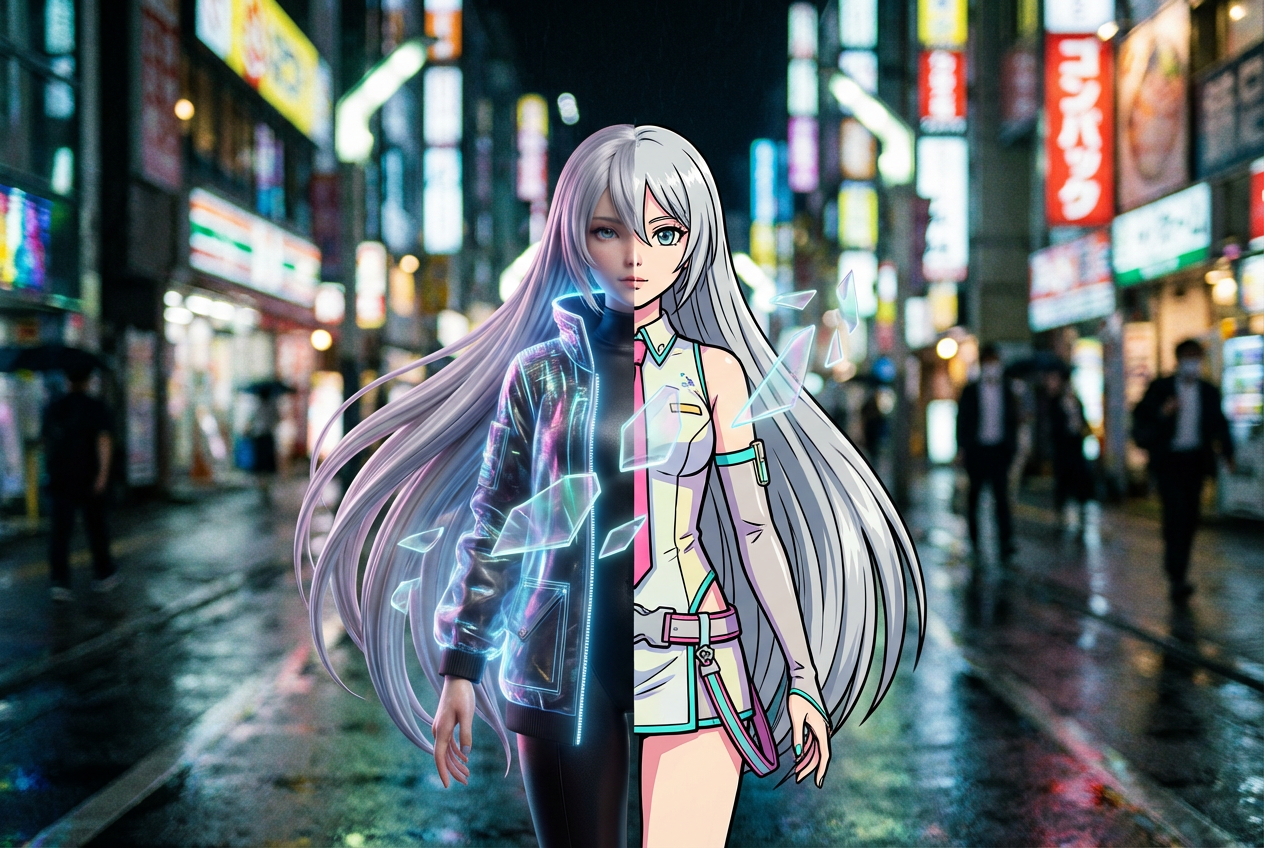
Naevis launched with a full music video for her debut track “Done.” The video shows Naevis dancing in a city at night as she switches back and forth between a cartoon version of herself and her more realistic form, accompanied by members of aespa as her backup dancers.
A variety of visual styles appeared — from “Live Style” to “Hyperreal Style” using 3D tools, “Casual Style,” “Tun Style” in animation form, and “Chibi Style” — drawing significant attention.
The multi-format approach is what makes this example particularly instructive for independent creators. Rather than committing to a single visual style, nævis demonstrates how AI-powered characters can shift fluidly across visual registers — something that would be prohibitively expensive in traditional production but is increasingly achievable with current AI tools.
4. Anime/Webtoon-Inspired — PLAVE Concert Visuals
Style: Anime-styled 3D real-time performance
Tool/Technique: Unreal Engine 5, real-time motion capture, DMX lighting integration
What makes it stand out:
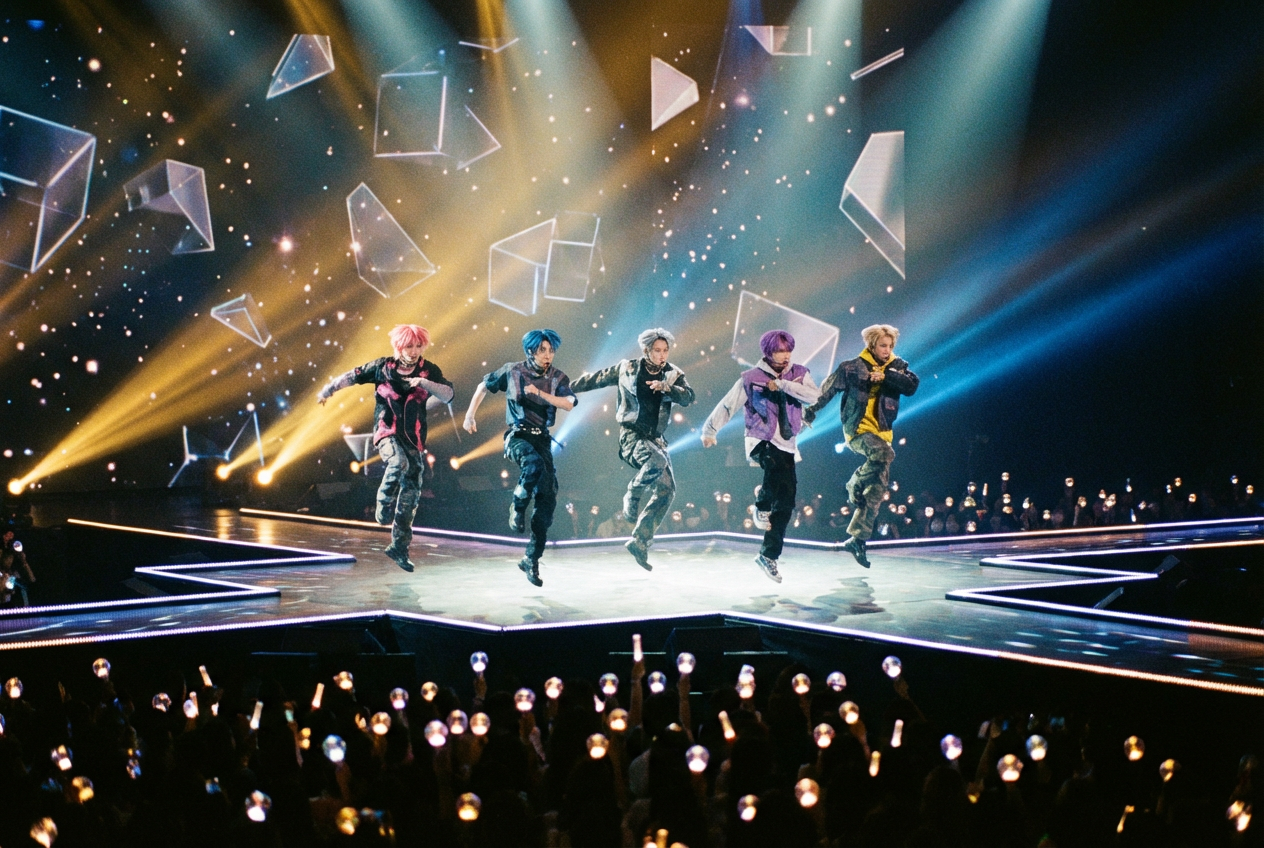
PLAVE, a virtual K-Pop boy band under VLAST, drew 37,000 fans to the Gocheok Sky Dome on November 21-22, 2025, marking a breakthrough moment for the genre’s expanding virtual idol sector.
PLAVE are a K-Pop band with a twist — the bandmembers are digital humans rendered entirely in Unreal Engine.
Making use of 3D modeling and motion capture, PLAVE have established an otherworldly yet tangible presence with their live performances and interactive streams led by webtoon-inspired visuals and story-driven artistry.
Augmented reality projections and hologram-like effects layered onto the stage created visual moments that would be impossible for physical performances. Their music videos feature the same anime-inspired aesthetic — bold linework, exaggerated expressions, fantastical environments — all rendered in real-time with game-engine technology.
Their debut EP sold 1,095,600 copies in its first week, becoming the first virtual-idol release to sell over a million copies — a rare seven-digit milestone even for actual K-Pop boy groups.
For creators inspired by this style: the webtoon-meets-K-Pop aesthetic is now one of the most in-demand visual styles thanks to the cultural tsunami of KPop Demon Hunters. AI tools can generate anime-styled frames and sequences that capture this energy without needing a game engine pipeline.
5. Dark Cinematic / Demon-Hunter Fantasy
Style: Dark, high-contrast cinematic with supernatural/fantasy elements
Tool/Technique: AI video generation (various tools), Midjourney for concept art
What makes it stand out:
The massive cultural impact of KPop Demon Hunters — the most-watched Netflix animated original film of all time and now Netflix’s most popular English-language film ever, with more than 236 million views — has driven a wave of animated and fantastical K-Pop visual styles into the mainstream.
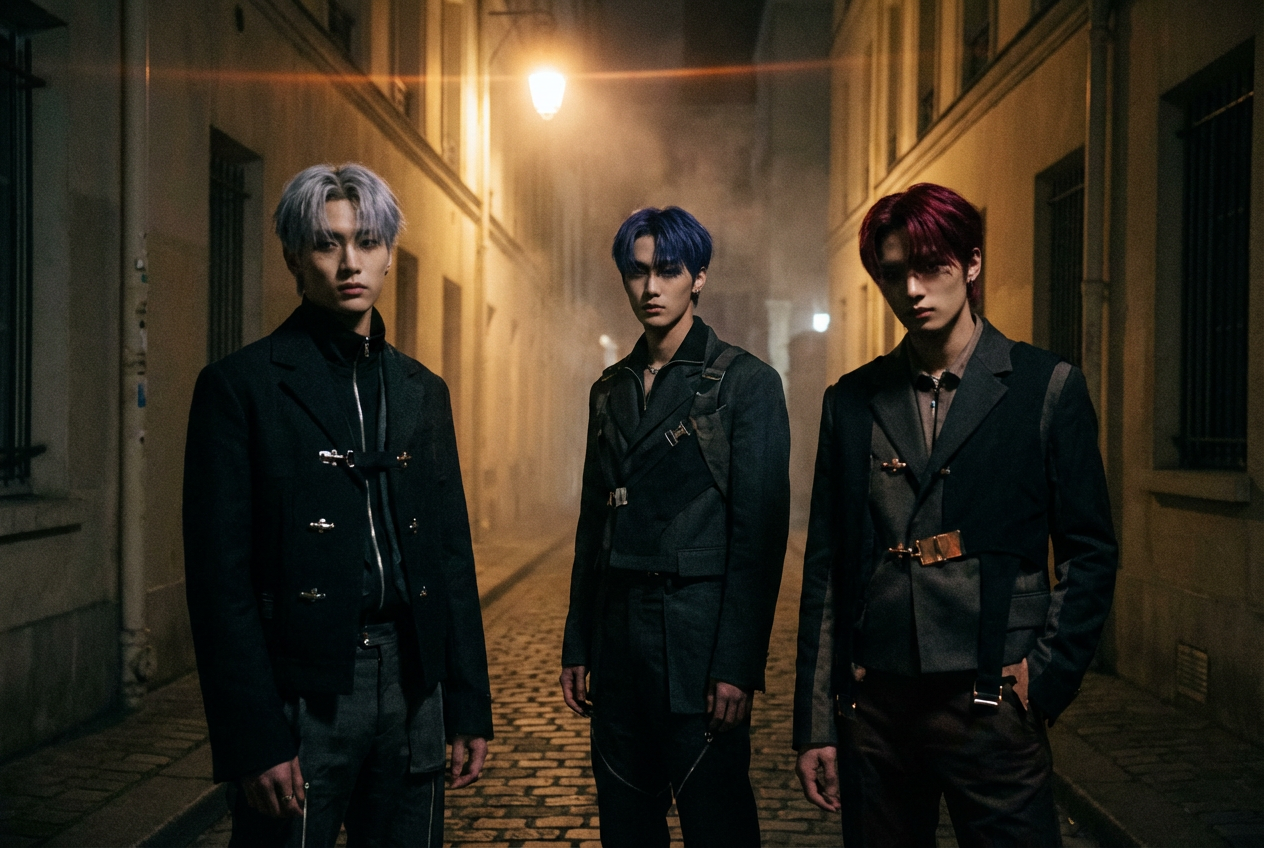
Dark, high-contrast cinematic visuals inspired by ATEEZ “HALAZIA” or demon-hunter-style concepts have appeared across 2025 K-Pop visuals. This visual style — gothic architecture, dramatic chiaroscuro lighting, supernatural VFX, sword-wielding idols — has exploded among indie AI creators who can now generate these production-heavy aesthetics without a VFX team.
The best examples of this style on YouTube and TikTok combine AI-generated environments (dark temples, shadowy forests, burning cityscapes) with beat-synced editing that mirrors the intensity of the music. For independent K-Pop artists working in darker concepts, this is the style where AI tools arguably deliver the most value, because traditional production of these environments would cost tens of thousands of dollars.
Want to see how dark cinematic styles translate across genres? Check out our AI Music Video Examples: Metal and AI Music Video Examples: Rock galleries.
6. Fully AI-Generated Idol Group — GLXE
Style: AI-generated visuals and AI-generated music
Tool/Technique: Suno (music), Veo3 (video), AI image generation
What makes it stand out:
GLXE (pronounced “galaxy”) debuted in December 2025 as a K-Pop trio — three male singers who appeared on TikTok, ready-packaged with epic musical build-ups and cinematic punches. It only takes a moment to realize GLXE are generative AI, albeit impressively rendered. Their voices and songs are also entirely AI, made with Suno.
GLXE follow the K-Pop playbook to a tee: a fandom name (Stars), dance challenges, several albums in quick succession, listening parties, and livestreams. Their fandom, which is small yet growing, do not care about the criticism of AI in K-Pop.
For the creator behind GLXE, AI software like Veo3 and Suno are tools of democratization, allowing him to enter an industry which is otherwise near-impossible to crack.
This is the purest example of a solo creator building a full K-Pop visual universe from scratch using only AI tools. The visuals are cinematic, the music is polished, and the content cadence matches what fans expect from a K-Pop group. Whether you view it as the future or a cautionary tale, it’s an undeniably instructive case study in what one person can build.
7. Beat-Synced Visualizer / Performance Hybrid
Style: Audio-reactive visual effects synced to beat drops
Tool/Technique: OneMoreShot.ai, Freebeat, or similar audio-reactive generators
What makes it stand out:
Fast-cut, rhythm-first editing like Stray Kids “MANIAC” or NCT 127 “Kick It,” where visuals hit every beat drop
— this is the visual language of K-Pop performance videos, and it’s the style most naturally suited to AI music video tools.
The best AI K-Pop visualizers don’t just layer generic effects over a waveform. They analyze the track’s BPM, identify beat drops and vocal breaks, and trigger scene transitions, camera movements, and visual effects in perfect sync. The result feels like watching a music show performance — rapid cuts between close-ups, formation shots, and explosive visual moments — all generated automatically from your audio file.
This is the style where platforms like OneMoreShot.ai truly shine for K-Pop creators. The audio-reactive editing automatically syncs visual cuts to your beat drops, matching K-Pop’s signature rhythmic editing style — no manual keyframing required.
For similar examples in other genres, browse our AI Music Video Examples: EDM and AI Music Video Examples: Pop galleries.
8. Retro / Concept-Based Visual Story
Style: Single-theme concept video (cyberpunk, retro, fantasy, Y2K)
Tool/Technique: AI image-to-video pipelines, style-locked generation
What makes it stand out:
Concept-based K-Pop AI videos include single-theme visuals such as cyberpunk (EXO “Obsession”), retro (NewJeans “Attention”), or fantasy-driven K-Pop MVs.
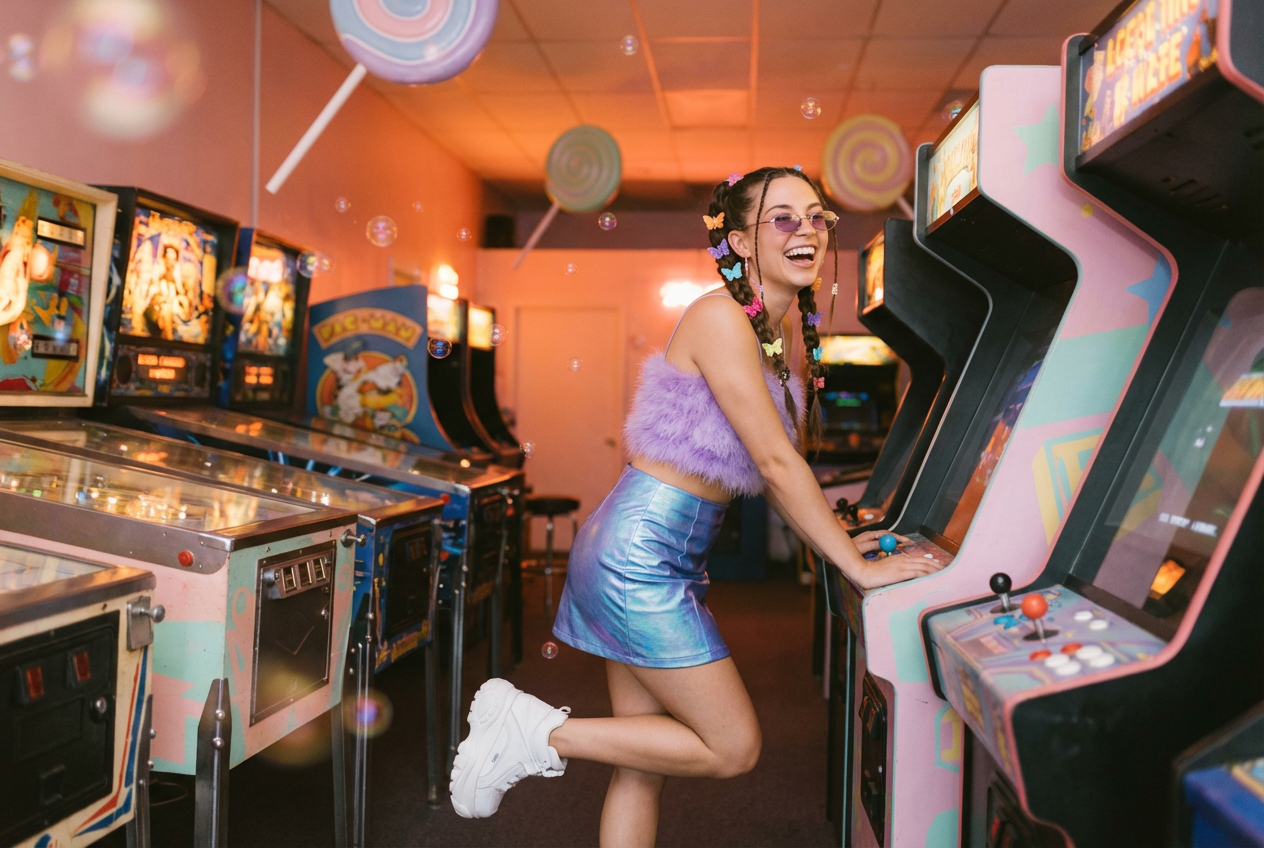
K-Pop’s concept culture — where an entire comeback revolves around a unified aesthetic — is perfectly suited to AI generation. You can prompt a consistent style across dozens of scenes, maintaining the visual coherence that K-Pop fans expect. The best examples lock into a single visual world — a Y2K arcade, a vaporwave dreamscape, a traditional hanbok-meets-futurism mashup — and sustain it from first frame to last.
For indie creators, this is arguably the smartest style to start with: pick one bold concept, craft your prompts around it, and let the AI maintain consistency across your entire video. For a K-Pop-specific template to get started, visit our K-Pop AI Music Video Template.
Gallery by Platform
K-Pop content lives differently across YouTube, TikTok, and Instagram. Here’s how the visual styles above perform on each platform — and what format decisions to make when creating your AI K-Pop music video.
YouTube (16:9, Full-Length MVs)
YouTube remains K-Pop’s flagship platform. YouTube reached 29 billion videos as of December 2025, with music videos alone accounting for 33% of all YouTube viewing time.
Best-performing AI styles on YouTube:
- Full-length narrative and concept videos (3-5 minutes) — the nævis “Done” and aespa “Rich Man (Yellow Claw Remix)” approach
- Virtual idol performance videos — PLAVE and MAVE: style polished 3D content
- Lyric videos with AI-generated backgrounds — lower production barrier, strong engagement for B-sides and remixes
Format tip: K-Pop fans expect multiple versions. Create a main MV, then a “performance version” or “visual version” using different AI style presets on the same audio. This mirrors the multi-version release strategy used by every major K-Pop label.
TikTok (9:16, 15-60 seconds)
K-Pop thrives on TikTok through dance challenges and visual trends. Formats like “pass-the-dance,” reaction chains, and visual-only challenges dominated YouTube Shorts. No translation needed — just rhythm, emotion, or absurdity — creating global virality without localization budgets.
Best-performing AI styles on TikTok:
- Beat-synced visualizers — 15-30 second clips timed to chorus hooks
- AI dance videos — AI-generated characters performing choreography
- Dark cinematic teasers — dramatic, atmospheric clips that tease a full release
- GLXE-style fully AI content — full AI idol personas releasing directly to TikTok
Format tip: Extract the 15-second chorus hook with the most visually explosive AI frames. TikTok’s algorithm rewards the first three seconds — open with your most striking visual.
Instagram Reels (9:16, aesthetic-driven)
Instagram rewards visual polish and aesthetic cohesion over raw energy.
Best-performing AI styles on Instagram:
- Concept teasers — single-style aesthetic loops (retro, cyberpunk, ethereal)
- AI photocard-style reveals — static AI-generated idol images with subtle motion
- Behind-the-scenes style content — “making of” content showing your AI workflow
Format tip: Instagram’s audience responds to visual consistency. Choose one color palette and one AI visual style per post. Think of each Reel as a single frame from your larger concept universe.
Common Techniques Behind the Best Examples
After analyzing dozens of AI K-Pop music videos across labels, virtual idol companies, and independent creators, these patterns emerge consistently in the work that resonates:
1. Concept-First Prompting
Every successful K-Pop AI video starts with a concept, not a tool. Before you open any AI tool, you need to understand what makes a K-Pop music video look like a K-Pop music video. The genre has a visual grammar all its own — one refined over decades by directors like Lumpens, GDW, and Shin Hee-won. The best creators write a full concept brief before generating a single frame.
2. Beat-Synchronized Editing
K-Pop editing is fast. Cuts land on beats, formations shift on downbeats, and camera moves mirror the energy of the dance. This rhythmic editing is critical to replicate when creating a K-Pop AI music video. The strongest examples — whether from labels or independents — never let visuals drift from the rhythm.
3. Multi-Tool Pipelines
Oh Jaewon, who founded his AI-based VFX studio Oloid in 2025, believes AI is simply another tool in an artist’s arsenal. The most impressive work typically combines multiple tools: Midjourney or DALL-E for concept art and reference frames, AI video generators for motion, and traditional editing software for final assembly. Even the aespa “Rich Man” remix combined Google’s Flow/Veo with human creative direction from Studio Realive.
4. Style Consistency Across Scenes
K-Pop fans have an extraordinarily high bar for visual coherence. K-Pop’s visual demands are extreme: saturated colors, rapid transitions, character consistency, and cinematic production quality. The best AI K-Pop videos use style-locking techniques — consistent color grading, character reference images, and scene-to-scene continuity prompts — to maintain the polished, unified look that the genre demands.
5. Cultural Authenticity
K-Pop’s visual identity is rooted in Korean culture, fashion, design philosophy, and storytelling traditions. One key aspect of K-Pop design is the incorporation of traditional Korean cultural elements. The most effective AI K-Pop visuals don’t just replicate surface aesthetics — they weave in hanbok-inspired silhouettes, hanji textures, Korean architectural motifs, and the genre’s signature color theory.
6. Platform-Specific Output
The smartest creators generate multiple cuts from the same source material. One AI session can produce a 3:30 YouTube MV, three 15-second TikTok hooks, and five aesthetic Instagram Reels. This mirrors how K-Pop labels release multiple versions of every comeback and maximizes the value of your AI generation investment.
For a deeper dive into these techniques applied across all genres, explore The Complete Guide to AI Music Videos in 2026.
Create Your Own K-Pop AI Music Video
Every example on this page — from SM Entertainment’s label-backed productions to GLXE’s one-person AI boy band — proves that the visual bar for K-Pop music videos is evolving rapidly. The gap between what major labels produce and what independent creators can achieve with AI tools is shrinking with every model update.
Here’s the truth: you don’t need SM Entertainment’s budget, Google DeepMind’s technology, or an Unreal Engine pipeline to create a K-Pop music video that looks genuinely impressive. You need a clear concept, a great track, and the right tool.
OneMoreShot.ai is built for exactly this workflow. Upload your K-Pop track, choose your visual style — whether that’s dark cinematic, retro concept, neon performance, or anime-inspired fantasy — and the platform generates a fully synced music video in minutes. The audio-reactive engine analyzes your beat structure and creates visual cuts that hit on every drop, matching the rhythmic precision that K-Pop demands.
Ready to start?
- 🎬 Create your K-Pop AI music video now →
- 📖 Read the full K-Pop creation guide →
- 🎨 Browse K-Pop video templates →
Explore more genre-specific examples and inspiration across our gallery:
- AI Music Video Examples: Pop — for crossover aesthetics
- AI Music Video Examples: Hip-Hop — for harder-edged concepts
- AI Music Video Examples: R&B — for smoother, vocal-driven visuals
- AI Music Video Examples: EDM — for festival-ready energy
The K-Pop visual revolution is here. The only question is whether you’ll watch it happen — or be part of creating it.