AI Slop Now Floods Half of All Music Uploads
The numbers dropped this week and they’re staggering: Deezer is now receiving almost 75,000 AI-generated tracks per day, representing roughly 44% of daily uploads — amounting to more than 2 million AI-generated tracks uploaded per month. One day later, Apple Music VP Oliver Schusser confirmed on Billboard’s ‘On The Record’ podcast that “more than a third of what we get today is actually what we would say is music that’s 100% AI.”
Let that sink in. Nearly half of everything uploaded to streaming platforms today was made by a machine. Not assisted by AI. Not enhanced by AI. Fully, completely, 100% generated by AI.
And here’s the twist that makes this story more fascinating than scary: almost nobody is listening to any of it.
The Great Paradox: 44% of Uploads, Less Than 1% of Streams
This is the stat that every musician should tattoo on their forearm: consumption of AI-generated music on Deezer is still very low, between 1-3% of the total streams, and a majority (85%) of these streams are detected as fraudulent and demonetized.
Apple Music tells a nearly identical story. Schusser added that “the reality is that the usage of the AI music on Apple Music is really tiny” — below 0.5% of usage, and “much lower than that.”
So what’s actually happening? It’s not that AI is replacing human musicians in listeners’ ears. It’s that fraudsters are using AI as a tool to game the royalty system at industrial scale. AI music uploads surged 650% on Deezer while fraudsters exploit streaming royalties. The attackers aren’t trying to make great art — they’re printing synthetic tracks like counterfeit money and hoping nobody notices.
The good news? Listeners do notice. Or rather, they don’t notice the AI music at all — because they’re not clicking on it, not saving it, not adding it to playlists. The humans are ignoring the bots. There’s something weirdly hopeful about that.
The Anatomy of an AI Music Scam
To understand why this matters to you as a musician, you need to understand how the fraud actually works.
AI has flipped the paradigm. Fraudsters use AI song generators to flood streaming platforms with millions of fake songs and stream each one just a few thousand times — just enough to fly under detection thresholds. The case of North Carolina musician Michael Smith is emblematic: Smith allegedly extracted more than $10 million in royalty payments by uploading hundreds of thousands of AI-generated songs and using bots to play each one a smaller number of times.
On March 19, 2026, Smith pleaded guilty to wire fraud. Prosecutors said his bots generated billions of fake plays and earned $8 million. He’s facing up to five years in prison and has agreed to forfeit the money.
But here’s the systemic problem: Beatdapp’s co-CEO Morgan Hayduk estimates that “every point of market share is worth a couple hundred million dollars today,” meaning “we’re talking about a billion dollars minimum” being taken out of the finite royalty pool.
This is a zero-sum game. Every dollar that goes to a bot farm is a dollar that doesn’t reach the indie artist who spent six months crafting their EP. And when a CISAC and PMP Strategy study warns that nearly 25% of creators’ revenues are at risk by 2028, amounting to as much as €4 billion , this isn’t a future threat — it’s happening right now.

How Every Major Platform Is Fighting Back
The streaming platforms are not sitting this one out. Each has deployed a different strategy, and understanding the differences matters if you’re distributing music.
Deezer: The AI Watchdog
Deezer has been the loudest voice in this fight. Deezer’s AI detection tool has been in place since the beginning of 2025, and in June they became the first (and so far only) music streaming platform to explicitly tag AI-generated music. Over 13.4 million AI-tracks were detected and tagged on Deezer in 2025.
Their approach is brutal but effective: the detection tool targets content from generators like Suno and Udio, with increased generalizability to detect AI content without specific training data. Deezer is now licensing this tech to the wider music industry.
Songs detected as AI-generated get the full treatment: removed from algorithmic recommendations, excluded from editorial playlists, and demonetized if the streams appear fraudulent.
Apple Music: Trust but Verify
Apple’s approach is two-pronged. Apple mandates content providers to flag AI-generated material at delivery, placing responsibility on labels and distributors. Schusser acknowledged that many may not fully understand the extent of AI in their catalogs. Internal detection tools give Apple a second layer of oversight — the company can analyze submissions to identify AI usage.
On fraud specifically, Apple is showing teeth. Apple Music identified and demonetized approximately two billion fraudulent streams throughout 2025.
Schusser noted that “the good news is our fraud penalty works incredibly well. We’ve seen a 60% reduction sort of over time in fraud, just because of the penalty.”
Spotify: Artist Profile Protection
Spotify’s response is arguably the most artist-friendly. Spotify confirmed Artist Profile Protection’s beta in March 2026, enabling artists and their teams “to review and approve or decline releases delivered to Spotify from most providers.”
The system works like a bouncer for your profile. Each artist gets a unique “artist key” — a code they can share with trusted distributors to enable automatic approval at delivery. Without that key, nothing lands on your profile without your explicit say-so.
This came after Sony Music requested the removal of over 135,000 AI-generated songs impersonating its artists , and the increasingly brazen practice of scammers uploading AI versions of songs to real artists’ pages. “Music has been landing on the wrong artist pages across streaming services, and the rise of easy-to-produce AI tracks has made the problem worse,” Spotify wrote.
What This Means for Independent Musicians
If you’re an indie musician reading this, here’s the honest truth: the AI slop problem is real, but it’s not the existential threat you might think. The data tells a story of fraud, not replacement.
Nobody is losing fans to AI-generated music. Deezer’s survey revealed that 97% of people couldn’t hear the differences between AI and human-made music, but 80% agree that 100% AI-generated music should be clearly labeled. People don’t want AI music — they want human artists. The problem is purely economic: bots streaming bot music to steal from a shared royalty pool.
Here’s what you should actually do about it:
1. Enable Every Protection Available
If you’re on Spotify, opt into Artist Profile Protection immediately. Share your artist key with your distributor and no one else. While Artist Profile Protection doesn’t remove AI-generated music from the platform altogether, it tightens the screws on the approval process and is a step towards preventing AI fraud.
2. Invest in Visuals That AI Can’t Fake
Here’s where the opportunity hides inside the crisis. While AI floods the audio side of streaming, the visual side of music is where human creativity still has an overwhelming advantage — and where fans actually engage.
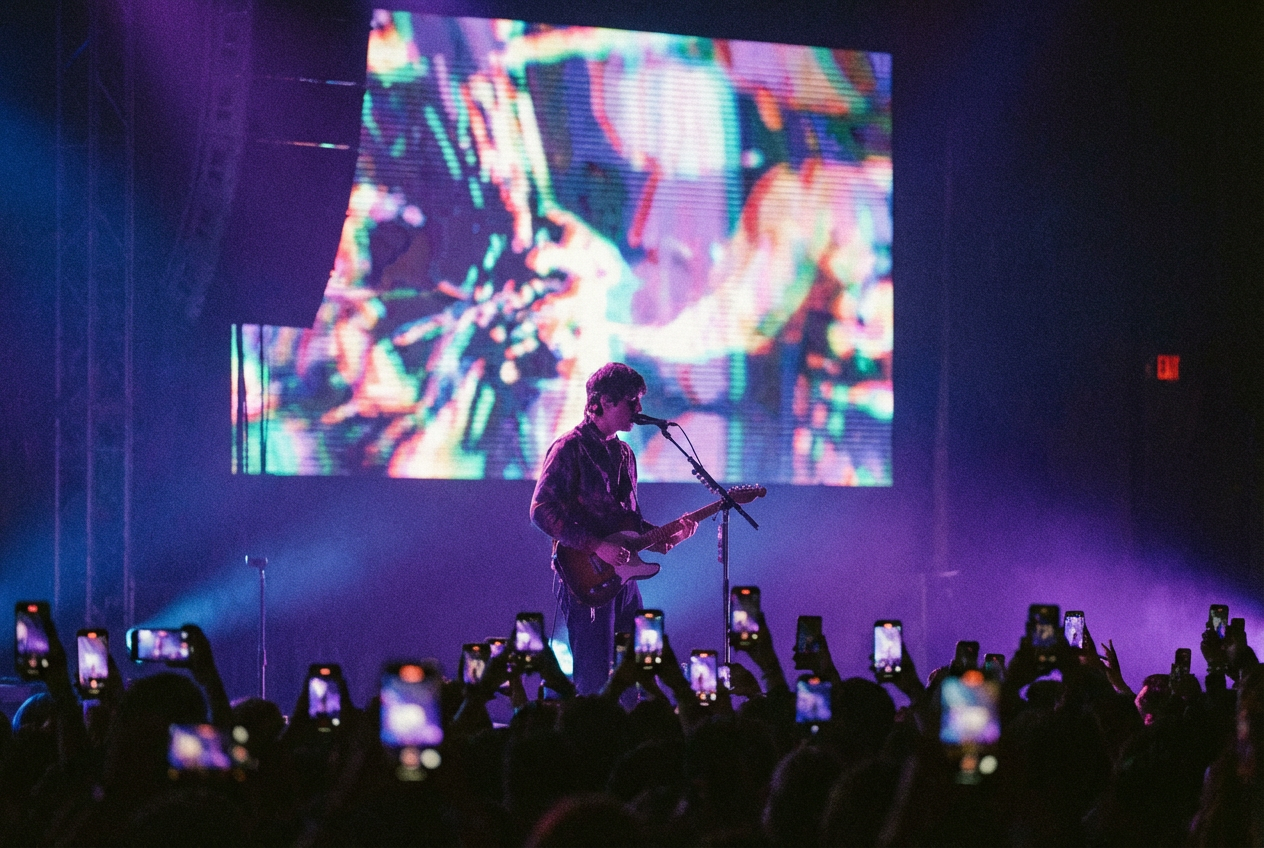
A musician with a compelling music video stands out from the sea of faceless AI-generated tracks in a way that no playlist algorithm can ignore. Music videos drive discovery, build emotional connections, and create the kind of parasocial relationship that turns a casual listener into a superfan.
The irony? AI is actually your best friend here — not as a replacement for your music, but as a tool for creating visuals. Tools like OneMoreShot.ai let you generate stunning, genre-specific music videos that give your very human music the visual presence it deserves. Whether you’re making hip-hop visuals, EDM content, or indie aesthetic videos, you can create something that makes your release feel like an event — not just another track lost in the flood.
3. Think Beyond Streaming Numbers
Every time a song’s play count is manipulated, it skews a platform’s recommendation algorithm and makes it more difficult for real artists to get their music heard. This is the real damage — not lost pennies per stream, but lost discovery.
The antidote is building your audience on channels that bots can’t game as easily. Music videos on YouTube. Visual content on TikTok and Instagram. Direct fan relationships through email lists and communities. If you’re following a complete strategy for AI music videos, you’re building an asset that no amount of streaming fraud can dilute.
The Bigger Picture: AI as a Tool, Not a Threat
A majority of music production survey respondents (58%) see the eventual role of AI in music production as primarily a supportive one — where human producers and musicians retain firm control of the creative reins, but assistive AI tools help them realize their vision faster and more effectively.
That’s the healthy version of AI in music. The streaming slop crisis is the unhealthy version — and it’s a solvable problem. Detection tools are getting better. Legal precedents are being set. Platforms are investing in protections.
As one industry observer put it: trying to stop AI in music is like trying to stop streaming in 2008 — it’s not happening. The real question is whether the industry can price it correctly.
For musicians, the path forward is clear: use AI as a creative tool while the platforms handle the fraud problem. Make your music human. Make your visuals unforgettable. Make your fan relationships direct and authentic.
The bots can flood the upload queue all they want. 52% of people say AI-generated songs shouldn’t be included in charts alongside human-made songs, and 80% want them clearly labeled. The audience has already made their choice. They want you.
Make Your Music Visible in the Noise
In a world where half of new uploads are synthetic noise, the musicians who win are the ones who give fans something to see — not just hear. A compelling music video isn’t a luxury anymore. It’s your proof of humanity.
If you’re ready to create visuals that cut through the AI slop and make your music impossible to ignore, try OneMoreShot.ai. Turn your tracks into stunning music videos in minutes — across every genre from pop to R&B to rock — and give your fans something worth clicking on.
Because in the age of AI slop, the most powerful thing you can be is undeniably real.