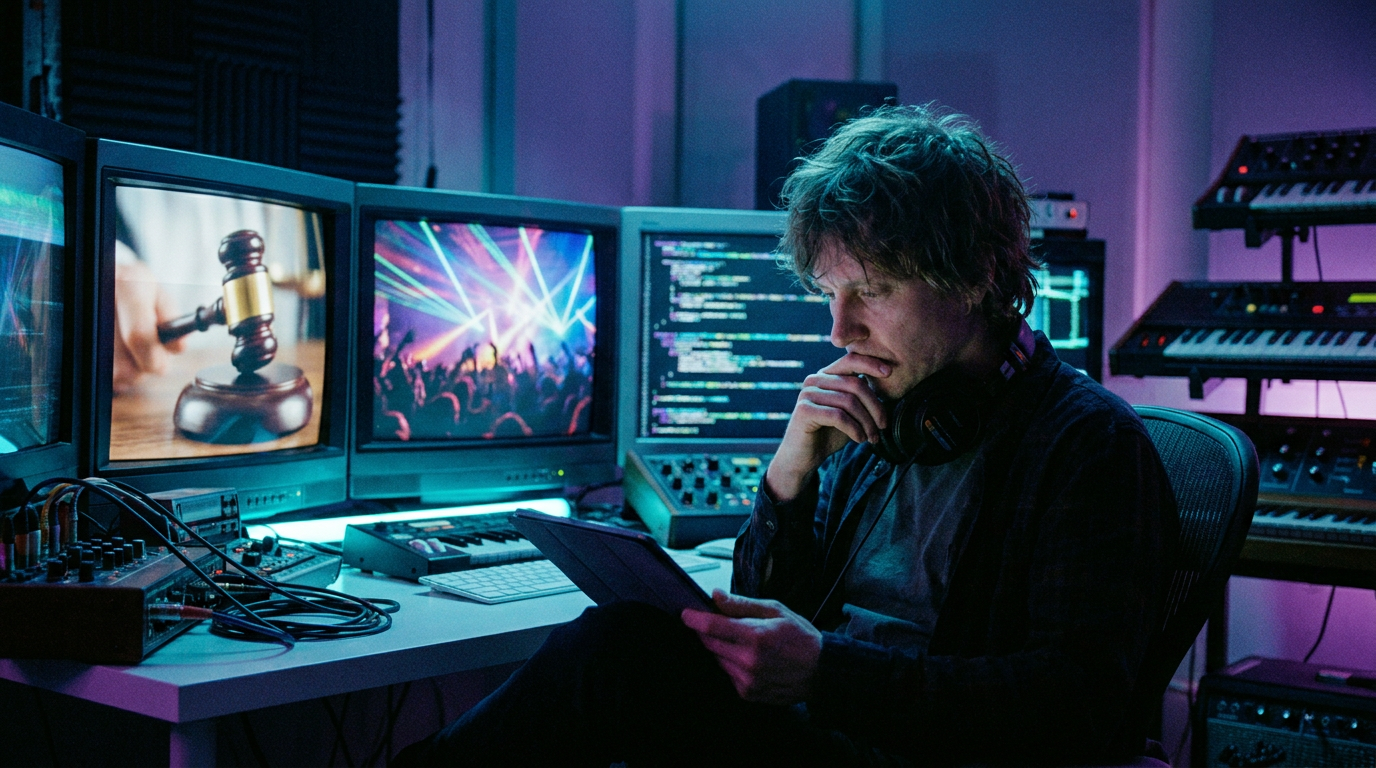
AI Video's Biggest Week and What Musicians Missed
Something wild happened over the last two weeks. While most musicians were focused on summer releases and tour prep, three seismic events collided in the AI music video world — and the fallout is going to reshape how every independent artist thinks about visual content for the rest of 2026.
Let me break it down.
ByteDance dropped Seedance 2.5, the first AI video model that generates 30 seconds of continuous, unstitched footage in a single pass. SZA went nuclear on Instagram after discovering 238 of her songs in AI training datasets. And a federal judge just denied Sony Music’s attempt to add 30,000 recordings to its copyright case against Udio — a ruling that Suno immediately weaponized in its own defense.
Three stories. One week. And a message so loud that ignoring it would be artistic malpractice.
Seedance 2.5: The 30-Second Barrier Falls
Let’s start with the tech, because it’s genuinely stunning.
ByteDance’s Seedance 2.5 entered its public launch window on July 3, 2026, claiming a technical milestone that no competing AI video tool has matched: generating a continuous, unbroken 30-second video clip in a single pass, with no segment stitching, no scene-cut splicing, and no visible seams.
If you’ve been making AI music videos — or even thinking about it — you know why this matters. The 15-to-20-second generation ceiling has been the defining constraint of AI video for the past two years. Every model hits it. Every workflow has to work around it. The workaround — generating multiple clips and stitching them together — introduces a cascade of quality problems.
At 15 seconds, you can establish a mood. At 30 seconds, you can tell a story — setup, development, payoff — in a single continuous shot. Camera movements can be more ambitious. Scene compositions can be more complex. The generation length finally matches the content formats that creators actually want to produce.
The version numbering is deliberate. ByteDance skipped 2.1 through 2.4 entirely, jumping from Seedance 2.0 to 2.5 to signal a generational change rather than a point release. Seedance 2.0 could generate clips of up to 15 seconds natively.
But the clip length is only part of the story. Seedance 2.5 accepts up to 50 reference materials simultaneously — images, audio clips, 3D models, style references — and the model incorporates all of them. That level of control moves it from “creative toy” to “production tool.”
For musicians, the implications are immediate. If you’re building a music video, you can now feed the model your album artwork, a reference photo of yourself, a mood board, an audio file for timing, and a dozen style references — all in one generation call. The character consistency problem that has plagued AI music videos? Character identity, lighting logic, and physics remain stable throughout because the entire output comes from one generation call.
What About the Copyright Cloud?
Here’s where it gets complicated — and where most musicians stop reading. Don’t.
Seedance 2.5 enters a market where its predecessor left behind a trail of unresolved copyright cease-and-desist letters from every major Hollywood studio.
The announcement arrives four months after ByteDance voluntarily paused the global rollout of Seedance 2.0 following cease-and-desist letters from every major Hollywood studio over alleged copyright infringement.
U.S. availability carries an additional uncertainty. The copyright disputes that delayed Seedance 2.0’s global rollout have not been resolved, and multiple sources have noted that a confirmed U.S. launch date for Seedance 2.5 does not exist.
So here’s the paradox: the most technically impressive AI video generator ever built is launching under a copyright storm. And it’s launching into a music industry that’s simultaneously having the most heated copyright debate in its history.
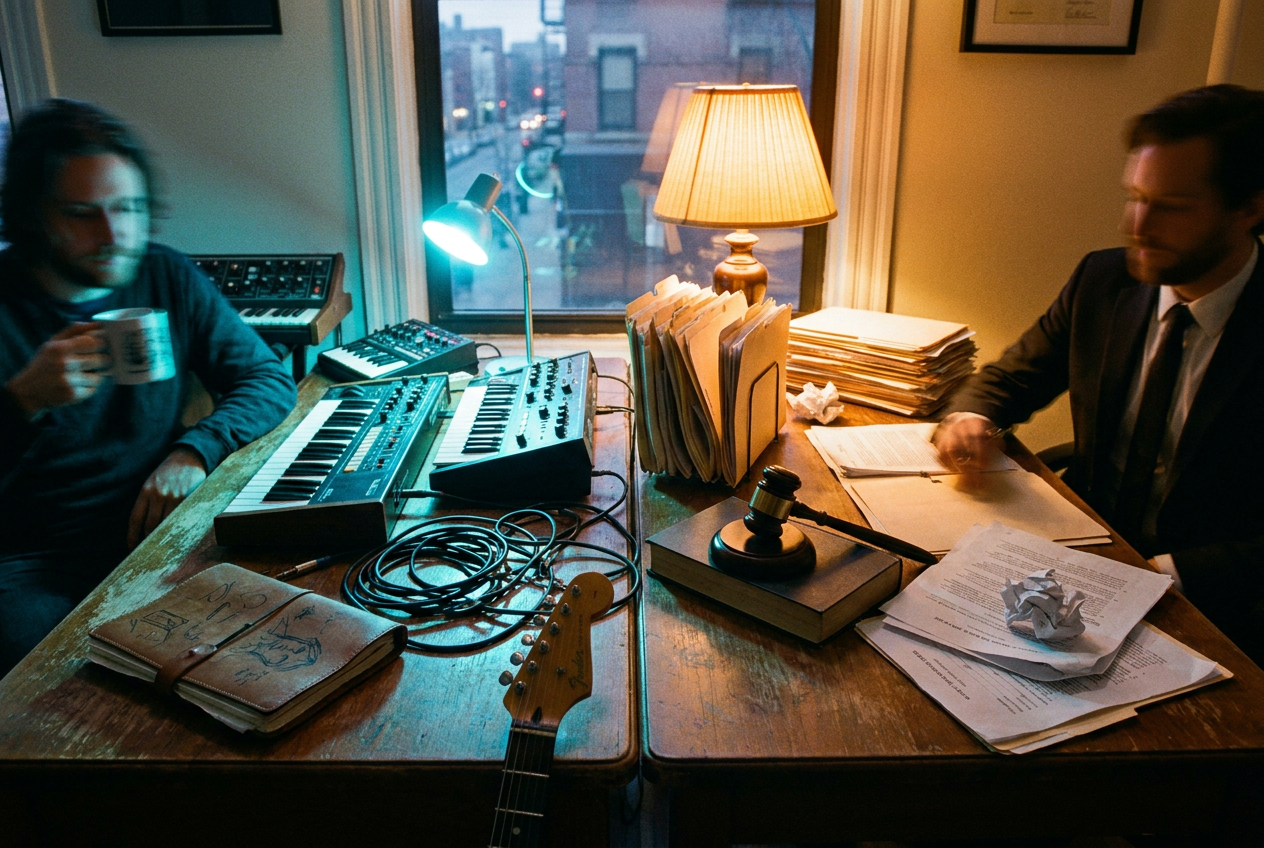
SZA Just Made AI Copyright Personal
While Seedance 2.5 was rolling out, SZA was doing something far more impactful than any tech launch: she was making the AI copyright fight personal.
SZA searched her name using the AI Watchdog database. The tool returned 238 entries associated with her catalog across four music datasets that have circulated among AI developers. Importantly, the database identifies songs appearing in those datasets — it does not by itself establish which specific AI company trained on every listed recording. But the findings intensified scrutiny of AI music companies already facing copyright lawsuits, and SZA specifically noted that some of those tracks were unreleased.
She didn’t stop there. On a private account, SZA alleged that Diplo has financial ties to Suno and has encouraged training its models on music from Black artists. Diplo has not publicly confirmed those claims; reporting from the Wall Street Journal has linked him to investment in a separate AI music startup.
SZA framed it clearly: “I’m not up against the pop girls, I’m not up against the R&B girls. I’m up against anti-intellectualism and doing things easy.”
The debate is splitting the industry. Jack Antonoff last month called those who’ve made music with AI “godless whores,” while producers like Will.i.am and Timbaland have invested in AI companies.
Here’s why this matters for music video creators specifically: The 238 number is striking, but it isn’t really the point. The point is that SZA checked — and now every artist with a search bar and an internet connection can do the same thing. Independent artists have already launched separate class actions, and the database gives those suits something they lacked: searchable, verifiable evidence that specific works appeared in specific training sets.
The AI music generation fight and the AI video generation fight are different animals — but they’re merging in the public consciousness. And that matters for anyone using AI music video tools to promote their work.
The Court Ruling Nobody Expected
As if the SZA firestorm wasn’t enough, the legal landscape shifted dramatically in the same week.
Suno asked a federal court to reject a bid by Universal Music Group and Sony Music Entertainment to add 61,026 recordings to their copyright infringement lawsuit against the AI music company. The request follows a decision last week in which a New York judge denied Sony Music’s attempt to add more than 30,000 recordings to the same labels’ parallel case against Suno’s rival, Udio.
Judge Hellerstein wrote: “Adding more than 30,000 works near the close of document discovery would require substantial additional production and review, generate further disputes, and materially alter the scope of the case before me.”
This might sound like a procedural technicality. It isn’t. It means Sony Music’s legal battle against Udio will proceed with around 300 works at issue, rather than the full scope of alleged infringement. That’s a dramatically different case.
And the bigger domino is still falling. Sony’s summary judgment hearing is scheduled for July 2026. The July hearing will produce the most consequential decision in the history of AI and music copyright.
If Sony wins, the court rules that training generative AI on copyrighted recordings without a license is infringement, not transformative use. Every AI music company will face the same choice: license the catalog, rebuild on opt-in or public domain training data, or shut down. The labels gain massive leverage. If Suno wins, the court rules that training is transformative and protected as fair use. The labels’ legal leverage collapses.
What This Means for Music Video Creators Right Now
Here’s the thing nobody’s saying clearly enough: the copyright fight is about AI music generation, not AI video generation for music. These are fundamentally different tools with different legal exposures.
When you use a tool like OneMoreShot.ai to create a music video from your own track, you’re providing the copyrighted music. You own it (or have rights to it). The AI is generating visuals to accompany your music — it’s not trained on your catalog, and it’s not reproducing anyone’s recordings.
The legal drama around Suno and Udio centers on whether those platforms illegally trained on copyrighted music without permission. That’s a completely separate question from whether you can use AI to generate visuals for your own songs.
This distinction matters more than ever because the public conversation — supercharged by SZA’s posts — is lumping everything “AI + music” into one bucket. Don’t let the noise stop you from using perfectly legitimate tools to compete.
The Practical Playbook
Here’s what smart musicians should be doing right now:
1. Separate your AI tools mentally. AI music generation (Suno, Udio) is the legally contested space. AI video generation for music (which you control the music for) is a different category entirely. If you’re making visuals for your own songs, you’re on solid ground regardless of how the Suno case shakes out.
2. Document your workflow. A trusted creator can explain why the song exists, who it is for, what inspired the lyrics, how the first draft changed, what parts were rejected, what edits were made, what tools were used, and how the final release supports a larger creative goal. Whether you’re using AI for hip-hop visuals, R&B aesthetics, or indie vibes, keep records of your creative decisions.
3. Watch the Seedance 2.5 rollout. ByteDance has targeted “early July 2026” for the rollout. The expected sequence is: ByteDance’s own consumer platforms first; CapCut in mid-July; and third-party API access through Volcano Engine in late July. When it hits CapCut, that puts 30-second AI video generation in front of 400 million monthly active users. The creative bar for music video content on TikTok and Instagram is about to jump.
4. Use the current window. While the market digests Seedance 2.5 and the legal drama plays out, there’s a genuine opportunity for musicians who are already making AI music videos to stand out. Check out our guides for pop, EDM, or lo-fi — whatever fits your sound. The artists who figure out AI visuals now will have a significant advantage when these tools become mainstream.
The Bigger Picture: Everything Is Moving at Once
That was just the beginning of a massively busy first half of 2026 in AI music. Six months is supposed to be a modest unit of time. Not when it comes to AI music. Nothing sat still long enough to be called settled. It just got bigger, faster, and harder to look away from.
Consider what’s happening simultaneously:
-
Seedance 2.5 breaks the 30-second video barrier
-
Veo 3.1 remains the safest all-around pick for cinematic output, combining strong realism, good motion, and native audio at per-second pricing of Standard $0.40, Fast $0.15, Lite $0.05
-
Sora 2 is officially deprecated — OpenAI deprecated the Sora product on April 26, 2026, with models and API scheduled to shut down on September 24, 2026
-
SZA’s broadside has turned AI copyright into a mainstream cultural conversation
-
Sony v. Suno heads toward the most important fair-use ruling in music history
EU AI Act Article 50 enforcement begins August 2, 2026, requiring machine-readable marking on all AI-generated video distributed to EU audiences, with penalties up to €15M or 3% of worldwide annual turnover

If you’re an independent musician looking at all this and feeling overwhelmed, that’s reasonable. But overwhelm is the wrong response. Opportunity is the right one.
The major labels are spending millions on lawsuits. Hollywood studios are sending cease-and-desist letters. Streaming platforms are debating whether to ban AI music. Meanwhile, a solo artist with a laptop can now create a professional music video — with their own music, their own creative direction, and zero copyright risk — in the time it takes to drink a coffee.
Where Things Go from Here
The Sony v. Suno ruling, expected any day now, will define the legal landscape for AI music for years. If Chief Judge Saylor rules that Suno’s training qualifies as fair use, Sony will have spent two years in litigation while its competitors built functioning AI partnerships. And the ruling would retroactively validate the training practices of every generative AI system that relied on a similar factual argument.
But regardless of how that case lands, AI video generation for music isn’t going away. If anything, it’s accelerating. Musicians and artists have emerged as the fastest-growing segment of AI video users, with five dedicated platforms now catering specifically to music video creation. These specialized tools analyze song BPM, lyrics, and mood to generate perfectly timed visual narratives. Independent artists can produce MTV-quality videos for under $50.
The gap between “what the big labels can do” and “what you can do” has never been smaller. And with tools like Seedance 2.5 pushing generation quality even higher, that gap is going to keep shrinking.
Start Making Your AI Music Video Today
The noise around AI copyright is real and important. But it shouldn’t stop you from using AI to create visuals for your music. The tools are better than they’ve ever been. The cost is lower than it’s ever been. And the competitive advantage of having professional visuals for every release has never been higher.
If you’re ready to turn your track into a music video without the drama, OneMoreShot.ai lets you upload your song, choose your visual style, and get a finished video in minutes. No training data controversies. No copyright clouds. Just your music, your vision, and AI doing the heavy lifting.
The future is messy, complicated, and moving faster than anyone can track. But the musicians who lean in — thoughtfully, ethically, and creatively — are going to own it.