Fontaines D.C.'s AI Credit Swap Reveals a Trend
Something fascinating happened last week that most musicians missed entirely.
Fontaines D.C. — the Grammy-nominated Irish post-punk band with a major-label deal and a critically adored catalog — dropped the lead single from their upcoming album Dopamine Chamber. The song is called “Marianne.” The video was directed by Dave Meyers, the same director behind Kendrick Lamar’s “Humble” and Travis Scott and Drake’s “Sicko Mode.”
Big budget. Big director. Big ambitions.
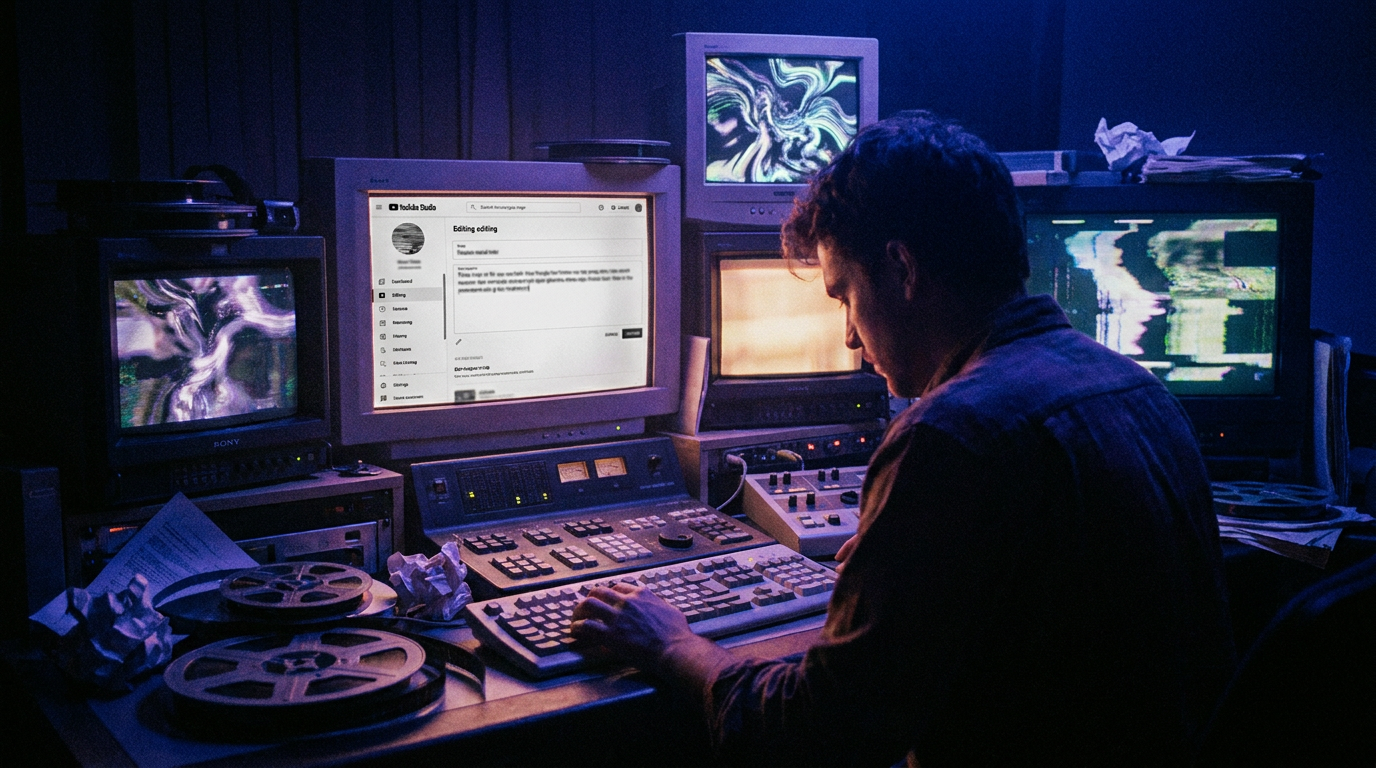
And then fans noticed something in the YouTube credits.
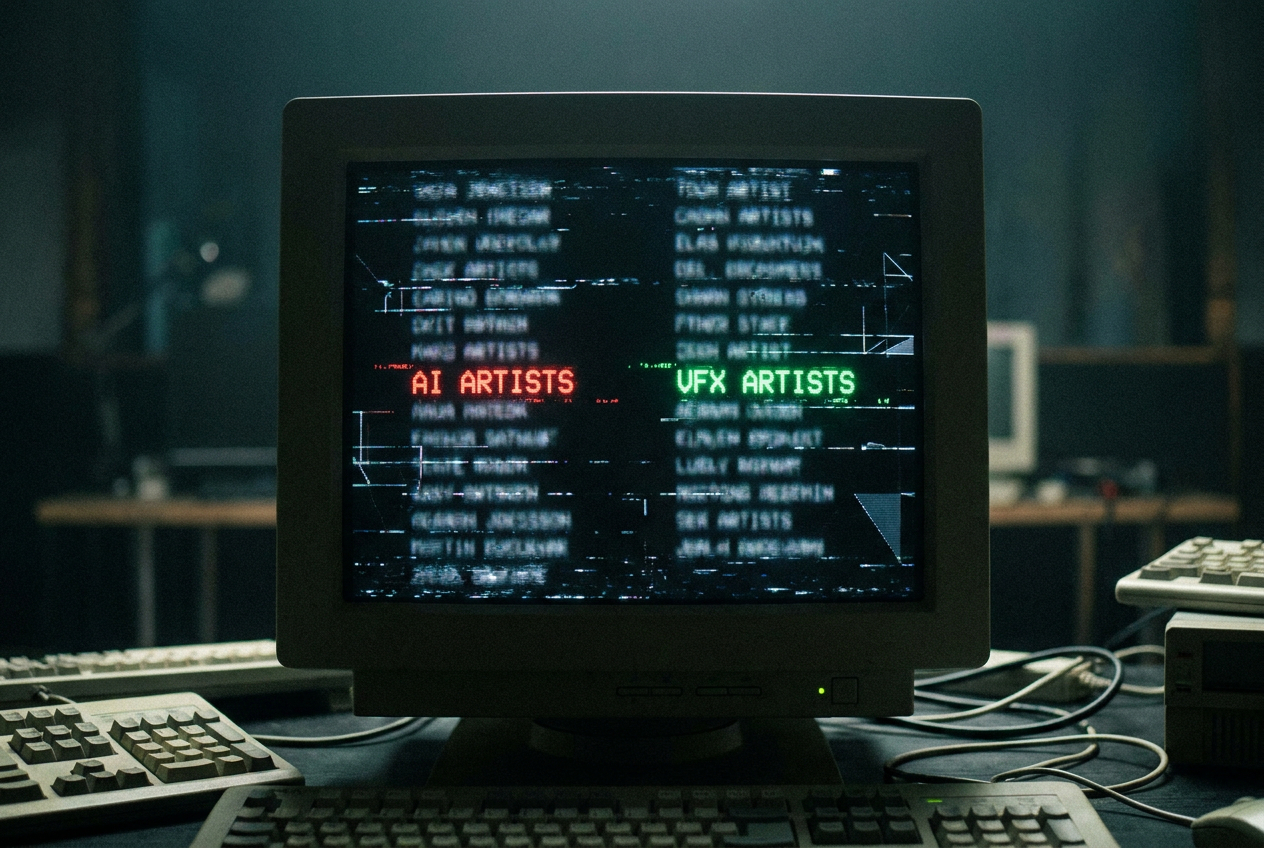
Three people — Marcin Misiura, Przemek “Drops” Drosik, and Michal Wal — were listed as “AI artists.” Also credited were post-production studios Deep VFX and Pineapple VFX.
According to their websites, both studios use generative AI in their work.
Then, quietly, the credits changed. The “AI artists” designation was relabeled to “VFX artists.”
No announcement. No explanation. Just a quiet edit.
Paste Magazine reached out to Fontaines D.C.’s representatives for comment on the AI credits, but no response has been received.
This is the most revealing AI music video moment of 2026 — not because of the AI itself, but because of the relabeling. It tells you everything about where AI stands in professional music video production right now.
The Irony Is Almost Too Perfect
Here’s where it gets delicious.
Fontaines D.C. have described Dopamine Chamber as an album “increasingly corrupted by automation, artificial intelligence and the loss of feeling.”
Three people were initially credited as “AI Artists,” before that designation was changed and subsequently removed. The controversy raises an uncomfortable question for a band whose new album is explicitly concerned with automation and the erosion of human feeling.
You’re making an album about the dehumanizing effects of AI, and you’re using AI to make the music video for the lead single? That’s not hypocrisy — that’s actually kind of brilliant, if you own it. The problem is they didn’t own it. They edited the credits instead.
The available information does not establish exactly how or where AI was used in the video, nor who made those production decisions. But the credit swap speaks volumes. It says: we know the audience might have a problem with this, so let’s make it disappear.
And that instinct — to use AI but hide the receipt — is becoming the default behavior across the music industry.
The Quiet AI Revolution in Music Videos
Fontaines D.C. aren’t alone. They’re just the ones who got caught.
Think about the timeline of AI video in music production in 2026. The biggest AI video generation news in 2026 is that the category has moved beyond standalone text-to-video demos into full production workflows. That’s industry-speak for: these tools are no longer experiments. They’re in the pipeline.
A 12-second loop no longer judges a music video generator. For musicians, the release question in 2026 is whether AI can support a campaign: a YouTube-length piece that still feels like one world, performance moments that look sung rather than pasted, a face that survives verse to chorus, and vertical cuts that don’t take a second week in Premiere.
That’s exactly the kind of work Deep VFX and Pineapple VFX are doing. They’re not replacing the director or the cinematographer. They’re handling post-production — the surreal visual effects, the impossible transitions, the dreamlike distortions that Dave Meyers is famous for. The kind of stuff that used to take a full VFX team weeks of rotoscoping and compositing.
Now it takes an afternoon with AI-assisted tools.
And here’s the thing: this is actually the right way to use AI in music videos. It’s a production tool in a professional workflow, not a replacement for creativity. The director still directs. The band still performs. The AI handles the grunt work of visual effects generation.
But nobody wants to say the quiet part out loud.
Why Artists Are Hiding AI Use
The credit swap reveals a calculation that every musician making content in 2026 has to make. And the math looks like this:
If you disclose AI, you risk backlash. We’ve seen it play out all year. Fans pile on. Reddit threads explode. Music journalists write hot takes. The narrative becomes “band uses AI” instead of “band releases incredible new music.”
If you don’t disclose, you risk a worse backlash when someone finds out. Which is exactly what happened to Fontaines D.C. The Mötley Crüe AI video controversy earlier this month taught the same lesson. The episode underscores a broader industry shift toward AI-driven visual production, raising questions about transparency and attribution as the technology integrates into mainstream workflows.
And the regulatory environment is tightening. The EU AI Act’s Article 50 provisions — which took effect August 2 — require labeling of AI-generated content. Apple Music is introducing “Made With AI” labels. Spotify is badging AI personas. The entire industry is moving toward mandatory disclosure.
Clear disclosure of AI involvement could become a standard practice, especially as artists and directors increasingly rely on these tools.
The window for quietly swapping “AI artist” to “VFX artist” in your YouTube credits is closing fast.
The Line Between VFX and AI Just Disappeared
Here’s the philosophical question at the heart of this controversy: Is there actually a meaningful difference between “AI artist” and “VFX artist” in 2026?
Think about what a VFX artist does today. They use After Effects, Nuke, Houdini — all of which now have AI-powered features baked in. Adobe’s generative fill is AI. The background replacement in DaVinci Resolve uses machine learning. Even basic color grading tools now use neural networks.
At what point does using AI tools make you an “AI artist” versus a “VFX artist who uses AI tools”?
This isn’t a semantic game. It’s the core question that every musician, every director, and every production company has to answer. And the Fontaines D.C. credit swap suggests that even top-tier productions haven’t figured out the answer.
Studio-quality output can now arrive in minutes, yet the cheap part is generation. The difficult part remains judgment: deciding what story deserves to exist, what claims you can legally make, and what visual assets you truly own.
For musicians making their own videos — which is most of you reading this — the distinction matters even less. If you’re using AI music video tools to create visuals for your releases, you’re not hiding behind a VFX credit. You’re the artist. You’re the director. The AI is your production tool.
What This Means for Independent Musicians
The Fontaines D.C. situation is actually good news for indie musicians, and here’s why.
1. Major-Label Artists Are Using the Same Tools You Are
Dave Meyers didn’t suddenly forget how to direct music videos the traditional way. He chose to integrate AI into the workflow because it produces results that would be impossible or prohibitively expensive otherwise. The surreal, effects-heavy style of “Marianne” is exactly the kind of visual storytelling that AI video tools excel at — and it’s exactly the kind of visual storytelling that independent musicians can now access without a six-figure budget.
The playing field hasn’t just leveled. It’s collapsed.
2. Transparency Is Your Competitive Advantage
While major-label acts try to hide their AI use and quietly edit credits, you can do the opposite. Be upfront. Tell your audience: “I used AI video generation to create visuals for this track because I’m one person with a $30 budget, not a band with a Dave Meyers Rolodex.”
Fans respect honesty. They respect resourcefulness. They don’t respect dishonesty. The backlash against Fontaines D.C. wasn’t about using AI — it was about the attempted cover-up.
3. The “AI or Not” Debate Is Becoming Irrelevant
By 2026, the conversation shifted from “Will AI replace artists?” to “How can artists and AI collaborate creatively?”
The Fontaines D.C. video is, by all accounts, excellent. NME gave “Marianne” a perfect five-star review. The visuals are striking and surreal. The AI-assisted effects serve the song’s themes about automation and the loss of human feeling.
Nobody is saying the video is bad because AI was involved. They’re saying the credit relabeling is dishonest. There’s a huge difference.
For independent musicians working across genres — whether you’re making hip-hop visuals, indie aesthetics, or rock videos — the quality of AI video output in 2026 has reached the point where the tools disappear into the work. Just like nobody asks whether a guitarist used Pro Tools or Logic to record, nobody will eventually care whether you used Seedance, MiniMax H3, or traditional VFX to create your visuals.
We’re just in the awkward transition period where people still care. And navigating that transition honestly is the move.
How to Handle AI Disclosure the Right Way
Based on everything we’ve seen in 2026 — from Mötley Crüe’s fumble to D’Addario’s denial-then-admission to Fontaines D.C.’s credit swap — here’s the playbook for musicians using AI in their visual content:
Be Honest in Your Credits
If you used AI tools, say so. You don’t need to write a manifesto. A simple “Visual effects created with AI-assisted tools” in your video description is fine. It’s honest, it’s professional, and it preempts the gotcha.
Frame It as a Creative Choice
You chose these tools because they allowed you to realize a specific creative vision. That’s not a concession — that’s directing. Dave Meyers didn’t need AI. He wanted the specific look it could produce. You can make the same argument.
Don’t Apologize for Being Resourceful
If you’re an independent musician who used AI video generation because you couldn’t afford a $5,000 traditional video shoot, that’s not a weakness. That’s you being smart about your career. Every stream, every view, every fan you gain from that visual content is worth it.
Know What’s Coming
The disclosure requirements are only tightening. The EU AI Act is live. Apple Music’s “Made With AI” labels are coming. Being ahead of the transparency curve now means you won’t have to scramble later when platforms start requiring it.
The Bigger Picture
The Fontaines D.C. credit swap is a snapshot of an industry in transition. Major artists are using AI in their music video production. Studios are integrating generative tools into their VFX pipelines. Directors are leveraging AI to create visual effects that would have been impossible or wildly expensive two years ago.
And almost nobody wants to talk about it.
That silence creates an opportunity for independent musicians who are willing to be honest about their process. While the big acts play the hide-and-seek game with credits, you can build trust with your audience by being upfront about how you create.
The tools are available. The average render time for a 30-second clip has dropped to 12 seconds among top-tier tools. The quality is professional. The cost is pennies on the dollar compared to traditional production. One creator fed a 32-second hook into MiniMax H3 and got four beat-locked shots back, cutting a complete music video for $4.80.
What separates you from a band on a major label isn’t the tools anymore. It’s whether you have the creative vision to use them well — and the honesty to say you did.
Your Move
The Fontaines D.C. “Marianne” video is genuinely great. The AI-assisted effects are striking, the visuals serve the song, and the whole package works as a piece of art. The only problem was the attempt to hide the process.
Don’t make the same mistake.
If you’re ready to create stunning visuals for your music — honestly, affordably, and on your own terms — OneMoreShot.ai lets you generate professional music videos in minutes. No credit-swapping required. Just your music, your vision, and a tool that helps you bring it to life.
Because in 2026, the best visual content wins. And the best disclosure policy is the simple truth.