
Runway's Media Router Is the App Store for AI Video
Two days ago, Runway stopped trying to beat every AI video model on Earth. Instead, it decided to sell all of them.
Runway no longer wants to be just another AI model company. It wants to become the infrastructure layer for generative media. And with the launch of the Runway Media Router on July 23, that pivot became real.
If you’re a musician making AI music videos, this matters more than you think. Here’s why.
What Runway Actually Launched
On Thursday, Runway launched Runway Media Router through Runway Dev, its developer platform, which provides API access to a growing roster of third-party image, video, and audio models alongside Runway’s own. The Media Router is a tool that automatically selects the best image, video, or audio generation model for a request based on whether a developer prioritizes quality, speed, or cost.
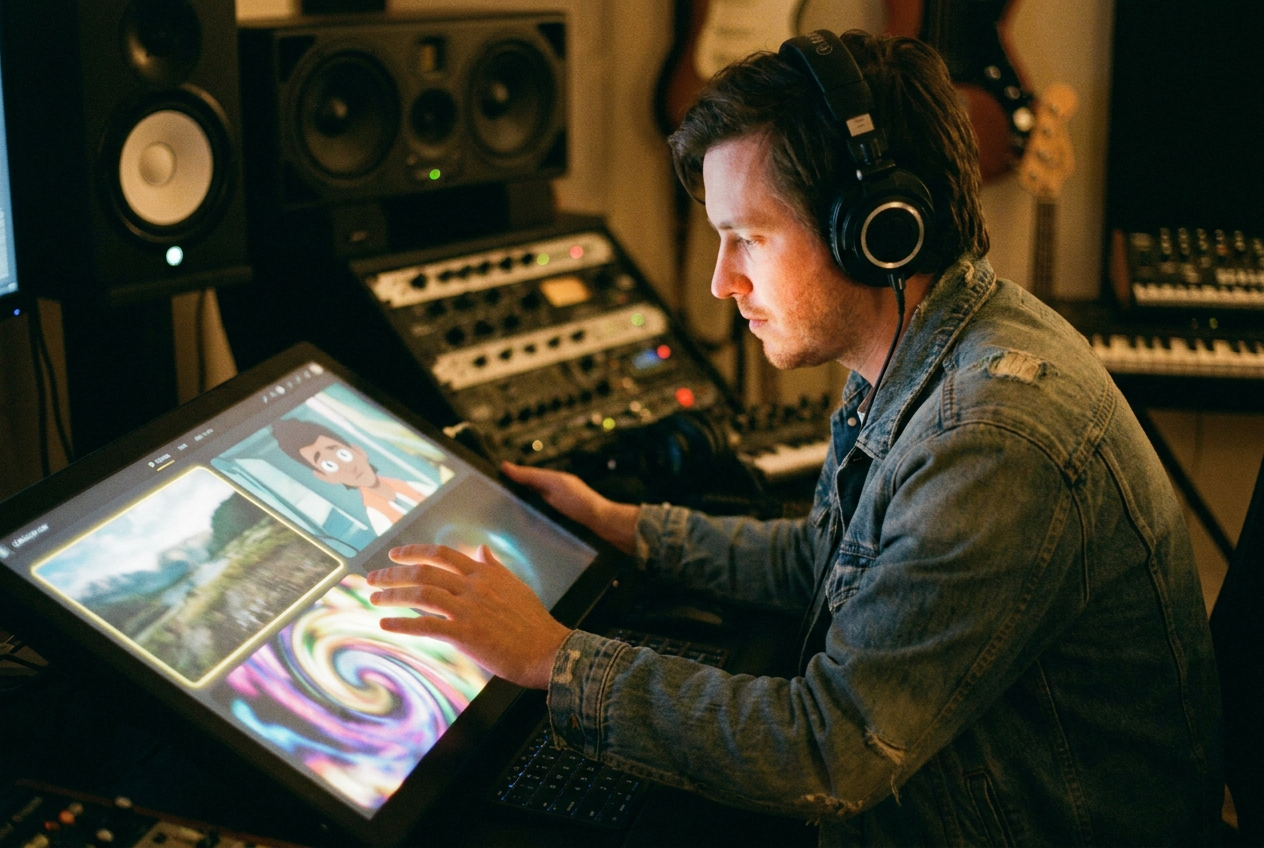
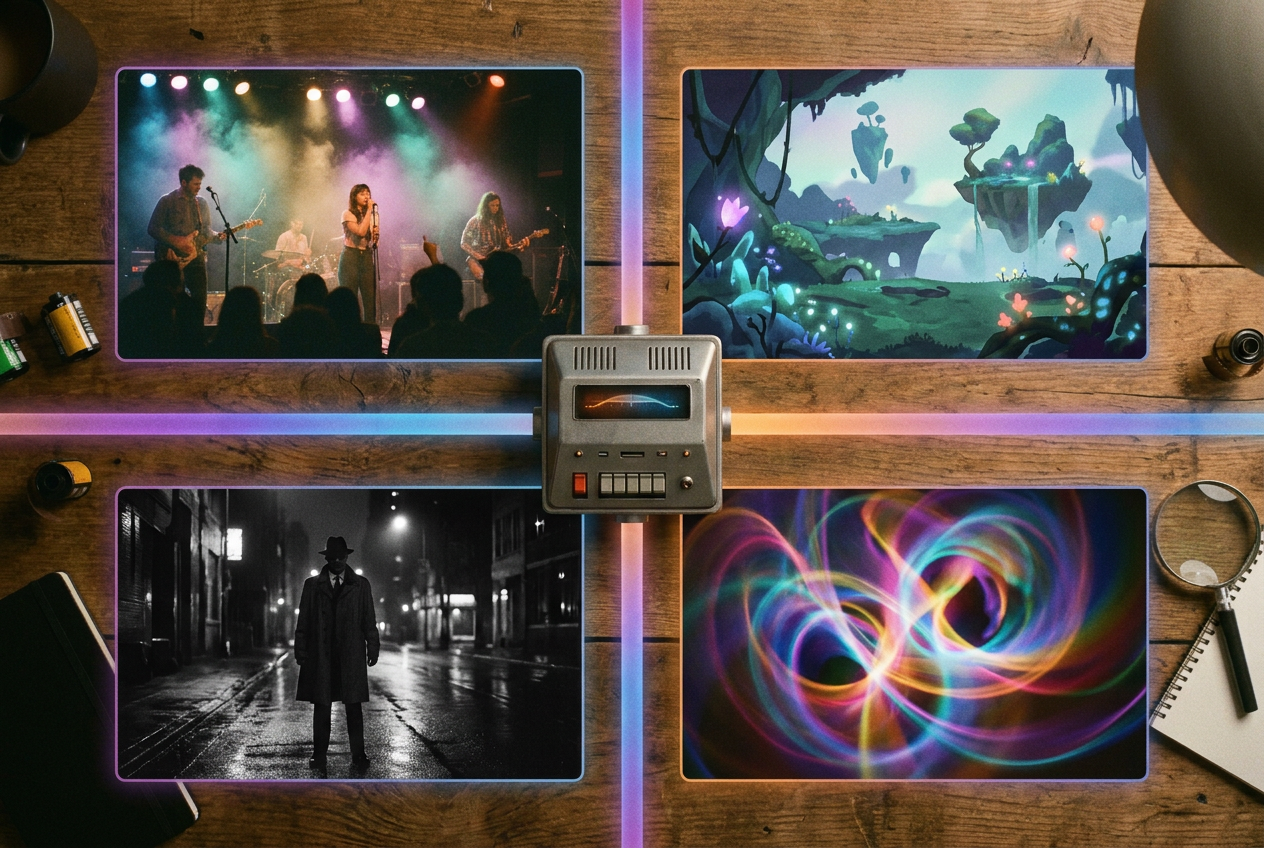
Think of it like this: instead of you bouncing between six different AI video tools trying to figure out which one nails the cinematic look for your rock ballad versus the psychedelic vibe for your EDM drop, an intelligent layer does the thinking for you.
While model routers have become increasingly common in the world of large language models, Runway says this is the first built specifically for generative media.
The models already available inside Runway’s platform tell the story. All of the world’s best models are now available right inside of Runway — including Kling 3.0, Kling 2.6 Pro, Kling 2.5 Turbo Pro, WAN2.2 Animate, GPT-Image-1.5, Sora 2 Pro and more.
In addition to its own video generation AI, Runway also provides image, video, and audio generation models from other companies such as Seedance, GPT Image 2, and ElevenLabs.
That’s a staggering roster. And the router sits on top of all of it.
Why Runway Stopped Competing and Started Aggregating
Here’s the uncomfortable truth that makes the Media Router make sense: Runway’s last AI video model release, Gen 4.5, occurred in December and outperformed similar offerings from Google. But despite recent advancements, Runway’s text-to-video and image-to-video models are no longer leaders in their categories, facing stiff competition from major players like Google and China’s ByteDance and Alibaba.
Translation: the model arms race got so intense that even Runway — the company that basically invented the consumer AI video category — couldn’t keep up on pure model quality alone. So they made the smartest pivot in the space: becoming the platform where all the models live.
Runway’s last dedicated frontier video model, Gen 4.5, launched in December, and competing models from Google, ByteDance and Alibaba now sit on top of the rankings. Routing to your rivals is a hedge against exactly that situation.
Runway co-CEO Anastasis Germanidis put it plainly: “The orchestration matters a lot because people are building entire campaigns with those models.”
What This Means for Musicians Making Videos
If you’re an independent musician creating AI music videos, the implications are massive. Let me break it down.
1. The End of Tool-Hopping
Every musician who’s tried to create a visual album knows the pain. You use Kling for the realistic performance shots, Seedance for the rhythmic motion-synced sequences, and maybe Veo for the cinematic establishing shots. Each tool has a different interface, different pricing, different strengths.
With the introduction of the router, Runway aims to offer a systemic approach to media-creation workflows, where model updates occur regularly. Such a solution reduces infrastructure complexity and speeds up the cycle from idea to finished content.
For musicians working on complete music video projects, this is a game-changer. One platform. Every model. The router picks the right one based on what you need.
2. Cost Optimization Becomes Automatic
Here’s something most musicians don’t realize: not every shot in your music video needs to be rendered by the most expensive model. Your B-roll? A fast, cheap model works fine. Your hero shot of the artist walking through rain? That’s where you want the premium model.
One possible use case is to prioritize low-cost models for processes where cost reduction is desired, and high-quality models for processes that produce finished products.
When you’re making AI music videos for indie on a tight budget, automatic cost routing could be the difference between affording a full visual album and settling for two clips.
3. Audio Integration Gets Real
The Media Router doesn’t just handle video. Runway Media Router supports image, video, and audio generation models. With ElevenLabs integrated into the platform and Runway’s own Seed Audio 1.0 launched in late June, musicians are getting closer to a unified creative pipeline.
Runway’s Seed Audio 1.0 lets creators generate up to 120 seconds of dynamic speech, sound design and music with simple text prompts. Imagine pairing that with Kling 3.0’s native audio sync or Seedance’s beat-locked video generation — all from one dashboard.
The Model Landscape in July 2026
Let’s zoom out for context. The AI video generation space has never been more competitive, and the models available through Runway’s platform reflect the state of the art.
In 2026, native audio is a bigger differentiator than raw visual quality. The standout tools are Kling 3.0 Omni, Seedance 2.0, and Veo 3.1. All three can produce synchronized dialogue, ambient sound, and background music inside a single generation.
For music video creators specifically:
-
Kling 3.0 Omni: Especially strong because it supports multi-shot sequences with a shared audio timeline and native dialogue in five languages. Perfect for Latin music videos or K-Pop projects that need multilingual support.
-
Seedance 2.0: Seedance 2.5 introduces native 4K resolution, 30-second video outputs, and sophisticated 3D pre-visualization tools. ByteDance has been aggressively pushing this model forward.
-
Veo 3.1: Still looks like the safest overall pick. It combines strong realism, good motion, and native audio.
-
Runway Gen-4.5: The world’s top-rated video model, offering unprecedented visual fidelity and creative control. Still the king for character consistency and cinematic control.
The fact that all of these live under one roof — and a smart routing layer picks the best one for each shot — is genuinely unprecedented.
The “App Store Moment” for AI Video
Industry observers have been calling Runway’s strategy the “App Store moment” for AI video. And the comparison is apt.
Remember when Apple shifted from making every app to making the platform where every app lives? That’s what Runway is doing for generative media. Runway responded by turning its platform into a unified hub.
Through Runway Dev, notable customers including Adobe, Cloudflare, ElevenLabs, Expedia, Shutterstock, and Quora can incorporate media generation functionalities directly into their products.
For musicians, the downstream effects are significant. When platforms like Shutterstock and Adobe build on Runway’s infrastructure, the AI video capabilities available inside tools you already use will improve automatically. The model router means those improvements can happen without any single company needing to build the best model — they just need to route to it.
The Bigger Picture: Why This Matters Now
This launch doesn’t exist in a vacuum. It arrives during a period of unprecedented turbulence in AI music and video:
The EU AI Act deadline looms. Article 50 transparency obligations apply from August 2, 2026. In just seven days, transparency obligations — including the labelling and watermarking of AI-generated content — sit at the heart of the regulation’s consumer protection goals. Musicians creating AI videos for European audiences need to think about provenance and labeling. A centralized platform with built-in compliance features could help. Runway emphasizes that the tool is designed with safety and responsibility in mind — it includes content moderation, operation logging, and support for private instances for corporate clients.
AI music is getting purged from streaming. With Deezer deleting AI tracks and TIDAL banning AI monetization, the visual side of music — videos, not audio — remains the safe creative zone. If you’re making AI music videos for hip-hop or rock, you’re using AI to create visuals for human-made music. That’s a fundamentally different proposition than generating the music itself.
The model war is accelerating. In the generative media segment, competition is intensifying: many models with different capabilities are entering the market, vying for creators’ attention. New models are shipping monthly. Nobody can keep up by staying loyal to one tool. The router acknowledges this reality.
What Musicians Should Do Right Now
Here’s the practical playbook:
Understand the Tiers
Not every model is right for every job. If you’re creating a pop music video with lots of character close-ups, you want a model that excels at facial consistency and emotional expression. That’s Runway Gen-4.5 territory. If you’re building abstract visual landscapes for an EDM track, you might route to Seedance for its motion-sync capabilities.
Think in Multi-Model Workflows
The era of generating your entire music video with one tool is ending. The best results come from mixing models — one for establishing shots, another for performance scenes, a third for abstract transitions. The Media Router’s philosophy validates what savvy creators have been doing manually for months.
Watch the Pricing
The Media Router launch also comes weeks after Runway replaced its unlimited subscription plans with token-based pricing, a move that drew criticism from some users. Token-based pricing means you pay per generation, which rewards efficiency but punishes experimentation. The router’s cost-optimization mode could soften that blow.
Don’t Sleep on Purpose-Built Tools
Here’s the thing: Runway’s Media Router is built for developers and power users. It’s infrastructure, not a music video maker. For musicians who want to upload a track and get a finished video without learning API endpoints, purpose-built tools like OneMoreShot.ai still offer the fastest path from song to visual. The underlying models keep improving — what matters is the workflow built for your needs as a musician.
The Future: Where This Is Heading
Runway’s bet is clear: in a world where new AI video models launch every few weeks, the platform that orchestrates them all wins. Instead of requiring developers to commit to a single model, the Media Router assumes that the best model will evolve over time.
For musicians, this means the quality ceiling for AI music videos will keep rising — automatically. The model you use today for your country music video might be outclassed next month by something from a lab you’ve never heard of. With routing, you don’t have to care. The system upgrades itself.
Runway co-CEO Germanidis says that as opportunities to create advertising campaigns and multi-scene video works using generative AI increase, a foundation for using multiple models rather than just one will become crucial.
He’s talking about ad campaigns, but swap “ad campaign” for “visual album” and the logic holds perfectly. A four-track EP with four different visual styles, each rendered by the optimal model for that aesthetic? That’s where we’re heading.
The Bottom Line
Runway’s Media Router isn’t a tool most musicians will interact with directly. But it represents something bigger: the maturation of AI video from a novelty into genuine infrastructure. When the best models in the world are accessible from a single platform, and an intelligence layer picks the right one for each shot, the quality floor for AI-generated visuals rises for everyone.
The model wars rage on. But for musicians, the war is increasingly irrelevant. What matters is the video at the end — and whether it does your music justice.
Ready to turn your tracks into visuals without navigating the model maze? OneMoreShot.ai handles the complexity so you can focus on what matters: making music that moves people, and giving it visuals that match.