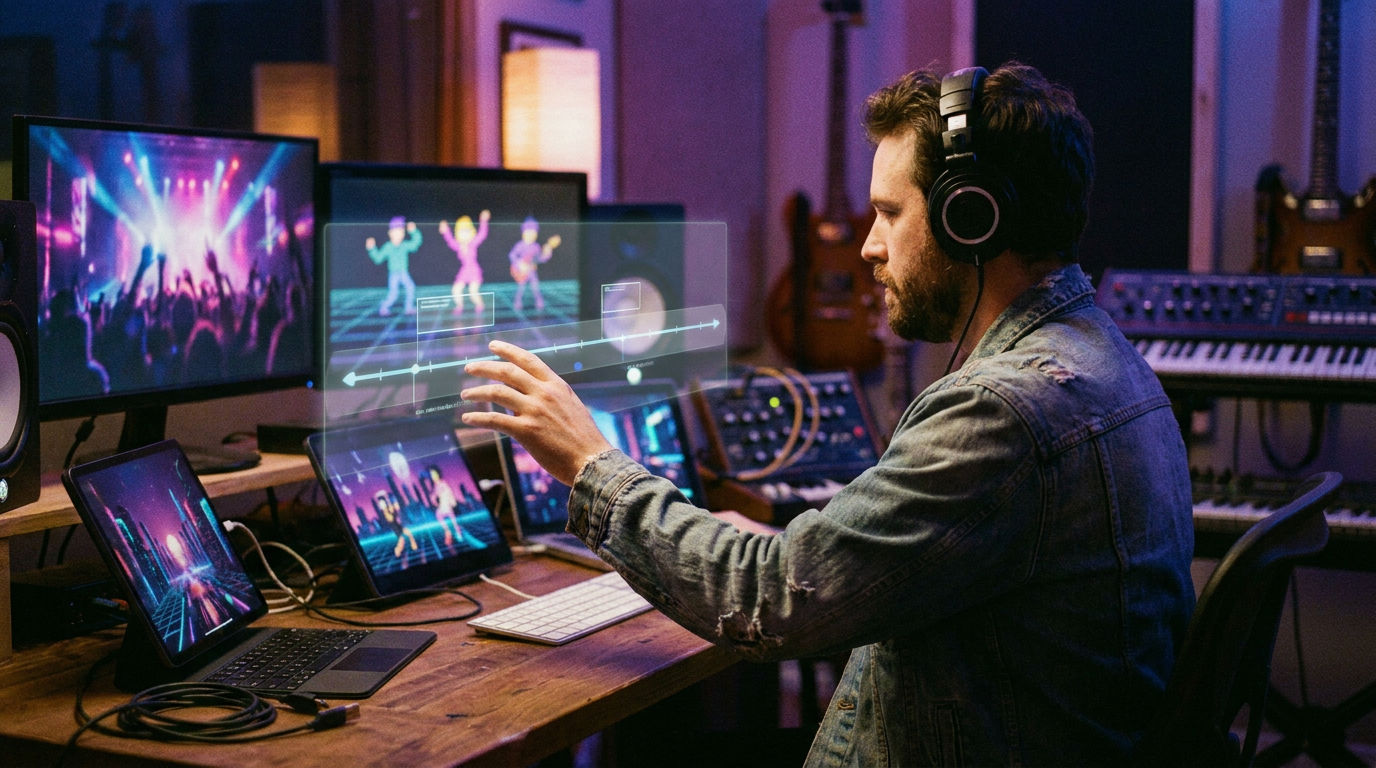
Seedance 2.5 Changes AI Music Videos Forever
The biggest bottleneck in AI music videos just got obliterated. And most musicians haven’t even noticed yet.
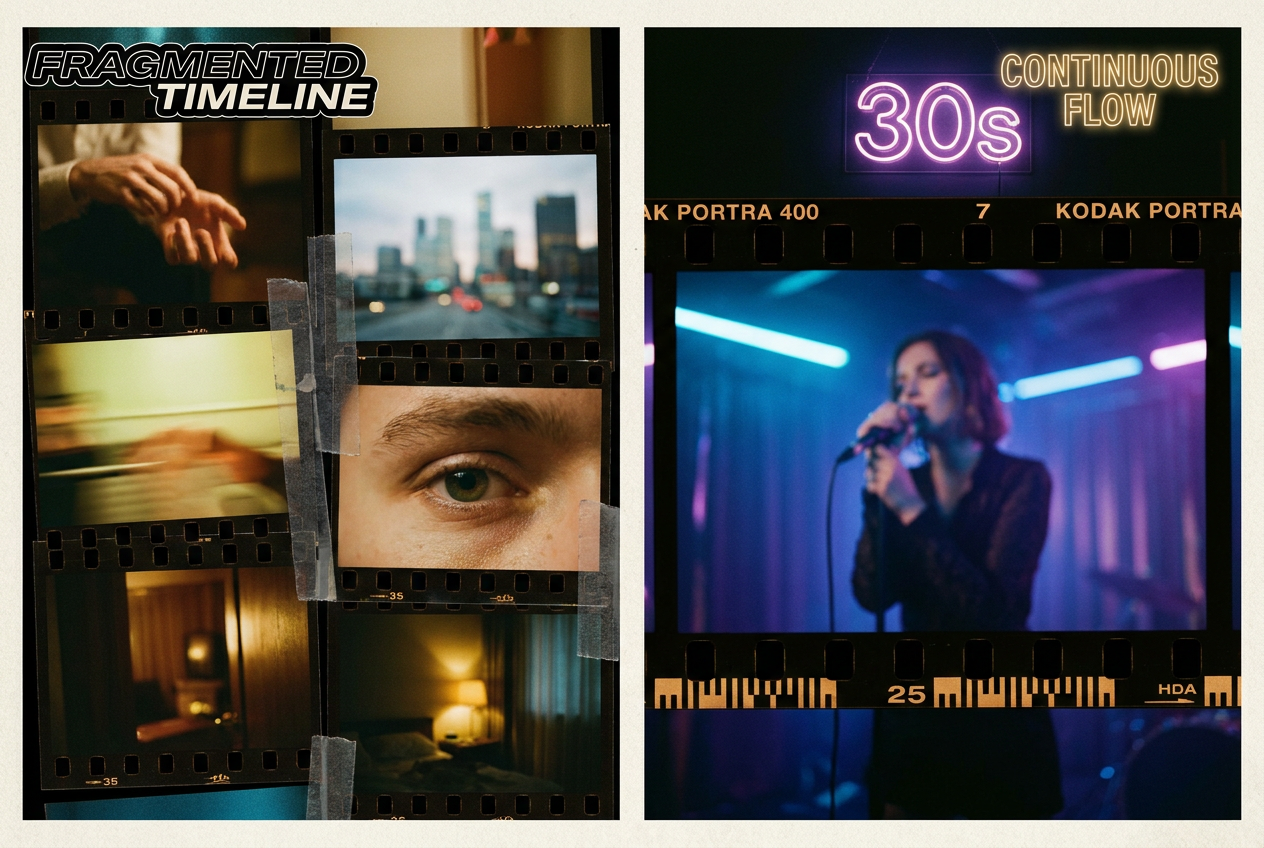
ByteDance’s Seedance 2.5 started its public rollout this week, and its headline claim is stunning: 30 seconds of continuous, native video generation in a single pass. No stitching. No splicing. No praying that the character’s face doesn’t morph into a different human between cuts.
For context, every other major AI video tool — Runway Gen-4.5, Google Veo 3.1, even the now-defunct Sora 2 — has topped out at roughly 8 to 15 seconds per clip. If you wanted a full music video, you were generating dozens of little fragments and Frankensteining them together in post. That era might be over.
Let’s break down what this actually means for musicians, why the copyright cloud hanging over it matters, and how to use this moment to level up your visual game right now.
The 30-Second Barrier Is Broken
ByteDance’s Seedance 2.5 entered its public launch window on July 3, 2026. The model claims a technical milestone that no competing AI video tool has hit: generating a continuous, unbroken 30-second video clip in a single pass, with no segment stitching, no scene-cut splicing, and no visible seams.
Why does 30 seconds matter so much for music videos?
Think about it: a verse is typically 16 bars, which clocks in at roughly 20–30 seconds depending on tempo. For the first time, you can generate an entire verse’s worth of visuals as one coherent take. The camera can push in, the lighting can shift, the character can move through a scene — all without the jittery jump-cuts that scream “AI made this.”
Seedance 2.5 renders the full 30 seconds as one pass. Motion, lighting, and subject identity stay coherent from the first frame to the last because the model is reasoning about the whole shot at once, not assembling fragments.
ByteDance unveiled the model at the Volcano Engine FORCE conference in Beijing on June 23, 2026. The number is a deliberate signal — ByteDance skipped 2.1 through 2.4 entirely and jumped straight from Seedance 2.0 to 2.5, framing it as a generational leap rather than a point release.
What’s Under the Hood
The specs, if they survive real-world testing, are genuinely impressive for music video creators:
Native 4K with 10-bit color. Seedance 2.5 renders natively at up to 4K (3840x2160) with 10-bit color, which means more headroom for color grading and post-production than an upscaled clip would give you. For musicians, this means your AI visuals can actually sit next to professionally shot footage without looking like a compressed YouTube thumbnail.
Unified audio-video generation. Seedance 2.5 uses a unified joint audio-video generation system in which visual and auditory signals are co-processed inside the same latent space from the start. The result is audio that is generated in parallel with the video rather than fitted to it afterward. For music videos specifically, you can upload your track and the model syncs to it — no manual alignment needed.
50 multimodal reference inputs. One generation can take in as many as 50 references — images, video, and audio — for locking characters, products, style, and motion across a long shot. Want your character to look like your album artwork, move like a reference dance video, and match the color palette of your brand? Feed it all in at once.
Region-level editing. Major features also include local editing — instead of regenerating an entire 30-second clip if one detail (like a character’s hair color) is incorrect, users can now modify specific areas within the scene to fix it. This prevents the loss of preferred acting performances, facial expressions, or lighting established in the original take.
The Copyright Cloud Musicians Need to Know About
Here’s where the story gets complicated — and where smart musicians pay attention.
The announcement arrives four months after ByteDance voluntarily paused the global rollout of its predecessor, Seedance 2.0, following cease-and-desist letters from every major Hollywood studio over alleged copyright infringement. Those legal disputes remain unresolved.
The backstory: after an AI video of “Tom Cruise” fighting “Brad Pitt” went viral, the Motion Picture Association denounced “massive” infringement on Seedance 2.0. ByteDance responded by adding content filters. Following the MPA’s formal cease-and-desist action in February 2026, ByteDance added content filters that block generation of recognizable real faces and copyrighted characters. Those filters remain active in the current model and are expected to carry forward into 2.5.
There’s also the data jurisdiction question. In December 2022, an internal ByteDance investigation confirmed that four employees had improperly accessed data belonging to U.S. journalists. In May 2025, Ireland’s Data Protection Commission fined TikTok €530 million for unlawfully transferring European Economic Area user data to China.
What does this mean for musicians? Two things:
- The visuals you generate are likely fine to use — you’re creating new content, not reproducing copyrighted material. But read the terms of service carefully before using anything commercially.
- Be aware of what you’re uploading — if you’re feeding in unreleased music or sensitive creative assets as reference files, understand that you’re sending them through ByteDance’s infrastructure.
Enterprise clients who build proprietary video pipelines on Seedance 2.5 should assess what content they plan to submit against this legal framework before committing to the integration.
The Streaming Platforms Are Drawing Battle Lines
Seedance 2.5 arrives in a music industry that’s rapidly splitting into pro-AI and anti-AI camps. And the timing is no coincidence.
Music streaming service TIDAL is the latest to take aim at AI-generated music with the introduction of a new policy that will prevent fully AI-generated music from making money on its platform. In addition, TIDAL will use automated tools to remove AI-generated music that attempts to impersonate an artist or a group.
The service’s new AI policy goes into effect July 15.
Meanwhile, the scale of AI music flooding is staggering. Deezer is now receiving almost 75,000 AI-generated tracks per day, representing roughly 44% of the daily uploads. This amounts to more than 2 million AI-generated tracks uploaded per month.
Deezer reported receiving around 60,000 AI tracks per day in January, up from 50,000 in November, 30,000 in September, and just 10,000 in January 2025.
Here’s the critical distinction that many musicians miss: AI-generated music and AI music videos are fundamentally different things. Platforms are cracking down on AI-generated songs — synthetic tracks created to flood catalogs and siphon royalties. But using AI to create visuals for your human-made music? That’s not just accepted — it’s increasingly the smart move.
When you create an AI music video for your original track, you’re using technology to enhance and promote genuine human creativity. Your songwriting, your performance, your artistic vision — all human. The visuals are the tool, not the art being replaced. For a deep dive into this distinction, check out our Complete Guide to AI Music Videos in 2026.
What This Means for Your Music Video Workflow
So Seedance 2.5 can generate 30-second clips. How does that actually translate to a full music video?
The Math Has Changed
A typical 3.5-minute song is about 210 seconds. With 15-second clips, you needed at least 14 perfectly matched segments. With 30-second clips, you need 7. That’s half the stitching, half the consistency headaches, half the renders that don’t quite match.
But here’s the real shift: those 30-second clips can now contain actual narrative beats. A character walking into a club, finding someone across the room, and starting to dance — that’s a scene, not a fragment. Your AI music video stops being a slideshow and starts being a story.
The Reference System Is the Real Game-Changer
Up to 50 references let a team lock a character, set, and palette across a sequence for tighter continuity. For musicians, this means you can upload your press photos, your album art color palette, and a reference video for the vibe you want — and the model integrates all of it into one cohesive visual.
If you’re making hip-hop visuals, that means consistent character identity across every scene. For EDM content, you can lock in those neon color palettes and club environments. Pop artists can maintain their brand aesthetic across an entire visual campaign.
You Still Need a Music-First Tool
Here’s the honest truth: Seedance 2.5 is a video model, not a music video tool. It doesn’t analyze your song structure. It doesn’t know where your chorus hits. It doesn’t automatically sync visual transitions to your beat drops.
Creating visuals for your music used to mean hiring a director, renting a studio, and blowing through your entire advance. AI music video generators promise to change that, but most of them are general-purpose video tools with no understanding of song structure, beat timing, or what makes a music video feel like a music video.
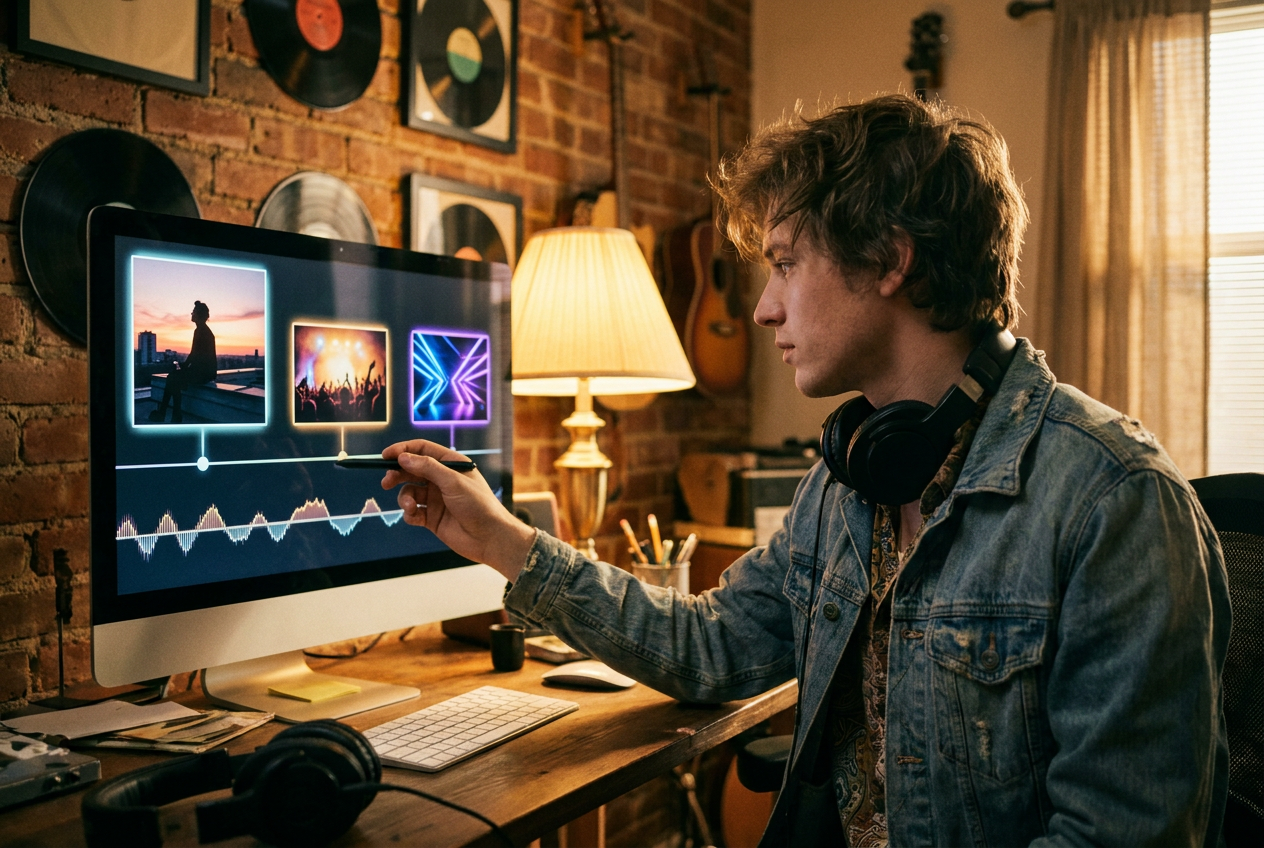
This is where dedicated music video platforms come in. Tools like OneMoreShot.ai are built specifically for musicians — they analyze your track’s BPM, structure, and energy to generate beat-synced visuals from the start. No timeline assembly required. If you want to understand the full landscape, our guide on how to make an AI music video walks you through every approach.
The Acceleration Is Dizzying
Step back and look at the trajectory. We are 2x’ing realistic video gen length every 6 months. May 2025: Veo 3 does audio + video for the first time, 15s. January 2026: Kling 3 does 15s. February 2026: Seedance 2 does 15s, big quality bump. July 2026: 2.5 will do 30s.
If that curve holds — and there’s no obvious reason it won’t — we’re looking at 60-second native clips by early 2027 and full 3-minute songs in a single generation by the end of that year. The commenter on Digg who wrote “In 18mos, entire music videos will be oneshotted by AI” might not be exaggerating.
Seedance 2 is already the #1 video model and does a whopping $2B in ARR, in a mere 4.5 months. At the current pricing of $2.5/15s, that implies over 3.3M hours of video have been generated. That’s 3x every feature film ever made.
Let that sink in. One model. Four and a half months. More video than the entire history of cinema.
The Practical Playbook for Musicians Right Now
Okay, enough big-picture awe. Here’s what you should actually do:
1. Don’t Wait for Seedance 2.5 to Make Your Next Video
Yes, 30-second native clips are exciting. But your fans don’t care about clip duration — they care about whether your video looks good and matches your music’s energy. Tools that are purpose-built for music videos, like OneMoreShot.ai, already handle the beat-sync, storyboarding, and full-length assembly that Seedance doesn’t.
2. Start Building Your Reference Library
The 50-reference system in Seedance 2.5 is powerful, but only if you have references ready. Start curating:
- Character references: 5-10 high-quality photos of yourself or your visual persona from different angles
- Style references: Screenshots or images capturing the visual mood you want
- Motion references: Short clips of camera movements or dance choreography you love
- Brand assets: Your color palette, logo treatments, album art
This reference library will be useful across every AI video tool, not just Seedance.
3. Think in Scenes, Not Clips
The shift from 15-second fragments to 30-second scenes changes how you should storyboard. Instead of planning shot-by-shot, plan scene-by-scene. Each 30-second generation should have a beginning, middle, and end — a mini narrative arc that serves your song’s emotional journey.
Whether you’re creating visuals for indie tracks, R&B grooves, or rock anthems, this scene-based thinking produces more cinematic results.
4. Layer Your Tools
The smartest approach in mid-2026 isn’t picking one tool — it’s building a stack. Use a music-first platform like OneMoreShot.ai for your primary music video generation (beat-sync, lyrics, full-length assembly), then reach for models like Seedance 2.5 when you need a specific hero shot — that one breathtaking 30-second continuous take that anchors your visual.
The Bottom Line
Seedance 2.5 is a genuine milestone. The 30-second barrier falling means AI-generated video just crossed the threshold from “interesting experiment” to “actual production tool.” For musicians, the implications are massive: the visual bar is about to rise dramatically, and the cost to meet it is about to plummet.
But technology doesn’t make music videos. Musicians do. The artists who win this moment won’t be the ones who generate the longest clips — they’ll be the ones with the clearest creative vision, the most compelling stories, and the best understanding of how these tools serve their music.
Your song is already finished. Your fans are already waiting. The only question is how quickly you can turn that track into visuals that match the emotion you put into it.
Ready to find out? Create your AI music video at OneMoreShot.ai — upload your track, and watch it come to life in minutes.