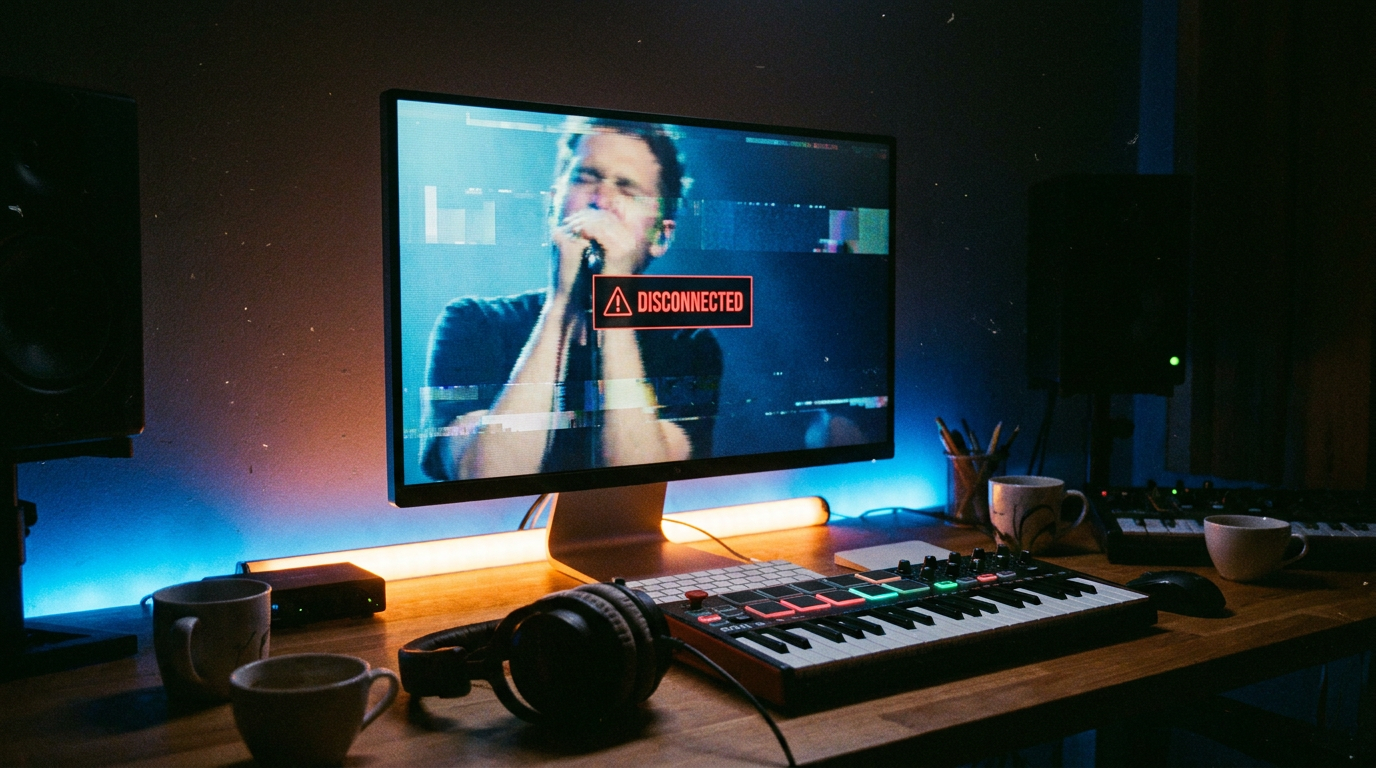
Sora Is Dead. Here's What Musicians Do Now
If you spent the last six months building your music video workflow around OpenAI’s Sora, I have some bad news. Actually, you probably already know. The app is gone. The API shuts down in 90 days. And the tool that was supposed to democratize cinematic AI video for everyone — including musicians who couldn’t afford a $15,000 shoot — is being quietly unplugged so OpenAI can focus on coding assistants and robotics.
But here’s the thing nobody’s saying loudly enough: for music video creators specifically, Sora’s death might actually be the best thing that could have happened. Let me explain.
What Actually Happened to Sora
The Sora web and app experiences were discontinued on April 26, 2026. The Sora API will be discontinued on September 24, 2026. That’s the timeline. If you’ve got API integrations, you have until late September. After that, it’s over.
The cost was unsustainable: Sora was burning through roughly $1 million per day in compute costs. Video generation is significantly more expensive to run than text or image generation, and those costs did not come down fast enough. User growth stalled: After peaking at around one million active users, the app declined to fewer than 500,000 by the time the shutdown was announced. Revenue from in-app purchases totaled an estimated $2.1 million over the app’s entire lifetime, far below what was needed to justify the infrastructure.
Read those numbers again. $1 million per day in costs. $2.1 million in total lifetime revenue. That’s not a pivot — that’s a product that was hemorrhaging money from day one.
Sora’s demise is part of a bigger strategic pivot. OpenAI wants to funnel compute toward coding tools and enterprise customers.
It failed because of a licensing and IP problem that OpenAI never really solved.
By default, the generator used copyrighted material in its videos, unless copyright holders actively opt out of having their content included. For musicians, that opt-out model was always a ticking time bomb. You couldn’t be sure whether your visual aesthetic, your style, or elements of your existing videos weren’t being fed into someone else’s output.
Why Musicians Shouldn’t Mourn Sora
Here’s the uncomfortable truth that most “RIP Sora” articles gloss over: Sora generated clips. It did not generate finished content. You still needed a script, a voice, captions, editing, music, and a publishing format.
That gap between “cool 10-second clip” and “finished music video I can upload to YouTube” was enormous. Sora gave you raw AI footage. Turning that footage into a 3-minute music video that actually syncs to your track, transitions between scenes on the beat, and tells some kind of visual story? That was entirely on you.
For musicians who just wanted to make a video for their new single, Sora was like being handed a RED camera and told to go figure out cinematography, editing, and post-production on your own. Impressive technology, terrible workflow.
The tools that are replacing Sora understand this problem. And they’re solving it in ways Sora never even attempted.
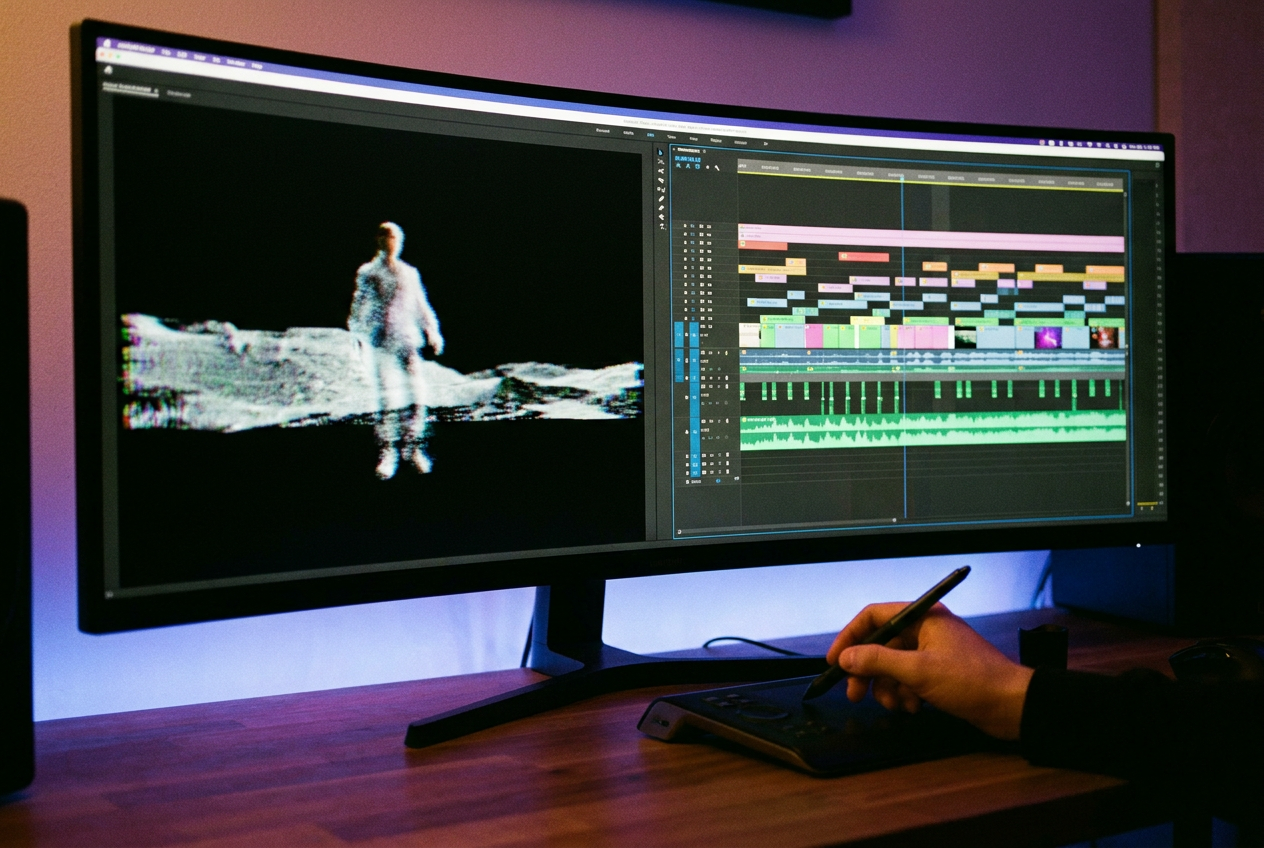
The Post-Sora Landscape for Music Videos
The AI video generation market didn’t just survive Sora’s death — it barely noticed. Almost all of them are still operational, all of them are improving faster than Sora ever did, and several of them are objectively better than Sora was on the day it shut down. The most surprising part of the shutdown story is how little impact it has had on the actual AI video market.
Here’s what the landscape actually looks like right now:
The Big Three Video Models
Seedance 2.0 (ByteDance) — Seedance 2.0 takes the top spot for overall best AI video generation model in 2026. The combination of motion quality, prompt adherence, and price performance is unmatched. The Fast tier at USD $0.022/sec provides production-grade output at a fraction of competitor pricing. For music video creators, Seedance is particularly interesting because Seedance 2.0 has largely solved character identity drift with its “Identity Lock” feature. You can feed the AI a reference image of a person, and it will maintain that exact face across multiple scenes and camera angles. It also features a multi-modal reference system that lets you control the camera motion and the music synchronization simultaneously.
Kling 3.0 (Kuaishou) — When absolute visual fidelity matters more than cost or speed, Kling Video O3 leads the pack. Kuaishou’s latest model produces video with remarkable detail in textures, lighting, and environmental elements. The model handles complex scenes with multiple subjects, reflections, and atmospheric effects with a coherence that other models still struggle to match.
Veo 3.1 (Google) — Veo 3.1 is the most technically advanced video generation model currently available, and it does something no other mainstream tool matches: it generates synchronized audio alongside the video in a single pass. The resolution ceiling is also the highest in the market. Veo 3.1 outputs true 4K at 3840×2160 with up to 60fps, exceeding what Sora ever offered.
But Raw Models Aren’t Music Video Tools
Here’s where musicians need to pay attention. Knowing the best AI video model is like knowing the best camera sensor. It matters, but it’s only one piece of the puzzle. What you actually need is a tool built for music videos — something that understands beats, song structure, visual storytelling, and the difference between a verse and a chorus.
The category has split into two camps. Song-first tools react to your track and generate a complete music video in one pass. Creative video systems give you control over every scene, reference, and edit, and you assemble the video in stages. Both camps work. Picking the wrong one for your workflow wastes weeks.
That distinction matters enormously. If you’re an indie artist who needs a video for your next release and you have zero video editing experience, a song-first tool is what you want. Upload your track, describe the vibe, and get a finished video. If you’re a visual artist who happens to make music and wants to art-direct every frame, a creative system gives you that control.
If you’re just getting started, check out our complete guide to AI music videos — it walks through the entire process from concept to upload.
The Real Winners of the Post-Sora Era
According to CNET’s April 2026 analysis, the AI video sector now splits into four main segments: enterprise video tools, creative editing suites, free consumer platforms, and specialized music video generators. That last category — specialized music video generators — didn’t even exist as a recognized market segment a year ago.
The most significant 2026 trend is the rise of music video generators, with five dedicated platforms entering the market as reported by The Music Universe, catering to artists and labels needing rhythm-synced visuals.
This is the real story. While everyone’s writing obituaries for Sora, the tools that were purpose-built for musicians are having their moment. They don’t need to generate photorealistic drone shots of Tokyo at sunset. They need to sync visuals to a beat drop, maintain character consistency across a 3-minute video, and output something that looks intentional — not like AI slop.
AI music video generators now handle 83% of production tasks that previously required human specialists. One test across three genres (rap, EDM, and indie folk) found that AI consistently delivered broadcast-ready results in under 8 hours — compared to the traditional 3-week minimum. Key advancements include automatic beat-synced transitions accurate to within 2ms and lyric-aware visual metaphors.
Beat-synced transitions accurate to within 2 milliseconds. Sora never came close to that level of audio-visual integration because Sora wasn’t built for music. It was built for everything, which meant it was optimized for nothing.
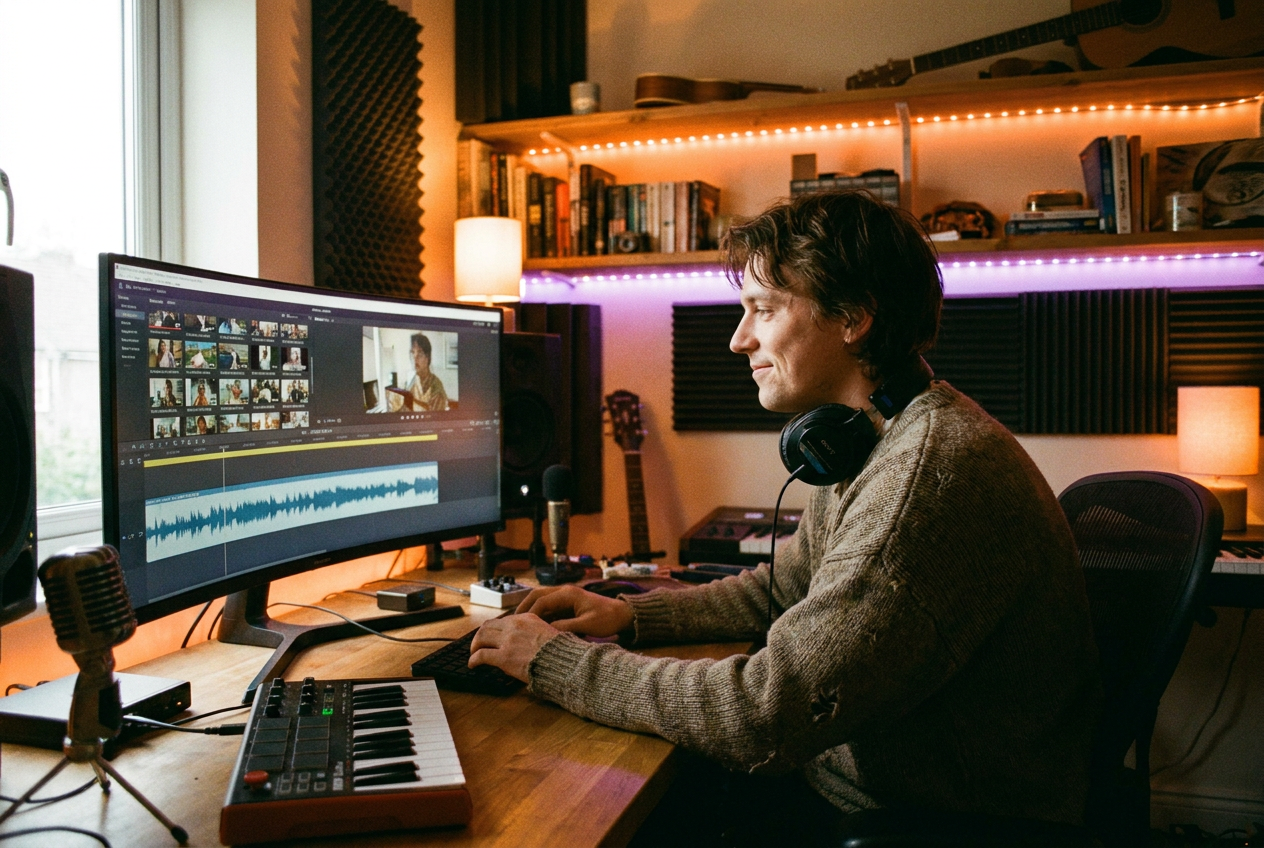
What to Do Right Now (A 90-Day Action Plan)
If you’ve been relying on Sora for music video work, here’s your migration playbook before the API dies on September 24.
Week 1–2: Audit and Export
Download everything you’ve generated in Sora. Once all deadlines pass, user data gets permanently deleted. If you’ve built prompt libraries or have Sora-specific workflows documented, save those too — they’ll partially translate to other models.
Week 3–4: Test Purpose-Built Music Video Tools
Stop trying to use general-purpose video models for music videos. Instead, explore tools designed specifically for musicians:
- OneMoreShot.ai — Upload your track, describe your vision, and get a complete music video. Song-first workflow with beat-synced editing.
- Neural Frames — Strong for audio-reactive visuals and customizable style control.
- ElevenLabs Flows — Node-based system with a new Flow Agent that automates much of the setup.
A finished, beat-synced video in as little as 10 minutes, for a fraction of one shoot day. That’s the promise of purpose-built tools, and in 2026, they’re actually delivering on it.
Month 2–3: Build Your Visual Identity
The biggest opportunity in the post-Sora era isn’t just replacing one tool with another — it’s building a consistent visual brand across your releases. Whether you’re making hip-hop videos, EDM visuals, or indie aesthetic pieces, the best AI music video tools now let you lock in a visual style and maintain it across your entire catalog.
That’s something Sora could never do. It was a one-shot generator. Every prompt was a fresh start. The new generation of tools lets you build a visual world that grows with your music.
The Bigger Picture: What Sora’s Death Teaches Us
Sora’s shutdown is not just the end of an app. It is a reminder that the AI products most likely to last are the ones that solve paid work, not just the ones that make the best demo.
That sentence should be tattooed on the forehead of every AI company founder. Sora made incredible demos. The early previews were jaw-dropping. But when it came to actually helping people finish real projects — especially musicians trying to make music videos — it fell short because it solved the flashy problem (generating pretty clips) instead of the boring problem (making a complete video that syncs to your song).
In 2024 and 2025, many tools impressed people for ten seconds and disappointed them for ten projects. In 2026, the strongest products are fixing practical founder problems such as keeping the same character across scenes, generating synchronized audio, adapting one asset into many formats, and cutting editing time after generation.
Cost structures have flipped entirely. Where a basic 3-minute music video previously required $15,000–$50,000 budgets, AI tools now deliver comparable quality for $300–$1,200.
For indie musicians, this is the headline. Not “Sora is dead” — but “the tools that replaced it are cheaper, better, and actually built for what you need.”
The Post-Sora Music Video Renaissance
We’re entering what might be the most exciting period for music video creation since MTV launched. The barrier to entry has never been lower. The quality ceiling has never been higher. And the tools are finally being built by people who understand that a music video isn’t just “some cool AI clips stitched together” — it’s a creative work that needs to breathe with the music.
Whether you’re a pop artist crafting polished visual narratives, a lo-fi producer building dreamy ambient loops, or a rock band that wants gritty performance footage, the post-Sora landscape has a tool built for your specific genre and workflow.
Sora proved that AI video generation was real. Its successors are proving that AI video generation can be useful. For musicians, that’s the only thing that ever mattered.
Ready to make your first AI music video without touching Sora — or anything like it? Try OneMoreShot.ai and go from track to finished video in minutes, not weeks. No video editing skills required. Just your music and your vision.