The AI Labeling Deadline That Could Wreck You
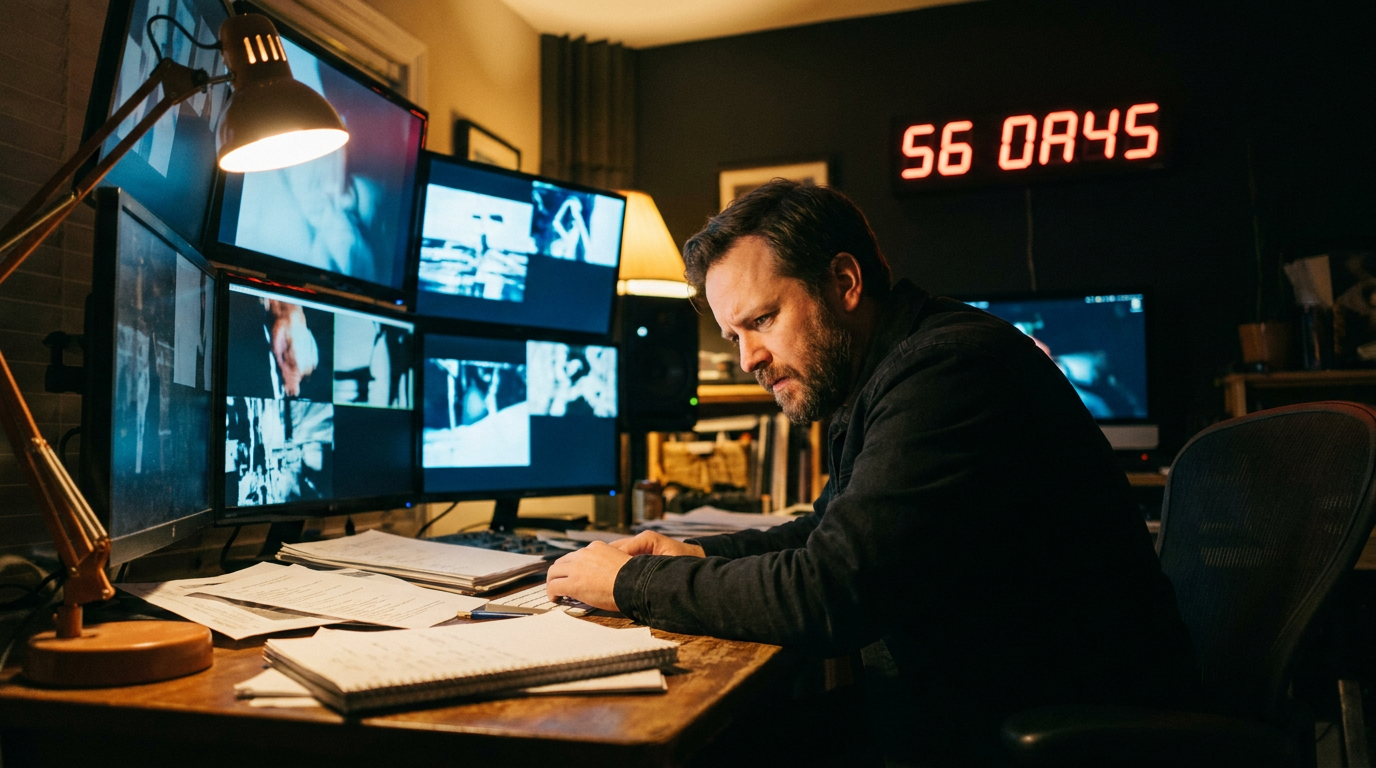
You’ve got 56 days.
On August 2, 2026, the EU AI Act’s Article 50 transparency obligations become fully enforceable. If you’re making AI music videos — and if any of your audience is in Europe — this law applies to you. Regardless of where you live, where your servers are, or whether you’ve ever set foot in Brussels.
Companies, agencies, and individuals that fail to comply may face penalties of up to €15 million or 3% of total worldwide annual turnover, whichever is higher. That’s not a typo. That’s the fine for uploading an AI music video without proper labeling.
And if you think this is just a European problem, think again. California’s AI Transparency Act (SB 942) has similar requirements for systems serving California residents: visible labeling, imperceptible machine-detectable watermarking, and a publicly accessible detection tool.
The era of quietly uploading AI-generated content without disclosure is ending. For musicians using AI to make music videos, this changes everything about your workflow. But here’s the thing most people are missing: it doesn’t have to be scary. It might even help you.
What Exactly Is Changing on August 2
Let’s cut through the legal jargon. Under Article 50, anyone publishing AI-generated content must disclose that it wasn’t created by a human — unless the content has been reviewed and approved through a human editorial process.
The regulation covers all synthetic content. The Act uses the term “synthetic content” — defined as content generated or manipulated by an AI system. This is broader than most people expect: AI-generated images, AI-generated video (Sora, Runway, any AI tool producing or significantly altering video content), AI-generated audio (text-to-speech, AI voice cloning, AI music generation), and AI-generated text.
So yes — if you’re using any AI video generator to create your music video, your content falls under this regulation. If you’re using an AI music generator like Suno or Udio for the track itself, the audio also qualifies. Your entire AI music video — visuals and audio — is subject to mandatory disclosure.
And here’s the kicker that catches most indie musicians off guard: As soon as the content is directed at users within the EU, the regulation applies. Under Article 2, the AI Act also applies to providers and deployers outside the EU if their AI outputs are used within the Union — regardless of domain extension or server location.
Upload an AI music video to YouTube? You have EU viewers. Post to Instagram or TikTok? Same deal. You’re in scope.

The Two-Layer Labeling System You Need to Understand
This isn’t as simple as slapping “Made with AI” in your video description. The industry has converged on a two-layer technical standard: C2PA content credentials (a signed metadata manifest) and imperceptible watermarking (SynthID and equivalents).
Layer 1: Machine-Readable Marking (C2PA)
The core of this new regulatory world is the C2PA standard (Coalition for Content Provenance and Authenticity). Unlike a visible watermark that can be easily cropped or edited out, C2PA embeds an invisible, cryptographically signed “nutrition label” directly into your video’s metadata.
Think of it as a digital receipt that travels with your file everywhere. It records what tools made the content, when it was created, and who signed off on it. As of 2026, over 6,000 organizations have joined the coalition, and platforms including LinkedIn and TikTok now display a “CR” (Content Credentials) badge on supported content.
Layer 2: Invisible Watermarking (SynthID and Others)
C2PA metadata is great — until social media strips it. And that’s exactly what happens. The key limitation: social media platforms systematically strip C2PA metadata during upload processing. Instagram, X, YouTube, and Facebook all remove these credentials when you publish. Your file can leave your system compliant and arrive at the viewer without any provenance signal.
That’s why invisible watermarks matter. Google’s SynthID, for example, embeds a signal directly into the pixels and audio waveform that survives compression, re-encoding, and social media processing. SynthID-Audio is used in Lyria, MusicLM, and Veo 3 audio outputs. SynthID-Image is used in Imagen and Vertex AI image outputs.
But here’s what most musicians don’t realize: Suno, Udio, ElevenLabs Music, Mureka, Stable Audio, and Riffusion do NOT use SynthID — those generators have their own watermarking approaches (mostly metadata and spectral fingerprints, not cryptographic embedded signals).
So the watermarking landscape is fragmented. Your AI music tool and your AI video tool likely use different (or no) watermarking systems. This is a problem you need to solve before August 2.
What This Means for Your AI Music Video Workflow
Let’s get practical. If you’re an independent musician making AI music videos — whether you’re creating hip-hop visuals, EDM content, or indie aesthetics — here’s what your new workflow needs to include.
Step 1: Know Your Tools’ Compliance Status
Check whether each AI tool in your pipeline embeds C2PA credentials or watermarks. Does your AI video tool embed C2PA credentials in output files? If not, plan an additional step. If you distribute to social platforms, embedded metadata will likely not survive the upload. Maintain a separate provenance record on your own infrastructure.
Most dedicated AI music video generators are still catching up on this front. Some embed provenance data, many don’t. Ask before you commit to a tool.
Step 2: Add Visible Disclosure
The simplest path to compliance? A visible label. A visible label or end-card also satisfies the audience disclosure requirement and tends to be simpler to audit.
This could be:
- An end card stating “Visuals generated with AI”
- A text overlay in the description
- A label in your video metadata on YouTube (which YouTube already supports)
YouTube’s auto-labeling system is actually working in your favor here. YouTube’s own auto-labeling system effectively helps creators meet this requirement. If you’re already using YouTube’s disclosure tools, you’re halfway there.
Step 3: Keep Your Own Records
Document your governance process. Regulators look for evidence of intentional compliance design, not just a watermark present on one file.
For musicians, this means keeping a simple log:
- Which AI tools you used (video generator, music generator, image tools)
- Dates of creation
- Any human editing you did afterward
- Where the content was published
This doesn’t need to be complicated. A spreadsheet works. The point is proving that you thought about it, not that you hired a compliance department.
Step 4: Understand the Editorial Exception
Here’s the silver lining that most coverage overlooks. When a human reviews, edits, or assumes responsibility for the content, the labeling requirement does not apply. Article 50(4) clearly states that editorial review or responsibility exempts the content from mandatory labeling.
This is huge for musicians who use AI as a tool rather than a full replacement. If you’re generating AI visuals but then curating, editing, re-timing, and making creative decisions, you may be able to claim editorial responsibility. The line between “AI-generated” and “AI-assisted” is becoming legally meaningful.
That said, if you’re generating a full music video from a single prompt with zero editing? That’s clearly AI-generated content requiring disclosure.
Why This Is Actually Good News for Musicians
I know, I know — “exciting new regulation” isn’t exactly a rallying cry. But hear me out.
Transparency Builds Trust
Edelman Trust Barometer data from early 2026 shows that 67% of consumers say they want to know when they are viewing AI-generated content. Proactive disclosure — before it is required — positions your product as trustworthy.
Musicians who lean into transparency instead of hiding from it will build more durable fan relationships. When your audience knows you’re using AI tools creatively and you’re upfront about it, they respect the honesty. It’s the hidden AI use that erodes trust.
It Levels the Playing Field
Right now, the biggest frustration for independent musicians is competing against a flood of low-effort AI-generated content clogging platforms. May gave the AI music industry a full set of warning signs: licensed remix deals, expanded lawsuits, platform tagging, AI upload floods, YouTube copyright tools, and creator backlash.
Mandatory labeling creates accountability. When every piece of AI content is identifiable, platforms can build better filtering and recommendation systems. The musicians who create genuinely compelling AI music videos — with real creative direction, not just prompt-and-pray — will stand out against the noise.
Platforms Are Already Doing the Heavy Lifting
The convergence of platform enforcement (YouTube, Meta, TikTok), industry standards (C2PA, SynthID), and government regulation (EU AI Act, California SB 942) is creating an ecosystem where undisclosed AI content has nowhere to hide.
YouTube already auto-labels AI content. TikTok and Instagram have their own systems. The platforms are not penalizing AI use. They are penalizing hidden AI use.
If you’re already being transparent about your process — and you should be — these regulations simply formalize what you’re already doing.
The Bigger Picture: This Is Only the Beginning
August 2, 2026 is not an isolated deadline. It sits inside a broader move toward mandatory content provenance.
The A2IM Indie Week conference — happening literally tomorrow, June 8–11 in New York — has sessions on AI music licensing and the evolving role of litigation in protecting rights in today’s digital and AI-driven marketplace. The Register of Copyrights herself, Shira Perlmutter, is keynoting. SonicOrigin’s interactive listening room will let attendees test whether they can detect audio watermarking in real time, exploring how this technology can be adopted across the independent music sector.
Meanwhile, Suno just announced a $400 million Series D round, valuing the company at $5.4 billion.
Suno reportedly reached 2 million paid subscribers and $300 million in annual recurring revenue in early 2026. AI music is an enormous and growing market. Regulation isn’t going to slow it down — it’s going to professionalize it.
The musicians who understand these rules now — not in August when they’re scrambling — will be the ones who thrive. Whether you’re making pop videos, R&B visuals, or lo-fi aesthetics, the creative opportunity hasn’t changed. You just need to be smart about the disclosure side.
Your 56-Day Action Plan
Here’s exactly what to do between now and August 2:
-
Audit your tools. List every AI tool you use — video generation, music generation, image creation. Check which ones embed C2PA or watermarks.
-
Set up disclosure templates. Create standard end cards, description text, and metadata labels you can reuse across releases. Make it part of your process, not an afterthought.
-
Start a provenance log. Even a simple spreadsheet tracking what tools you used for each release. Date, tool, output type, where published.
-
Lean into editorial involvement. The more creative direction you bring — editing, re-timing, curating shots, adding effects — the stronger your claim to editorial responsibility.
-
Update your distribution accounts. YouTube, TikTok, and Instagram all have AI disclosure settings. Turn them on now and get comfortable with the workflow.
-
Don’t panic. This regulation exists to create accountability, not to kill AI creativity. Musicians who use AI thoughtfully and transparently have nothing to worry about.
Make It Easy on Yourself
The best compliance strategy? Use tools that make disclosure seamless. When your AI music video generator handles the technical side — embedding provenance data, maintaining quality, syncing to your track — you can focus on what matters: making great music videos.
OneMoreShot.ai lets you create stunning AI music videos from your tracks in minutes. As labeling requirements tighten, working with a purpose-built music video tool means one less thing to worry about in your creative workflow. Upload your track, direct your visuals, and get back to making music.
The countdown is at 56 days. The musicians who prepare now won’t just survive the AI labeling era — they’ll own it.