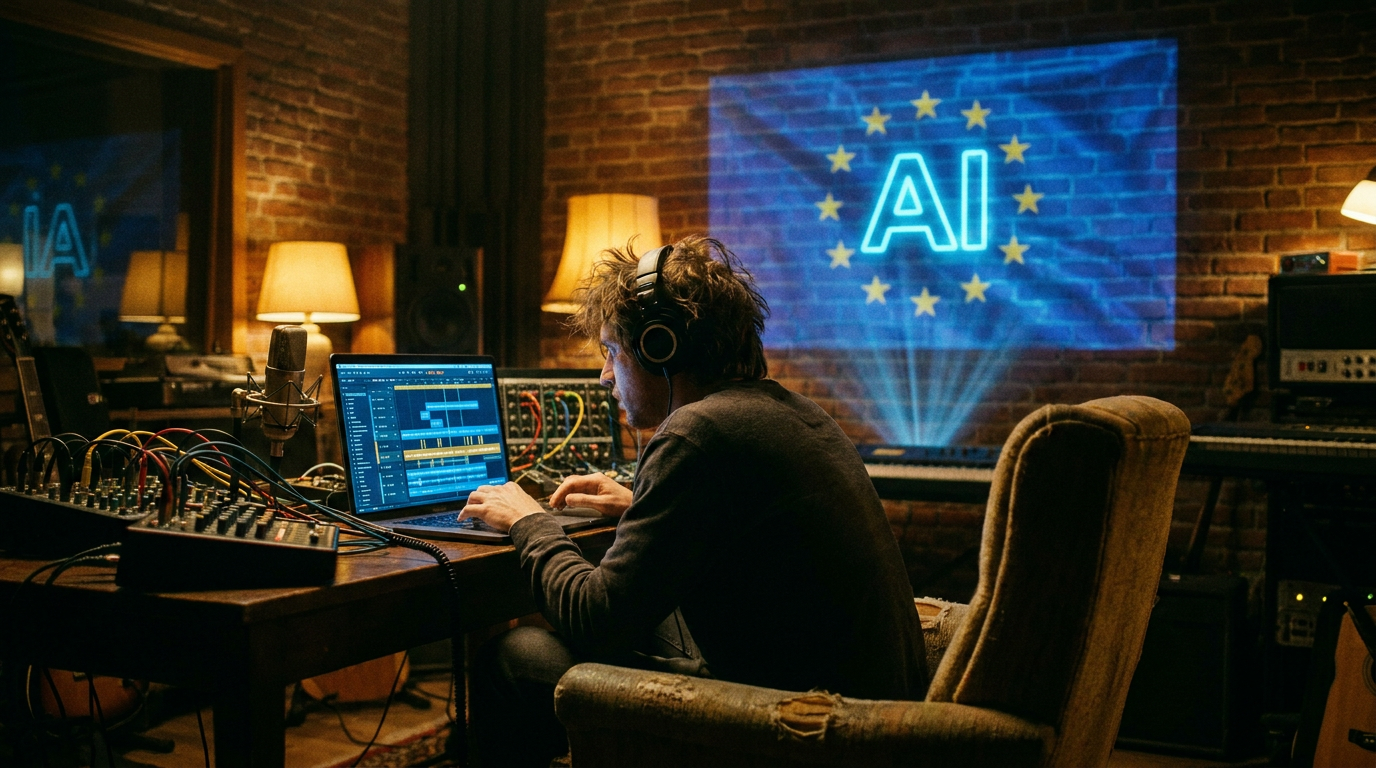
The EU AI Act Hits AI Music Videos Tomorrow
Tomorrow changes the game.
On August 2, 2026, the EU AI Act’s Article 50 transparency obligations become fully enforceable. This imposes direct transparency duties on providers and deployers of chatbots, synthetic-media generators, emotion-recognition systems, and deepfake tools — regardless of whether the underlying system qualifies as “high-risk.”
If you’re a musician using AI to make music videos — and if anyone in your audience is in the EU — you need to understand what just changed. Because the fines aren’t theoretical. They reach €15 million or 3% of global annual turnover, whichever is greater.
Let’s break down exactly what this means for your AI music video workflow.
What Article 50 Actually Requires
The core idea is deceptively simple. If a piece of content could pass for real, people have a right to know a machine made it, and the burden now falls on the companies behind it.
The rules split the work in two. Providers, the firms that build generative systems, must embed machine-readable markings so that images, audio, video, and text can be detected as AI-generated or manipulated. That’s the tool-makers: Runway, Kling, Veo, Seedance, and yes, every AI music video platform.
Then there are the deployers — the people who actually publish the content. That’s you, the musician. Deployers who publish AI-generated or AI-manipulated content to the public, including deepfakes and text on matters of public interest, must disclose the artificial nature of the content to the audience.
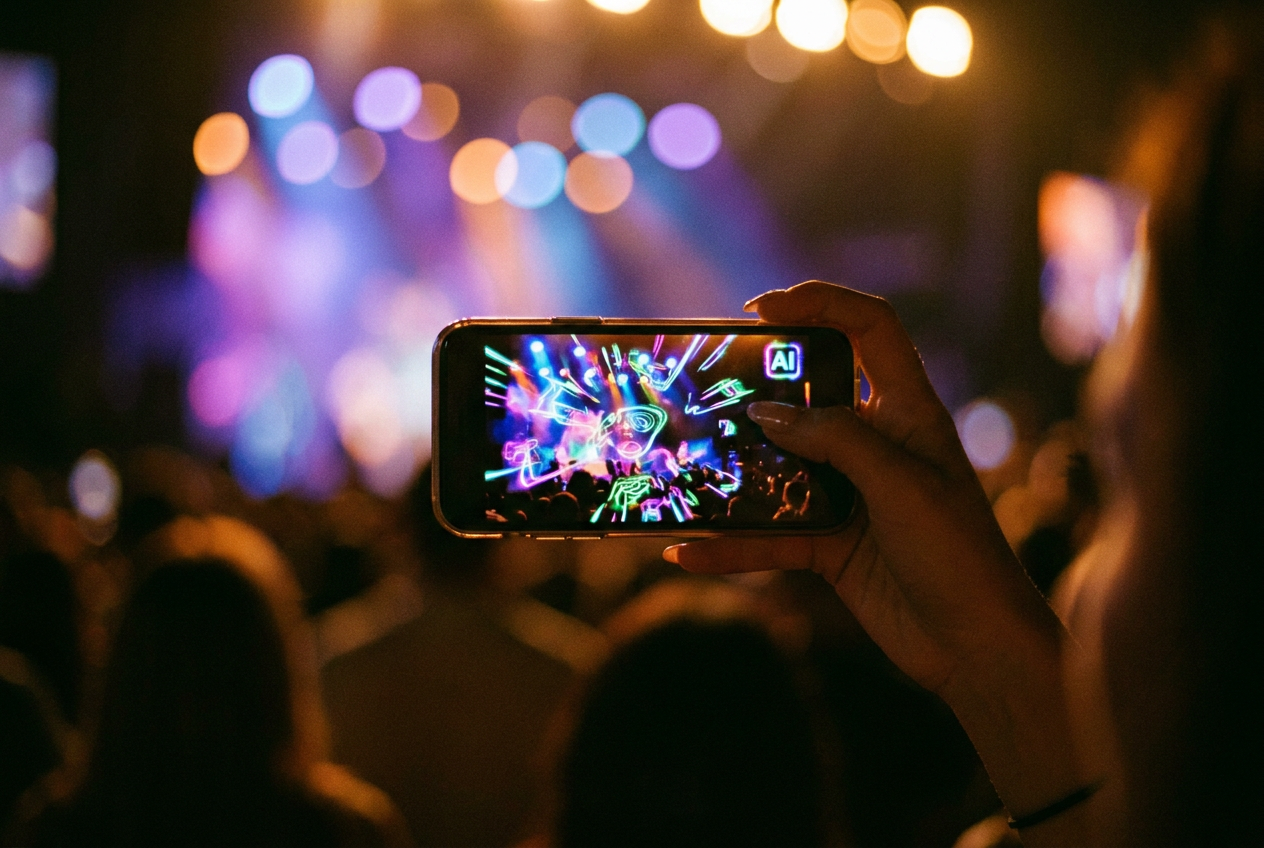
Here’s the part that matters most for music video creators: For images and video, companies must display a visible, unobstructed icon or label featuring a large, distinct “AI” text. For audio materials, a clear spoken warning (audible disclaimer) must be played at the very beginning of the track.
Yes, you read that right. The regulation envisions visible labels on AI video and audible disclaimers on AI audio. For a music video, that’s a double hit.
Wait — Does This Apply to Musicians?
Short answer: it depends on how you use AI, and whether your audience includes anyone in the EU.
The regulation applies where the AI system is placed on the EU market or its output is used in the EU. A US or UK provider or deployer serving EU users is in scope. So if you’re an American indie artist who uploads an AI music video to YouTube, and someone in Berlin watches it — technically, you’re in scope.
Now, before you panic, there are some critical nuances.
The Artistic Exemption (It’s Not What You Think)
Where deepfake content forms part of an evidently artistic, creative, satirical, fictional or analogous work or programme, the disclosure obligation is reduced: it is limited to disclosing the existence of the generated or manipulated content “in an appropriate manner that does not hamper the display or enjoyment of the work.”
This is the clause musicians should be paying very close attention to. A music video is clearly an artistic work. So you don’t need to plaster a massive “AI” watermark across every frame of your visual album. But — and this is crucial — artistic, creative, satirical, fictional or analogous works are not a blanket exemption: disclosure is limited to an appropriate form that does not hamper display or enjoyment.
In practical terms? For works that are evidently artistic, creative, satirical or fictional, the disclosure is attenuated — it must still appear but in a way that does not spoil the work (for example, in the credits).
So a credit-roll disclosure, a video description note, or metadata tagging could work. A credit-roll disclosure, an IPTC metadata field, or a small on-screen icon shown for at least five seconds (as the draft Code of Practice proposes for deepfakes in artistic works) may suffice.
The Personal Use Exemption
Purely personal, non-professional activity and scientific research and development are outside scope. But the exemption covers genuinely personal use: generating art purely for yourself, with no professional or commercial dimension. The moment money or professional obligation enters the picture, the deployer definition applies.
If you’re releasing music commercially — on Spotify, YouTube, anywhere — this exemption doesn’t help you.
What This Means for Your AI Music Video Workflow
Let’s get practical. Here’s what musicians making AI music videos should actually do starting tomorrow.
1. Label Your Videos
The safest approach: add a brief disclosure in your video description that AI tools were used in production. Something like: “This music video was created with AI-assisted video generation tools.”
For YouTube specifically, you should already be using the platform’s AI disclosure toggle (YouTube auto-labels AI videos since late 2025). But the EU regulation requires that disclosure to be visible and clear to the viewer, not just machine-readable metadata buried in the backend.
If you’re making videos with OneMoreShot.ai or any other AI music video tool, make disclosure part of your standard upload checklist. It takes five seconds and it protects you.
2. Know the Provider vs. Deployer Split
The good news: the heavy technical lifting falls on the AI tool providers, not on you. Providers of systems that create synthetic audio, image, video, or text must also mark outputs in a machine-readable format where technically possible. That means the platforms building the video generation models — Google (Veo), ByteDance (Seedance), Kuaishou (Kling), MiniMax (H3) — are responsible for embedding watermarks and metadata.
Your job as the deployer is the human-readable part: making sure your audience knows the content was AI-generated or AI-assisted, in a way that’s clear and not buried in fine print.
3. Understand the Watermarking Grace Period
There’s a small reprieve here. There’s a grace period for the marking obligation until December 2026 for generative AI systems placed on the market before 2 August 2026. So the machine-readable watermarking tech has until December to fully roll out for existing tools. But the core transparency and disclosure duties applied on schedule from August 2, 2026. Organizations relying on that grace period should confirm which specific sub-obligation it covers, since Article 50’s disclosure duties for interactive systems and deployer-side deepfake disclosure took effect immediately on August 2, 2026.
Translation: the tools get a few extra months to build the watermarking tech, but your obligation to disclose starts now.
The Realistic Deepfake Problem for Musicians
Here’s where it gets really interesting — and potentially treacherous — for music video creators.
A realistic synthetic depiction of a fictitious but natural-looking person would therefore constitute a deepfake within the meaning of the AI Act, even where no identifiable rights-holder was implicated. But the draft Guidelines clarify that clearly fantastical or physically impossible content (e.g., dragons or humans flying unaided) falls outside the deepfake definition.
This creates a fascinating split for music video creators:
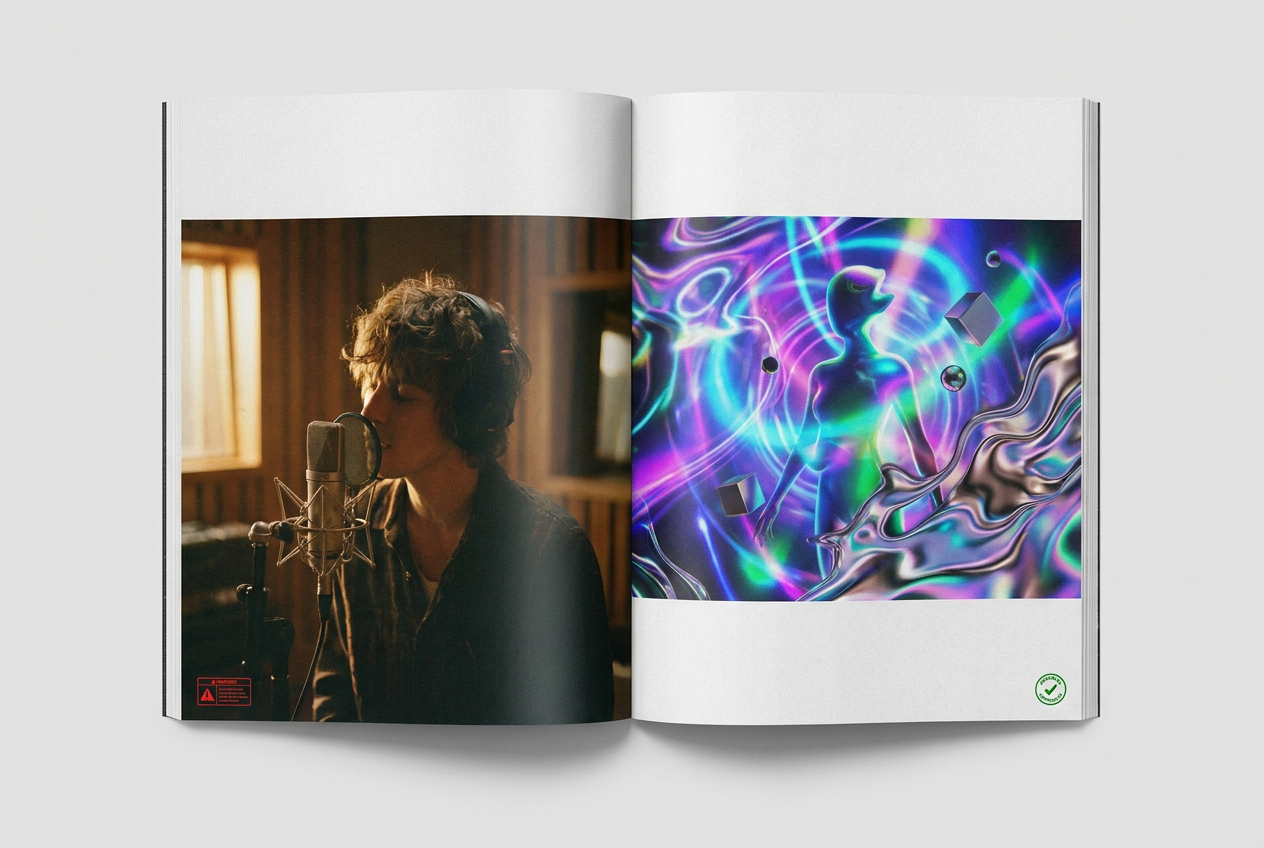
- Abstract, psychedelic, surreal AI visuals? Probably not deepfakes under the regulation. The more obviously AI-generated and fantastical your video looks, the lighter your disclosure burden.
- Photorealistic AI-generated people in your video? That’s a deepfake under the EU’s definition, even if you invented the character from scratch. Full disclosure required.
This is actually a strong argument for leaning into the aesthetic strengths of AI video generation rather than chasing photorealism. The dreamy, morphing, otherworldly look that tools like OneMoreShot.ai produce naturally? That’s not just an artistic choice anymore — it’s a compliance advantage.
If you’re working in genres where surreal visuals are the norm — lo-fi, EDM, or indie — you’re already in a good position. Genres that tend toward photorealistic music videos, like R&B or hip-hop, may need to think more carefully about how they approach AI-generated characters.
The Bigger Picture: Why This Matters Beyond Compliance
Let’s zoom out. The EU AI Act isn’t just a regulatory checkbox. It’s reshaping how the entire AI content ecosystem works. And for musicians, the implications go beyond just labeling your videos.
AI Video Tools Are Already Adapting
The major AI video platforms are scrambling to comply. The industry has focused on the Article 50 deadline, which mandates that all synthetic content — audio, image, or video — must be watermarked in a machine-readable format. This has led to the universal adoption of the C2PA standard by major labs, effectively creating a “digital birth certificate” for AI-generated media.
C2PA (Coalition for Content Provenance and Authenticity) essentially creates a tamper-evident chain of custody for AI content. When you generate a video with a compliant tool, the output carries invisible metadata proving its AI origin. This survives re-encoding, compression, and most edits.
For musicians, this means the tools you use are increasingly going to handle the technical compliance automatically. Your job is the disclosure layer on top.
The Two-Speed AI Video World
EU AI Act Article 50 enforcement begins August 2, 2026. It requires machine-readable marking on all AI-generated video distributed to EU audiences.
Meanwhile, the US has no equivalent federal regulation. China is building its own framework. This creates a fragmented global landscape where the same AI music video might need different disclosure approaches depending on where it’s viewed.
For now, the smart move is to default to EU-level disclosure everywhere. It’s the strictest standard, and adding a note to your video description costs nothing. If you’re already following our complete guide to AI music videos, you’re most of the way there — just add disclosure to your publish checklist.
The MiniMax H3 Timing Is Not a Coincidence
It’s worth noting that MiniMax and ByteDance released updates to their dueling AI video generation models within hours of each other — literally yesterday, the day before Article 50 enforcement kicks in.
Chinese AI firm MiniMax has launched H3, its newest multimodal video generation model, pledging to break closed-source “dominance” through open weights and competitive pricing.
H3 generates 2K clips with natively synced audio from up to twelve reference files, priced pay-as-you-go from $0.13 per second.
These tools are launching into a world where every output they generate must now carry machine-readable provenance markers for EU distribution. The era of unmarked AI video is over — at least in Europe.
For musicians evaluating which AI video tools to use, compliance readiness should now be on your checklist alongside quality and price. Check whether your tool embeds C2PA metadata or equivalent watermarking. If it doesn’t, you’re the one on the hook.
Your Checklist for August 2, 2026
Here’s exactly what to do right now:
-
Add disclosure to every AI music video description. A simple line stating AI tools were used in production. Do this on YouTube, Instagram, TikTok — everywhere.
-
Use your platform’s AI disclosure features. YouTube’s AI label toggle, TikTok’s AI content tag, Instagram’s AI-generated label. Turn them on.
-
Check your AI video tool’s compliance. Does it embed C2PA metadata? Does it include watermarking? If you’re using OneMoreShot.ai, compliance metadata is handled in the generation pipeline.
-
Lean into artistic aesthetics. The more obviously creative and non-photorealistic your AI video is, the lighter your disclosure burden under the artistic exemption.
-
Don’t fake real people. The artistic exemption does not excuse realistic depictions of real people in misleading ways. If your AI music video features a convincing likeness of a real person, you need full deepfake disclosure.
-
Keep records. Document your AI tool usage, your disclosure practices, and your creative process. If you ever need to demonstrate compliance, documentation is your best friend.
What This Doesn’t Change
Here’s what musicians should not panic about:
- Your AI music video isn’t illegal. Article 50 is about transparency, not prohibition. You can still make AI music videos. You just have to say so.
- The artistic exemption is real. Music videos are creative works. Your disclosure can be in the credits, the description, or accompanying materials — not plastered across the video itself.
- Enforcement will be gradual. Compliance with the rules will mainly be enforced by national competent market surveillance authorities. They’re not coming for indie musicians on day one. But building good habits now means you’ll never have to worry.
The EU AI Act doesn’t kill AI music videos. It just makes transparency mandatory. And honestly? For musicians who are already proud of their creative process — who use AI as a tool, not a crutch — disclosure is something to embrace, not fear.
If you want to learn more about how to create AI music videos that stand out, check out our guide on how to make an AI music video. And when you’re ready to start creating, OneMoreShot.ai makes it simple to go from track to finished video in minutes — with the transparency tools you need built right in.