The Rolling Stones Just Deepfaked Themselves Young
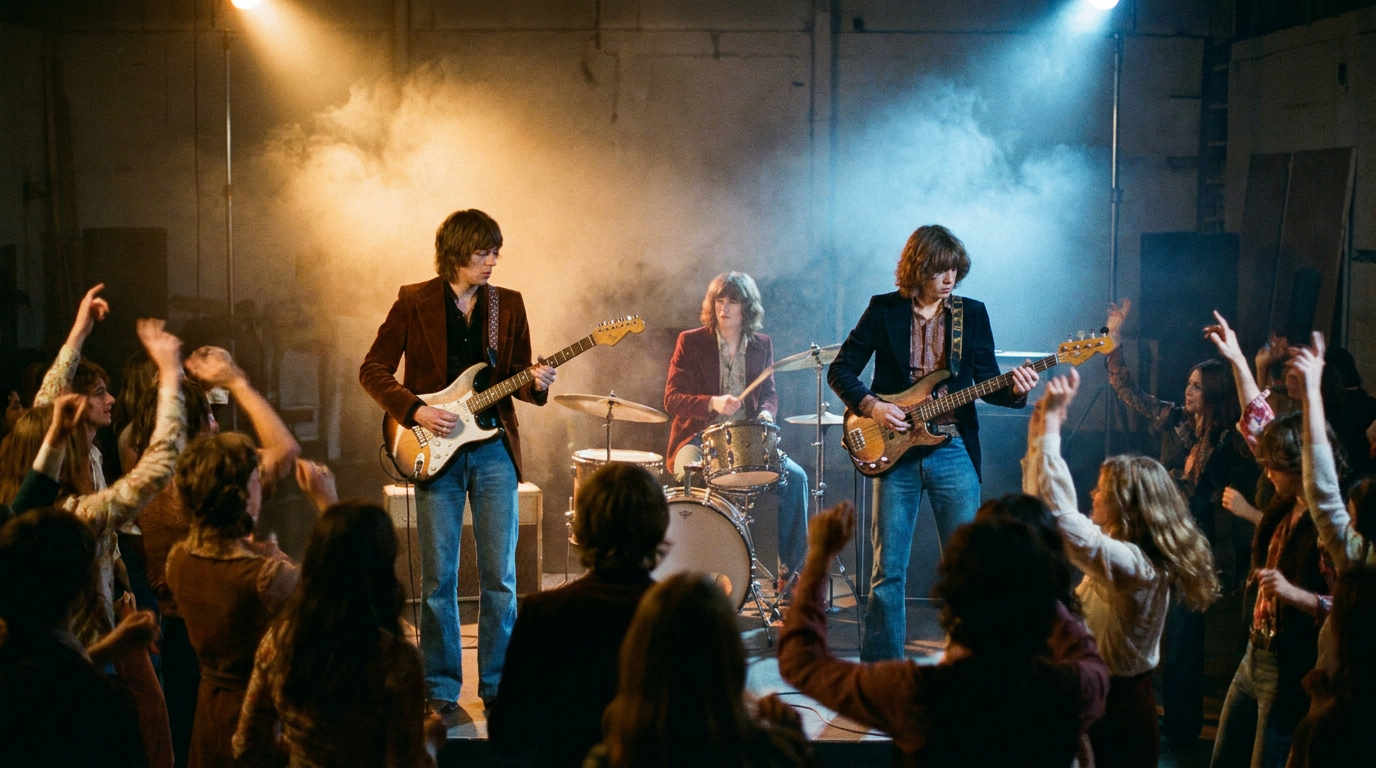
Mick Jagger is 82 years old. Keith Richards is 82. Ronnie Wood is 78. And yet, in the music video for their new single “In The Stars,” all three look like they just stumbled out of a 1978 warehouse party, cigarettes dangling, leather jackets gleaming, not a wrinkle in sight.
This isn’t CGI. It isn’t makeup. It’s deepfake AI — and it might be the most important music video of 2026.
What Happened
The Rolling Stones look straight out of the 1970s in the legendary rock band’s music video for new single “In the Stars,” thanks to de-aging technology courtesy of South Park creators Trey Parker and Matt Stone’s AI company Deep Voodoo.
In the François Rousselet-directed video, which features Odessa A’zion, the band is rocking out in a warehouse as a crowd of fans dances around them and a slew of other musicians join in on the song too.
The video, which turns surrealistic with multiple drummers and guitarists, serves as a preview of their upcoming album, Foreign Tongues, out July 10.
The process itself is fascinating. The exact process used to develop the de-aged Stones is unknown, but the video credits body doubles for Jagger, Richards, and Wood, who must have stood in for the band while AI de-aging tech was used on their faces to seal the deal.
Members of the young British band Hot Property played the pre-deepfaked Stones.
The video’s credits on the Deep Voodoo side lists an “AI data wrangler” as well as deepfake artists for all three of the band members’ AIs.
Let that sink in: a young British band physically performed, and then AI painted the faces of 80-year-old rock legends over them, frame by frame, convincingly enough to release to millions of fans worldwide.
The Deep Voodoo Origin Story
Here’s where it gets weird — and interesting. The company behind this isn’t some faceless Silicon Valley startup. Deep Voodoo is an artificial intelligence-based visual effects studio created by Matt Stone and Trey Parker in 2020. The studio utilizes deepfake technology to create hyperrealistic effects for entertainment purposes. Deep Voodoo was established in early 2020 after being spun out of Matt Stone and Trey Parker’s independent entertainment company, Park County, to develop deepfake technology. The team, originally composed of more than twenty computer graphics artists, had been assembled for a film project that was interrupted due to the COVID-19 pandemic. Following this, the studio pivoted to creating deepfake tools for the entertainment industry.
Yes, the guys who make South Park — a show animated with construction paper cutouts — are now running one of the most sophisticated AI visual effects companies on the planet. You can’t make this up.
Matt Stone said in a rare interview: “I find that a lot of discussions about AI become tiresome. You know, ‘Put your taxes in and it can do them.’ And it’s like, ‘Cool, but a human can do your taxes.’ What we’re trying to do is something no amount of humans can do.”
That last line is the key. De-aging Mick Jagger to look exactly like 1978 Mick Jagger while he performs a brand-new song — that’s something traditional VFX has struggled with for decades. It’s the kind of creative application that sidesteps the typical AI debates entirely.
Deep Voodoo’s Music Video Resume
The Rolling Stones video isn’t Deep Voodoo’s first foray into music. In fact, they’ve been building one of the most impressive music video portfolios in the AI space.
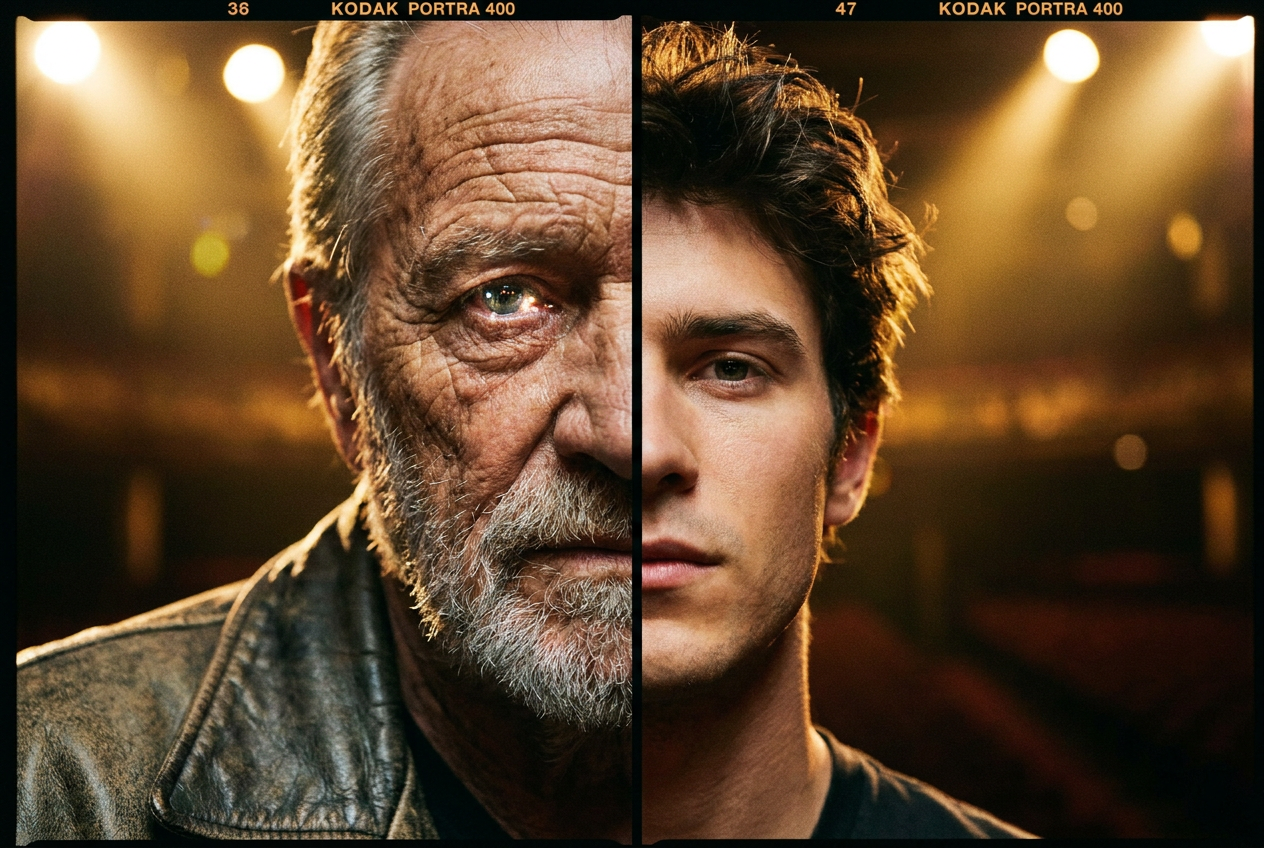
In 2022, Deep Voodoo made deepfakes for Kendrick Lamar, putting the faces of O.J. Simpson, Jussie Smollett, Nipsey Hussle, Kobe Bryant, and Kanye West on Kendrick for the music video for “The Heart Part 5”. That video didn’t just go viral — it became one of the most important visual statements in hip-hop history. Lamar used the technology to literally become the figures he was rapping about, creating a deeply unsettling commentary on identity, legacy, and public perception. (If you’re exploring AI-powered visuals for hip-hop, check out our AI Music Videos for Hip-Hop guide.)
Then came Billy Joel. Deep Voodoo also helped to create a music video for Billy Joel’s song, “Turn the Lights Back On”, where the artist is depicted playing the song at different ages in his life. Rather than just making Joel look young, the video traversed his entire timeline — a living biography rendered in AI.
And now the Stones. Three landmark music videos, three completely different creative approaches, one company.
Why Fans Are Divided
Not everyone is thrilled. While some fans of the rockers are thrilled with the new single and video, others aren’t convinced by the de-ageing effect, describing it as “creepy” and “unnerving”. “The new AI video is very uncanny valley. I don’t like it. Just… why?” posted one user on social media platform Reddit. “The AI is weird – we all know they’re in their 80s,” wrote another on X, while a third suggested that “AI had Keef lookin like Jeff Beck”.
And then there’s the more philosophical critique. Stereogum memorably called it “The Irishman of music videos” — a reference to Martin Scorsese’s film that de-aged Robert De Niro and Joe Pesci to somewhat uncanny effect.
The debate mirrors something broader happening across AI music visuals. Overall, the deepfakes are impressive, if not maybe a tad uncanny, showing a near-perfect replica of how Jagger, Keith Richards and Ronnie Wood looked in the late ’70s. It’s that “tad uncanny” that either delights or disturbs, depending on who you ask.
Deep Voodoo executive Jennifer Howell told THR: “Our goal is to make beautiful, cinematic film and television that never pulls the viewer out because the effect doesn’t look right.” Whether they achieved that with the Stones video is genuinely debatable — and that’s what makes it such an interesting creative moment.
What This Means for Music Videos in 2026
Here’s the real takeaway for musicians reading this: AI-powered visual effects in music videos aren’t a novelty anymore. They’re a legitimate creative tool being used by the biggest artists on the planet.
Consider the trajectory:
- 2022: Kendrick Lamar uses deepfakes for artistic commentary
- 2024: Billy Joel uses de-aging for nostalgic storytelling
- 2026: The Rolling Stones use de-aging as the entire visual concept
Each step normalizes the technology a little more. And each time, the conversation shifts from “should artists use AI?” to “how should artists use AI?”
The Stones video is particularly significant because it represents a consent-first approach. Unlike the controversies around unauthorized AI voice clones or AI-generated music that mimics real artists, everyone involved chose to participate. The band approved their de-aged likenesses. Body doubles were hired and credited. Deepfake artists got credits alongside the traditional crew. It’s a model for how AI can be used ethically in music visuals.
For a deeper look at how AI is reshaping music video creation across all levels, our Complete Guide to AI Music Videos in 2026 breaks down everything you need to know.
The Bigger Picture: AI Music’s Dual Identity
What makes the Stones video fascinating is that it arrives during a moment of deep tension around AI in music. A Luminate study compared attitudes towards AI use in music creation from May to November of 2025. It found that overall interest dropped from -13% to -20% during that time period. “Across the board, what we found is that consumers are net negative,” says Audrey Schomer, a media analyst and research editor at Luminate. “All that means is that people are more likely to feel uncomfortable than to feel comfortable with AI use.”
Meanwhile, Apple Music’s senior vice president of music Oliver Schusser disclosed in a May 2026 interview that over one third of all new uploads to the platform are now fully AI-generated. This is the first time a major DSP has put a number on the AI upload share. The figure refers to fully synthetic tracks generated by models like Suno and Udio, not human compositions that used AI as a production assistant.
So we’re in a paradox: AI-generated music is flooding platforms while listeners increasingly dislike it. But AI-enhanced visuals for human-made music? That’s a completely different story. Nobody’s upset that the Stones used AI to look younger. They’re debating whether it looks good enough, which is a fundamentally different conversation.
This distinction matters for every musician thinking about AI. Using AI to replace your creativity is a hard sell to audiences. Using AI to amplify your vision — to do something you physically can’t do, like make an 82-year-old look 35 — is a much easier proposition.

What Indie Musicians Can Learn from the Stones
You probably don’t have Deep Voodoo on speed dial. That’s okay. The lesson from the Stones video isn’t “hire a $20 million AI company.” It’s this: AI works best in music videos when it serves a creative idea you couldn’t achieve otherwise.
The Stones didn’t use AI because they were lazy. They used it because there’s literally no other way to make an 82-year-old man look 35 while performing a new song in real-time. That’s the sweet spot.
For indie musicians, the equivalent might be:
- Creating visuals that match impossible locations — your lo-fi track deserves a rain-soaked Tokyo night scene, even if you live in Ohio
- Generating consistent character designs across a visual album
- Building surreal, dream-like sequences that would cost thousands to film practically
- Producing music videos at the speed of your release schedule — not six months after your song drops
Whether you’re working in rock, indie, or pop, the same principle applies: AI should be the tool that bridges the gap between what you imagine and what you can afford.
And unlike the Stones’ approach — which required body doubles, deepfake artists, an AI data wrangler, and presumably a significant budget — today’s AI music video tools have democratized visual creation to the point where a single musician can produce compelling visuals from their laptop.
The Keith Richards Perspective
Perhaps the most fitting final word belongs to Keith Richards himself, who shared his views on AI in 2023. “Synthesizers, now you have AI, which is even more superficial…But AI is like anything else. It can either be a tool, or it can be a toy.”
In “In The Stars,” it’s clearly being used as a tool. Whether it’s a good enough tool to overcome the uncanny valley, or whether it’s a step too far into digital fantasy, is a question every viewer gets to answer for themselves.
But here’s what’s not debatable: the biggest rock band in history just made a deepfake music video and treated it as a totally normal creative decision. That shifts the Overton window for everyone.
If you’re interested in learning how to make an AI music video yourself, you don’t need the South Park guys or body doubles. Tools like OneMoreShot.ai let you upload your track and generate stunning music videos in minutes — no deepfake artists required, no uncanny valley debates. Just your music, your vision, and AI that brings it to life.
Because if the Rolling Stones are using AI for their music videos in 2026, what exactly are you waiting for?