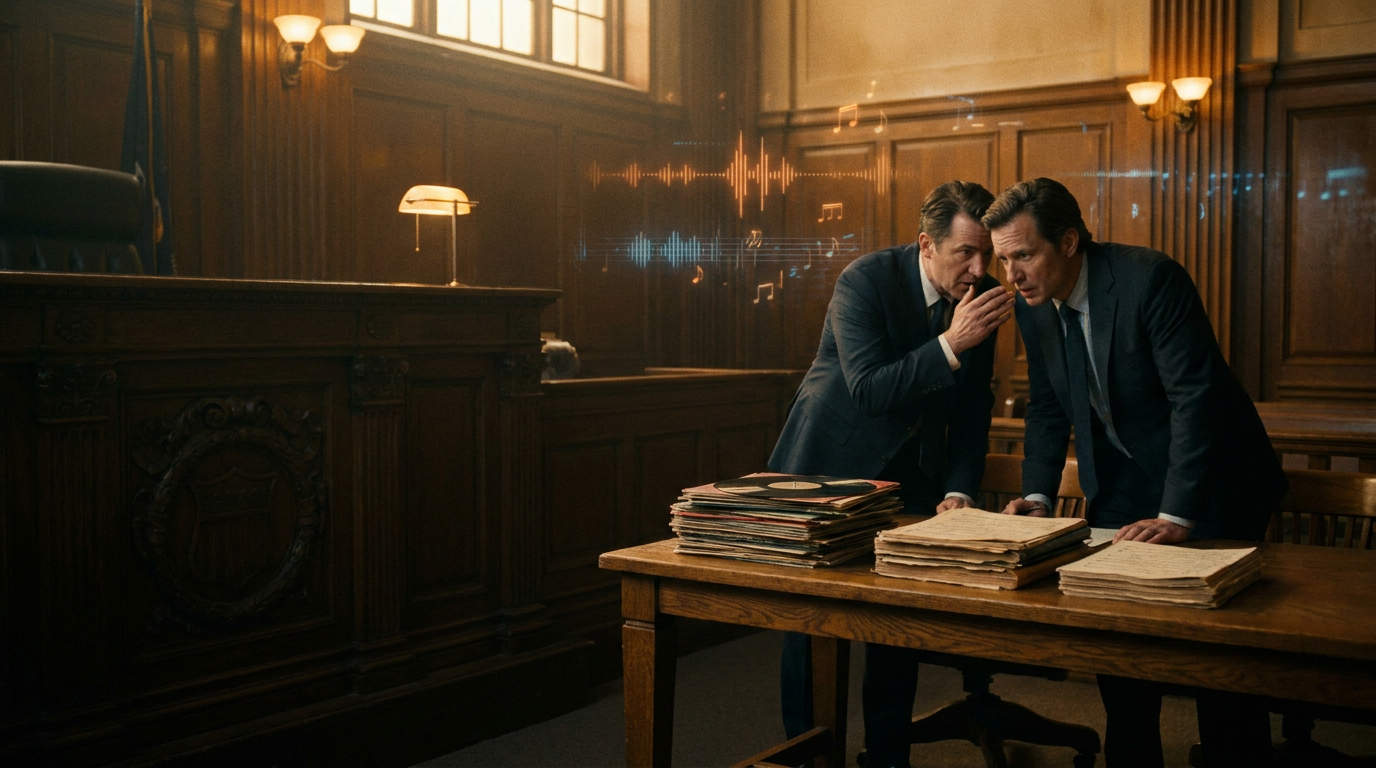
The Tobacco Lawyers Are Coming for AI Music
The AI music industry just got its scariest opponent yet — and it’s not a major label.
On Monday, June 22, Hagens Berman — the law firm that took on the tobacco industry — joined forces with Delgado Entertainment Law to represent independent artists whose recordings were allegedly copied without permission to train Suno’s and Udio’s AI music-generation models.
If that name doesn’t ring a bell, it should. Hagens Berman represented 13 US states in what it describes as the largest recovery in litigation history — a settlement with the tobacco industry that the firm values at $260 billion.
Now they’re turning that same firepower on AI music. And for independent musicians trying to navigate this space, the implications are enormous.
Why This Lawsuit Is Different
The major labels have been suing Suno and Udio since June 2024. That’s old news. But this case is fundamentally different because it’s not about Sony, Universal, or Warner protecting their catalogs. It’s about independent artists — the people who make music in bedrooms, home studios, and tour vans — fighting for their rights.
Hagens Berman’s Steve Berman put it bluntly: “We believe that Udio and Suno have blatantly stolen works from millions of independent artists and have violated the terms of online platforms in order to do so.”
The case was originally filed in June 2025 by country musician Tony Justice and his label, 5th Wheel Records. Justice — a full-time truck driver whose song Last of the Cowboys has been streamed more than 8 million times on Spotify — sued both companies in separate complaints.
That detail matters. This isn’t a billionaire record executive protecting quarterly earnings. It’s a truck driver who writes songs fighting for ownership of his creative work. And now he has one of the most feared plaintiffs’ firms in America backing him up.
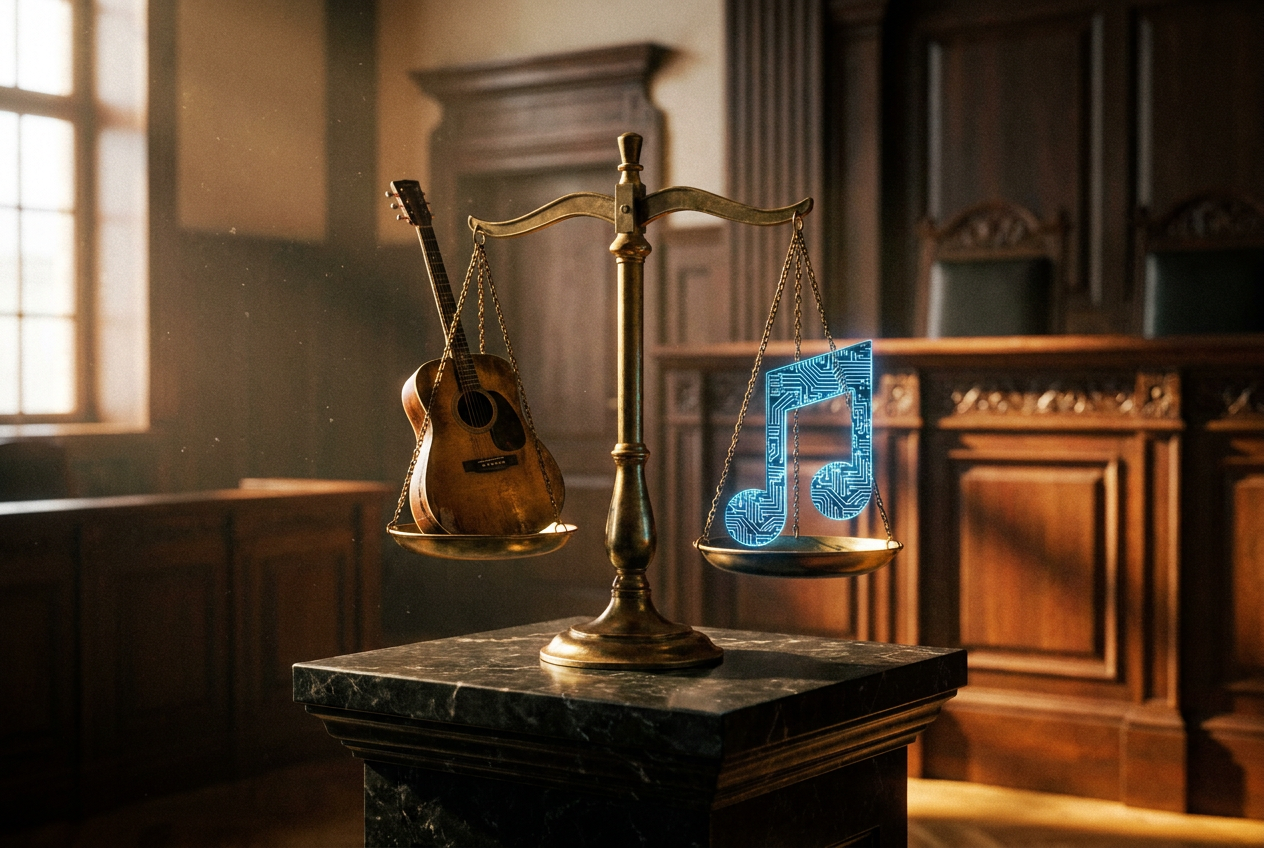
The Legal Landscape Is Closing In
Here’s the thing that makes this moment uniquely dangerous for Suno and Udio: the legal walls are closing in from every direction simultaneously.
On May 21, the federal court hearing the Udio case denied in part the company’s motion to dismiss, upholding claims under the Digital Millennium Copyright Act. That’s a major blow. When a judge says “no, you can’t walk away from these claims,” the calculus changes dramatically.
The DMCA claims center on “stream-ripping” — a method of downloading audio that the major labels also alleged. Suno did not deny stream-ripping music from YouTube, but its lawyers argued the practice is not illegal under the DMCA.
Meanwhile, the record labels filed to amend their complaint to allege that over 61,000 more songs were used for AI training without permission — up from the original 560 works cited in 2024.
And internationally? Germany’s performing rights organization GEMA has an active lawsuit against Suno. The pressure is global.
Yet the Money Keeps Flowing
Here’s the paradox that should make every musician’s head spin: Suno just raised a $400 million Series D round, valuing the company at $5.4 billion — roughly doubling its $2.45 billion valuation from just seven months ago.
None of the litigation appears to be slowing Suno’s growth. It continues to hover around the top of the App Store charts for music, and users were generating over 7 million songs on Suno every day.
Suno says it is “thrilled to have participation from some of the best artists, producers, songwriters, and people from across the music industry” in its funding round — without disclosing any names. The omission is notable; named artist endorsements would go a long way toward defusing the narrative that the music industry is uniformly opposed to what Suno is building.
The investors are betting that the lawsuits won’t matter. The lawyers are betting they will. Someone is going to be very, very wrong.
The Udio Walled Garden Problem
While Suno raises billions, Udio has taken a radically different path — and it’s a cautionary tale for every musician creating with AI tools.
The Udio-UMG walled garden is the first licensed generative AI music platform, announced October 29, 2025 as part of Udio’s settlement with Universal Music Group. It works like a SaaS product, not a distributor: users create AI music inside Udio’s environment, but those AI outputs cannot be exported, downloaded, or uploaded to Spotify, Apple Music, YouTube, or any external platform.
Let that sink in. You can make music on Udio. You just can’t take it anywhere.
The backlash was immediate and fierce. “This feels like an absolute betrayal,” wrote one Reddit user. “I’ve spent hundreds of $$$ and countless hours building tracks with this tool,” wrote another. “No one warned us that one day, we wouldn’t even be able to access our own music.”
Udio gave users a 48-hour window to download existing songs under the old terms. A fully licensed version with downloads re-enabled is expected to launch later in 2026, but as of June 2026 it has not shipped.
For comparison, Suno took the opposite path. It settled with Warner Music Group in November 2025 but kept downloads and commercial rights intact for paid users.
The lesson here is stark: the platform you create on can fundamentally change what you own overnight. If you’re building a creative career on any AI music platform, you need an exit strategy.
What This Means for Musicians Making AI Music Videos
So where does this leave you — the musician who wants to create, promote, and release your work?
Here’s my honest read:
1. The Music Is the Battleground. The Visuals Are Not.
The lawsuits target AI music generation — the models that produce audio. AI video generation is a completely different legal territory. When you use AI to create visuals for your own original music (or properly licensed music), you’re not stepping into the same legal minefield.
This is exactly why AI music videos have become the smartest creative investment for independent artists in 2026. You keep the human element where it matters most — in the songwriting and performance — and let AI handle the visual production that would otherwise cost you $5,000 to $50,000. If you’re new to the concept, our complete guide to AI music videos breaks down the full landscape.
2. Own Your Music. Period.
Audio quality is a tie-breaker; ownership is the whole game.
Whether you write songs yourself, co-write with collaborators, or use AI as a creative tool, make sure you can answer one question: Do I own this? If the answer is “it’s complicated” or “I think so,” you have a problem.
Metadata is becoming part of the rights paper trail. Platforms may want to know whether AI was used in the sound recording, composition, lyrics, artwork, music video, voice, or other material parts of a release.
3. Your Music Videos Are Your Marketing Moat
Here’s the opportunity hiding inside all this chaos: while the legal battles rage over AI-generated audio, there’s a massive opening for musicians who use AI-generated video to promote human-made music.
Labels using AI-generated music videos saw a 40% increase in engagement on social media compared to static album art. That’s the kind of advantage you can’t ignore.
Whether you’re making hip-hop, EDM, indie, or country music, AI video tools let you compete visually with artists who have ten times your budget.

The Proof Era Has Arrived
AI music creators are entering the proof era. Not just proof that a song sounds good. Proof of process. Proof of rights awareness.
Tool choice is becoming part of rights strategy. Where you make the song may matter almost as much as what the song sounds like.
This is the uncomfortable reality of mid-2026. The wild west period of AI music is ending. The cowboys had their fun. Now the lawyers are here — not just any lawyers, but the ones who took down Big Tobacco.
What Smart Musicians Are Doing Right Now
- Writing their own music and using AI as a production accelerator, not a replacement for creativity
- Keeping clean metadata on every release — documenting what’s human, what’s AI-assisted, and at what stage
- Making AI music videos for their human-made tracks, which is the highest-ROI use of AI tools with the lowest legal risk
- Diversifying their visual presence with genre-specific templates and consistent branding across platforms
- Not building their entire catalog on any single platform that could change its terms overnight
If you want to learn how to make AI music videos for your own tracks, our step-by-step guide walks you through the entire process. And for genre-specific inspiration, check out our examples for R&B, rock, or lo-fi.
The Bottom Line
Hagens Berman says Suno and Udio have “attempted to hide their infringement behind flimsy fair-use arguments.” Whether that’s true is for the courts to decide. But the arrival of a law firm with a quarter-trillion-dollar track record changes the game in ways that $5 billion in venture capital can’t easily overcome.
For independent musicians, the message is clear: the safest, smartest path forward is creating your own music and using AI where it amplifies your vision without creating legal exposure. AI music videos are that sweet spot — real creative leverage with none of the copyright landmines.
The tobacco lawyers are in the building. The AI music industry just got a lot more interesting.
Ready to turn your own music into a stunning visual? OneMoreShot.ai lets you create professional AI music videos in minutes — upload your track, describe your vision, and let the AI handle the production. No legal gray areas, no walled gardens, just your music with visuals that match.