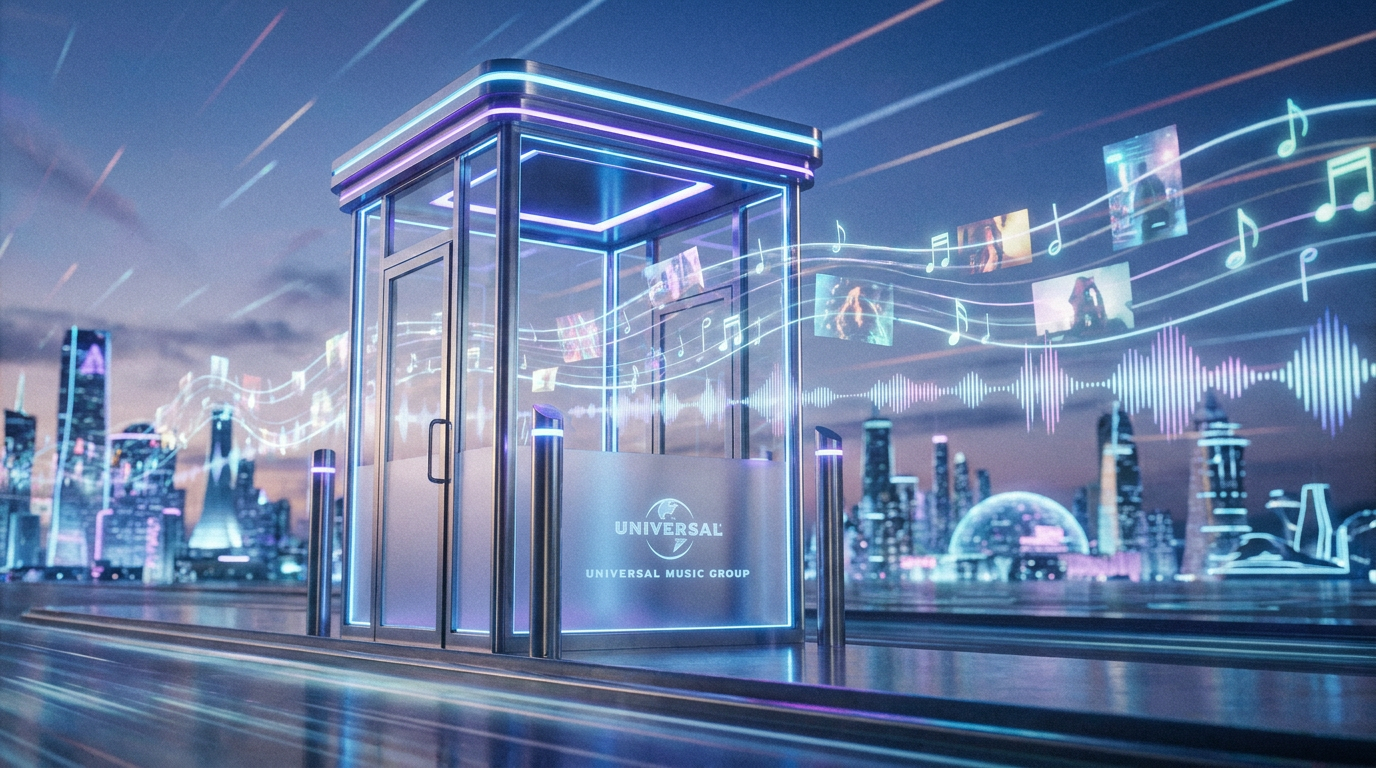
UMG Just Patented the AI Music Pipeline
If you thought the AI music wars were just about lawsuits and licensing deals, you missed the real power play.
On August 20, Universal Music Group quietly revealed what might be the most consequential move in AI music since the first Suno lawsuit. Through a joint venture called Music IP Holdings (MIH), UMG and intellectual property firm Liquidax Capital unveiled a portfolio of over 24 patents — with 50+ more pending — that covers the entire lifecycle of AI-generated content.
Not just music. The patents extend beyond music to a broad range of content, including audio, video, film, animation, images and text, as well as applications involving name and likeness.
Read that again. Audio. Video. Film. Animation. Images. Text. Name and likeness.
If you’re a musician making AI music videos, this changes the ground beneath your feet.
What UMG Actually Patented
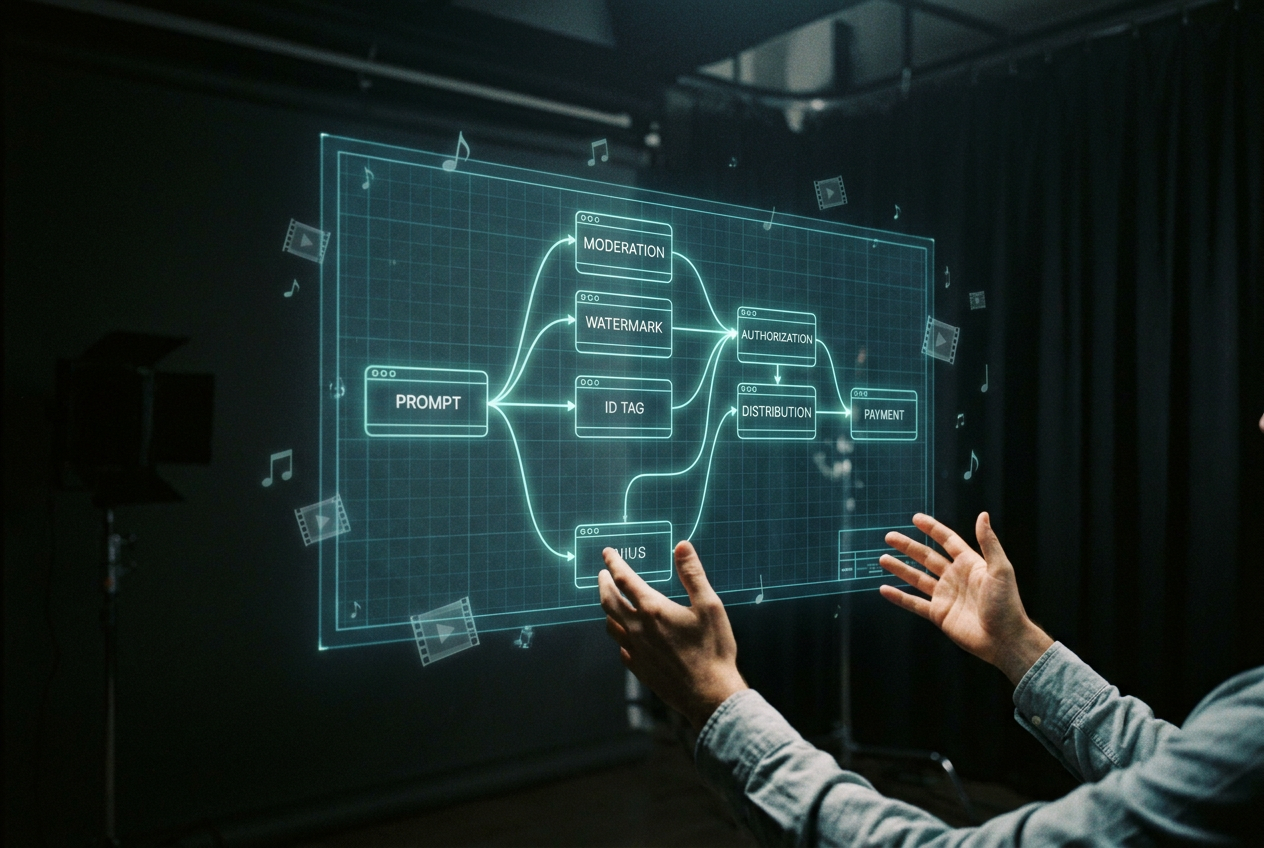
This isn’t a vague “we filed some IP paperwork” situation. MIH holds and manages a portfolio of more than 24 patents, both issued and allowed, with a further 50+ patents pending. The portfolio spans the full process of creating, licensing and commercializing AI-generated content: from the moment a prompt is entered through moderation, watermarking, identifier tagging, authorization, licensed distribution and payment across both open and closed ecosystems.
Let that sink in. UMG didn’t patent a single technology. They patented the entire pipeline — every step from the moment you type a prompt to the moment money changes hands.
The lifecycle runs: Prompt → moderation → watermarking → identifier tagging → authorization → licensed distribution → payment. One of the most interesting aspects of MIH’s announcement is that the patents appear to address AI music as a complete lifecycle rather than a single generation event.
This is the music industry’s version of building a toll road. Every AI platform that wants to operate legitimately within the UMG ecosystem — covering the world’s largest catalog of recordings — now has to pay for access to these patented processes.
The First Two Companies Just Signed Up
Music IP Holdings revealed on Thursday (Aug. 20) that AI music start-ups Udio and GRAI are the first two companies to license patents from its portfolio for use in developing their AI products. According to a press release, the MIH patents will specifically be used to support “the development of licensed AI services including covers, remixes and a wide range of interactive music experiences.” So far, MIH holds and manages more than 24 patents and has over 50 patents pending, all of which provide frameworks for creating “responsible,” licensed AI content products.
You know Udio. It’s the AI music generator that settled with Warner Music last year and has been quietly positioning itself as the “licensed” alternative to Suno’s more aggressive approach. Udio is backed by leading lights from tech and music, including a16z, Redpoint, Hanwha, will.i.am, Steve Stoute, Kevin Wall, and many others.
But GRAI is the fascinating wildcard. You’ll surely know Udio, but what is Grai? Its CEO Ilya Liasun described it as “a social streaming service where music moves between people. And when someone puts something of their own into a song they love, the artist is asked, credited and paid, every time.”
While little is still known about GRAI, the press release described the emerging AI company as being built on “GRAI’s own music foundation model, trained on licensed data and built to understand music…Every play and every change pays the artists and songwriters behind the song.” The company was founded by the team behind video-editing app Vochi, which was acquired by Pinterest, and has raised seed funding from Khosla Ventures.
Udio’s CEO put it bluntly: “With MIH, we’re partnering to implement the infrastructure that protects artists and establish the guardrails that ensure AI amplifies human creativity.”
Why This Is About Way More Than Music
Here’s where it gets really interesting for musicians making AI music videos.
The company says the patents extend beyond music into: Audio, Video, Film, Animation, Images, Text, and Name and likeness applications. That means the underlying strategy could potentially have applications far beyond AI-generated songs. Think about an AI platform where a user generates: A song using an artist’s identity, A music video featuring an AI representation, An animated performance, A visual campaign based on a musician, Interactive fan experiences, AI-generated multimedia derivatives.
This is the quiet part said loud. UMG isn’t just patenting how AI makes songs. They’re patenting the infrastructure for how AI creates everything connected to an artist — including the music videos, the animations, and even the likeness-based content that fans might generate.
If you’ve been following our Complete Guide to AI Music Videos in 2026, you know the landscape has been moving toward more structure and regulation. This patent portfolio is the corporate version of that same impulse — but instead of governments writing rules, UMG is writing the code (literally and figuratively) that determines how AI content gets made, tracked, and paid for.
The Patent Toll Booth Strategy
The music industry is shifting its AI strategy from defensively protecting copyrights to offensively controlling the technology with patents. Daniel Drolet, Founder of Liquidax Capital, details his firm’s partnership with Universal Music Group to commercialize the patents that will shape music’s future. A new entity, Music IP Holdings, was created to license UMG’s AI technology, turning a potential threat into a new revenue stream.
This is a massive strategic pivot. For two years, the major labels fought AI primarily through lawsuits — suing Suno, suing Udio, trying to establish copyright boundaries in court. Those lawsuits haven’t gone away (Sony still has active litigation against Suno scheduled for 2027). But UMG has now opened a second front: patent licensing.
The difference? Copyright lawsuits are reactive. You wait for someone to copy your work, then you sue. Patent licensing is proactive. You build the infrastructure, patent it, and then every company that wants to build AI music tools has to license your technology — or risk patent infringement claims that exist entirely separately from copyright.
MIH’s CEO Daniel Drolet said it plainly: “Artists and songwriters shouldn’t have to choose between embracing AI and protecting their life’s work. And responsible AI companies should have a clear path to innovate. This portfolio is designed to do both: creating new opportunities for responsible innovation while giving artists, songwriters and rightsholders stronger protections and the ability to share in the value their work creates.”
The MIH patents also address a nuance that matters enormously: the same patents cover tech to enable ‘open’ AI music ecosystems — where AI content is permitted to travel between platforms, but carries watermarks and identifiers designed to track, enforce, or monetize its usage. So the technology isn’t just about walled gardens. It’s about creating a tracking layer that follows AI-generated content wherever it goes.
What This Means for Musicians Making AI Music Videos
Let’s get practical. If you’re an independent artist using AI tools to make music videos — and if you’re reading this blog, there’s a good chance you are — here’s what the MIH patent portfolio means for you:
1. The “Licensed” AI ecosystem is solidifying fast
The days of the AI wild west are numbered. Between Apple Music’s upcoming “Made With AI” labels, Spotify’s AI Persona badges, the EU AI Act’s August 2 enforcement date, and now UMG’s patent framework, the entire industry is building guardrails. The tools that survive will be the ones operating within these frameworks.
This is actually good news for musicians who use AI responsibly. When you create an AI music video with a legitimate tool like OneMoreShot.ai, you’re already operating on the right side of these emerging standards. The artists who will get burned are the ones using unlicensed, untracked tools to generate content from copyrighted material.
2. AI music video creation is now explicitly covered
Most people read the MIH announcement as an “AI music” story. But the patents explicitly cover video, film, and animation. “What the portfolio covers is basically how AI learns, consumes, and produces derivative content, and that’s video content, voice content, music content.”
This means the infrastructure being built for AI-generated music will eventually extend to AI-generated music videos. If you’re making AI music videos for hip-hop, pop, or any other genre, the platforms you use will increasingly need to integrate with these patent-protected systems — especially if your music involves samples, covers, or references to existing copyrighted work.
3. Name and likeness protection is coming
The MIH patents cover “applications involving name and likeness” — and this isn’t theoretical. Just this week, “The View” co-host Sunny Hostin licensed her name and likeness to the AI startup Fountain 0, becoming one of the most high-profile figures to provide her image for use in AI-generated films and television shows.
Sir Michael Caine recently licensed his well-known voice to be used for a new audiobook version of The Odyssey, and the family of the late actor Val Kilmer, who died in 2025, have licensed his likeness.
The likeness licensing wave is coming for music. When it arrives, the patent infrastructure that MIH is building will determine how your face, voice, and visual identity can (and can’t) be used in AI-generated content. If you’re building your visual brand through AI music videos now — using tools that give you control over your aesthetic — you’re laying groundwork that will matter when these systems go live.
4. Revenue tracking could finally work for AI derivatives
Here’s the optimistic read: If technology can reliably establish where music came from, who authorized a derivative, how it was transformed and where value was generated, artists and songwriters have a much better chance of participating in that value.
If MIH’s patents work as described, every AI-generated derivative — every remix, cover, transformation, or multimedia creation — could be tracked back to its source material, with payments flowing to the original rights holders. That’s a world where AI doesn’t just create content. It creates revenue streams.
For independent musicians, this could mean getting paid when someone uses AI to remix your track, create a visual interpretation of your song, or generate content that references your work. The key word is “could” — the technology itself isn’t enough. The industry will ultimately have to decide how those systems are used, how much control musicians receive, how licensing works and how revenue is divided.
The Warning Buried in the Announcement
Not everything about this development is rosy. There’s a warning embedded in MIH’s strategy that independent musicians should take seriously.
Although he believes there will always be a place for traditional creation, Drolet acknowledged that the market’s gravitational pull toward AI will be immense. Those who don’t adapt risk being “drowned out” by the wave of innovation. The UMG-Liquidax partnership is driven by a desire to steer the industry’s course, rather than being swept away by it.
“Drowned out.” That’s direct language from the guy running UMG’s patent strategy. And he’s not wrong. The data backs it up — AI-generated music already accounts for nearly 40% of releases on platforms like SubmitHub, and the flood is only accelerating.
The musicians who thrive in this environment will be the ones who embrace AI as a creative tool while maintaining their authentic artistic identity. That’s exactly the balance we talk about in our guide to making AI music videos — using AI to amplify your vision, not replace it.
What Happens Next
MIH has made their patent portfolio available through an online licensing platform “designed for widespread adoption.” That means more AI companies will sign on in the coming months. Watch for:
- Suno — Will they license MIH patents, or does their ongoing litigation with Sony and their recent settlement dismissals keep them on the outside?
- AI video platforms — Tools like Runway, Seedance, and other AI video generators could need MIH licenses if they start handling music-related content creation.
- Streaming platforms — Spotify’s AI remix features and Apple Music’s AI labeling system will eventually need to interoperate with patent-protected infrastructure.
- Independent AI music video tools — Every tool in the AI music video space will need to understand how these patents affect their operations.
This essentially means that MIH, UMG and Liquidax Capital will receive compensation every time these patents are adopted for use in developing various AI products, opening up a potentially significant new revenue stream for the group of firms.
UMG isn’t just protecting their catalog. They’re building a toll booth on the highway that every AI music company has to drive down. Whether you think that’s brilliant strategy or corporate overreach probably depends on which side of the gate you’re standing on.
The Bottom Line for Musicians
The music industry is building the infrastructure for AI-generated content at an extraordinary pace. In the last month alone, we’ve seen Apple announce AI labels, Spotify badge AI personas, Australia ban AI songs from charts, the EU AI Act begin enforcement, and now UMG patent the entire AI content pipeline.
If you’re a musician, the message is clear: the window for unstructured, unregulated AI creativity is closing. That’s not necessarily bad — structure means potential revenue, attribution, and protection for your work. But it means the time to establish your AI workflow and visual identity is now, while the tools are accessible and the standards are still being written.
The smartest move you can make today? Start creating AI music videos that showcase your artistry, build your visual brand, and position you as a real artist in an increasingly AI-saturated landscape. Whether you’re making AI visuals for rock, country, or K-pop, the fundamentals haven’t changed: great music deserves great visuals, and the musicians who show up with both will win — patents or no patents.
Ready to start building your visual identity before the toll booths go up? Create your first AI music video with OneMoreShot.ai and own the visual side of your music while the infrastructure is still being built.