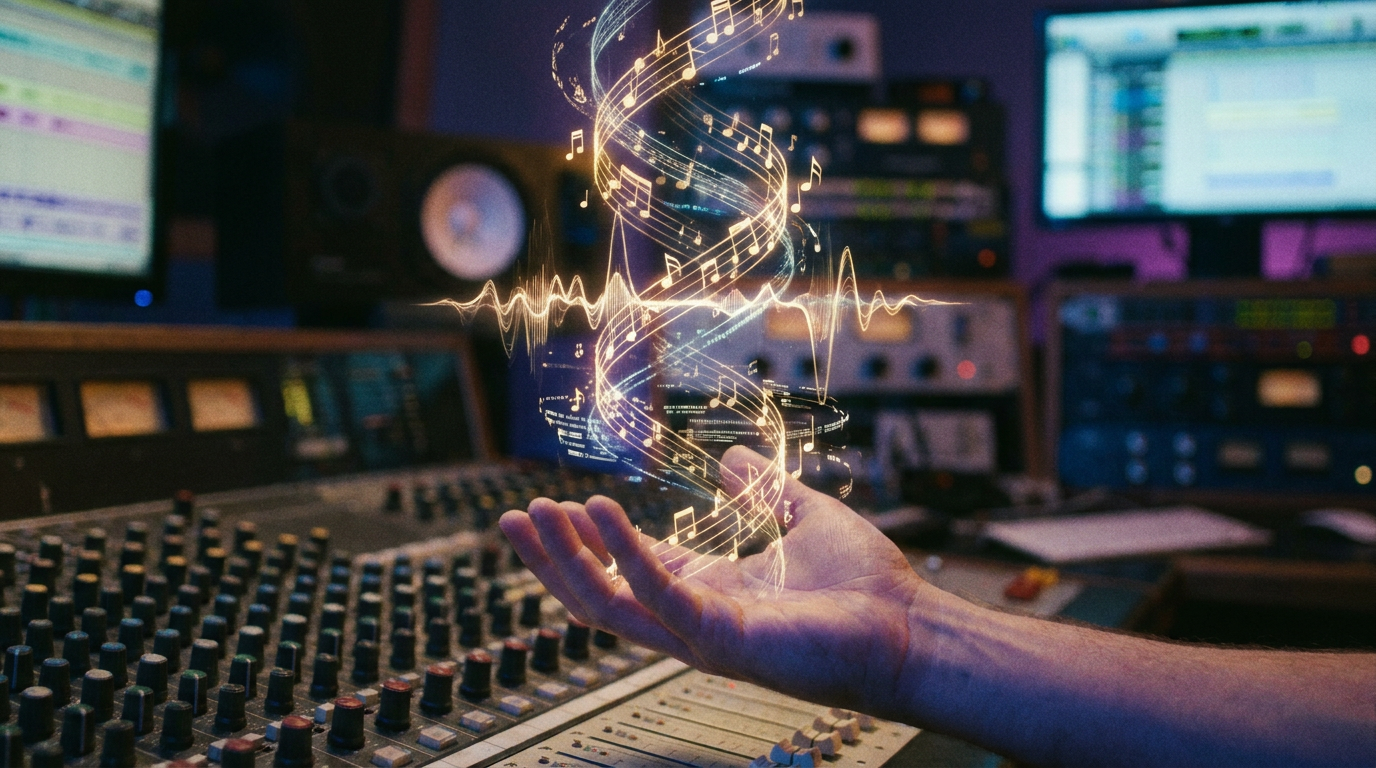
Warner Music's AI DNA Play Changes the Game
Two days ago, Warner Music Group did something that didn’t make a single TikTok trending page but might be the most consequential AI music move of 2026 so far. They acquired a startup called Sureel AI — and with it, the technology to fingerprint every single piece of music their artists have ever created.
If you’re an independent musician using AI tools to create, remix, or visualize your music, you need to understand what just happened. Because the era of “just vibes” in AI music is officially over. Welcome to the era of AI DNA.
What Warner Music Actually Bought
Warner Music Group announced its acquisition of Sureel AI, a platform that uses a technology called “AI DNA” to protect creative projects and other intellectual property — including music, voices, likeness, and performance — from unauthorized use and monetization by AI training models.
Let’s break that down, because the press release language hides the real bombshell.
Sureel AI’s technology analyzes music by breaking songs into smaller components rather than treating them as single entities. This approach, referred to as AI DNA, allows for technical tracking of whether elements like a song’s melody, vocals, or rhythm have been used by AI models or if similar content has been generated.
Think of it like Shazam, but instead of identifying this song, it can tell you which specific parts of which specific songs influenced an AI-generated output. Sureel breaks down any AI output into the specific works that shaped it, track by track and contributor by contributor, each with its own attribution percentage. This granular, multi-layer attribution is the infrastructure on which licensing runs.
That’s not a music identification tool. That’s an AI audit system.
The Team Behind It
Founded in 2022 by former Snowcrash CTO Tamay Aykut, Palo Alto-based Sureel bills itself as today’s “attribution layer for generative AI models.” And Aykut didn’t build this in a vacuum. Sureel AI’s staff includes several music industry veterans, including Pledgemusic co-founder Benji Rogers and former Universal Music exec Aileen Crowley (both co-presidents) as well as former SoundCloud and Warner Music exec Michael Pelczynski as head of licensing.
When you see a roster like that — people who’ve sat on both sides of the table in music distribution, licensing, and tech — it tells you this isn’t a science experiment. It’s a business infrastructure play.
The Sureel registry today holds millions of music assets, with the architecture to extend its multi-layer attribution into video and image at scale.
Read that last part again: video and image at scale. We’ll come back to why that matters for music video creators specifically.
Why Warner Went From Suing AI Companies to Buying Them
Here’s the narrative arc that makes this acquisition so fascinating. Warner Music Group didn’t start as AI’s friend.
WMG has embraced AI after initially opposing it, as the company originally sued music-generation startup Suno in 2024 and later signed a licensing deal with the company last year.
WMG last year also settled its lawsuit against AI music startup Udio and reached a licensing deal with the company.
So in the span of roughly 18 months, Warner went from suing the two biggest AI music generators to signing licensing deals with both of them, acquiring a B2B distribution platform (Revelator), and now buying the attribution layer that could underpin the entire AI music economy.
WMG has gone from an AI skeptic to an AI embracer.
That’s not a philosophical shift. It’s a strategic land grab. Warner isn’t fighting AI anymore — they’re trying to own the plumbing.
How AI DNA Actually Works (And Why It’s Controversial)
Here’s where it gets spicy.
Sureel’s key innovation is addressing what many consider the central problem in music rights: distinguishing between compositional and recording contributions. Most attribution systems treat music as a single asset. For instance, when an AI generates a track with the same melody as a training example, but with completely different instrumentation and production, many attribution systems would miss this connection entirely. Sureel’s technology attempts to separate influences on melodies and lyrics (publishing rights) from influences on production and performance (master rights).
That’s genuinely clever. But not everyone is convinced it actually works.
AI-music firm Udio’s CEO Andrew Sanchez recently expressed scepticism about the technology in an interview with MBW. He criticised the idea that AI models are “looking at a [vast] scale of sound recordings and grabbing a little bit here, a little bit there, and stitching things together. That’s not how they work.” He added that “the idea that you could assign a percentage of the output to something used in the training corpus just doesn’t make sense.”
The irony? Udio is one of the AI-music companies to have signed a licensing deal with Warner Music Group, which adds a little spice to today’s news.
So Warner just bought the tool that tracks AI models’ usage of music… while also being in a licensing deal with a company whose CEO publicly says that tool’s premise is flawed. Welcome to 2026, where everybody’s in business with their skeptics.
AI attribution remains a debated topic. While it is an incredibly popular idea in the music industry — given it could allow individual artists and songwriters to be paid in accordance to when their specific works are cited by AI models — experts in the AI field appear divided over whether or not it’s possible at this stage.
What This Means for Independent Musicians
Okay, here’s where we stop talking about major label chess and start talking about you.
If you’re an independent artist making music — and especially if you’re creating AI music videos to promote your work — the Warner/Sureel deal matters for three concrete reasons.
1. Attribution Infrastructure Is Coming for Video Too
WMG wasn’t subtle about noting the possibility of Sureel’s expanding “its multi-layer attribution into video and image at scale.”
Fellow attribution startup Musical AI, which scored a $4.5 million raise in January, is also targeting a video buildout for 2026.
That means the same kind of content fingerprinting being applied to music will eventually extend to visuals. If you’re using AI video tools to create music videos, the provenance of your visual content may soon be trackable in the same way audio is. That’s not a threat — it’s actually a reason to use tools with clean, licensed pipelines right from the start.
2. The “Proof Era” Is Real
The main forecast for AI music creators is entering the proof era. Not just proof that a song sounds good. Proof of process. Proof of rights awareness.
When Warner can technically audit what went into an AI-generated track, the question shifts from “Is this AI music?” to “Can you prove your AI music is clean?” Platforms will increasingly reward musicians who can demonstrate their creative provenance. If you’re building an AI music video for hip-hop or EDM, you want to work with tools that keep your creation pipeline transparent.
3. Tool Choice Is Now a Rights Decision
Tool choice is becoming part of rights strategy. Where you make the song may matter almost as much as what the song sounds like.
Not all AI tools carry the same legal risk. A fully licensed remix environment and an open text-to-song generator and a DAW plugin and a voice model may all have different rules. This is why it matters which platform you use — for your music and your visuals.
The Bigger Picture: Three Lanes Forming in AI Music
Step back from the Warner deal for a second and you can see three distinct lanes forming in the AI music landscape:
Lane 1: Fight. Sony Music Entertainment and Universal Music Group are still pursuing massive copyright infringement claims against AI music startups. These labels believe litigation is the answer.
Lane 2: License and Track. Warner Music is here — doing deals with Suno and Udio, buying attribution tech, and building the infrastructure to monetize AI rather than block it. This suggests the technology could become an industry-wide standard for tracking AI usage, rather than remaining exclusive to Warner Music’s catalog.
Lane 3: Create. This is where independent artists live. You’re not suing anyone. You’re not building attribution layers. You’re making music, making music videos, and trying to reach fans. The question is: which of the first two lanes benefits you the most?
Honestly? Lane 2. If attribution tech works, it means your original music has trackable value in the AI ecosystem. Your melodies, your vocal performances, your production choices — they all generate a trail that could eventually translate into royalties when AI models reference your work.
But here’s the flip side: if you’re generating music with AI tools, that same attribution infrastructure could eventually check whether your outputs lean too heavily on someone else’s catalog. The technology is agnostic about who it benefits — it just traces influence.
What Sureel’s “AI DNA” Means for Music Videos
Let’s talk about the visual side specifically, because that’s where this story gets interesting for AI music video creators.
The AI video generation space has exploded in 2026. Kling AI now serves over 60 million creators worldwide and has produced more than 600 million videos. Veo 3.1, Seedance 2.0, and LTX-2.3 have all shipped major releases this year. The tools are better, cheaper, and faster than ever.
But here’s what nobody’s talking about: as attribution tech scales into video and image, there’s going to be a new premium on original visual content — the same way there’s now a premium on provably original music. Musicians who pair their tracks with unique, on-brand AI-generated visuals are building something that has both creative and legal value.
When you make an AI music video with a tool like OneMoreShot.ai, you’re not just creating promotional content. You’re creating a visual identity that’s tied to your music. In a world where AI DNA tracks influence across media types, having a consistent, documented visual brand becomes an asset.
Whether you’re working in pop, rock, R&B, or indie, the principle is the same: own your creative pipeline. Know where your music comes from. Know where your visuals come from. Be ready to show your receipts.
The Smart Musician’s Playbook for the AI DNA Era
Here’s what to actually do with all of this:
Document your creative process. Keep notes on which tools you use, what prompts you give, and what reference material feeds your music and videos. If attribution tech becomes standard, this documentation becomes your proof of originality.
Use licensed, transparent tools. Whether you’re generating music with Suno or Udio (both now licensed by Warner), or creating visuals with AI video generators, stick with platforms that have clear IP policies. The gray area is shrinking fast.
Build your visual brand early. By the end of 2026, the AI music video generator will no longer feel new. It will feel necessary. Start establishing your visual identity now, while the barrier to entry is low and the creative space is wide open.
Watch the attribution space. Sureel’s exit will boost the confidence of other startups and larger tech firms working on similar attribution technology. Warner won’t be the last major player to make a move here. Universal and Sony will need their own solutions. The whole ecosystem is about to get a lot more structured.
The Bottom Line
Warner Music didn’t buy Sureel AI because they care about abstract fairness in the AI ecosystem. They bought it because they see a future where every piece of AI-generated content can be traced back to its influences — and they want to be the ones collecting the toll.
For independent musicians, this creates both opportunity and urgency. The opportunity: your original creative work has never been more valuable as a trackable, monetizable input into the AI economy. The urgency: the tools and practices you adopt now will determine whether you’re positioned to benefit from that system or get left out of it.
The AI DNA era isn’t coming. It arrived two days ago.
If you want to start building a visual identity for your music that’s original, trackable, and entirely yours, give OneMoreShot.ai a try. Upload your track, pick a style, and create an AI music video that’s as unique as your sound — in minutes, not months.