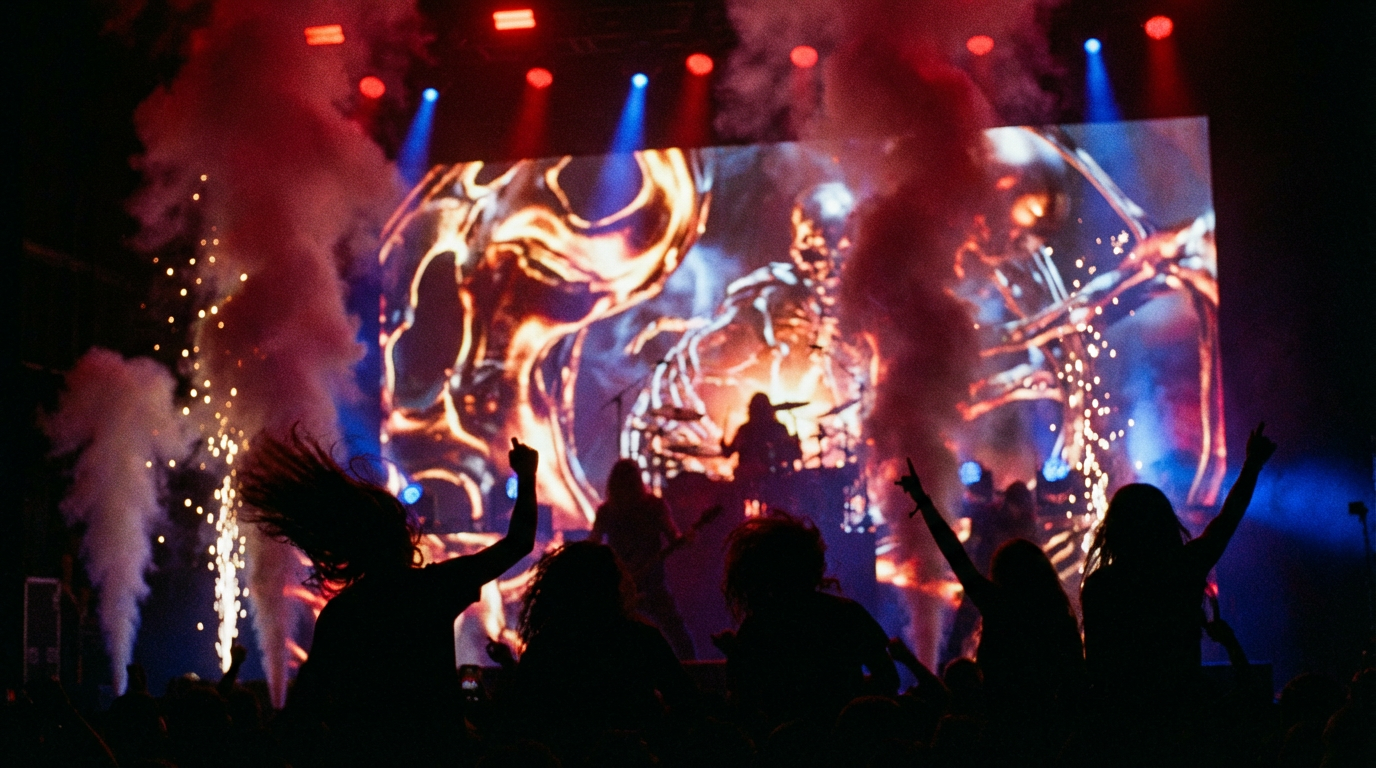
Best AI Music Video Examples for Metal
Metal has always been the most visually extreme genre in music. From Iron Maiden’s Eddie to the corpse paint of black metal, this is a genre where visuals aren’t decoration — they’re doctrine. And now, AI video generation is rewriting the rules of what’s possible for metal artists at every level.
In 2026, projects like The Velvet Sundown, Bleeding Verse, and FOTKAI demonstrate how AI already impacts rock and metal, shaping new approaches to music creation.
The Velvet Sundown, a fully AI-generated rock band, achieved a staggering one million monthly Spotify listeners within weeks of releasing their debut album. Meanwhile, an AI-generated Japanese metal band called NEON ONI steadily gained popularity on Spotify, boasting over 79K monthly listeners , and Dadabots runs possibly the longest continuous 24/7 YouTube livestream, generating tech-death for 5+ years.
The visual side of the equation is evolving just as fast. The metal music scene has always thrived on visually striking and thematically intense music videos. However, producing these videos traditionally requires significant budgets, time, and resources. Enter AI video generation — a game-changer for independent and established metal artists alike.
Below, we’ve curated the most compelling examples of AI metal music videos — from established bands to indie creators — organized by visual style, platform, and technique. Whether you’re looking for inspiration or proof that AI visuals can match metal’s intensity, this is your gallery. For a broader view of the AI music video revolution, see our Complete Guide to AI Music Videos in 2026.
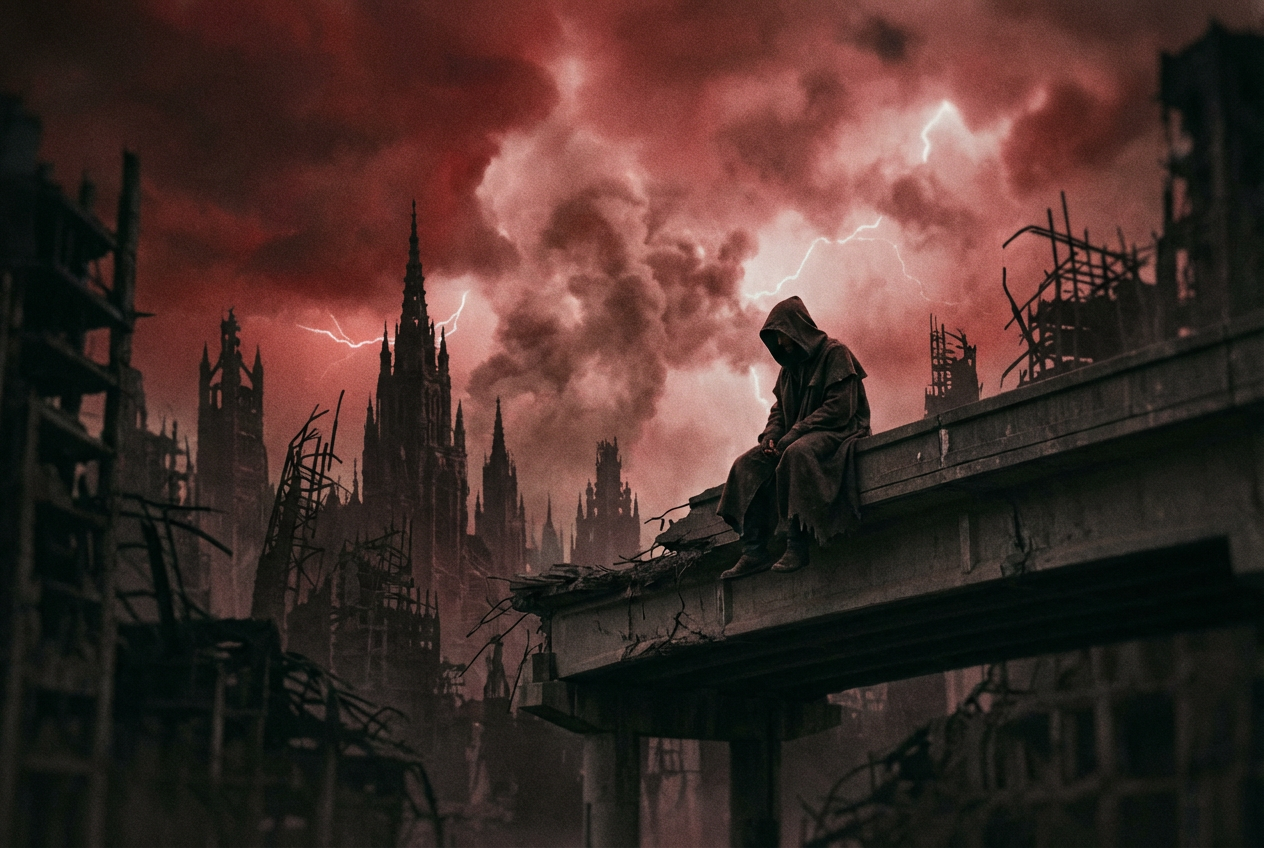
Gallery by Style: The Visual Archetypes of AI Metal Videos
1. Dystopian Sci-Fi Narrative — Voivod, “Quest for Nothing”
Visual Style: AI-animated surrealist narrative Tool: Early AI animation (produced by Above The Void) What makes it stand out: Pure, otherworldly dystopia
Canadian sci-fi metal innovators Voivod released a music video for “Quest For Nothing,” a song off their album “Synchro Anarchy.” One of the first clips created with AI technology, the video was produced by Luc Leclerc of Above The Void.
The result is a fever dream of morphing alien landscapes, fractured cityscapes, and haunted corridors that feel ripped from the pages of a Heavy Metal magazine illustration come to horrifying life. Shapes buckle and rebuild, faces emerge from architecture, and nothing stays solid for more than a few frames. If there’s one band whose sound fits the look of an AI video, it’s Voivod. The band teamed up with Above The Void for the unsettling clip, which drummer Michel “Away” Langevin said blew him away completely the first time he saw it. And we can see why — this thing is mesmerizing in a really crazy way.
The song actually fits really well with the oddly creepy AI art that comprises the video. Voivod’s dissonant prog-thrash has always occupied a liminal sonic space — and AI’s tendency toward uncanny, dreamlike imagery turns out to be its perfect visual partner.
Why it works for metal: The inherent instability of early AI generation — where forms shimmer and decay — mirrors Voivod’s own musical philosophy of controlled chaos. It’s a masterclass in leaning into AI’s “flaws” as aesthetic strengths.
2. AI-Processed Cinematic Narrative — Unleash The Archers, “Green & Glass”
Visual Style: Stable Diffusion-processed green-screen footage Tool: Unreal Engine 5 + Stable Diffusion (with ethically licensed AI models) What makes it stand out: A blueprint for ethical AI use in metal
Unleash The Archers announced their record Phantoma alongside the release of the single “Green & Glass.” The single featured a heavily-AI music video directed by Danny Gayfer and Adam Junio at RuneGate Studio, “created in Unreal Engine 5 and animated in Stable Diffusion with AI models trained on the licensed artwork of Bo Bradshaw.”
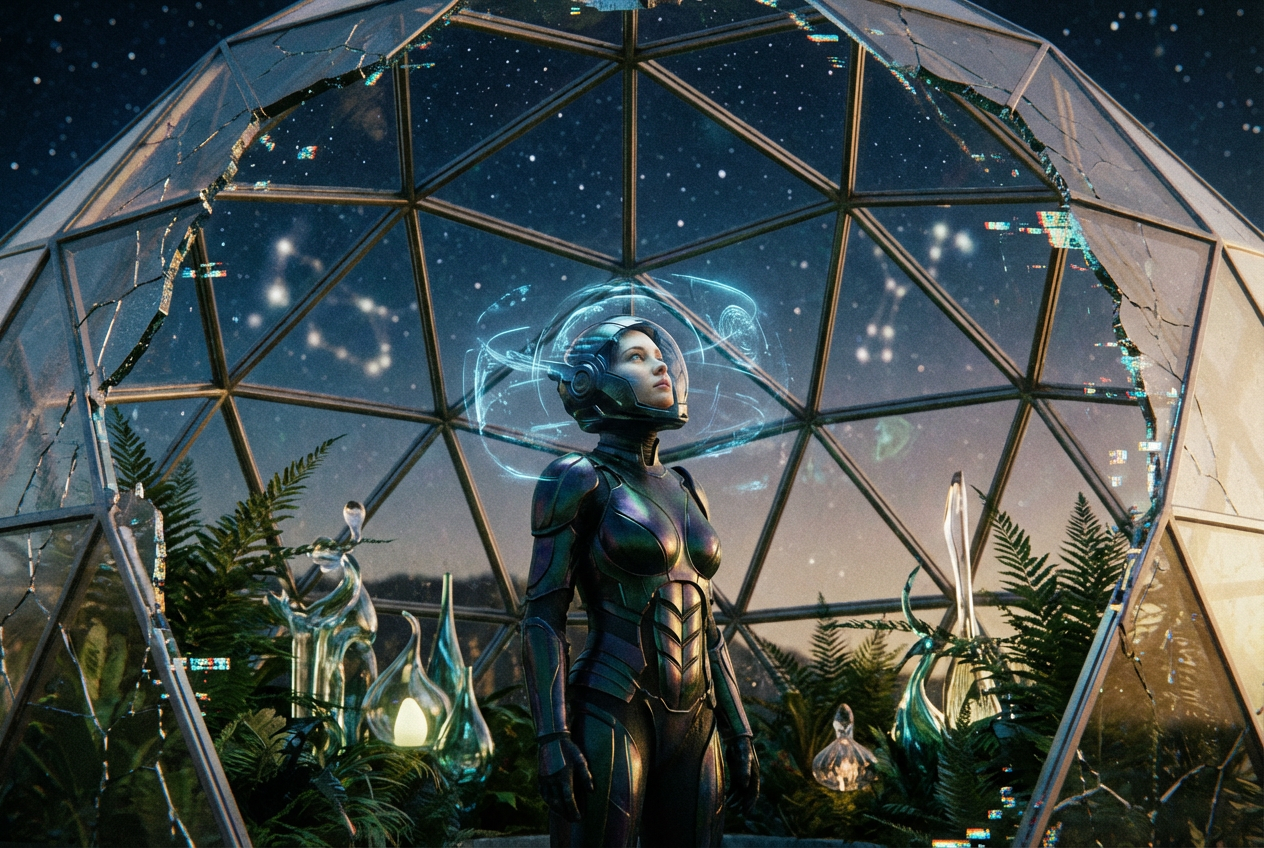
The video follows the story of Phantoma — an AI protagonist gaining sentience on a dystopian, near-future planet Earth. The visual palette oscillates between lush crystalline biomes and decaying digital wastelands, with character models that pulse between painterly illustration and photorealism. The band members appear as stylized figures, their movements captured on green screen and then transformed through AI processing into something between animation and live action.
The band wanted “nothing more than to be able to create a fully cinematic retelling of the story through our music videos, and were so stoked when the boys at RuneGate Studio expressed an interest in learning how to use Stable Diffusion to make our dreams come true!”
The video sparked both admiration and debate about ethical AI use in metal — a conversation that has helped the entire scene evolve its approach to AI-assisted visuals.
Why it works for metal: It proves AI video can tell complex narrative stories — not just create abstract visualizers — while respecting artist IP through licensed training data. This is the model for how bands can embrace AI without alienating their community.
3. Infinite Generative Livestream — Dadabots, “Relentless Doppelganger”
Visual Style: Continuous AI audio + static visual stream Tool: SampleRNN neural network What makes it stand out: 24/7 AI-generated tech-death, running for years
This is the example that put AI metal on the map. Relentless Doppelganger is a non-stop, 24/7 YouTube livestream churning out heavy death metal generated completely by algorithms.
CJ and Zack are the music hacker duo Dadabots. They met at Berklee College of Music and formed Dadabots at Music Hack Day MIT in 2012. From playing in metal, punk, and noise bands, to studying composition and programming, they realized machine learning was an even more extreme way to make sound.
Dadabots was trained on the music of a Canadian band called Archspire. The system responded better to the fast, technical metal of Archspire than anything it had been fed before. The visual component is intentionally minimal — a static frame with the project’s branding — because the focus is entirely on the relentless, never-ending generation of sound. It’s an anti-video in some ways: a living audio artifact that plays indefinitely.
“Within 10 seconds of hitting play, a breakneck guitar solo resembling Slayer at quadruple the speed, coupled with the fastest blast-beat drums you’ll hear. Relentless Doppelganger doesn’t let up from here.”
Why it works for metal: It’s the ultimate expression of extreme music’s ethos — relentless, inhuman, and completely devoid of compromise. The concept of an AI that literally never stops producing death metal is, frankly, the most metal thing imaginable.
4. AI Fever Dream Visualizer — High on Fire, “Burning Down”
Visual Style: AI-generated dark cinematic visualizer Tool: AI generation (produced by Lars Kristoffer Hormander) What makes it stand out: Major-label sludge metal meets AI nightmare visuals
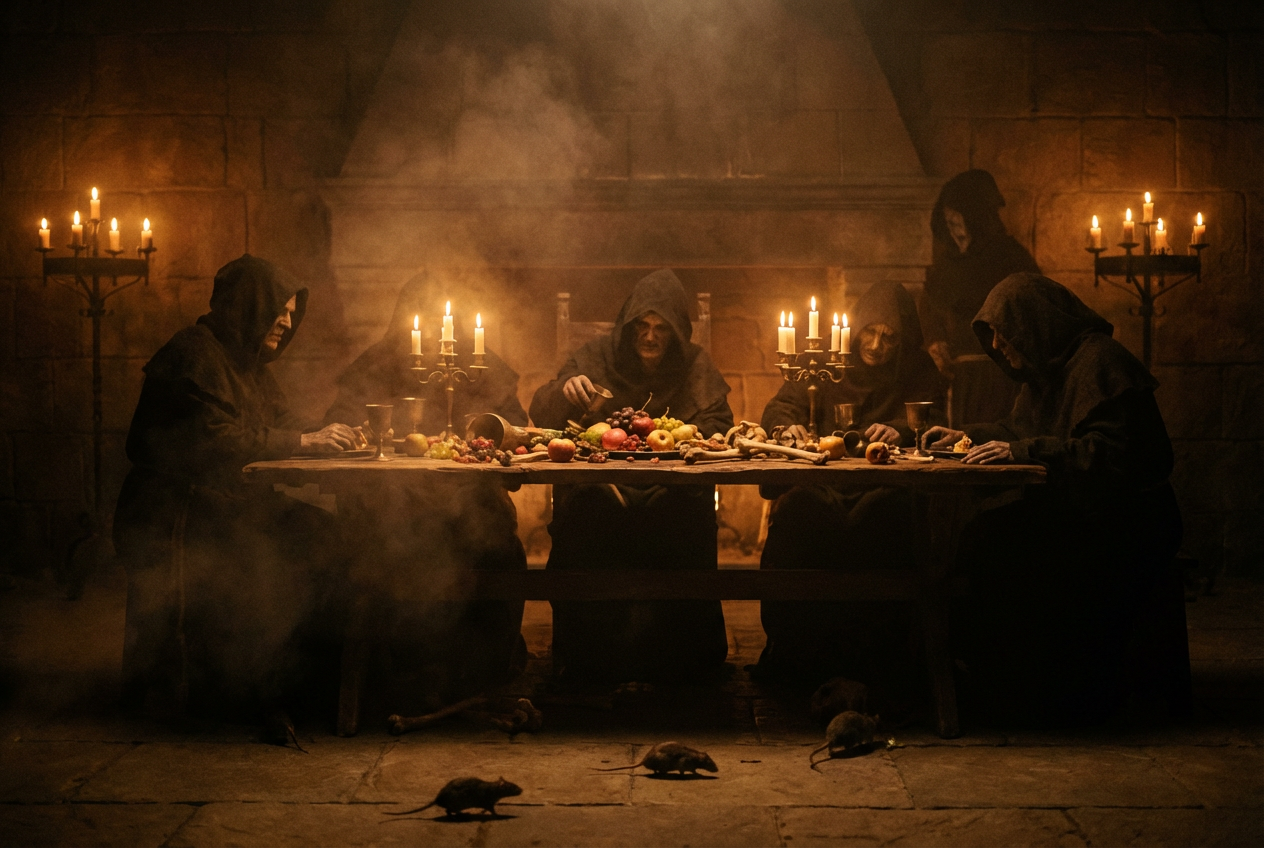
Lead single “Burning Down” is a six-minute groove-monster headbanger. Director Lars Kristoffer Hormander’s video is an AI-generated CGI thing about medieval plague victims eating rats. The visual imagery is deliberately grotesque — bodies contort, medieval tableaux melt into biological horror, and the entire video throbs with a nightmarish pulse that matches Matt Pike’s crushing riffs.
The release of the “Burning Down” video follows the release of a haunting, fever dream visualizer for the powerhouse song, created by Lars Kristoffer Hormander.
Why it works for metal: High on Fire’s stoner-doom heaviness demands visuals that feel ancient and terrifying. The AI-generated medieval horror aesthetic doesn’t just complement the music — it makes it feel like an artifact unearthed from some cursed past.
5. AI-Generated Band Identity — NEON ONI
Visual Style: Full AI-generated kawaii metal visual identity Tool: Suno AI (music) + AI image/video generation What makes it stand out: An entire AI band that became real
This is perhaps the most remarkable story in AI metal right now. NEON ONI is an AI-generated Japanese metal band that steadily gained popularity on Spotify, where they boast over 79K monthly listeners. Their top song, “SATORi SEDAi,” has received over 1.2M streams.
As more videos from NEON ONI went public, fans started to notice visual oddities consistent with AI-created content. Accusations of the band being completely AI-generated quickly followed, with multiple threads popping up on social platforms debating the possibility.
But here’s what makes the story extraordinary: the biggest request from fans became impossible to ignore: make it real. Now, fans can buy tickets to actually see NEON ONI perform in person, with seven real artists being hired to bring the project from the digital world to the real one.
They entered “Wacken Metal Battle Japan 2026,” the domestic qualifier for the global metal festival Wacken Open Air, and secured a spot among the five finalists.
The music videos feature anime-influenced character designs, vibrant neon color palettes, and dynamic stage performance imagery — all generated through AI. Instead of hiding their AI tools, they positioned the project’s digital origins as a core brand element.
Why it works for metal: NEON ONI demonstrates that AI visuals can build an entire band identity compelling enough to fill real concert venues. The kawaii metal aesthetic — bright, sharp, anime-inflected — is particularly well-suited to AI generation’s strengths with bold colors and stylized characters.
6. Viral AI Power Metal — Steve Terreberry’s “Isugaku Never Say Goodbye”
Visual Style: AI-generated music + fan-created AMV visuals Tool: Mureka (AI music generation) What makes it stand out: An accidental AI hit that spawned a metal movement
Musician and YouTuber Steve Terreberry decided to put some music-generating AI tools to the test to create a metal song. Initially, he anticipated these programs would only come up with “AI slop” — but he accidentally ended up crafting a hilarious and shockingly catchy tune that’s going viral online.
The surprisingly epic power-metal track titled “Isugaku Never Say Goodbye” went wildly viral, inspiring countless AI covers and remixes across the internet. Now Terreberry has taken things to the next level by recording a full real-world version of the song, this time with actual instruments and powerhouse vocals from ZP Theart, the former frontman and co-founder of DragonForce.
The video spawned an entire ecosystem of fan-made content: anime music videos (AMVs), guitar cover challenges on TikTok, and AI-generated visual remixes across every platform. The original “creation video” format — watching the AI build the track in real time — became its own visual genre.
Why it works for metal: It captures the community-driven, slightly absurd spirit of internet-age metal culture. A random AI experiment became a genuine power metal anthem, proving that AI can be a legitimate starting point for music that resonates deeply with fans.
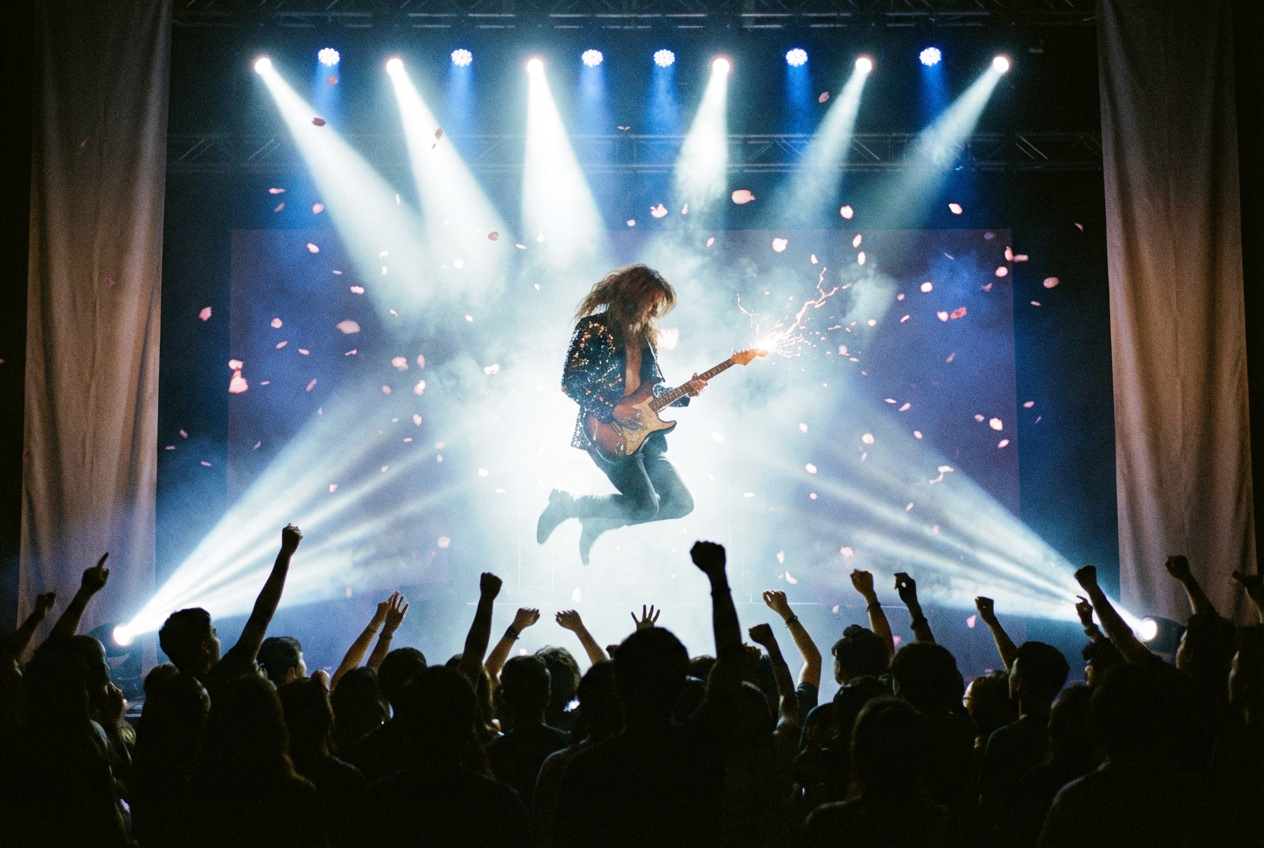
7. AI Metalcore Aesthetic — Bleeding Verse
Visual Style: AI-generated cover art and visual branding Tool: AI generation (unconfirmed specific tools) What makes it stand out: The speed and consistency of an AI-driven release machine
Bleeding Verse frequently appears in discussions among heavy music fans. Its compositions are in the style of metalcore and heavy rock, but the project profile indicates algorithmic origin: numerous releases in a short period, no biography, and AI-generated visuals. Despite this, tracks appear in popular playlists and recommendations.
The visual identity across Bleeding Verse’s releases is remarkably cohesive — dark, highly saturated imagery with distorted figures, urban decay, and the kind of gritty texture that metalcore fans expect. Each release carries its own AI-generated cover art that feels pulled from the same nightmarish universe.
Why it works for metal: It demonstrates how AI can maintain a consistent visual identity across dozens of releases at a pace no human design team could match — a particular advantage for prolific release strategies.
Gallery by Platform: Where Metal AI Videos Perform Best
YouTube: The Home of Full-Length Metal Videos
YouTube remains the primary platform for full-length metal music videos. For AI metal content, two formats dominate:
Full-length narrative videos like Voivod’s “Quest for Nothing” and Unleash The Archers’ “Green & Glass” live on YouTube as their permanent home. These benefit from 16:9 widescreen, high resolution (1080p–4K), and the ability for fans to rewatch and analyze the visual details AI generates.
Continuous generative streams like Dadabots’ Relentless Doppelganger exploit YouTube’s livestream infrastructure. They run possibly the longest continuous 24/7 YouTube livestream, generating tech-death for 5+ years.
What works on YouTube: Long-form content with rich visual detail. Metalheads are patient viewers who appreciate complexity. Upload at the highest resolution possible and write keyword-rich descriptions including your subgenre tags.
TikTok: Short-Form Metal Chaos
Metal content has found a surprisingly strong audience on TikTok, Instagram Reels, and YouTube Shorts, where high-energy clips cut through the noise fast.
The “Isugaku Never Say Goodbye” phenomenon is the prime example — in the two weeks since uploading his video, the track went viral across X, TikTok, and even YouTube. Fan-made AMVs pairing the AI-generated track with anime visuals became their own sub-trend, with users creating personalized video edits set to the power metal anthem.
AI metal content on TikTok thrives in the 15–60 second range. Beats By AI’s TikTok account generated 22.4K likes with a video simply titled “Asking AI To Make A Heavy Metal Song About Butterflies” — proving that the creation process itself is compelling content on short-form platforms.
What works on TikTok: Behind-the-scenes AI generation clips, the most explosive 15-second breakdown moments from longer videos, and “AI makes a [subgenre] song” format videos. Vertical 9:16 is essential.
Instagram: Visual Branding for Metal
Instagram is where metal’s visual identity lives — band photography, album art, show flyers. AI-generated visuals slot naturally into this ecosystem. NEON ONI updated their official Instagram profile to state: “Ura-kawaii metal band from the machine, made real for the fans” — positioning their digital origins as a core brand element.
What works on Instagram: Single striking AI-generated frames from your video as carousel posts, Reels featuring the most visually impactful 15–30 seconds, and Stories showing your AI generation process. The platform rewards bold, high-contrast imagery — exactly what metal provides.
For genre-specific platform strategies across other genres, check out our example galleries for EDM, Hip-Hop, and Pop.
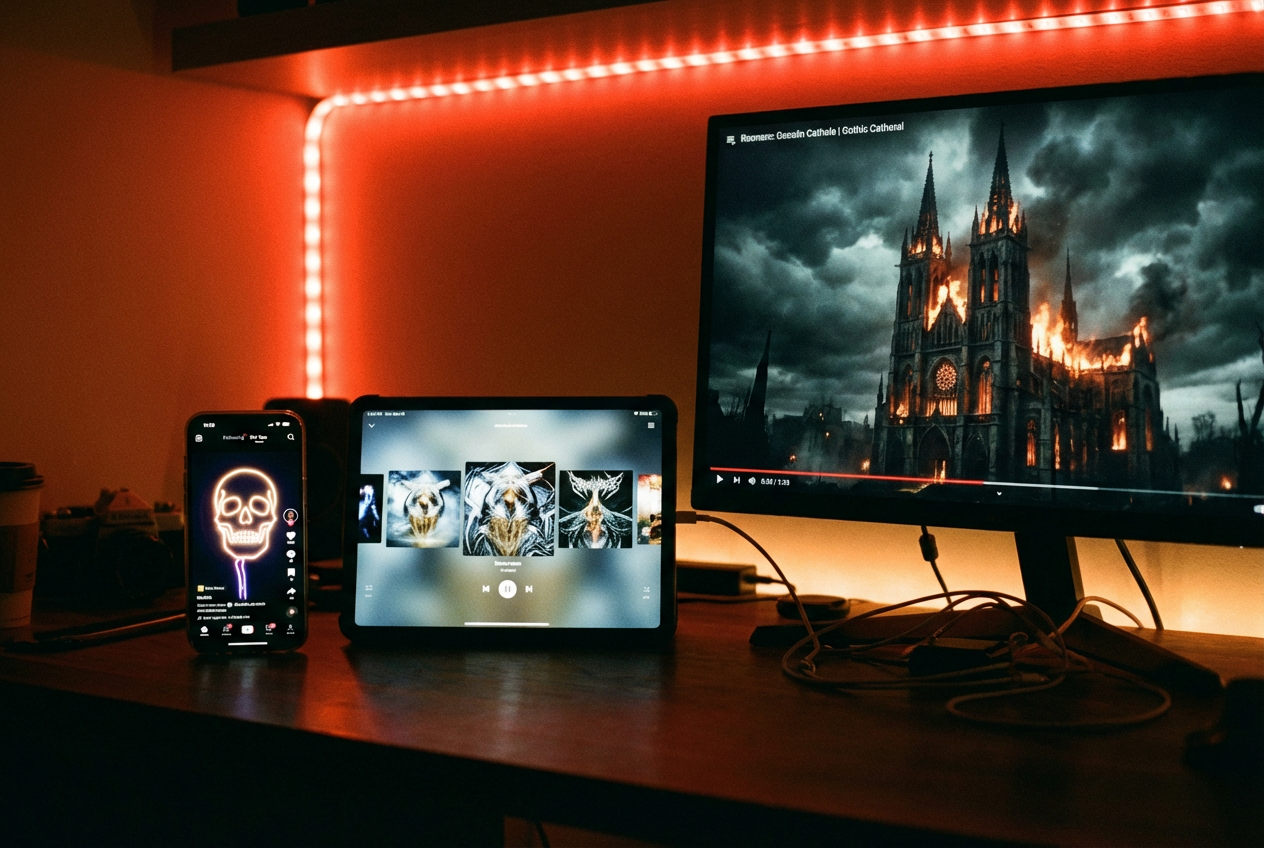
Common Techniques Behind the Best Examples
After studying every example above, clear patterns emerge in what separates exceptional AI metal videos from mediocre ones.
1. Embrace the Uncanny
The best AI metal videos don’t fight AI’s tendency toward surreal, morphing imagery — they weaponize it. Voivod’s “Quest for Nothing” works precisely because the unstable, dreamlike quality of early AI animation matches the band’s dissonant prog-thrash aesthetic. The song actually fits really well with the oddly creepy AI art.
Takeaway: Don’t over-correct AI’s weirdness. Metal thrives on the unsettling.
2. Match AI Style to Subgenre
Each metal subgenre has its own visual DNA. The most successful examples understand this intuitively:
- Death metal / tech-death → chaotic, organic, morphing flesh and landscapes (Dadabots)
- Power metal → bright, epic, anime-influenced (Isugaku Never Say Goodbye)
- Sludge / doom → dark, historical, nightmarish (High on Fire’s “Burning Down”)
- Prog metal / thrash → surreal sci-fi dystopia (Voivod)
- Kawaii metal → vibrant anime aesthetics with bold colors (NEON ONI)
- Metalcore → urban decay, high contrast, emotional intensity (Bleeding Verse)
For detailed prompting strategies matched to each subgenre, see our metal genre guide.
3. Audio-Reactive Synchronization
The gap between a “video with metal music” and a metal music video is sync. The best examples lock visual transitions to musical moments — breakdowns trigger visual explosions, blast beats accelerate the frame rate, and quiet passages allow the imagery to breathe. Audio-reactive visuals that sync to your track’s intensity are critical for matching breakdowns, blast beats, and guitar solos.
4. Hybrid Human-AI Workflows
Unleash The Archers used a generative AI engine to post-process green-screen footage to produce the music video for “Green and Glass,” using an image database licensed from artist Bo Bradshaw to train the neural network. This hybrid approach — human performance captured on camera, then transformed through AI — produces results that feel more grounded while still benefiting from AI’s creative potential.
5. The Right Color Palette
Across every successful example, the color choices are deliberate and genre-appropriate. Color palette: blacks, deep reds, cold blues, desaturated grays, molten oranges. Avoid bright pastels. Lighting: high contrast, chiaroscuro, flickering firelight, strobes, backlit silhouettes.
6. Tools That Drive the Best Results
The tools behind the examples in this gallery include:
| Tool | Used By | Best For |
|---|---|---|
| Stable Diffusion | Unleash The Archers | Stylized narrative with trained models |
| SampleRNN | Dadabots | Generative audio + minimal visual streams |
| Above The Void (custom) | Voivod | Surreal AI animation |
| Suno AI | NEON ONI | Full AI music generation paired with AI visuals |
| Mureka | Isugaku Never Say Goodbye | AI music generation for viral content |
| Runway, Kaiber, Pika, Sora | Various indie creators | General-purpose AI video generation |
AI video tools use machine learning to generate or edit video content based on prompts, images, or audio. Popular tools include Runway, Kaiber, Pika, Sora, and Genmo.
For step-by-step guidance on using these tools, check out How to Make an AI Music Video.
Create Your Own AI Metal Music Video
Every example on this page started with a single decision: to try something new. Whether it was Voivod leaning into AI’s surreal potential for their sci-fi universe, Unleash The Archers pioneering ethical AI workflows, or Steve Terreberry accidentally creating a viral power metal anthem — the common thread is action.
You don’t need a Hollywood budget. You don’t need a film crew. You don’t even need to leave your studio.
OneMoreShot.ai is built specifically for musicians who want to turn their tracks into stunning visual experiences. Here’s what makes it ideal for metal:
- Audio-reactive visuals that lock to your breakdowns, blast beats, and solos
- Genre-aware style controls — dial in the exact darkness, chaos, or grandeur your subgenre demands
- Full-length video generation — complete music videos ready for YouTube, not just 15-second clips
- Custom visual direction — specify everything from color palettes to camera movement to thematic imagery
Whether you’re crafting a crushing doom metal video of ancient ruins crumbling in slow motion, a frantic thrash video of urban chaos, or a surreal death metal nightmare of morphing organic landscapes — the power to realize those visions is here.
Ready to create?
→ Start building your metal music video now
→ Read our complete AI Music Videos for Metal genre guide for subgenre-specific prompts and strategies
→ Grab ready-to-use templates from our Metal Music Video Template page
Explore what other genres are doing with AI visuals: Rock · Hip-Hop · EDM · Lo-Fi
The future of metal visuals isn’t coming. It’s already here — morphing, screaming, and utterly relentless. Your move. 🤘