The AI Music Vibe Shift Is Real in 2026
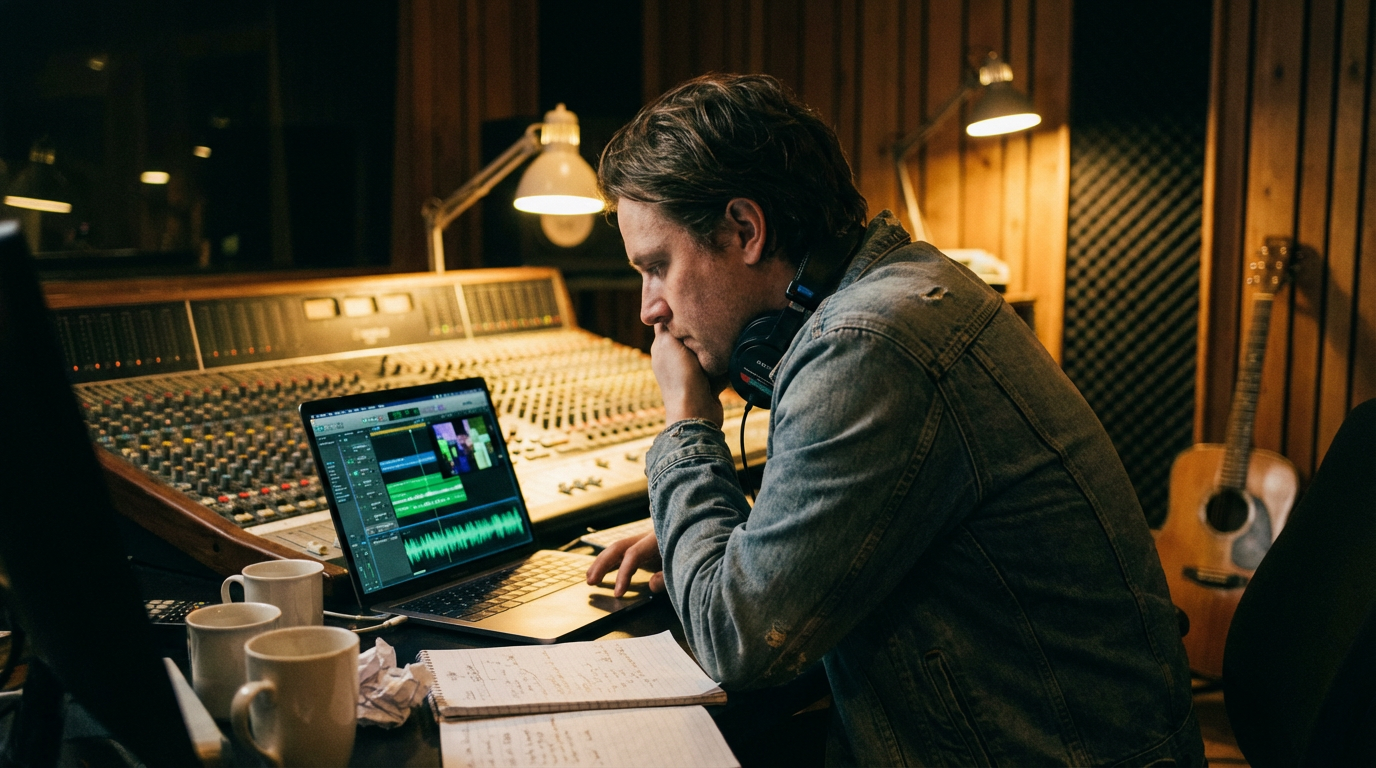
Something strange is happening in studios across Nashville, Los Angeles, and New York right now. The same songwriters who publicly signed “Say No To Suno” letters are privately feeding their lyrics into AI platforms and getting back fully-produced demos in minutes. The same producers who swore they’d never touch AI are using it to pitch songs to A-list artists — and landing placements.
The music industry’s AI tipping point isn’t coming. It arrived this month.
The Quiet Revolution in the Writing Room
There’s a vibe shift happening in how the music industry is coping with its ongoing AI revolution , according to a major new report from The Hollywood Reporter. And the evidence is hard to ignore.
Suno recently surpassed 2 million paying subscribers , and the company has surpassed $300 million in annual recurring revenue . But here’s the number that actually matters: it’s not casual hobbyists driving those figures. “I don’t meet a lot of producers and songwriters who aren’t using Suno at least a little bit in their workflows,” CEO Mikey Shulman told THR.
Think about that for a second. The same platform that major labels sued for copyright infringement is now a standard tool in professional writing sessions.
Career songwriter Autumn Rowe, who has credits on songs for Jon Batiste, Dua Lipa, and Ava Max, says many of her peers have used Suno to make demo productions of songs they wrote and have managed to get those songs placed with recording artists. She’s experimenting with it herself, taking years-old demos she wrote that never got recorded and using Suno to remix them to see if they can be updated to give them a second life.
The irony is thick. Nashville publishers — the very people whose industry groups wrote open letters denouncing AI — are now requiring demos to be done via AI. Very few now will give a budget for live musician demos.
Timbaland, Grammy Camps, and the New Creative Process
The most telling signal of this vibe shift isn’t the subscriber numbers — it’s who’s showing up to collaborate.
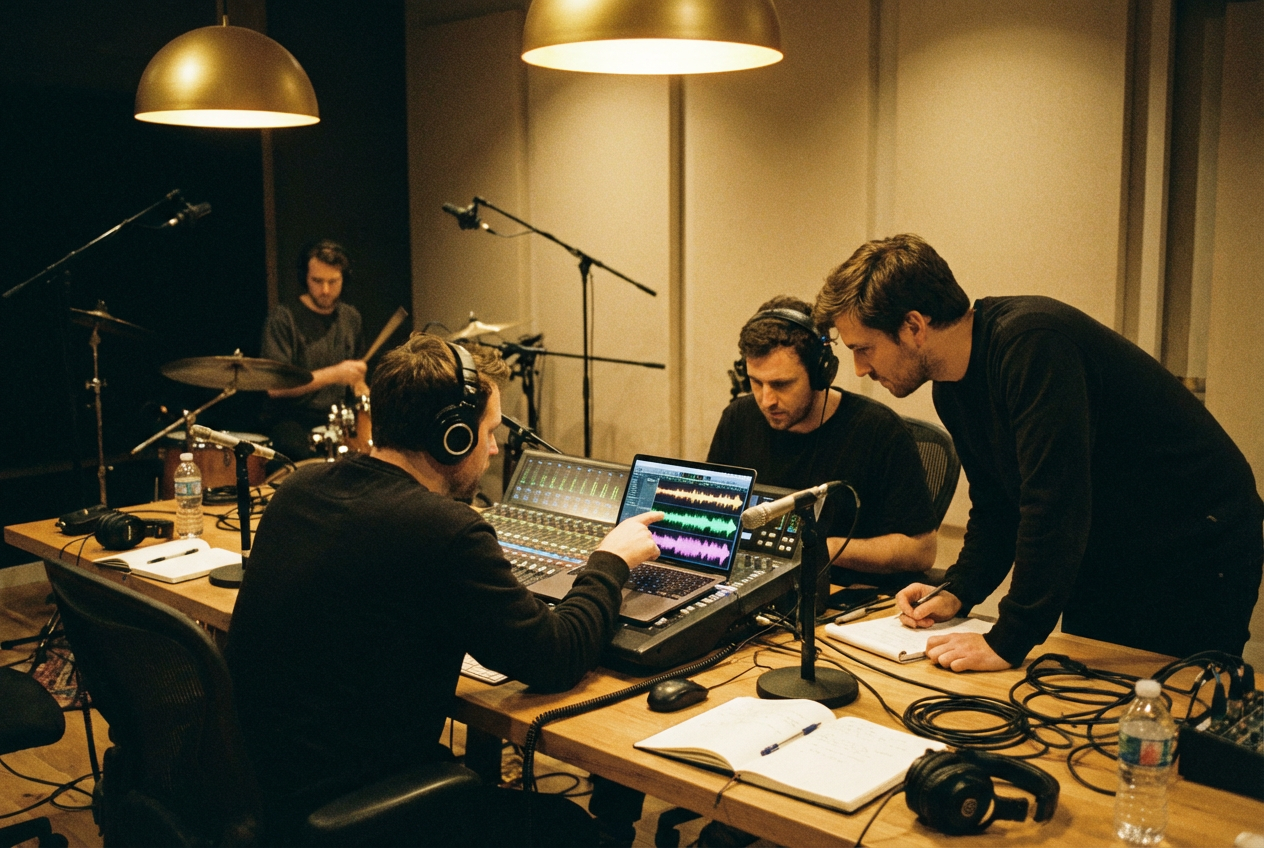
During Grammy week, producers including Timbaland, Gino the Ghost, and Grammy-winning producer Om’Mas Keith — who has worked with Frank Ocean, Erykah Badu, and Jay-Z — spearheaded a songwriting camp with Suno at a studio in Hollywood.
The writers fed lyrics to Suno in a prompt asking for different types of songs and vibes and, within minutes, had tracks with intricate production and convincing lead vocals. After Suno generated the concept, a collection of world-class musicians including string players and a drummer recorded the musical bits to fill in the blanks and add a more personalized human touch.
This is not replacement. This is augmentation with a speed nobody imagined two years ago. AI generates the scaffolding. Humans add the soul. And the result lands faster, sounds bigger, and costs a fraction of what it used to.
Gino the Ghost, a writer-producer for Sabrina Carpenter, The Chainsmokers, and Saweetie, says he uses Suno “like a more intuitive Splice” and isn’t worried about its implications for his career. Though he adds a caveat that plenty of us share: he’s concerned about the flood of low-effort content.
The AI Video Explosion Makes It Even Bigger
Here’s what most coverage of the music industry’s AI tipping point misses: this isn’t just about audio anymore. The visual side of the equation is experiencing an even more dramatic upheaval — and the two are converging fast.
Consider what’s happened in AI video generation just this month:
Alibaba’s HappyHorse dropped a bombshell. HappyHorse-1.0, which appeared on the benchmarking platform Artificial Analysis around April 7, without identifying its affiliations, climbed to the top of blind-test rankings for both text-to-video and image-to-video generation.
The margin over second-place Seedance 2.0 — 74 Elo points — is the largest gap in leaderboard history. It was later revealed as developed by a team led by Zhang Di, former Vice President of Kuaishou and Head of Kling Technology. The model generates both high-quality video and synchronized sound effects directly from a single text prompt, processing video and audio tokens within a unified Transformer sequence.
Google launched Veo 4. In April 2026, Google officially released Veo 4, the most advanced AI video generation model in its lineup. Coming just months after Veo 3.1 was made free for all Google users, Veo 4 raises the bar dramatically with longer videos, storyboarding capabilities, superior character consistency, and multimodal input support. And critically for musicians: if you have a voiceover or music track, you can input it as an audio reference when generating your video. Veo 4 will attempt to sync visual pacing and scene transitions to the audio rhythm — a powerful feature for music videos.
Sora is dead. OpenAI discontinued Sora on March 24, 2026. The platform was reportedly generating $2.1 million in lifetime revenue against $15 million per day in inference costs.
Google Vids now gives everyone free AI video. Google Vids now lets anyone with a Google account generate high-quality video clips using Veo 3.1, with 10 free generations monthly. Google AI Pro and Ultra subscribers gain access to custom music generation via Lyria 3.
For musicians, this means the same democratization happening in audio production is now hitting video production with equal force. If you’re an indie artist writing demos with AI assistance, you can now also create music videos with AI at a quality level that was unthinkable even six months ago.
Why This Matters for Indie Musicians
Let’s get specific about what this convergence means if you’re an independent artist in 2026.
The $15,000 Music Video Is Optional Now
One music video creator shared that “Traditional music video production for this project would have cost $15,000. Using Veo 4, total costs were under $500 including the subscription and editing time. The artist was thrilled, and the video has 2 million views on YouTube.”
That’s not a hypothetical. That’s happening right now. Production costs have dropped 91%, from $4,500 per minute to roughly $400 per minute, and the average 60-second marketing video that took 13 days to produce now takes 27 minutes.
Whether you’re making hip-hop visuals or lo-fi aesthetic videos, the barrier to entry has essentially been eliminated.
The Full-Stack AI Creative Workflow
Here’s what the new musician workflow looks like in April 2026:
- Write your core melody and lyrics (the human part that still matters most)
- Use AI to generate production demos — try different arrangements, tempos, and vibes in minutes instead of days
- Record your final human performance over the AI-generated scaffolding, or hire session musicians for the parts that need real soul
- Create your music video with AI using tools that sync visuals to your beat automatically
- Generate promotional clips for TikTok, Instagram Reels, and YouTube Shorts from your full video
Each step that used to require separate specialists, separate budgets, and separate timelines now happens in a single creative flow. The complete guide to AI music videos covers the visual side in depth, but the point is bigger: we’re watching the entire production pipeline collapse into something a single creative person can manage.
Genre-Specific Opportunities
The vibe shift isn’t uniform across genres. Platforms report a noticeable uptick in AI-enhanced releases, particularly in electronic, hip-hop, and experimental genres where abstract visuals complement sonic experimentation.
Country music is a fascinating case study. AI-assisted artists like Breaking Rust and Cain Walker are climbing the country charts , while simultaneously, country music’s songwriting community is pushing back hardest against AI adoption. If you’re in country music, the opportunity gap is enormous precisely because so many peers are resistant.
EDM and electronic music creators are arguably the most natural fit for AI-generated visuals — the aesthetic practically begs for surreal, beat-reactive imagery. And indie artists who’ve always had to do more with less are finding AI tools are the great equalizer.
The Backlash Is Real Too
I’d be dishonest if I painted this as a purely optimistic story. The tensions are genuine and growing.
Music Millennium, Portland’s legendary record store, canceled a listening party at the last minute after an uproar on social media. Brandon Carmody, a longtime Portland musician, was set to have a CD release party for his new album, which used AI to expand his partial lyrics and melodies into full songs.
Commenters said it was hypocritical for a vaunted independent record store to promote robot-created music. The store’s owner says a few employees came to him and said they didn’t support hosting an AI artist.
Meanwhile, several jazz musicians face a wave of AI-generated tracks uploaded to their Spotify artist profiles without consent.
Jason Moran, the former artistic director for jazz at the Kennedy Center, found a fake EP on his profile, remarking “There’s not even a piano player on this whole damn record.”
These aren’t abstract concerns. Real artists are being harmed by bad actors using the same tools that legitimate creators are using productively. The music industry needs to solve the fraud problem, the consent problem, and the attribution problem — and it needs to do it fast.
To say music has figured out the AI question would be a massive overstatement.
As part of its settlement with Warner Music Group, Suno will be rolling out a new version of its model trained only on licensed music. Whether that new model will be nearly as effective as the one trained on millions of additional songs remains to be seen.
What Smart Musicians Should Do Right Now
Here’s my honest take after watching this space intensely: the window for early-mover advantage in AI-assisted music and video creation is closing. The tools aren’t experimental anymore. They’re production-ready. And the professionals are already using them — they’re just not advertising it.
Start with video, not audio. The AI video side of the equation has less stigma, clearer copyright situations, and more immediate impact on your streaming numbers. A great AI-generated music video costs you almost nothing and can dramatically increase your reach on every platform.
Use AI as a creative accelerator, not a replacement. The Timbaland model is the right one: let AI generate concepts and scaffolding, then layer in your human performance and artistic vision. Nobody who listens to music can be fooled by a fully AI-generated track — but an AI-assisted production with real human vocals and real emotional intent? That’s genuinely powerful.
Get visual now. By the end of 2026, the AI music video generator will no longer feel new. It will feel necessary. If you wait until everyone’s doing it, you’ve lost the advantage.
Pick the right tools for your genre. A rock music video needs a completely different approach than a K-pop visual. The best results come from understanding the visual language of your genre and directing AI accordingly.
The Bottom Line
The music industry’s AI tipping point isn’t about technology replacing humans. It’s about a fundamental shift in who gets to create professional-quality music and visuals. As frontier models become more efficient, even smaller creators will access studio-quality tools.
Two years ago, you needed a label budget for a music video. One year ago, you needed technical expertise in AI tools. Today, you need a Google account and a creative vision.
The songwriters who are secretly using AI understand something the holdouts don’t: these tools don’t diminish artistry. They democratize production. The song still has to be good. The vision still has to be yours. But the gap between “bedroom artist with a great idea” and “signed artist with a production team” has never been smaller.
Ready to close that gap? OneMoreShot.ai lets you create stunning AI music videos in minutes — upload your track, describe your vision, and watch it come to life. Whether you’re a songwriter who’s been quietly experimenting with AI demos or an indie artist ready to compete visually with major-label releases, the tools are here. The tipping point has tipped. Time to make something.