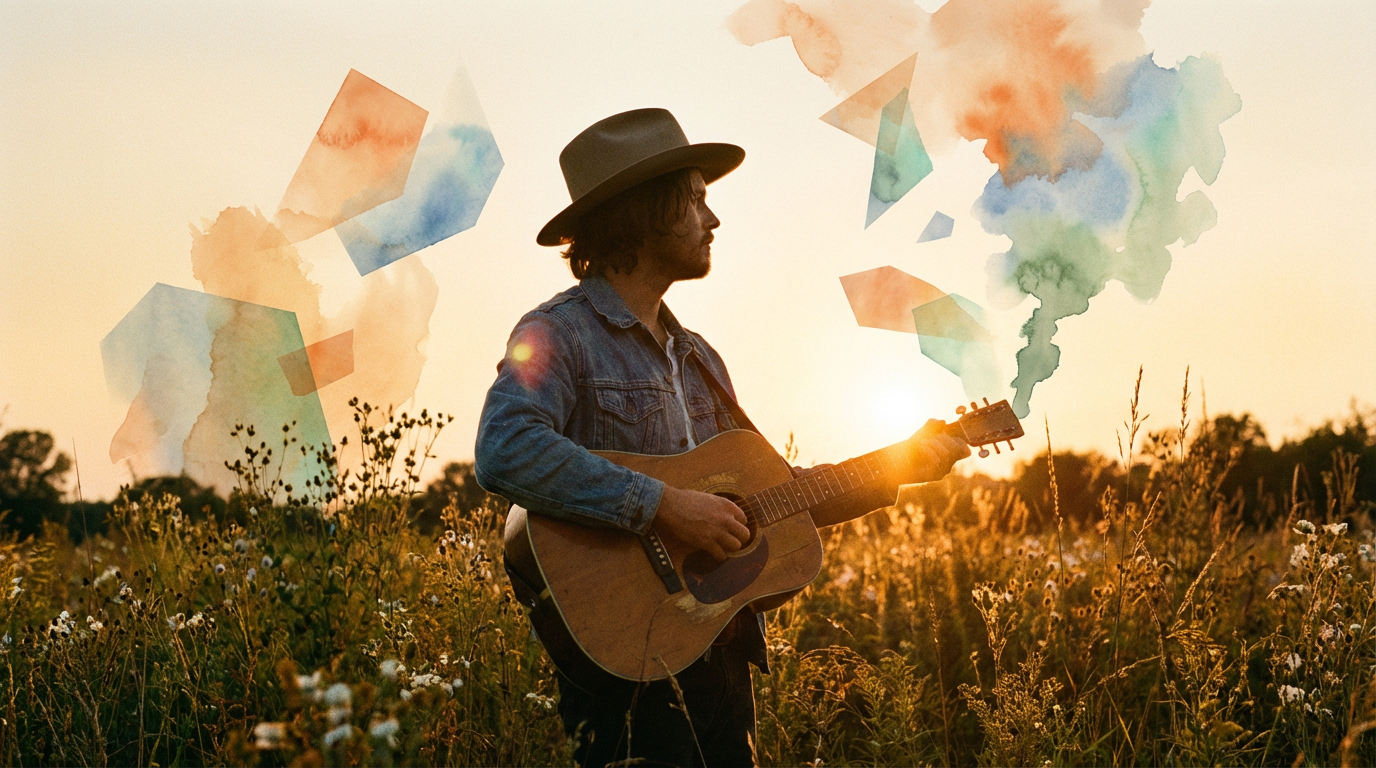
Indie AI Music Video Examples & Inspiration
Indie music has always been about doing more with less — about finding beauty in limitation, meaning in restraint, and artistry on a shoestring budget. Now, AI is rewriting what “less” means. 35% of music creators have already used AI in their work , according to a landmark Goldmedia/GEMA/SACEM study of over 15,000 artists. The market for AI-supported applications in music is expected to increase tenfold over the next five years — and indie artists are leading the charge on the visual side.
An indie artist can launch an AI-backed single, visualize it through generative animation, and dominate social charts within weeks. From dreamy watercolor landscapes to surreal narrative journeys, AI-generated indie music videos have become one of the most exciting creative frontiers of 2026. The popularity of AI video formats surged in late 2025, when short-form creators began combining AI music generation with quick visual storytelling.
This curated gallery showcases the best AI indie music video examples we’ve found — organized by visual style and platform — to inspire your next release. For a full overview of the tools and techniques driving this movement, check out The Complete Guide to AI Music Videos in 2026.
Gallery by Style
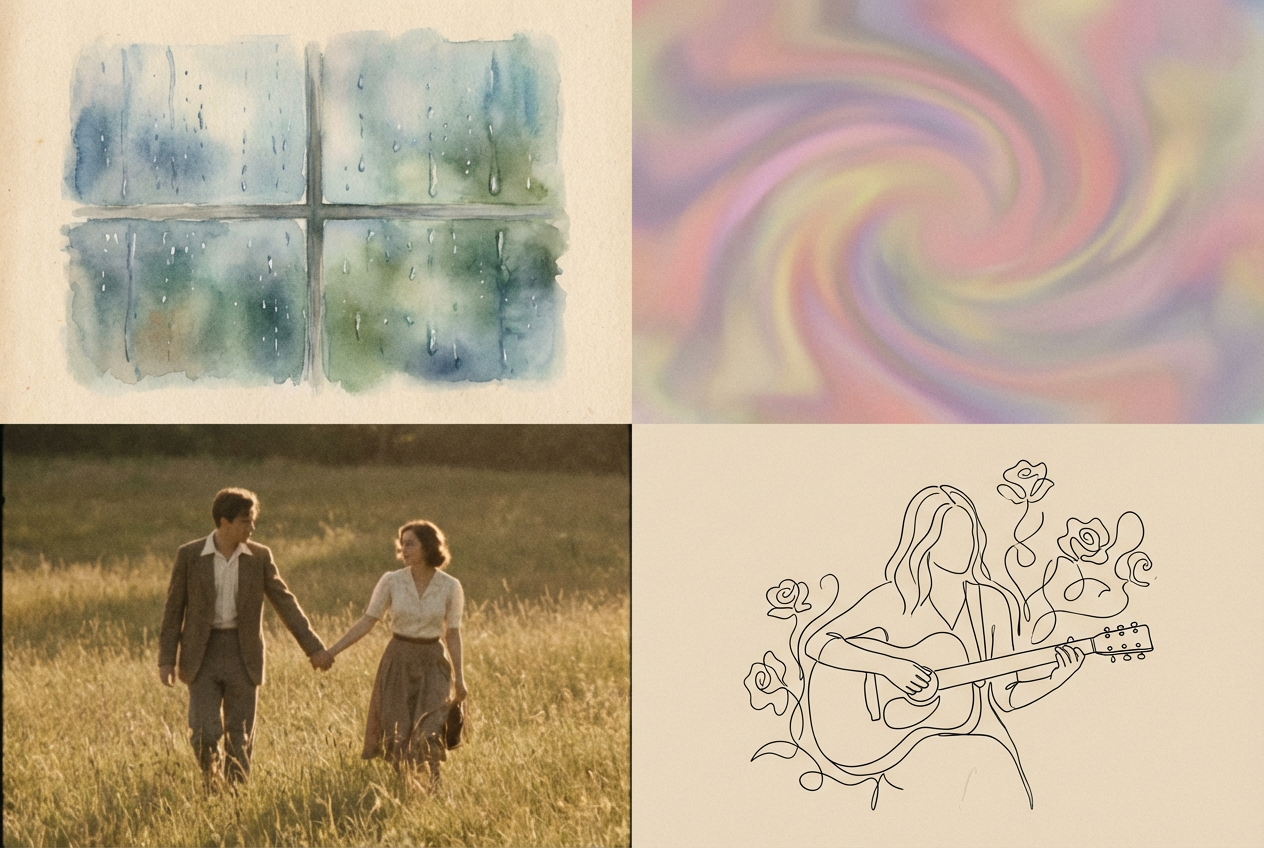
Indie isn’t a single aesthetic — it’s a galaxy of them. The best AI indie videos lean into the genre’s emotional sincerity and visual individuality. Here are the standout styles we’ve seen in 2026, with real examples where we found them.
1. Surreal Narrative — Washed Out, “The Hardest Part”
No conversation about AI indie music videos can skip the video that started it all. The four-minute music video for Washed Out’s latest single, “The Hardest Part,” was made entirely with OpenAI’s text-to-video model, Sora. Directed by Paul Trillo, the video follows a couple’s romance across decades — from high school hallways to a wedding, parenthood, and eventual death — all rendered in a single, continuous, dreamlike zoom.
What makes this groundbreaking isn’t photorealism — it’s the deliberate embrace of AI’s imperfections. There is something dreamlike, almost uncanny, about the visuals — an effect that seems intentional. Trillo leaned into the hallucinatory qualities of AI generation, creating visuals that feel like memories dissolving at the edges. He “leaned into the hallucinations and Sora’s dream logic to explore memories that never existed.”
The production involved generating roughly 700 clips, with Trillo ultimately selecting about 55 to assemble in Adobe Premiere. In total, it took six weeks to complete. This wasn’t a quick render — it was an artful collaboration between human vision and AI capability.
Why it works for indie: The imperfect, flowing quality of the AI generation perfectly mirrors the nostalgic, emotionally hazy tone of chillwave. Rather than fighting AI’s tendencies toward the surreal, Trillo weaponized them. This is the template for indie artists who want their visuals to feel like waking dreams.
Tool used: OpenAI Sora (note: on March 24, 2026, OpenAI announced that the Sora app and API would be shutting down ; alternatives like Runway, Kling, and Veo now fill this space)
Style category: Surreal Narrative / Infinite Zoom
2. AI-Anime Hybrid — Linkin Park, “Lost”
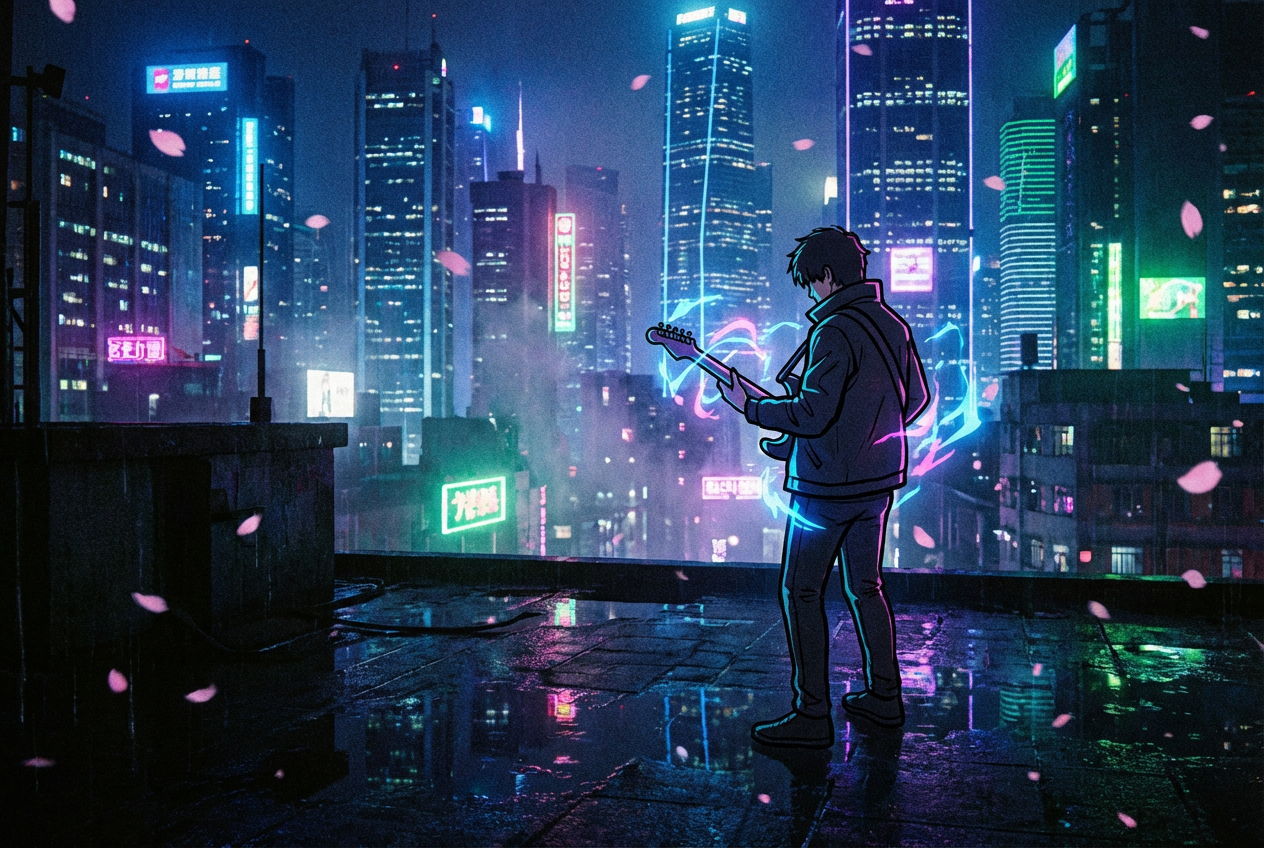
While Linkin Park is more rock than indie, the visual approach they pioneered is directly applicable to indie artists exploring animation. Prominent Web3 artists Emily Yang (pplpleasr) and Maciej Kuciara teamed up with the AI startup Kaiber to animate a breathtaking AI-generated music video for the band’s previously unreleased Meteora-era track “Lost.”
The technique was sophisticated: the original art of the anime scenes were trained on Kaiber, which was then applied onto the Linkin Park footage to make the band members look like anime characters. The result blends hand-drawn anime aesthetics with AI style transfer, creating visuals that pulse and morph with the music’s energy.
The music video was nominated for Best Rock Video at the 2023 MTV Video Music Awards and has since accumulated over 100 million YouTube views — proving that AI-assisted visuals can resonate at massive scale.
Why it works for indie: Anime-inspired AI videos have exploded among independent artists because they offer a visually rich aesthetic at a fraction of traditional animation costs. If your music carries emotional intensity — think emo, shoegaze, or post-punk — this hybrid approach delivers the cinematic weight your sound deserves. For more examples of AI animation in adjacent genres, see our AI Music Video Examples: Rock gallery.
Tool used: Kaiber AI (style transfer + audio reactivity)
Style category: Anime / Style Transfer
3. Watercolor & Painterly Dreamscapes
Of all the AI visual styles available in 2026, the watercolor aesthetic may be the most natural fit for indie music. A digital animation style that mimics the fluid, translucent, and textured look of traditional watercolor painting.
Watercolor animation creates a soft, dreamy, and emotionally resonant vibe — perfectly suited to folk, bedroom pop, and singer-songwriter tracks.
Across YouTube and Instagram, indie artists are generating watercolor-style visuals where landscapes bleed into one another, figures dissolve into color washes, and every frame looks like a page torn from an illustrated diary. The “Watercolor” and “Cinematic” styles look stunning on 4K monitors , and they consistently stop the scroll on social media.
The technique typically involves feeding AI tools like Kaiber a reference image or style prompt — something like “soft watercolor animation, pastel colors, visible paper texture, dreamy ambiance” — then enabling audio reactivity so the paint blooms and swirls respond to the music’s dynamics. Watercolor provides a softer, artistic touch, suitable for more relaxed or emotional tracks.
Why it works for indie: Watercolor visuals communicate vulnerability, intimacy, and handmade authenticity — the exact emotional register that defines the best indie songwriting. A soft folk ballad paired with bleeding watercolor landscapes feels cohesive in a way that hyper-realistic visuals never could. Artists working in lo-fi and acoustic spaces should also explore our AI Music Video Examples: Lo-Fi gallery for adjacent inspiration.
Tools used: Kaiber (Flipbook + watercolor presets), Runway (with style reference images), Pika (2D stylization)
Style category: Painterly / Watercolor Animation
4. Audio-Reactive Visualizers
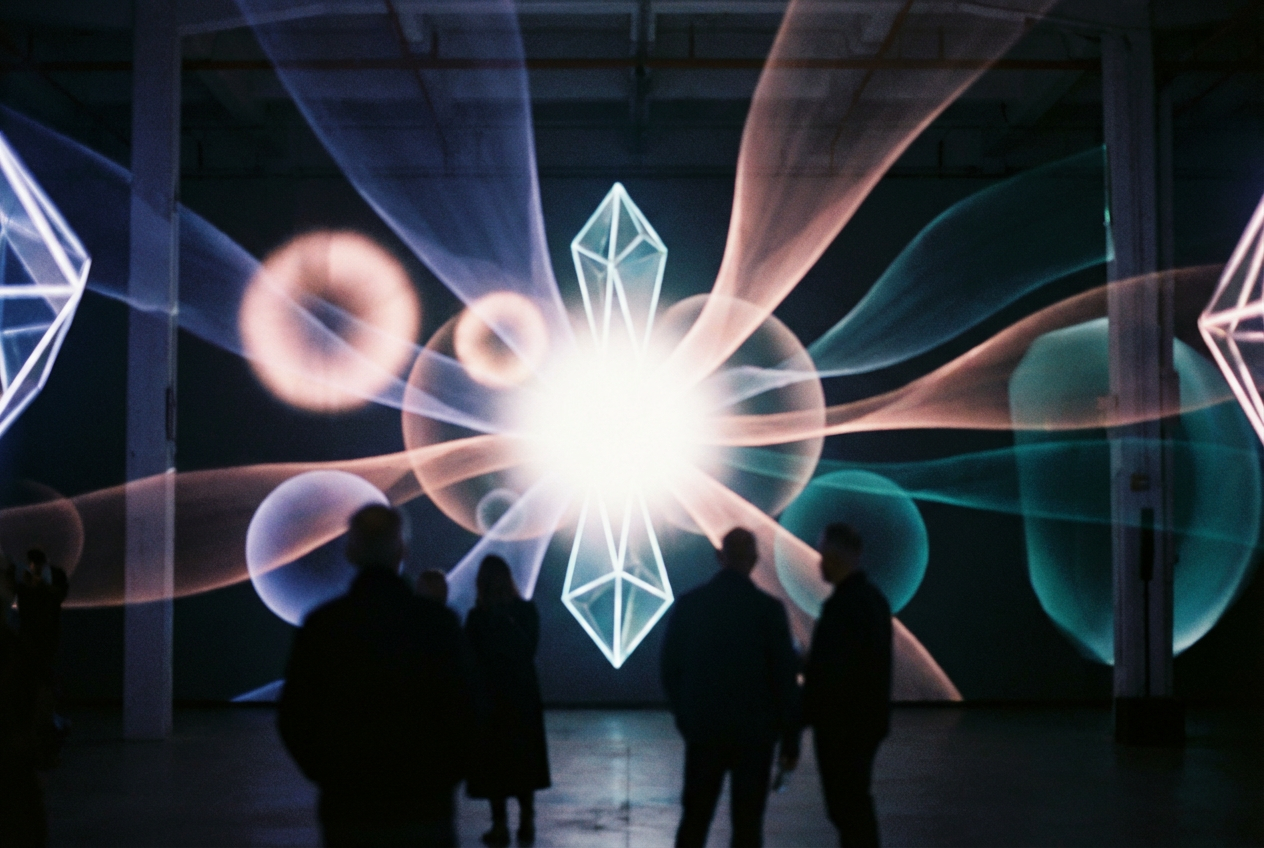
For instrumental indie, post-rock, and ambient acts, audio-reactive visualizers are the workhorse format. Neural Frames separates a track into individual audio stems and maps distinct visual behaviors to specific frequency ranges. The kick drum triggers a pulse; the synth swell shifts the color field.
Imagine: luminous geometric crystals fracturing on every snare hit, an ocean of particle dust rising with the swell of a reverb-drenched guitar, nebula-like clouds of color that breathe in time with the bass. These aren’t random screensavers — they’re deeply musical visual instruments.
Thousands of artists have made over two million videos with Neural Frames. The platform offers frame-by-frame control, stem-based parameter mapping, and automatic upscaling to 4K — all optimized for the kind of precise audio-visual sync that ambient and post-rock demand.
Why it works for indie: If your music is instrumental or your identity is more about sonic texture than personality, visualizers transform a static Spotify upload into a captivating visual experience. They’re also the fastest AI videos to create — often ready in minutes — and they’re ideal for Spotify Canvas, YouTube uploads, and live show projections.
Tools used: Neural Frames (stem-level reactivity), PlazmaPunk (waveform-driven), OneMoreShot.ai
Style category: Audio-Reactive Visualizer / Abstract
5. Cinematic AI Performance Videos
One of 2026’s biggest leaps forward is convincing AI-generated performance footage. 90%+ lip sync accuracy — mouth movement stays naturally aligned with vocals; tested on indie pop and rap, both convincing. This means indie singer-songwriters can now create performance-style videos where an AI avatar sings their track — without ever stepping in front of a camera.
The approach typically involves creating or selecting an AI avatar, uploading your track, and letting the platform generate a full performance video complete with lip-synced vocals, camera angle changes, and scene transitions that align with your song’s structure. Freebeat works as an AI director that plans, shoots, and edits your music video automatically. It turns creative ideas into structured storylines, cinematic shot plans, and complete music videos in one flow.
For camera-shy indie artists — and there are many — this is transformative. You can have a visually compelling “performance” video without the anxiety of being on camera, the expense of hiring a crew, or the logistics of booking a location.
Why it works for indie: Indie audiences connect with sincerity and personality. A well-crafted AI performance video can communicate the emotional truth of your lyrics through facial expression and body language, even when generated. Pair it with a cinematic or lo-fi visual filter and you’ve got something that feels authentic.
Tools used: Freebeat (lip-sync + character consistency), OneMoreShot.ai (virtual artist + automatic production), Kling (human motion quality)
Style category: Performance / Lip-Sync
6. Lyric Videos with Kinetic Typography
Lyric videos have been an indie staple for years — they’re low-cost, fan-friendly, and perfect for driving engagement on release day. AI has supercharged the format. Turns lyrics into perfectly timed motion that moves with the music. Automatically generates synced lyrics with customizable motion, highlighting, and karaoke-style timing.
The best AI lyric videos for indie go beyond simple text overlays. Imagine your lyrics handwritten in chalk on a blackboard that slowly fills with botanical illustrations, or typeset in vintage letterpress that shifts color with each chord change, or floating as translucent text over a slowly morphing watercolor landscape.
Why it works for indie: Lyrics are often the emotional core of indie music. Giving them visual life — with motion, typography, and mood-matched backgrounds — turns passive listening into active engagement. Fans share lyric videos because they help them learn and sing along, driving both streams and social reach.
Tools used: Freebeat (karaoke-style timing + .LRC export), VEED.io (subtitle + animation), OneMoreShot.ai
Style category: Lyric Video / Kinetic Typography
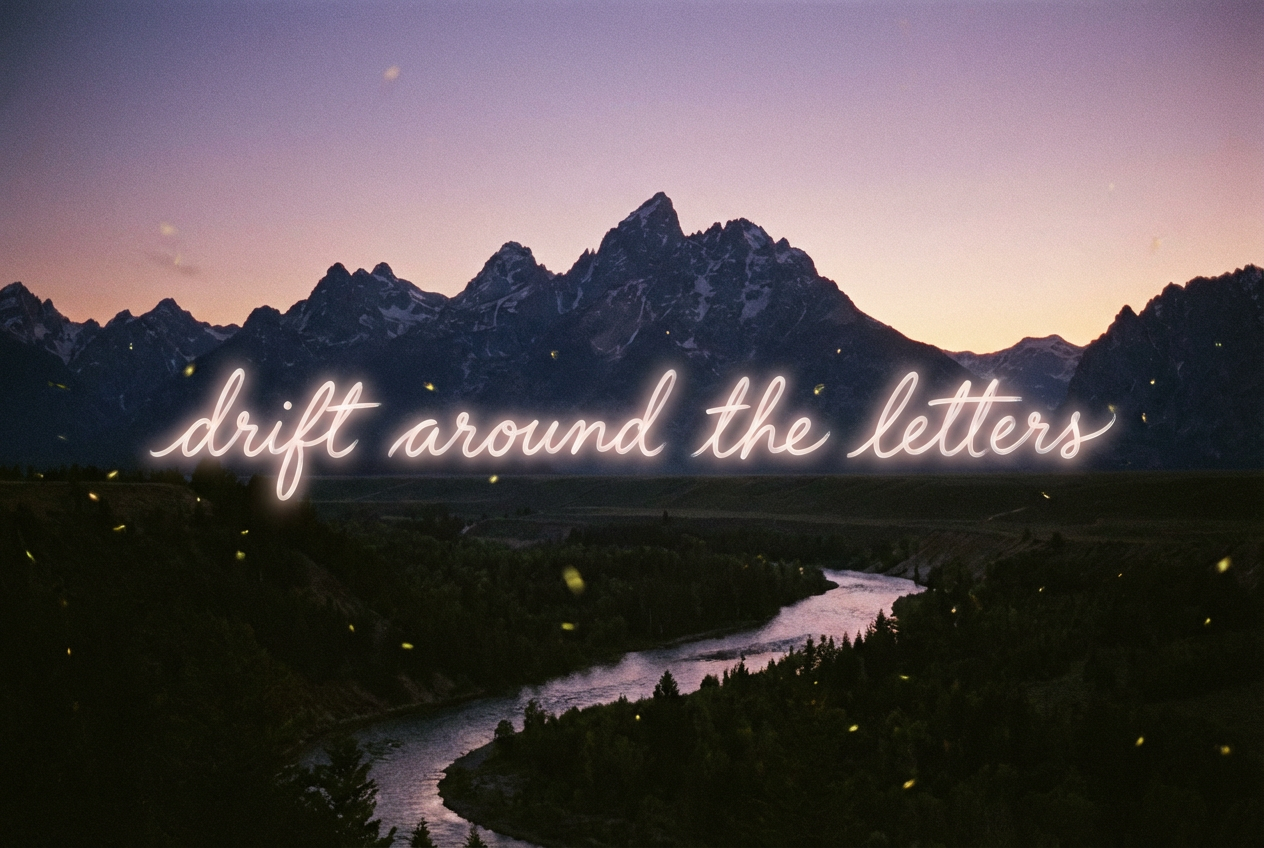
7. Collage & Mixed-Media Aesthetic
The indie DIY ethos has always embraced collage — think zine culture, hand-cut gig posters, and Polaroid-littered album art. AI now lets artists create dynamic collage-style videos where photographs, illustrations, textures, and text layers interact and overlap in motion.
This style works by combining AI-generated imagery with style transfer, scanned textures, and layered composition. The result feels handmade and personal — like a moving mood board set to music. Artists feed tools like Kaiber or Runway reference images of torn paper, film negatives, botanical prints, or vintage photographs, then let the AI animate and morph them in response to the track.
Why it works for indie: Nothing screams “indie” like a collage aesthetic. It communicates artistic intentionality and a DIY sensibility that resonates deeply with indie audiences. It’s also incredibly forgiving — imperfections add character rather than detracting from it.
Tools used: Kaiber (Transform + Flipbook), Runway (image-to-video + style reference), OneMoreShot.ai
Style category: Collage / Mixed Media
Gallery by Platform
Not all AI indie music videos are created equal — and not all platforms reward the same approach. Here’s what we’ve seen performing best on each.
YouTube: Long-Form Immersion Wins
YouTube remains the home of the full-length indie music video, and AI has made it dramatically more accessible. If you’re an independent artist in 2026, you already know the problem: the music is the easy part. It’s the constant demand for visuals that drains your time, energy, and budget.
The best-performing AI indie videos on YouTube tend to be:
- Full-length surreal narratives (3–5 minutes) in the mold of Washed Out’s “The Hardest Part”
- Audio-reactive visualizers for instrumental and ambient tracks, where watch time is naturally high
- Anime-style or painterly videos that offer visual richness throughout the entire track
YouTube’s algorithm rewards watch time, so visuals that sustain interest across a full song — through evolving scenes, narrative progression, or hypnotic audio-reactive movement — outperform static or repetitive content. Export in 16:9 at 1080p minimum, and consider 4K if your tool supports it.
TikTok: The 15-Second Hook
Forget full-length songs — TikTok in 2026 is all about the perfect snippet. The most viral tracks are engineered to include a catchy, emotionally charged 10–20 second segment.
For indie artists, TikTok AI video strategy should focus on:
- Vertical 9:16 clips that capture the most visually striking 15–30 seconds of your video
- Watercolor or anime transformations that feel “thumb-stopping” in a fast-moving feed
- Lyric overlay clips that invite duets and sing-alongs
- Behind-the-scenes AI generation content — showing your creative process is itself engaging
Novelty and Surprise: AI-generated visuals and sonic textures can feel otherworldly, instantly drawing attention. Personalization: AI allows individual creators to infuse personal narratives or niche aesthetics without massive production teams.
Instagram Reels: Polished & Aesthetic
Instagram’s indie music community gravitates toward curated aesthetics and visual consistency. The platform rewards:
- Cohesive visual identities — use the same AI style across multiple Reels to build brand recognition
- Looping Spotify Canvas-style clips repurposed as Reels (square or vertical)
- Cinematic performance clips with a film-grain or vintage filter
- Collage/mixed-media visuals that mirror the zine-culture aesthetic popular in indie Instagram
Enhanced Artist Identity – Visuals become part of your sonic brand — a consistent aesthetic across releases. Instagram is where that consistency pays off most. For comparisons with how other genres approach platform-specific strategy, explore our AI Music Video Examples: Pop and AI Music Video Examples: EDM galleries.
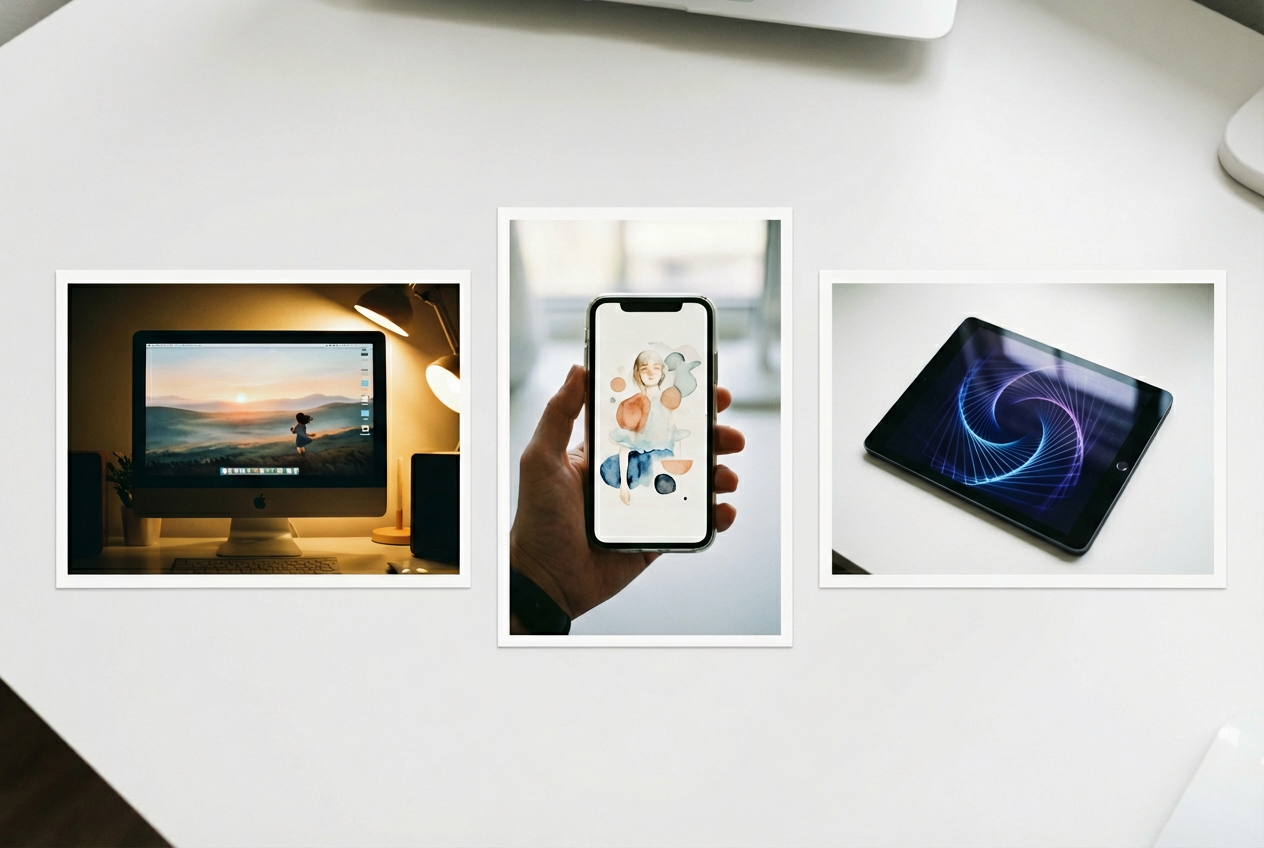
Common Techniques Behind the Best Examples
After analyzing dozens of standout AI indie music videos, clear patterns emerge. Here’s what separates the exceptional from the mediocre.
1. Audio-Structural Awareness
The best AI indie videos don’t just play visuals alongside music — they respond to the music’s architecture. The AI analyzes tracks at four levels — BPM, individual beats, bars, and full song structure — and uses that map to plan the shot sequence before generating a single frame. Cuts land on beats. Visual intensity builds with the chorus. The drop actually lands.
This structural awareness is what transforms a generic clip into something that feels “edited with intent.” Tools like Freebeat, Neural Frames, and OneMoreShot.ai prioritize this musical intelligence — and for indie tracks with dynamic structures (quiet verses, explosive choruses), the difference is immediately visible.
2. Embracing Imperfection
The Washed Out example proved something crucial: AI’s “flaws” — morphing faces, impossible transitions, dream-logic continuity — can be artistic strengths when intentionally deployed. The best indie AI videos don’t try to replicate reality. They lean into the surreal, the impressionistic, the emotionally resonant.
This is a distinctly indie advantage. While pop and hip-hop may demand polish and photorealism, indie audiences often prefer the raw and the handmade. AI’s natural tendency toward the dreamy and slightly uncanny is a feature, not a bug.
3. Style Consistency Across Releases
It also functions as an album cover generator, letting you create consistent visual identities that extend from static artwork into full video. That continuity matters. Instead of disconnected assets, you get a unified aesthetic across cover art, scenes, and character presence.
The most successful indie artists using AI video treat each release as part of a larger visual world. Album art, Spotify Canvas loops, music videos, and social teasers all share the same color palette, style treatment, and character design. This is how you build an instantly recognizable visual brand.
4. Prompt Engineering as Artistry
Behind every stunning AI indie video is a carefully crafted prompt. The best creators approach prompt writing as a creative discipline — specifying not just what they want to see, but the emotional texture, lighting quality, camera behavior, and artistic references that define the mood.
For indie, effective prompts often reference specific aesthetics: “shot on Super 8 film,” “faded Polaroid colors,” “Wes Anderson palette,” “Studio Ghibli countryside,” “vintage postcards from 1970s California.” The more specific your visual language, the more distinctive your output.
5. Multi-Tool Workflows
Many of the best indie AI music videos combine multiple tools. A common workflow in 2026:
- Generate base visuals with a music-aware tool (OneMoreShot.ai, Freebeat, Neural Frames)
- Enhance specific scenes with a high-fidelity generator (Runway, Kling, Veo)
- Add lyric overlays and final polish in an editor (CapCut, DaVinci Resolve, Premiere)
- Export platform-optimized versions — horizontal for YouTube, vertical for TikTok/Reels, square for Spotify Canvas
For a step-by-step walkthrough of these workflows, see How to Make an AI Music Video.
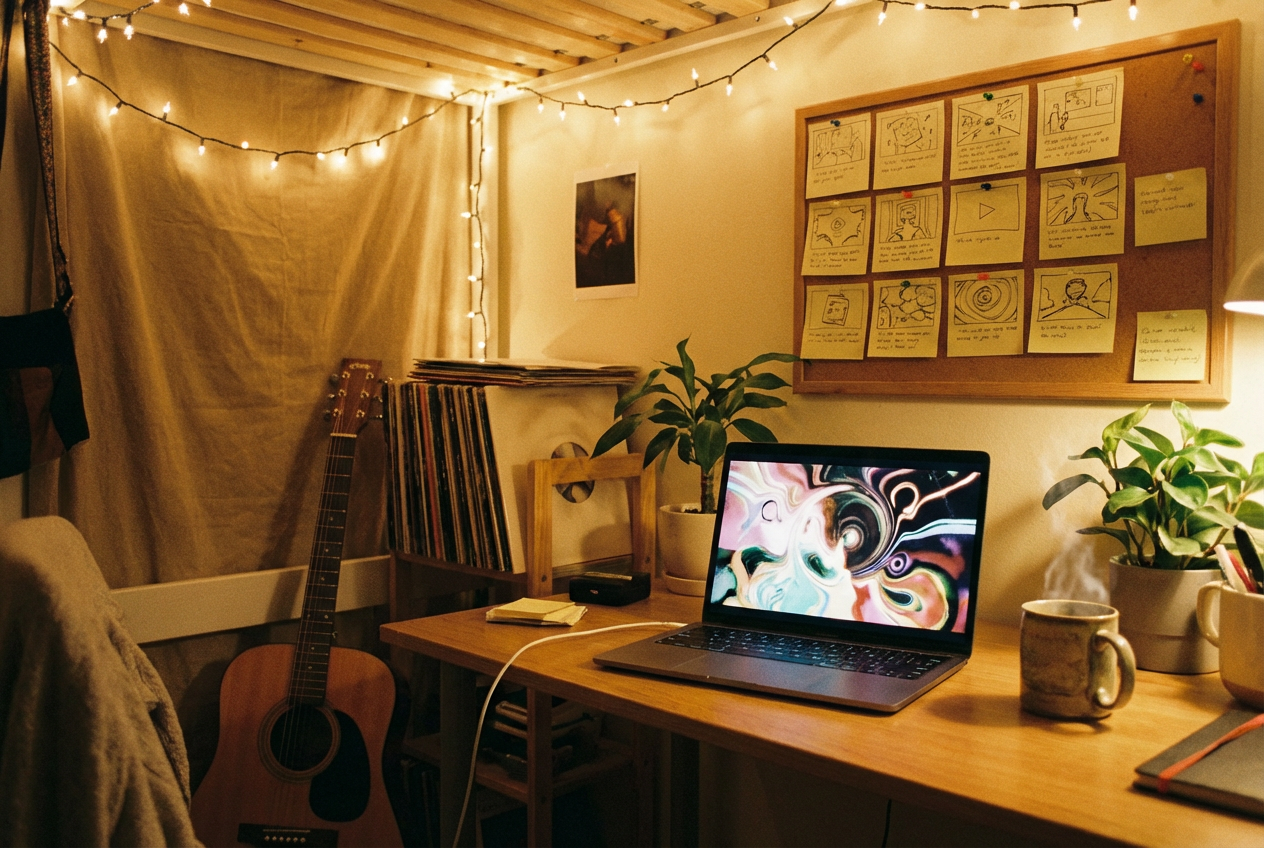
The Indie AI Video Toolkit in 2026
In 2026, indie artists no longer have to choose between expensive shoots and static cover art. Here’s a quick reference for the tools behind the examples in this gallery:
| Tool | Best For | Indie Strength |
|---|---|---|
| OneMoreShot.ai | Full music videos from a single upload | Virtual artist creation, automatic production, lip-sync |
| Neural Frames | Audio-reactive visualizers | 8-stem analysis, frame-by-frame control, 4K |
| Kaiber | Style transfer & artistic animation | Flipbook, watercolor, anime presets |
| Freebeat | Complete release visual packages | Lip-sync, lyric videos, Suno integration |
| Runway | Cinematic AI footage | Photorealistic clips, Motion Brush |
| Kling | Cost-effective performance footage | Long clips, natural body movement |
In 2026, the question is no longer whether AI can generate a video — most tools can. The question is whether the AI actually understands what music is doing.
Create Your Own Indie AI Music Video
Every example in this gallery started the same way: an artist with a track and a vision. The tools have never been more accessible, the quality has never been higher, and the indie community has never been more open to AI-assisted visuals.
Here’s how to get started right now:
- Upload your track to OneMoreShot.ai — it supports MP3, WAV, FLAC, and direct links from Suno, Udio, or YouTube
- Choose your visual style — dreamy watercolor, cinematic performance, abstract visualizer, anime, or let the AI suggest one based on your music’s mood
- Generate your video — the AI handles storyboarding, scene transitions, and beat-synced editing automatically
- Refine and export — adjust individual shots, add your branding, and export in formats optimized for YouTube, TikTok, Instagram, and Spotify Canvas
For detailed genre-specific guidance, explore our AI Music Videos for Indie guide and grab a ready-made starting point from our Indie AI Music Video Template.
Your music deserves to be seen. The only question left is what it looks like.
Create your indie AI music video now →
Looking for inspiration in other genres? Explore our galleries for Hip-Hop, EDM, Pop, Lo-Fi, Rock, R&B, Country, Jazz, Latin, and K-Pop.